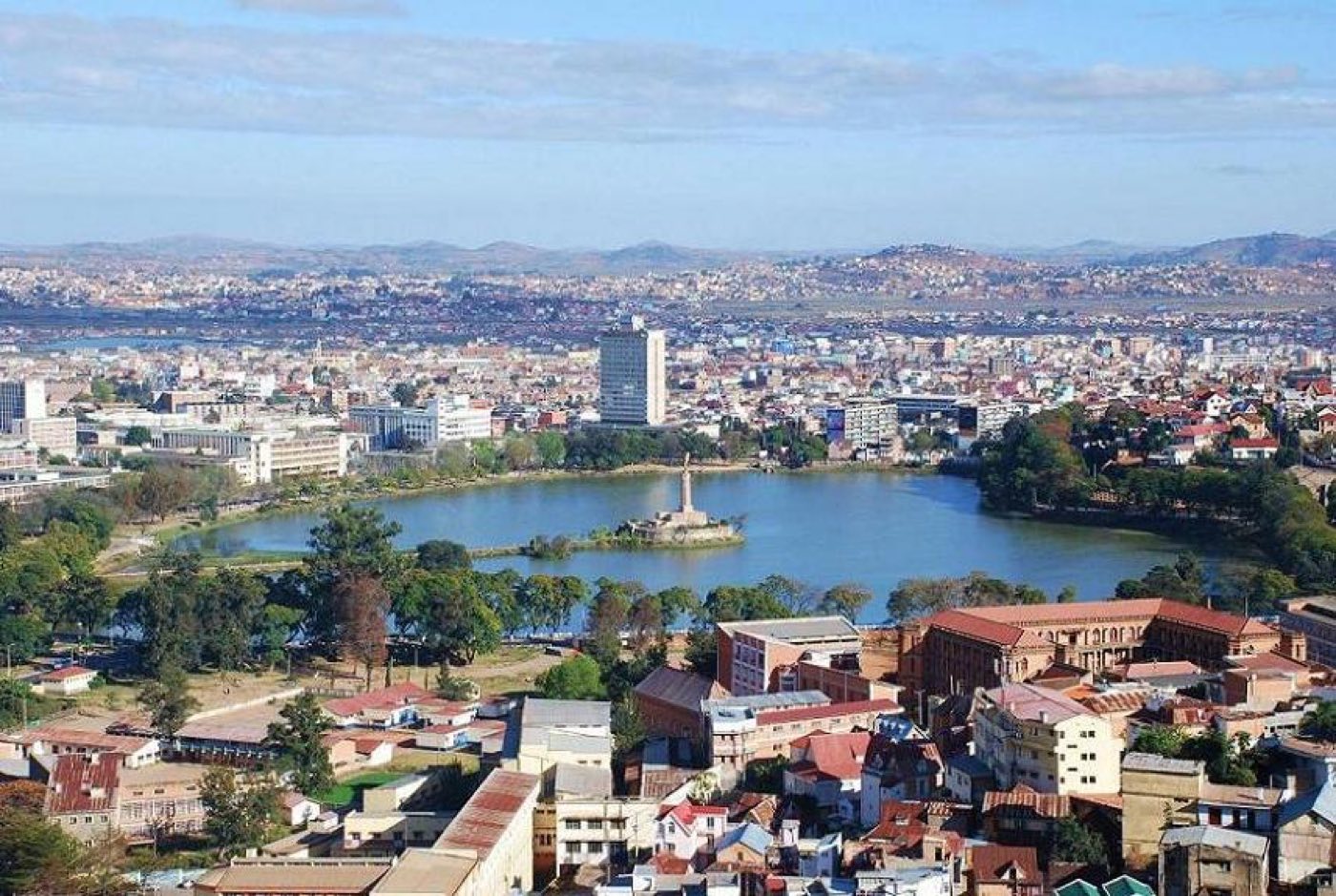
Madagascar
- Capital
- Antananarivo
- Population
- 30.3M
- Currency
- MGA
- Languages
- Malagasy, French
Overview
The world's fourth-largest island drifted off from Africa roughly 160 million years ago, and almost everything alive here followed its own evolutionary path afterward. Around ninety percent of Madagascar's wildlife lives nowhere else — all 101 species of lemur, the fossa, half the world's chameleons, and plants that look like they belong on a different planet. You notice the strangeness first along the roads. Baobabs thicken into swollen silhouettes at dusk. Zebu cattle drift across the highway in pink light. Villages pass in quick flashes of red-earth walls and rice terraces stepped down the hillsides, then the pavement gives out and the next three hours are spent on something between a road and a riverbed. Madagascar is not efficient to travel. Flights between regions save days and are worth every ariary. You come here for the wildlife above anything else — dawn in a rainforest with indri calls bouncing across the valley, a flashlight walk to find mouse lemurs the size of golf balls, or an afternoon among the Tsingy's limestone blades. Pair that with a few days on Nosy Be or Île Sainte-Marie to decompress at the end. Two weeks is the realistic minimum, three is better, and distances will eat more of that than you expect.
Things to Do
Avenue of the Baobabs at sunset
A short stretch of dirt road outside Morondava lined with a few dozen Grandidier's baobabs, some eight hundred years old, is probably the most photographed scene in Madagascar. Come for sunset when the trunks go copper against a bruised sky and local kids wander home along the ruts. Stay for the after-glow — most of the tour buses clear out fast and the last twenty minutes of light are the ones you remember. A night at a lodge in Morondava lets you catch sunrise here too.
Andasibe-Mantadia National Park lemur trekking
Three hours east of Antananarivo along a reasonable road, Andasibe is the easiest place to meet the indri — the largest living lemur, whose morning call travels two miles through the rainforest and sounds like a whale song filtered through a broken radio. Guides take you out at six to find a family group while they feed. Add a night walk for woolly lemurs, chameleons, and frogs you can only hear. Two nights is the right length here; one is enough but you will wish it were two.
Tsingy de Bemaraha razor-sharp limestone formations
A UNESCO-protected field of needle-pointed limestone blades up to seventy meters high, the Tsingy are traversed on fixed cables, narrow plank bridges, and short climbs between pinnacles. The route is physical but not technical, and the reward is a landscape that looks architectural from above and almost lunar from within. Getting here means a rough drive from Morondava and a ferry crossing that can add hours to the day. Budget three full days round-trip and go in dry season — the access road closes when it rains.
Nosy Be island beaches and snorkeling
Off the northwest coast, Nosy Be is the end-of-trip decompression most itineraries need. The main island has decent beaches and a lively small capital at Hell-Ville, but the real draw is the day trips — Nosy Komba for brown lemurs and beach lunch, Nosy Iranja for long sand spits and turtle nesting, and Nosy Tanikely for the country's best accessible snorkeling over healthy reef. Manta and whale shark sightings are possible from September through November.
Ranomafana National Park rainforest
A cloud forest in the southeast preserves twelve species of lemur, including the golden bamboo lemur that led to the park's 1991 creation. Trails climb steeply through steaming forest where millipedes the size of your hand cross the path and Parson's chameleons hold absolutely still above you. The hot springs in the village give the park its name and make for a good soak after a long day. Pair with Isalo on a southern loop — the drive between them is long but scenic.
Île Sainte-Marie humpback whale watching
From July through September, humpback whales migrate into the channel between Île Sainte-Marie and the east coast to calve, and boat trips from Ambodifotatra regularly surface alongside breaching adults and curious mothers with newborns. Outside whale season the island is a quiet, palm-lined retreat with the ruined pirate cemetery at Baie des Forbans as its main cultural stop. Flights in from Antananarivo are short; the ferry from Soanierana-Ivongo is a long, rough day.
Isalo National Park canyon hiking
A sandstone massif eroded into canyons, natural pools, and pinnacles in the dry south, Isalo is where you get Madagascar's wide-open version of itself. Day hikes take you down into the Canyon des Makis for swimming beneath waterfalls and up onto the plateau for sunset over a lunar horizon. Lodges outside the park gate range from basic to the architecturally ambitious Relais de la Reine. Two nights, two full hiking days is the standard.
Ifaty coral reef diving
A fishing village on the southwest coast north of Toliara, Ifaty sits behind one of the longest barrier reefs in the Indian Ocean. Diving here is less polished than Nosy Be but cheaper and quieter — drift dives along the outer wall, reef sharks, green turtles, and whale sharks from October through January. On land, the spiny forest reserve at Reniala holds thousand-year-old baobabs and octopus trees you will not see elsewhere. A long drive from anywhere, so pair it with Isalo.
When to Go
April through November covers the dry season across most of the island and is the window you want for wildlife viewing, the Tsingy access road, and the rougher overland routes. September through November is the sweet spot — comfortable temperatures, lemurs actively feeding ahead of the rains, and whale watching off Île Sainte-Marie wrapping up. The rainy season from January through March can make roads impassable and cyclones occasionally close airports on the east coast, though the rainforest parks are lush and green. Avoid late December through early January unless you are staying put on Nosy Be.
Getting Around
Domestic flights on Madagascar Airlines are expensive and routinely delayed but still the sane way to cover the main distances — Antananarivo to Morondava, Diego Suarez, Nosy Be, or Fort Dauphin. Roads outside the central corridor are slow: the paved RN7 from Antananarivo south to Tulear is fine, while almost everything else is rutted, rough, or seasonally impassable. Hire a 4x4 with a driver for multi-day overland trips — self-driving is legal but rarely worth the trouble, and a driver doubles as a translator in Malagasy-speaking villages. Within towns, tuk-tuks (pousse-pousse in places, tuk-tuk in Antananarivo) handle short hops cheaply.
Cost & Currency
Madagascar uses the Malagasy ariary (MGA), and it trades softly — expect roughly 4,500 MGA to the dollar. The country is cheap on the ground but expensive to cover: lodges in national parks run $60–$150 a night, mid-range hotels in Antananarivo $40–$80, and a sit-down meal with a beer is 30,000–60,000 MGA ($7–$14). The big costs are flights ($150–$300 each way domestically) and 4x4 rental with driver ($80–$150 per day including fuel). Cards work at upscale hotels in the capital and Nosy Be; everywhere else is cash, and ATMs run out regularly, so pull ariary in Antananarivo before flying out. Tip guides 20,000–50,000 MGA per day.
Frequently Asked Questions
- Do I need a visa to visit Madagascar?
- Most travelers get a visa on arrival at Antananarivo's Ivato airport for stays up to 60 days, paid in euros, dollars, or ariary. Bring a printed onward ticket and two blank passport pages. An e-visa is also available online and can speed up the airport queue considerably.
- Is Madagascar safe for tourists?
- Generally yes in tourist areas, with petty theft the most common concern in Antananarivo and around transit hubs. Avoid walking in the capital after dark, keep valuables hidden on long-distance drives, and be cautious in areas south of Toliara where banditry has occasionally been reported. Using a driver rather than self-driving adds a useful layer of local knowledge.
- What vaccinations and health precautions do I need?
- Malaria prophylaxis is essential outside Antananarivo, and a yellow fever certificate is required only if arriving from a yellow-fever country. Routine boosters plus typhoid and hepatitis A are strongly recommended, and a plague advisory for highland regions means it is worth checking current CDC guidance close to your travel dates.
- How many days do I need for a trip to Madagascar?
- Two weeks is the realistic minimum for a single region plus a beach stop, and three weeks is better if you want to combine the rainforest parks, the Tsingy, and the south. Distances are long and flights are limited, so plan on losing at least one day in four to travel logistics.
- Is it easy to see lemurs in the wild?
- Yes, in the right parks — Andasibe, Ranomafana, and Isalo almost guarantee multiple species with a local guide. Sightings are close and relaxed since most habituated groups are used to visitors. Night walks reveal a separate set of species, and hiring a guide is mandatory in every protected area anyway, so budget for that from the start.
Plan a Trip to Madagascar
Have you been to Madagascar?
Track 195 countries, 50 states & 63 national parks on your map