Italy
- Capital
- Rome
- Population
- 58.9M
- Currency
- EUR
- Languages
- Italian
Overview
A peninsula country that stretches from alpine lakes to Sicilian volcanoes, and that somehow fits Roman ruins, the Renaissance, Baroque Naples, medieval Tuscany, and a dozen distinct cuisines into less space than California. Travelers come for the Colosseum and the Vatican in Rome, for Florence's concentration of Renaissance art, for Venice's improbable floating city, for the Amalfi Coast's clifftop villages, and for meals in every region that make home-cooking taste disappointing afterward. What you come to realize is that Italy is not one country. Milan and Palermo sit further apart culturally than London and Madrid. Northern Italians speak French-inflected Piedmontese or German in the Tyrol; Sicilians speak a language with Arabic and Greek roots. Food changes every forty miles — ragù in Bologna, cacio e pepe in Rome, arancini in Palermo, pesto in Liguria — and locals are quietly offended if you order a regional specialty in the wrong region. Lean into it. Eat where they eat, which is later than you're used to (dinner at nine), longer than you're used to (two hours is a quick lunch), and with more courses than you think you can handle. Two things will improve your trip immeasurably: a willingness to slow down, and a few words of Italian. Rushing Rome in two days leaves you exhausted and unimpressed; staying five and walking without a plan leaves you reluctant to leave. English is common in tourist areas and thinner in the countryside. Buongiorno, grazie, and a smile will open more doors than you expect.
Things to Do
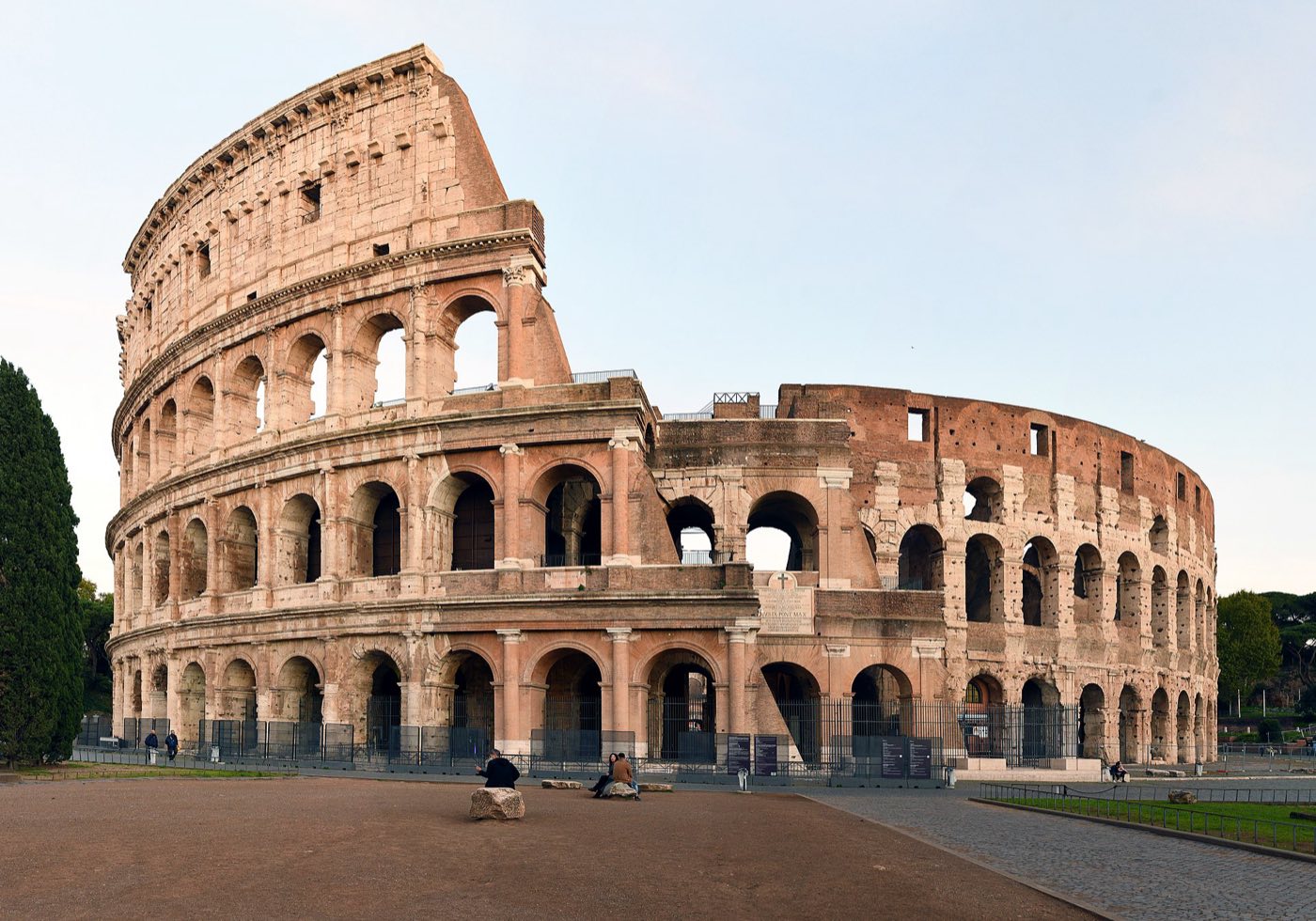
Colosseum and Roman Forum in Rome
The 50,000-seat amphitheater finished in 80 CE still dominates central Rome, and walking its arcades gives you a visceral sense of imperial scale that no textbook delivers. Buy the combined ticket online in advance — it covers the Colosseum, Palatine Hill, and Forum, and skips the longest queue — and aim for the first entry at 8:30 a.m. or late afternoon, when the light turns the travertine gold. Give yourself three hours minimum. The Forum next door is ruin upon ruin; without a guide or a good audio tour you'll miss most of what you're looking at.
Vatican Museums and Sistine Chapel
Seven kilometers of galleries, the Raphael Rooms, and Michelangelo's ceiling at the end — the Vatican Museums are the single greatest concentration of Western art on the planet and the queue outside the walls reflects that. Book the earliest entry slot online, walk straight to the Sistine Chapel first before the crowds thicken, and work your way back through the rest. Silence and no photography are enforced in the chapel. Afterward, St Peter's Basilica next door is free; climb the dome if you have the legs.
Venice's Grand Canal and St. Mark's Basilica
Venice is best understood from the water, and the single-euro vaporetto ride down the length of the Grand Canal on line 1 is the cheapest sightseeing tour in Europe. Ride it once in daylight, once after dark. St Mark's Basilica is free and the gold Byzantine mosaics inside are worth the queue. The city empties after the day-trippers leave around six; book at least two nights so you get the quiet evenings, get lost in the back lanes of Cannaregio or Dorsoduro, and eat cicchetti with an ombra of local wine at a bacaro counter.
Florence's Uffizi Gallery and Duomo
The Uffizi holds Botticelli's Birth of Venus and Primavera, Da Vinci's Annunciation, and enough Titian and Caravaggio to fill a day — reserve a timed ticket in advance or expect a three-hour queue. Climb the 463 steps up Brunelleschi's 1436 dome afterward for the view that every photograph of Florence uses. Tucked between the two, Piazza della Signoria is an open-air sculpture gallery with a Michelangelo David copy standing exactly where the original used to. Walk across Ponte Vecchio at sunset, when the goldsmiths are closing and the Arno turns pink.
Amalfi Coast drive and Positano
Fifty kilometers of switchback road cling to cliffs between Sorrento and Salerno, with villages stacked in pastel layers down to the sea — Positano, Amalfi, Ravello. The drive is extraordinary and genuinely white-knuckle; if you're not confident, take the SITA bus or a private driver and use the time to look out of the window instead. Park in Sorrento and ferry to Positano in summer to skip the worst traffic. Ravello sits higher and quieter, with the Villa Cimbrone's terrace jutting over a 400-meter drop to the water.
Cinque Terre coastal villages
Five fishing villages — Monterosso, Vernazza, Corniglia, Manarola, Riomaggiore — strung along a stretch of Ligurian coast connected by hiking trails and a cliff-hugging train line. The Sentiero Azzurro coastal footpath between them is the classic walk, though sections close after landslides; check the current status at the park office before setting out. Base yourself in Monterosso or Vernazza for a night rather than day-tripping from La Spezia. Dinner is pesto, pasta, and whatever came off the boat that morning.
Pompeii ruins near Naples
The Roman city buried by Vesuvius in 79 CE was preserved under ash in extraordinary detail — frescoed dining rooms, shop counters with their amphorae still in place, plaster casts of the bodies where they fell. Arrive at opening (9 a.m.) and stay three to four hours; the site is enormous and there is almost no shade. Pair it with a half-day climb of Vesuvius itself, whose crater is a 25-minute walk from the upper car park. A guide brings Pompeii alive; going it alone you miss the stories behind the stones.
Tuscany's rolling vineyards and hilltop towns
The countryside between Siena and Florence is what the Renaissance painters were looking out the window at — cypress-lined ridges, Sangiovese vineyards, fortified hilltop towns that have not grown since 1400. Rent a car and spend three or four days driving between San Gimignano's fourteen surviving towers, Montalcino for Brunello tastings, Pienza for pecorino, and Siena for the shell-shaped Piazza del Campo. Stay in a country agriturismo rather than a town hotel — the meals are better and you wake up to roosters.
When to Go
April through June and September through October are the two shoulder stretches everyone who travels to Italy eventually converges on. Days are warm, evenings cool, the Amalfi Coast is open and swimmable from May through September, and prices sit well below August peak. July and August bring European holiday crowds and genuinely uncomfortable heat in Rome, Florence, and the south — many small family-run restaurants close for ferragosto in mid-August. Winter is the quiet season for the art cities: Rome in January is cool, grey, and crowd-free, and Venice in February catches the Carnival at its most atmospheric.
Getting Around
The Trenitalia and Italo high-speed trains are the right way to move between cities — Rome to Florence in ninety minutes, Florence to Venice in two hours, Rome to Naples in a little over an hour. Book a week or two ahead for the best fares. Inside cities, walk — centri storici are compact and designed for feet, not cars, and historic centers are ZTL-restricted traffic zones that will fine you heavily for driving through. Rent a car only for rural Tuscany, Umbria, Sicily, and the Amalfi Coast, and pick it up at a station outside the old city walls. Regional buses fill the gaps trains miss; for the islands, ferries run on the national FerriesOnline and regional operator sites.
Cost & Currency
Italy uses the euro and sits somewhere between France and Portugal on cost — cheaper than Paris or London, pricier than Lisbon or Athens. Expect €1.20–€1.50 for an espresso standing at the bar (double if you sit at a table), €12–€18 for a neighborhood pasta lunch, €30–€50 a head for a proper trattoria dinner with wine, and €100–€180 a night for a comfortable mid-range hotel in Rome, Florence, or Venice. Cards are widely accepted; keep €30–€40 in cash for small bars, market stalls, and rural family-run places. A coperto (cover charge) of €2–€4 per person is standard at sit-down restaurants and is not a tip; service is usually included, and an extra €1–€2 per person for good service is plenty.
Frequently Asked Questions
- How long should I plan for a first trip to Italy?
- Ten to fourteen days is the right length for a first visit — four nights in Rome, three in Florence with a Tuscany day trip, two in Venice, and the rest on the Amalfi Coast or in Cinque Terre. Shorter than a week and you'll move every day; longer is easy to fill once you add Sicily, Puglia, or the Dolomites. Don't try to cram Venice, Rome, and the south into five days; Italy punishes that.
- Do I need to speak Italian?
- No, but a little helps a lot. English is common in tourist-facing hotels, restaurants, and major sites; less so in small towns, the deeper south, and with older people. Buongiorno, buonasera, grazie, prego, and scusi will get you through most exchanges, and Italians are generous with visitors who try. A phrasebook or a translation app fills the gaps.
- What should I know about ZTL driving zones?
- Most Italian historic centers are ZTL (Zona a Traffico Limitato) — limited traffic zones with cameras at the entrances that will fine you €80–€200 per pass, billed to your rental car months later. The signs are small and the rules vary by city and time of day. The simple solution: park outside the old walls at a public lot or your hotel's garage and walk in. Hotels can register your plate for temporary access if you're staying inside the zone.
- Is tap water safe to drink?
- Yes — tap water is potable across Italy and often tastes excellent, particularly in Rome where it comes off the aqueducts from the Apennines. The many public fountains (nasoni in Rome) are drinkable; fill your bottle as you walk. Restaurants will push bottled water on you automatically — asking for acqua di rubinetto (tap water) is unusual but not offensive.
- Is Italy safe for travelers?
- Yes — violent crime is rare and tourist areas are well patrolled. Pickpocketing is the real concern, particularly on Rome's Metro A line, around Termini station, on Florence's bus lines, and anywhere with a crowd around a pickpocket's preferred sightlines — a wallet in a back pocket or an open bag. Keep your phone and wallet in a front pocket or zipped, and you'll be fine.
Plan a Trip to Italy
Have you been to Italy?
Track 195 countries, 50 states & 63 national parks on your map