France
- Capital
- Paris
- Population
- 67.8M
- Currency
- EUR
- Languages
- French
Overview
The most visited country in the world, and with reason. France has set the benchmark for European travel for roughly two centuries — the cuisine, the wine regions, the museums, the coastlines, the Alps, the cathedrals, the villages that look exactly the way you already pictured them. Travelers come for the Eiffel Tower's hourly sparkle over Paris at dusk, the lavender fields of Provence in July, the Loire chateaux, and the Normandy beaches that changed the twentieth century. What surprises first-time visitors is how different the regions feel from each other. Paris is a city of long stone boulevards and a river cutting through it; the Cote d'Azur is a Mediterranean light that turns buildings ochre at four in the afternoon; Brittany is Celtic and wet and serves cider instead of wine; Alsace could be mistaken for Germany across a bowl of choucroute; the Basque country in the southwest runs on pintxos and an entirely different language. France is not a weekend destination — it is a country you return to for a decade and still have not quite finished. What holds the country together is a shared seriousness about food, landscape, and craft. A two-hour lunch in a small village bistro is not an indulgence, it is the architecture of the day. Bread from the boulangerie, cheese and wine from markets you wander into without planning, and long driving days through vineyards and sunflower fields are the grammar of a French trip. Start with Paris and one region — Provence, the Loire, Burgundy — and give yourself permission to come back.
Things to Do
Eiffel Tower and Champs-Elysees in Paris
The Eiffel Tower is obvious for good reason, and the best way to experience it is not from the top but from below at dusk — grab a bottle of wine and a baguette, sit on the Champ de Mars, and wait for the hourly five-minute sparkle that runs from sunset to 1 a.m. The Champs-Elysees running from the Arc de Triomphe down to Place de la Concorde is the country's grand ceremonial avenue, lined with cafes and shops; walk it once for the scale, then head a few blocks north or south for the neighborhoods Parisians actually live in. Book tower tickets online weeks ahead to skip the queue.
Palace of Versailles
An hour southwest of Paris by RER C train, Louis XIV's seventeenth-century palace is the set-piece of French absolutism — the Hall of Mirrors, the royal apartments, the 800-hectare formal gardens designed by Le Notre. Arrive at opening or in late afternoon to avoid the worst crush, and budget a full day: the palace interior takes two hours, the gardens another three if you want to walk to the Grand Trianon and Marie-Antoinette's hamlet. The Musical Fountain shows on summer Saturdays turn the gardens into the spectacle they were designed to be.
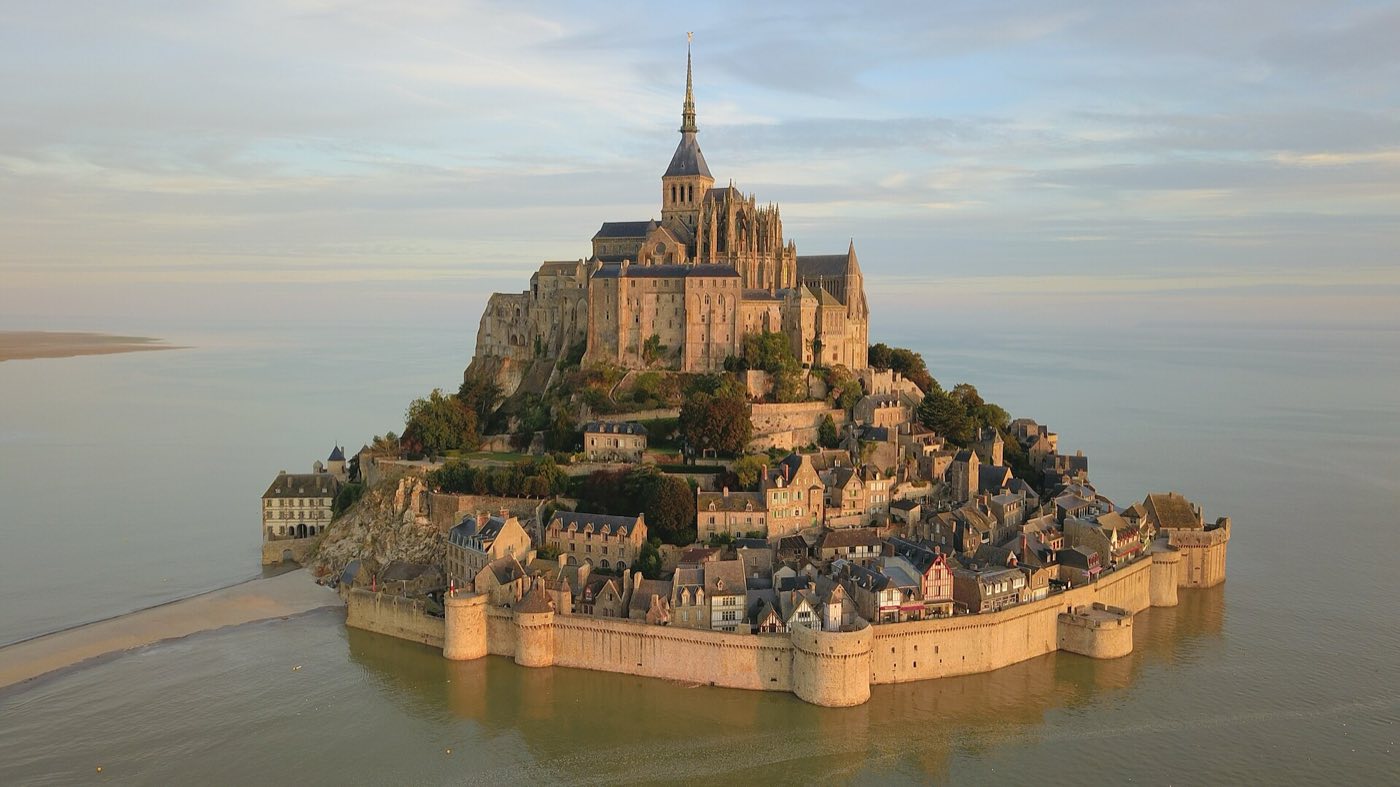
Mont Saint-Michel
A medieval abbey rising on a granite tidal island off the Normandy-Brittany border, reached by a footbridge across the tidal flats. The Romanesque and Gothic abbey at the summit climbs in layers — cloister, refectory, scriptorium, crypt — and the views from the ramparts across sheep-grazed salt marshes are better than any postcard. Stay overnight in one of the handful of hotels inside the walls to experience the village after the day-trippers leave; the Mont takes on a quieter, almost monastic character once the gates effectively close at sunset.
French Riviera and Nice
The Cote d'Azur runs from Marseille east to the Italian border and holds the Mediterranean light, the palm-lined Promenade des Anglais in Nice, the pastel medieval town of Eze perched above the sea, and the yacht harbors of Monaco and Villefranche. Nice itself is the logical base — a real city with food markets, museums, and an airport — from which day trips to Antibes, Cannes, and the Matisse Chapel in Vence are easy by train or rental car. Swimming is from pebbled beaches rather than sand, and the water is at its best from June through September.
Loire Valley chateaux
A hundred-kilometer stretch of the Loire River west of Orleans holds the densest concentration of Renaissance chateaux in the world — Chambord with its double-helix staircase attributed to da Vinci, Chenonceau bridging the Cher River on arches, Azay-le-Rideau reflecting perfectly in its moat, and a dozen more. Base in Tours or Amboise, rent bikes from the excellent Loire a Velo network, and spend three days riding between the chateaux on dedicated paths through vineyards and villages. Spring and early fall are the best windows; August can be uncomfortably hot.
Provence lavender fields
From late June through mid-July, the plateaus around the Luberon and Valensole in Provence turn purple with flowering lavender, and the drive between Sault, Valensole, and the Abbey of Senanque near Gordes is one of the great summer routes in Europe. Go early in the morning for photography and to beat the tour buses. Beyond the flower season, Provence still rewards visits for the Roman ruins in Arles and Orange, the Cezanne landscapes around Aix, and the markets of villages like Roussillon and Gordes that have become icons without losing their weekly-market rhythm.
Normandy D-Day beaches
The 80-kilometer stretch of coast from Utah Beach to Sword Beach is where the Allied invasion of occupied Europe began on June 6, 1944, and it is now a network of museums, memorials, and preserved German bunkers that makes the scale of the operation tangible. The American cemetery above Omaha Beach with 9,388 white crosses and the crater-pocked ground at Pointe du Hoc are the two most affecting stops. Day tours run from Bayeux — the logical base, with its own remarkable 70-meter medieval tapestry — and a full-day guide is worth the cost for context.
Bordeaux and Burgundy wine regions
France's two flagship wine regions each reward a three- or four-day visit. Bordeaux, on the Atlantic southwest, is built around Cabernet Sauvignon and Merlot blends across chateaux in the Medoc, Saint-Emilion, and Pomerol; the city itself has been beautifully restored along the Garonne. Burgundy, centered on Beaune two hours southeast of Paris, produces the world's reference Pinot Noir and Chardonnay from postage-stamp vineyards where the producer's name on the label matters more than the region. Neither region is priced for casual visits, but the wine-country lunches at places like La Table du Chef Royal Champagne justify the splurge.
When to Go
April through June and September through mid-October are the sweet spots — mild weather, long daylight, gardens and vineyards at their best, and shoulder pricing on hotels and flights. Paris is pleasant year-round; December adds Christmas markets and illuminations. July and August bring the Riviera into full season and the lavender into bloom, but cities like Paris empty of locals and fill with tour groups, and August in Provence can be brutally hot. Skiing in the French Alps runs December through April, with Chamonix, Val d'Isere, and Courchevel holding the biggest weeks in February and early March.
Getting Around
The TGV high-speed rail network connects Paris with Lyon, Marseille, Bordeaux, Strasbourg, and most major cities in two to four hours — book Prem's fares online through SNCF Connect one to two months ahead for substantial discounts. Rental cars are the right call for the Loire chateaux, Provence villages, Burgundy vineyards, Brittany coast, and Normandy beaches, where trains will not reach the small places that matter. Within Paris, the metro, RER, and buses share a single Navigo weekly pass that is the best value for stays of three days or more. Autoroutes use tolls; the system is easy but can add up on long drives. In cities, ride-hailing apps work and are cheaper than hotel taxis.
Cost & Currency
France uses the euro and runs on the expensive end of Western Europe, though less so than Switzerland or the Nordic countries. Expect €3–€4 for an espresso at a sit-down cafe, €18–€28 for a prix-fixe lunch at a neighborhood bistro, and €150–€250 a night for a mid-range hotel room in Paris or a comparable city. Michelin-starred meals run €90–€400 per person; by contrast, a boulangerie lunch of baguette, cheese, and a small wine costs under €10. Cards are universal and contactless payment is standard; keep €30–€50 in cash for small-village markets and family-run gites. Tipping is light — service is included by law, and rounding up to the nearest euro or leaving 5 percent for notable service is sufficient.
Frequently Asked Questions
- Do I need to speak French?
- A few polite phrases help considerably. English is widely spoken in Paris, the Riviera, and any tourist-facing business, but outside those areas French-only service is common. Learning bonjour, merci, s'il vous plait, parlez-vous anglais, and the words for the numbers one through ten will smooth almost every interaction. The stereotype of rudeness toward non-French speakers has faded; starting a conversation with bonjour rather than an English opener is the single biggest thing you can do to change how you are received.
- How many days do I need for a first trip?
- Ten days is comfortable for Paris plus one region. Four nights in Paris to do the city properly, three nights in the Loire Valley or Normandy if you want chateaux or history, and three nights in Provence, Burgundy, or the Riviera for food and landscape. Shorter than a week and you will wish you had another few days; longer is easy to fill. France rewards return visits more than almost any country in Europe.
- Is it better to visit Paris or the regions first?
- Paris first if you are flying in and out of Charles de Gaulle, which is logical for most travelers. Fly in, spend three to four nights jet-lag-walking through museums and neighborhoods, then take a TGV or rental car out to your chosen region where the pace slows and the meals stretch. Ending in Paris is tempting for last-minute shopping but leaves you navigating city logistics at the end of a trip when you are tired.
- What's the best way to get from Paris to the Riviera?
- The TGV from Paris Gare de Lyon to Nice takes about 5 hours 45 minutes, with stops in Avignon, Aix-en-Provence, and Marseille — a single scenic journey that lets you work or watch the Rhone and then the Mediterranean roll by. Book one to two months ahead for fares as low as €50. Flying is faster door-to-door only marginally, and loses the Provence crossing that is part of the trip.
- Is the tap water safe to drink?
- Yes, tap water is safe and meets EU standards throughout France. Restaurants are required to provide a free carafe d'eau if you ask — this is une carafe d'eau, s'il vous plait — and there is no social awkwardness in ordering it alongside wine. Paris tap water in particular is tested constantly and is entirely fine; bottled water is widely available if you prefer the taste.
Plan a Trip to France
Have you been to France?
Track 195 countries, 50 states & 63 national parks on your map