Georgia
- Capital
- Tbilisi
- Population
- 3.7M
- Currency
- GEL
- Languages
- Georgian
Overview
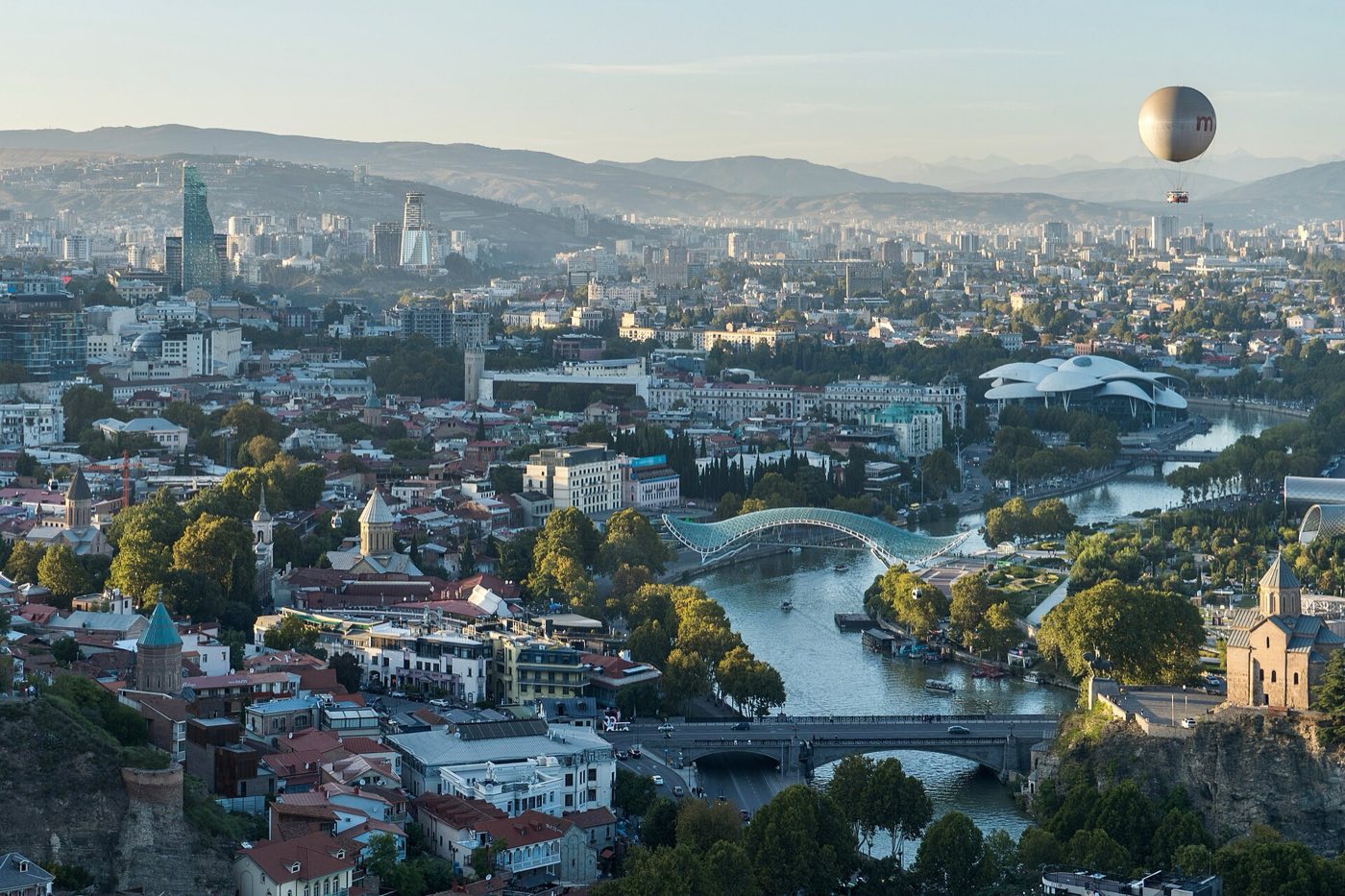
A South Caucasus nation wedged between the Black Sea and the Greater Caucasus range, Georgia is a country of medieval cave monasteries, amber-colored orange wines fermented in clay pots buried in the ground, and some of the most dramatic high-mountain scenery in Europe. Travelers come for Tbilisi's wood-balconied old town, the stone tower villages of Svaneti, and a wine culture that has been running more or less continuously for 8,000 years. You feel the layering quickly. The capital sits in a cleft along the Mtkvari River with cliff-top churches, Soviet-era apartment blocks, an Ottoman-tiled bath district, and a new glass pedestrian bridge all visible in a single sightline. An hour out of Tbilisi you're among stone-built villages where grandmothers still make their own cheese, and three hours more gets you to Kazbegi with Mount Kazbek's 5,000-meter summit above a stone church on a ridge — one of the images every visitor ends up photographing. Georgia rewards travelers who like to eat and drink seriously, walk in mountains, and poke into corners of history that are not in the standard European syllabus. It is affordable, visas are straightforward for most nationalities, and English is common among younger Georgians in the cities. Come with time for long meals — the supra, or Georgian feast, is a national institution — and the stamina for roads that corkscrew up passes and occasionally give up on asphalt entirely once you're in the high country.
Things to Do
Tbilisi's Old Town and sulfur baths
The historic core of the capital folds around the base of Narikala Fortress and the Mtkvari River, with wood-balconied houses tilting over cobbled lanes and the domes of the sulfur bath district rising in the lowest part of the neighborhood. Book a private room at Orbeliani or Bathhouse No. 5 for an hour — the sulfur is pungent, the heat is real, and a kisa scrub from the bath attendant is the local tradition. Afterward, eat khinkali on Erekle II Street.
Gergeti Trinity Church beneath Mount Kazbek
A three-hour drive north of Tbilisi up the Georgian Military Highway ends at Stepantsminda, where a stone chapel from the fourteenth century sits alone on a ridge with 5,033-meter Mount Kazbek rising behind it. The hike up takes about an hour and a half from the village and rewards you with the single most photographed view in the Caucasus. A 4x4 ride up is available if you'd rather save the legs. The drive itself is part of the experience — Jvari Pass, stone shepherds' villages, the Ananuri fortress on a reservoir.
Vardzia cave monastery complex
Carved into a cliff face in the south of the country near the Turkish border, Vardzia is a twelfth-century cave city built by Queen Tamar with 600 rooms across nineteen terraced levels — living quarters, churches, wine cellars, refectories all dug from the rock. An earthquake in 1283 sheared off the front face and exposed the interior. You can walk through a network of tunnels and chambers; the frescoes in the Church of the Dormition are the highlight. Pair it with a night in Akhaltsikhe at Rabati Castle.
Svaneti region towers and alpine villages
The high-mountain province of Upper Svaneti is the cultural crown jewel of Georgia — stone defensive towers built between the ninth and twelfth centuries still stand in villages like Ushguli at 2,200 meters, one of the highest continuously inhabited settlements in Europe. Mestia is the main base and hub for four-day treks to Ushguli, shorter day hikes to glacier viewpoints, and winter skiing at Hatsvali. Getting there is a long drive or a small plane from Tbilisi; the landscapes justify both.
Kakheti wine region and qvevri tastings
Two hours east of Tbilisi, Kakheti is Georgia's wine heartland and the best place to taste amber qvevri wines made by fermenting grape juice on its skins inside clay vessels buried underground. Sign up for tastings at small family-run marani in Sighnaghi and Telavi, buy Saperavi and Rkatsiteli by the bottle, and eat a long lunch of mtsvadi and khachapuri at a village table. UNESCO listed the qvevri method as intangible cultural heritage in 2013; spending an afternoon with it is one of the best-value experiences in the country.
David Gareja monastery in the semi-desert
On the semi-desert border with Azerbaijan about two hours southeast of Tbilisi, David Gareja is a sixth-century cave monastery complex strung along a rocky ridge. The lower Lavra is still a working monastery; the upper Udabno caves contain faded but remarkable frescoes and command sweeping views into Azerbaijan. The road in is unpaved in parts and a 4x4 or a Tbilisi day-tour van is the practical way to visit. Wear sturdy shoes and go early to beat the sun.
Uplistsikhe ancient rock-hewn town
A Bronze Age rock-cut city on the Mtkvari River an hour west of Tbilisi, Uplistsikhe was inhabited for nearly three thousand years before being abandoned after Mongol raids. Pagan temples, a large hall with a coffered ceiling carved from rock, wine cellars, and a small basilica are all visible across the terraced site. Combine it with a visit to Stalin's birthplace museum in Gori, fifteen minutes away — an oddly unreconstructed piece of Soviet hagiography that is worth seeing for what it refuses to say.
When to Go
May and June and September and early October are the sweet spots — warm in Tbilisi and the lowlands, with long hiking days in Svaneti and Tusheti before the passes close. July and August are the peak months for the high mountains, when the Tusheti road is open and all the alpine treks are running, though Tbilisi itself gets hot and dusty. Winter is cold and snowy and the main draw is skiing at Gudauri and Bakuriani from late December through March. Wine harvest season in Kakheti falls in late September and is an excellent time to visit the region — expect every family marani to be in full production.
Getting Around
Tbilisi, Kutaisi, and Batumi are linked by cheap and regular marshrutka minibuses and by a slower but more comfortable train network — the overnight train from Tbilisi to Batumi is a reliable option in summer. Renting a car makes sense for Kakheti, Kazbegi, and the smaller corners of the south, but snow closes the road to Stepantsminda in winter and the drive to Svaneti is long and technical. Within Tbilisi, the metro plus taxis on the Bolt app will get you anywhere cheaply. For Svaneti, a small plane from Tbilisi to Mestia beats the eight-hour drive if the schedule works. Border crossings with Armenia, Azerbaijan, and Turkey are straightforward by shared taxi.
Cost & Currency
Georgia uses the lari (GEL), and prices remain among the best values in Europe — roughly half what you'd pay in Turkey and a third of what western Europe charges. Expect 15–30 lari (€5–€10) for a full sit-down lunch with wine, 150–300 lari a night for a comfortable mid-range hotel in Tbilisi or Batumi, and about 5–7 lari for a marshrutka between major towns. Cards are accepted widely in Tbilisi and the resort coast, though small guesthouses and rural marani are cash only. ATMs are plentiful. Tipping is modest — 10% at sit-down restaurants if service isn't already added, round up taxis, and tip guides a fair share at the end of a trip.
Frequently Asked Questions
- Do I need a visa to visit Georgia?
- Citizens of the EU, UK, US, Canada, Australia, and many other countries can enter visa-free for up to one year — Georgia has one of the most generous visa policies in the region. You'll need a passport valid for the duration of your stay. Overland entries from Armenia, Azerbaijan, and Turkey are straightforward and commonly used by backpackers on the Caucasus route.
- Is Georgia safe for travelers?
- Georgia is one of Europe's safer countries, with very low violent crime and a strong tradition of hospitality. The disputed regions of Abkhazia and South Ossetia are off-limits for independent travel and should be avoided. In cities, standard urban caution applies for pickpocketing in crowded metro stations and touristy bars; solo travelers and women generally report Georgia as comfortable.
- What should I eat in Georgia?
- Khachapuri — the boat-shaped Adjaran version with a runny egg is the icon — khinkali dumplings eaten by hand, mtsvadi (grilled meat skewers), and the walnut-based sauces of the west all belong on the list. Wash it down with Saperavi red or a qvevri-aged amber wine. The supra, a multi-hour feast with toasts given by a tamada, is the cultural form and worth experiencing if you're invited.
- How long should I plan for a first trip?
- Eight to twelve days is comfortable for a first visit — three nights in Tbilisi including side trips to Mtskheta and Uplistsikhe, two in Kakheti for wine, two or three in Kazbegi or Svaneti for mountains, and optional time on the Black Sea at Batumi. A full two weeks lets you add Vardzia and the south or go deeper into the Caucasus.
- Do people speak English in Georgia?
- English is widely spoken among younger Georgians, in Tbilisi cafes, at most hotels, and at tour operators. Russian is understood by many in the older generation, and Georgian is the only language in rural areas. A translation app and a few learned phrases will carry you through most everyday interactions outside the big cities.
Plan a Trip to Georgia
Have you been to Georgia?
Track 195 countries, 50 states & 63 national parks on your map