Gabon
- Capital
- Libreville
- Population
- 2.4M
- Currency
- XAF
- Languages
- French
Overview
A Central African country that is almost entirely rainforest — roughly 85% of the land is still under canopy — Gabon is the rare equatorial nation that turned most of its territory into national parks. Visitors come for forest elephants that walk out of the treeline onto empty Atlantic beaches, lowland gorillas tracked on foot in Loango, and the sheer scale of a jungle country that has barely been logged. You notice the quiet first. Libreville is small for a capital, strung along a humid Atlantic coastline, and thirty minutes out of the city the road gives way to red dirt and wall-to-wall green. Distances are long, flights are occasional, and the country effectively runs on chartered bush planes and lodge transfers. What you trade for that inconvenience is wildlife viewing at the intimacy of walking safaris rather than the convoy lines of East Africa, and guides who grew up in villages bordering the parks they work in. Gabon rewards travelers who want serious wildlife without Instagram-backed crowds and are willing to pay for the logistics that entails. It is not a budget destination — lodges are flown into, permits aren't cheap, and French is essential outside a handful of hotels. Come with a tolerance for rain in any month, patience for delays, and a gorilla-tracking permit booked months ahead. What you get back is one of the last honest pieces of African wilderness still running.
Things to Do
Loango National Park — elephants and hippos on the beach
The park on the central Atlantic coast is the image of Gabon the world reaches for: forest elephants sauntering across white sand, buffalo grazing in the tideline, hippos surfing in the shore break. You reach it by small plane from Libreville into a bush strip, and you move around it by boat, 4x4, and foot. Lodges are rustic and fly-in only, which keeps numbers small. Gorilla tracking here is conducted with habituated lowland groups and is physically demanding — early starts, humidity, and a few hours of bushwhacking to reach them.
Lopé National Park UNESCO site
Lopé sits inland along the Ogooué River and is reached by overnight train from Libreville — a scenic thirteen-hour ride that cuts through the forest and drops you at the park's edge. The landscape here is unusual for equatorial Africa: a mosaic of savanna and rainforest that predates the last ice age and supports mandrills, forest elephants, and a remarkable primate diversity. Combine it with a visit to the archaeological rock engravings that earned the UNESCO listing in 2007.
Ivindo National Park and Kongou Falls
Deep in the northeast, Ivindo protects some of Central Africa's most photogenic waterfalls and the best-known bais — natural forest clearings where elephants, sitatunga antelope, and gorillas come to drink mineral-rich water. Langoué Bai is the standout, accessed by a camp run with very limited beds. Kongou Falls thunders through the jungle nearby. Access is by charter flight plus river pirogue, and the park is for travelers willing to invest several days.
Pointe-Denis beach near Libreville
A short boat ride across the Komo Estuary from the capital lands you on a long sandbar with guesthouses, seafood restaurants, and empty beach stretching toward the horizon. It's the easy day trip from Libreville — or an overnight stop if you want a quieter introduction to the coast. Turtles nest here in season, and a handful of operators run short boat excursions into the mangrove channels to the south.
Pongara National Park mangroves
Just south of Libreville across the estuary, Pongara protects tidal mangrove forest, nesting leatherback turtles from October through April, and a coastline that sees almost no tourism. A night expedition to watch leatherbacks haul themselves up the sand to lay eggs — they can weigh half a ton — is one of the genuine set-pieces of Gabonese travel. Camps are basic and managed in cooperation with the park authority.
Crystal Mountains rainforest
The Monts de Cristal range in the northwest is thick, steep, and biologically rich — an Important Bird Area and one of the more accessible slices of Gabon's inland forest for naturalists who don't want to fly everywhere. Infrastructure is thin, but a few ecolodges on the fringes give you access to waterfalls, orchid-heavy forest walks, and the chance to hear African grey parrots overhead. Plan with a guide out of Libreville.
Libreville's coastal promenade and markets
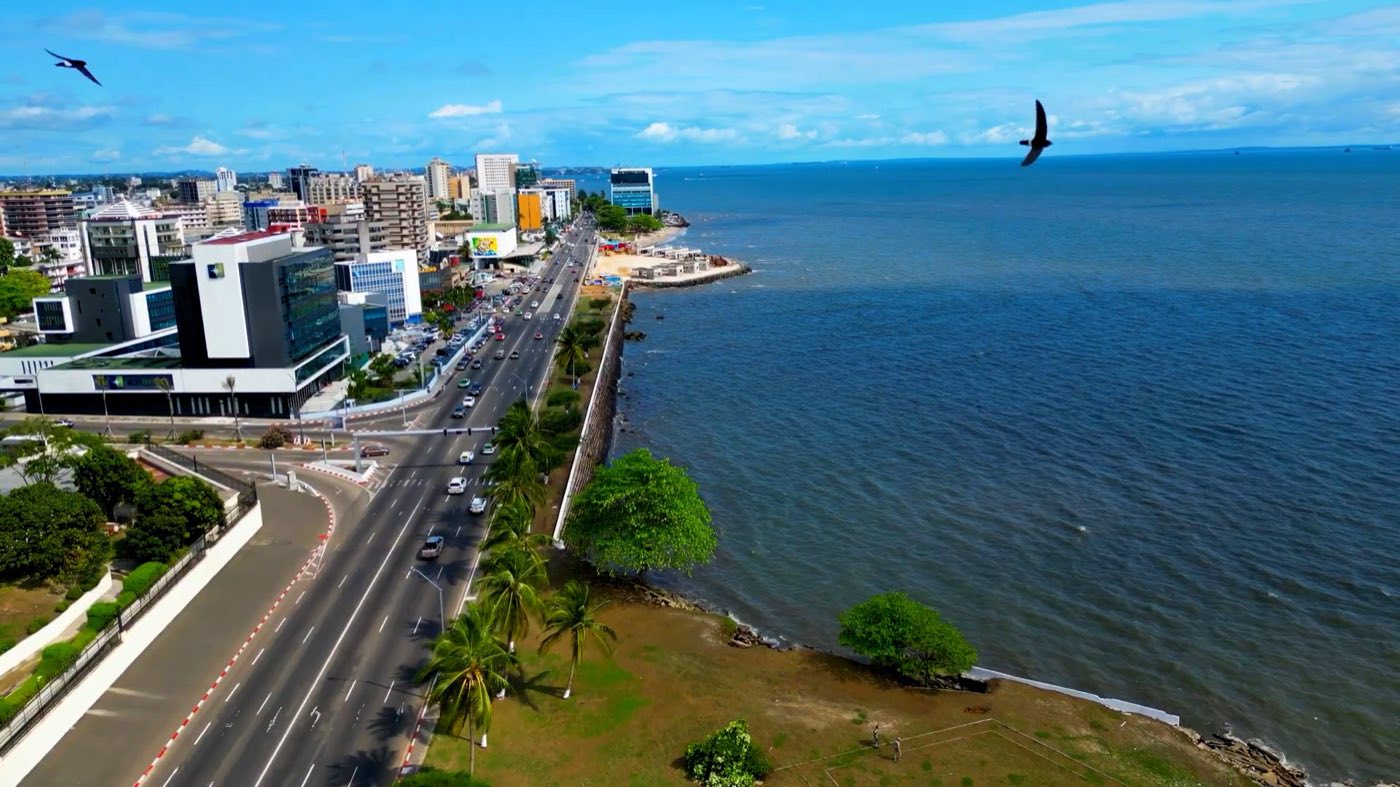
The capital is not the highlight of a Gabon trip, but it's where most itineraries start and end, and it's worth a day. Walk the Bord de Mer at dusk, eat grilled capitaine at a beachfront maquis, and browse the Marché du Mont-Bouët for fabric, produce, and masks. The National Museum holds a small but excellent collection of ceremonial Fang and Punu art. Use the day to recover from or prepare for the bush.
When to Go
June to September is the main dry season and the easiest window for beach and wildlife access — Loango's forest elephants and gorillas are more reliably seen and the light for photography is better. December and January offer a shorter dry stretch useful for travelers who can only come in winter. The long rains from February through May make some roads impassable and many lodges close. Leatherback turtle nesting on the Pongara coast runs from October through April, with peak activity in December and January, making the short dry season an attractive window if wildlife is the priority.
Getting Around
Movement within Gabon relies on a mix of bush flights, the Trans-Gabon railway, and long drives on variable road surfaces. Charter flights into national parks are the standard for Loango and Ivindo and are almost always arranged through your lodge. The overnight train from Libreville to Lopé and Franceville is slow but reliable and the best way to see the country's interior on the cheap. Within Libreville, taxis run fixed routes for shared fares or can be hired privately. Outside the capital a car with driver is the realistic choice — self-driving is possible on paved routes but not recommended once the tarmac ends. Budget for long transit days and build in buffer time.
Cost & Currency
Gabon uses the Central African CFA franc (XAF), pegged to the euro at 655.957 to 1, and is genuinely expensive by African standards — oil wealth has lifted urban prices well above neighbors. Expect 4,000–8,000 CFA (€6–€12) for a sit-down lunch in Libreville, 70,000–150,000 CFA a night for a mid-range hotel room, and premium rates for bush lodges that often run US$400–US$800 per person per night all-inclusive. Cards are accepted at larger Libreville hotels and at a few supermarkets, but almost nowhere else; carry cash in small denominations. Tipping is modest — a few thousand CFA at the end of a good meal or a few days with a guide is appropriate.
Frequently Asked Questions
- Do I need a visa to visit Gabon?
- Most travelers need a visa, and Gabon's e-visa system lets you apply online and collect on arrival at Libreville airport after pre-approval. Processing takes about 72 hours. A yellow fever vaccination certificate is required on entry, and you should carry a printout of your e-visa approval with you.
- Is Gabon safe for travelers?
- Gabon is one of Central Africa's more stable countries, and tourist infrastructure around Libreville and the national parks is well managed. Petty theft occurs in Libreville markets and at transit hubs, so standard urban caution applies. Avoid unlit areas at night and use registered taxis rather than flagging down unknowns on the street.
- How much does gorilla tracking cost in Gabon?
- Permits for habituated lowland gorilla tracking in Loango run around US$400–US$500 per person per day, separate from lodge and flight costs. The total cost of a Loango visit including charter flights and two to three nights of tracking typically lands in the US$3,000–US$5,000 range per person. Book well in advance — capacity is very limited.
- Do people speak English in Gabon?
- French is the official language and the working language of daily life, and English is rare outside international hotels and some of the higher-end lodge staff. A working French vocabulary will make a significant difference to the trip, especially for navigating Libreville, dealing with transport, and interacting with guides outside the biggest lodges.
- What vaccinations and health precautions are needed?
- Yellow fever vaccination is legally required and you'll be asked for the certificate. Routine boosters plus typhoid and hepatitis A are strongly recommended, and malaria is present year-round across the whole country — prophylaxis from a travel clinic is essential. Drinking water should be bottled or filtered outside the main Libreville hotels.
Plan a Trip to Gabon
Have you been to Gabon?
Track 195 countries, 50 states & 63 national parks on your map