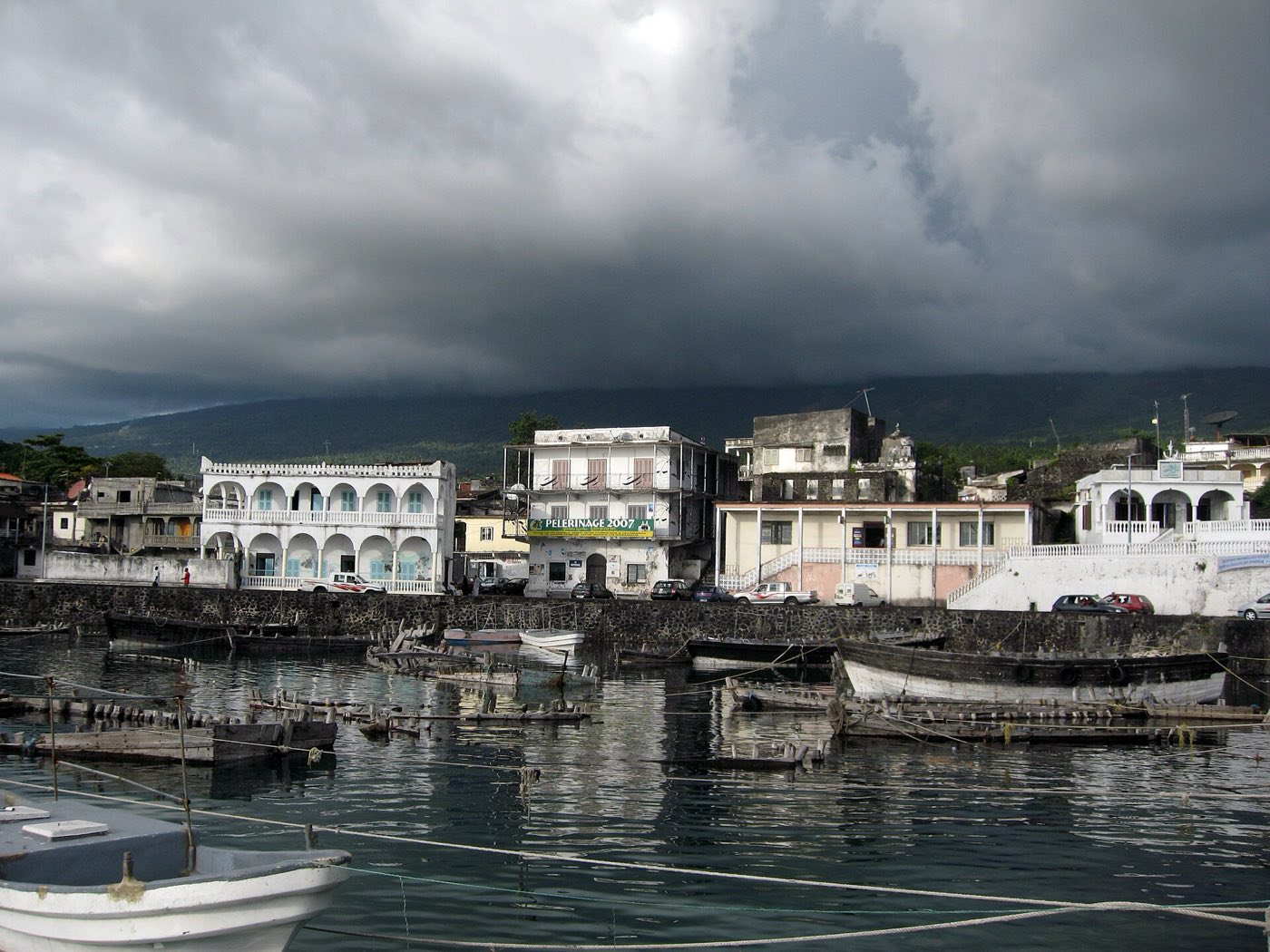
Comoros
- Capital
- Moroni
- Population
- 888K
- Currency
- KMF
- Languages
- Comorian, Arabic, French
Overview
A volcanic archipelago of three main islands — Grande Comore, Mohéli, and Anjouan — floating in the Mozambique Channel between Madagascar and the East African mainland, the Comoros is one of the least-visited island nations on earth. Travelers come for the active crater of Mount Karthala, the nesting sea turtles of Mohéli Marine Park, and the Swahili-Arabic old quarters of Moroni that most of the outside world has never heard of. What you notice is the quiet. You land in Moroni on a small prop plane that flies in from Dar or Nairobi, and the city wakes up slowly in the morning with the call to prayer drifting over tin roofs, fishermen on the black lava shoreline pulling in the night's catch, and women in colorful shiromani scarves walking children to school. The pace rarely shifts out of first gear. A café coffee takes twenty minutes; a boat ride to Mohéli may or may not happen today depending on the swell. You either surrender to it or you do not go to the Comoros. This is not polished island travel. Infrastructure is thin, ATMs work some days and not others, power cuts are routine, and English is rarely spoken — French and Shikomori are the languages you need. What you get in return is an Indian Ocean archipelago with reefs and rainforest and crater lakes, where you may well be the only foreign visitor on the beach. Go with patience, cash in euros, and a willingness to let the plan change.
Things to Do
Mount Karthala active volcano summit trek
At 2,361 meters, Karthala is one of the largest active volcanoes in the world, with a caldera nearly three kilometers across at its summit on Grande Comore. The hike is a serious two-day effort — up through plantations and cloud forest, a cold night at a basic hut near the rim, then a sunrise walk to the caldera edge where steam still rises from vents on the crater floor. You go with a local guide arranged in Moroni; bring warm layers, a headlamp, and two liters of water per day. It last erupted in 2007, so respect the mountain.
Mohéli Marine Park turtle nesting
Mohéli is the smallest and least-developed of the three islands, and its southern coast forms a marine park where green turtles still nest on Itsamia beach in numbers rare anywhere else. Between July and February you can join a community-run night walk that follows turtles up the sand as they dig and lay; the operation is careful and low-impact, limited to a handful of visitors per night. Sleep in one of the village ecolodges — simple rooms, rice-and-fish dinners, the Milky Way overhead — and spend days snorkeling reefs that see almost no traffic.
Itsandra Beach near Moroni
A short drive north of the capital, Itsandra is a protected crescent of black-and-tan volcanic sand with a small hotel at one end and calm water most days for swimming. Families come on Fridays after prayers; the rest of the week it is often nearly empty. Go late in the afternoon, order grilled fish and a cold Djawane at the beach bar, and stay through sunset over the water as the lights of Moroni flicker on to the south. It is the easiest half-day on Grande Comore.
Moroni's old medina and Friday Mosque
The old medina of Moroni is a compact warren of narrow lanes, carved Swahili doorways, and whitewashed walls trapped between the volcanic coast and the newer town. At the waterfront stands the Ancienne Mosquée du Vendredi, the Old Friday Mosque, built in the fifteenth century with a minaret that still calls the city to prayer five times a day. Non-Muslims cannot enter but the exterior and the small plaza around it give you the feel of the place. Wander through the surrounding alleys for spice vendors, schoolrooms, and tailors, and stop for a cup of cardamom coffee in a small café.
Mohéli island's reefs
The reefs around Mohéli are what a healthy Indian Ocean reef looked like thirty years ago — coral gardens at five meters depth, schools of fusilier and snapper, green turtles cruising through with almost no divers to bother them. Base yourself at Laka Lodge on the south coast and arrange snorkeling or dive trips to nearby pinnacles and to Nioumachoua Bay. Humpback whales pass close to shore from July through October, and a good skipper can often position you quietly enough to hear them breathing on the surface.
Chomoni Beach on Grande Comore
On the east coast of Grande Comore, about an hour from Moroni, Chomoni is a small stretch of pale sand flanked by black lava rock where the Karthala flows hit the sea centuries ago. The juxtaposition is the whole point — white sand, black boulders, green palms, blue water — and the snorkeling over the lava shelves at either end of the bay is surprisingly good. There are no facilities, so bring water, snacks, and sunscreen. A taxi day-hire from Moroni runs around 30,000 to 40,000 KMF with waiting time.
Livingstone's fruit bat colony on Anjouan
Anjouan is the greenest of the three islands, dripping with cloves and ylang-ylang plantations, and its cloud forests hold one of the last populations of Livingstone's fruit bat — a critically endangered species with a wingspan approaching a meter and a half. A half-day hike from Moya village takes you to a roosting site where the bats hang in large trees; the Dahari conservation organization can arrange guides who know the current colony locations. Combine it with a stop at the Mutsamudu citadel and a swim at Bimbini on the west coast.
When to Go
May to October is the cool, dry southern-winter season and the right time to come — pleasant temperatures, calmer seas for interisland boats, and clear skies for hiking Karthala. July through October adds humpback whales passing through the channel. November to April is the hot, wet season with cyclone risk and heavier rain, though water temperatures are warmer for diving. Turtle nesting on Mohéli runs from July through February with a peak around October and November. Ramadan timing shifts each year and changes restaurant and ferry schedules noticeably.
Getting Around
Small propeller flights on AB Aviation link the three islands several times a week; book in person at the Moroni airport counter, because the online systems are unreliable, and expect schedule changes with the wind. An alternative is the interisland boat — the passage is cheap, takes most of a day, and is rough. On any single island, a shared taxi-brousse runs the coast roads for a few hundred KMF, and a private taxi hire for a full day sits around 25,000–40,000 KMF. Roads on Grande Comore are decent; on Anjouan and Mohéli they are rougher and a 4x4 is worth the extra cost.
Cost & Currency
The Comoros uses the Comorian franc (KMF), pegged to the euro at around 492 to 1. It is not cheap in the way some African destinations are — imported goods carry a premium and flights between islands add up — but local food and transport are very affordable. A plate of poulet aux oignons at a roadside restaurant runs 2,000–3,000 KMF, a small hotel room in Moroni 30,000–60,000 KMF a night, a decent ecolodge on Mohéli 40,000–70,000 KMF with meals. Bring euros in cash — ATMs are unreliable outside Moroni, cards are accepted almost nowhere, and larger hotels can change currency for you. Tipping is modest — a few thousand francs for a driver or guide at the end of a good day.
Frequently Asked Questions
- Do I need a visa to visit the Comoros?
- Most travelers are issued a visa on arrival at Prince Said Ibrahim International Airport in Moroni for around 30 euros for a stay of up to 45 days. Bring the cash in euros, not dollars or francs, and have a printout of your onward flight. The process takes about ten minutes at a small counter just past immigration.
- Is the Comoros safe for travelers?
- Yes, generally — violent crime against visitors is very rare and the islands are politically stable at the time of writing. The practical hazards are more about infrastructure: underpowered boats in rough seas, unlit roads at night, occasional political demonstrations around elections. Dress modestly — the Comoros is conservatively Muslim — and women should cover shoulders and knees outside beach resorts.
- What languages do people speak?
- Shikomori is the everyday language, French is the administrative and business language, and Arabic is used in religious contexts. English is very limited — even at hotels you should not count on it beyond the most basic phrases. Bring a French phrasebook and a translation app with offline French loaded, and the trip will go considerably more smoothly.
- Can I pay with a card or do I need cash?
- Cash, mostly. Only a handful of the larger hotels in Moroni accept credit cards and often with a surcharge. ATMs exist but are unreliable and sometimes empty for days. Carry euros in small denominations and change them at banks or licensed bureaus in Moroni; avoid street moneychangers. Budget cash for the whole trip including interisland flights before you leave Moroni.
- What should I pack for the Comoros?
- Lightweight, modest clothing that covers shoulders and knees for town; swimwear and a rash guard for the reefs; sturdy shoes and warm layers if you plan to summit Karthala, where the night at the hut is genuinely cold. A headlamp is essential for power cuts and predawn starts. Bring any prescription medications for the whole trip — pharmacies in Moroni are basic and stock is unpredictable. Reef-safe sunscreen is the right choice around the marine park.
Plan a Trip to Comoros
Have you been to Comoros?
Track 195 countries, 50 states & 63 national parks on your map