National Park · WA · Est. 1968
North Cascades
Overview
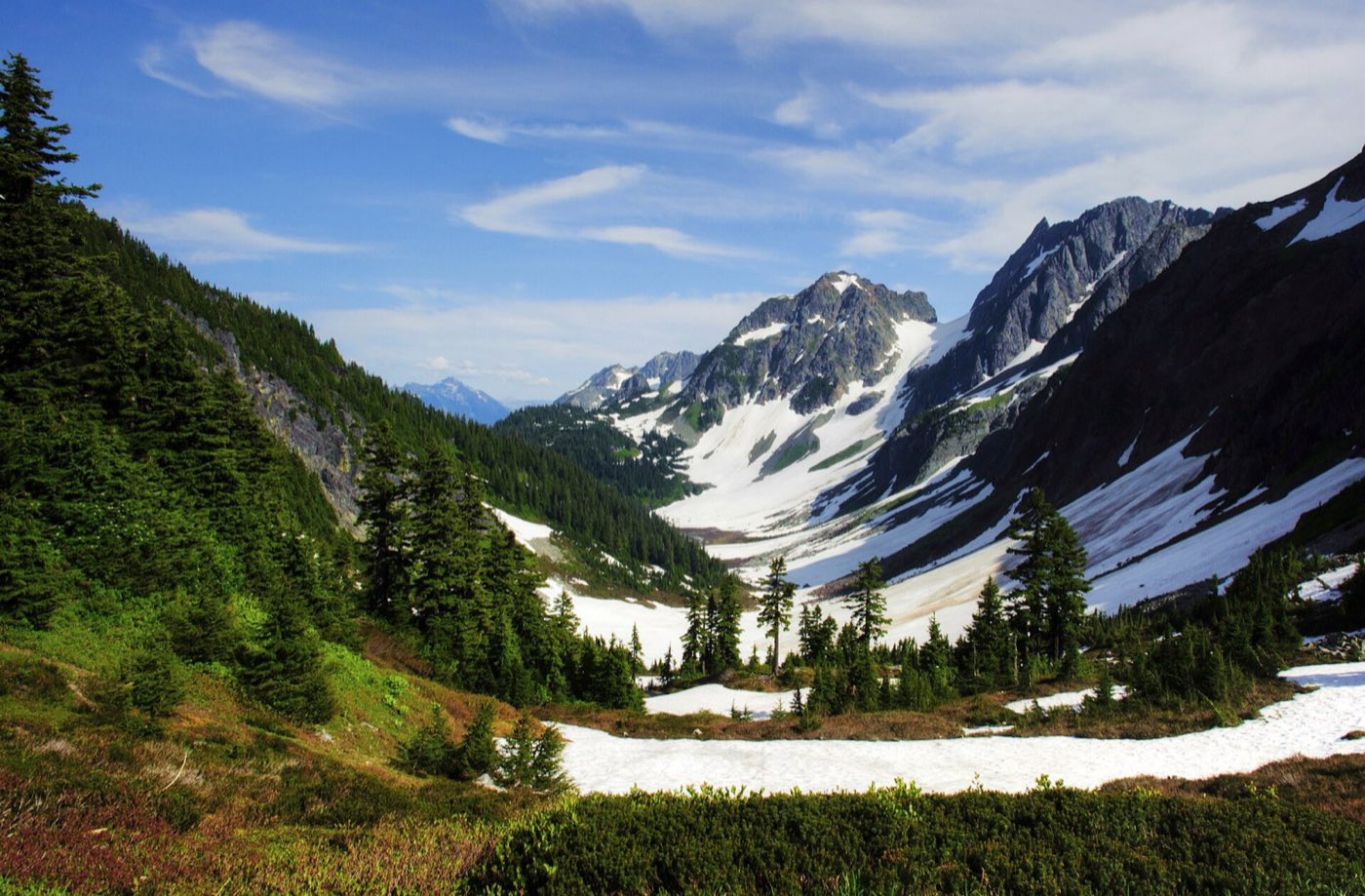
North Cascades is the national park most Americans have never heard of — which is exactly why the people who go love it. Three hours northeast of Seattle, it protects more than 300 glaciers (more than any U.S. park outside Alaska) and a tangle of jagged granite peaks so sharp and high that the early climbers who saw them started calling the range the American Alps. The park itself has almost no roads inside its boundaries. The North Cascades Highway, State Route 20, cuts through the Ross Lake National Recreation Area between the park's north and south units, and that strip of asphalt is where most visitors experience the place — pulling off at Diablo Lake Overlook for the glacier-milk turquoise, hiking short trails out of Newhalem, or launching a boat onto Ross Lake. Leave the highway and the landscape gets serious fast: trails climb thousands of feet in a few miles, weather changes in an hour, and backcountry permits fill months ahead. Come for one long day on SR 20, or plan a full backcountry trip with time to get deep — there isn't much in between.
What to See & Do
North Cascades Highway (SR 20) — one of America's great mountain drives
The 140-mile stretch of State Route 20 between Marblemount and Winthrop is the only road through the park, and you'll want a full day to drive it well. Pull off at Gorge Creek Falls, Diablo Lake Overlook, and Washington Pass Overlook — the last one puts Liberty Bell Mountain's granite needles directly above your windshield. The highway closes by late November for avalanche control and doesn't reopen until mid to late April, so plan summer or early fall. Gas up in Marblemount or Winthrop; there's nothing in between.
Diablo Lake overlook for impossibly turquoise glacial water
About an hour east of Marblemount on SR 20, Diablo Lake glows an almost unreal shade of jade green — the color comes from glacial rock flour suspended in the meltwater. The main overlook has a wide pullout, interpretive signs, and a short path to the rim. For more color, go mid-afternoon when the sun is overhead; early morning and cloudy days dull the effect. For a closer look, take a Seattle City Light boat tour from the Diablo Dam area down onto the lake itself.
Cascade Pass and Sahale Arm trail into alpine splendor
The classic day hike of the park. The Cascade Pass trailhead sits at the end of a rough 23-mile gravel road off SR 20 near Marblemount. Pass is 3.7 miles and 1,800 feet up through switchbacks into a wildflower meadow surrounded by glaciated peaks. From there, continue another 2 miles up the Sahale Arm for mountain-goat territory and close views of the Sahale Glacier. Start early — the afternoon clouds roll in fast, and the trailhead parking fills by 8 a.m. on summer weekends.
Ross Lake boat tour through the remote upper valley
Ross Lake stretches 23 miles north from Ross Dam into British Columbia, and the only way to see most of it is by boat. Ross Lake Resort, floating on log platforms at the south end, rents kayaks, canoes, and motorboats and runs a shuttle from Diablo. Paddle to one of the boat-in campgrounds for a night, or just cruise for a few hours between walls of forest that drop straight into the water. The lake's far end, where it crosses into Canada, sees almost no one.
Ladder Creek Falls illuminated trail in Newhalem
In the tiny Seattle City Light company town of Newhalem, a short half-mile loop climbs through a rock garden to Ladder Creek Falls. After dark, colored floodlights light the falls in a light show originally set up in the 1930s by the dam engineer J.D. Ross. The lights run from sunset until midnight, and the trail is open all night. It's kitsch and also kind of wonderful — a piece of Depression-era public works theater still running.
Thunder Knob Trail above Diablo Lake
A 3.6-mile round-trip with only 425 feet of climb, Thunder Knob is the easy hike of the SR 20 corridor — good for kids, tired legs, or a shoulder-season afternoon. The trail starts at the Colonial Creek Campground, climbs through forest, and ends on a rocky knob with wide open views across Diablo Lake to Colonial Peak and Pyramid Peak. A good choice when the higher trails are still under snow.
Blue Lake trail to an alpine cirque lake
From a trailhead a mile west of Washington Pass on SR 20, the Blue Lake trail climbs 4.4 miles round-trip and 1,050 feet through subalpine fir and larch forest to a small blue lake cupped under the granite spires of Liberty Bell and Early Winters. In late September and early October, the larches turn gold and the hike becomes one of the best short fall color walks in the Cascades. Snow lingers into July up here.
Getting There & When to Go
Seattle is the closest major airport, about three hours' drive west to the park via I-5 and SR 20. The nearest gateway towns are Marblemount on the west side and Winthrop on the east; both have gas, food, and a few small lodges. Plan your trip for July through September — SR 20 typically reopens in late April but snow stays on the high trails into July, and the highway closes again by late November for the winter. July and August are peak season with the driest weather; September drops the crowds and brings early larch color. There's no park entry fee.
Where to Stay
The park itself has no lodges, just a handful of campgrounds along SR 20 (Newhalem Creek, Gorge Lake, Colonial Creek) that are first-come-first-served outside reservation dates. Ross Lake Resort, a floating cluster of cabins accessed by boat or a mile-long trail, books 12 months out and is an experience of its own. For regular lodging, the quirky Old West-themed town of Winthrop on the east side has cabins and small hotels; on the west side, Marblemount has a few inns and the larger town of Concrete is 20 minutes further down the Skagit River. North Cascades Lodge at Stehekin, accessed only by ferry or floatplane up Lake Chelan, is worth the detour for the remoteness alone.
Frequently Asked Questions
- Is there an entrance fee for North Cascades?
- No — North Cascades National Park is one of the few U.S. national parks with no entrance fee. You will need a Northwest Forest Pass or America the Beautiful pass for some adjacent Forest Service trailheads, though, and a backcountry permit for overnight wilderness trips.
- When does the North Cascades Highway close for winter?
- The Washington State DOT closes SR 20 between Ross Dam and Silver Star Creek typically in late November and reopens it in mid to late April, depending on the snowpack and avalanche conditions. The closure dates can shift by weeks year to year — always check WSDOT before planning a shoulder-season trip.
- Can I see the park without hiking?
- Yes — the SR 20 corridor has several overlooks (Diablo Lake, Washington Pass, Gorge Creek Falls) and short paved paths that require no real hiking. That said, the best of the park is in the backcountry, and day hikers willing to walk two or three miles will see dramatically more than road-trippers who stay in the car.
- Are there bears in North Cascades?
- Yes — both black bears and a small recovering population of grizzlies live in the park. Encounters are rare but real; carry bear spray on backcountry trails, store food in bear canisters or hang it properly at backcountry sites, and make noise in brushy sections of trail.
Plan Your Visit
Book Nearby HotelsHave you visited North Cascades?
Track all 63 national parks on your map