National Park · MT · Est. 1910
Glacier
Overview
Glacier is a park of sharp horizontal lines stacked vertically — the red argillite and green mudstone layers of 1.5-billion-year-old Belt Supergroup rock, tilted and glacially carved into knife-edged ridges and cirques full of turquoise water. You drive between them on Going-to-the-Sun Road, 50 miles of engineering that threads the Continental Divide at Logan Pass and feels, in places, like it has no right to exist. Most visitors cluster along the Sun Road corridor between West Glacier and St. Mary, which is the park's busiest axis by far. But the park's deeper character shows up in the side valleys — Many Glacier, Two Medicine, North Fork — where the infrastructure thins, the grizzlies outnumber the cars, and the light on the peaks in the late afternoon is the thing you'll remember. The park shares a border with Canada's Waterton Lakes National Park to form an international peace park, and the lakes, trails, and mountain goats don't acknowledge the line. NPS eliminated the Going-to-the-Sun Road vehicle reservation requirement for 2026, so a standard entrance pass now gets you onto the corridor — that policy has swung back and forth in recent years, so check current NPS guidance before you plan around it. A week here is better than a weekend: you want one full day each for the Sun Road, Many Glacier, and Two Medicine, plus a buffer day for weather or a boat tour.
What to See & Do
Going-to-the-Sun Road — one of America's greatest scenic drives
Fifty miles from West Glacier to St. Mary, crossing the Continental Divide at 6,646-foot Logan Pass. Drive it east-to-west in the morning for the best light on the Garden Wall; allow three hours without stops, five or six if you actually stop. Roadwork on the Weeping Wall and Big Bend sections routinely slows traffic; check the NPS status page the morning of. The road fully opens by late June or early July depending on plowing and closes to through traffic by mid-October. No vehicle reservation is required for 2026, though this has changed season to season — confirm the current rule on the NPS website before you drive up.
Highline Trail along the Garden Wall from Logan Pass
The classic Glacier day hike — 11.8 miles one-way from Logan Pass to the Loop, contouring the east face of the Garden Wall with the Continental Divide on your right the whole way. First half mile includes a section where the trail narrows to about four feet with a cable handhold bolted into the cliff and a significant drop. Mountain goats and bighorn sheep are almost guaranteed. Take the free shuttle from the Loop back to your car at Logan Pass, or do an out-and-back to Haystack Butte for a shorter day.
Grinnell Glacier hike in the Many Glacier valley
Ten miles round-trip with about 1,600 feet of climbing out of the Many Glacier Hotel to a glacier-fed lake the color of a swimming pool. Icebergs calve into Upper Grinnell Lake all summer. Shorten the hike by about three miles by taking the two boat rides across Swiftcurrent Lake and Lake Josephine. Book the boats at the hotel dock the day before or earlier — they fill. Grizzly activity on this trail is consistent; carry bear spray and hike in a group when you can.
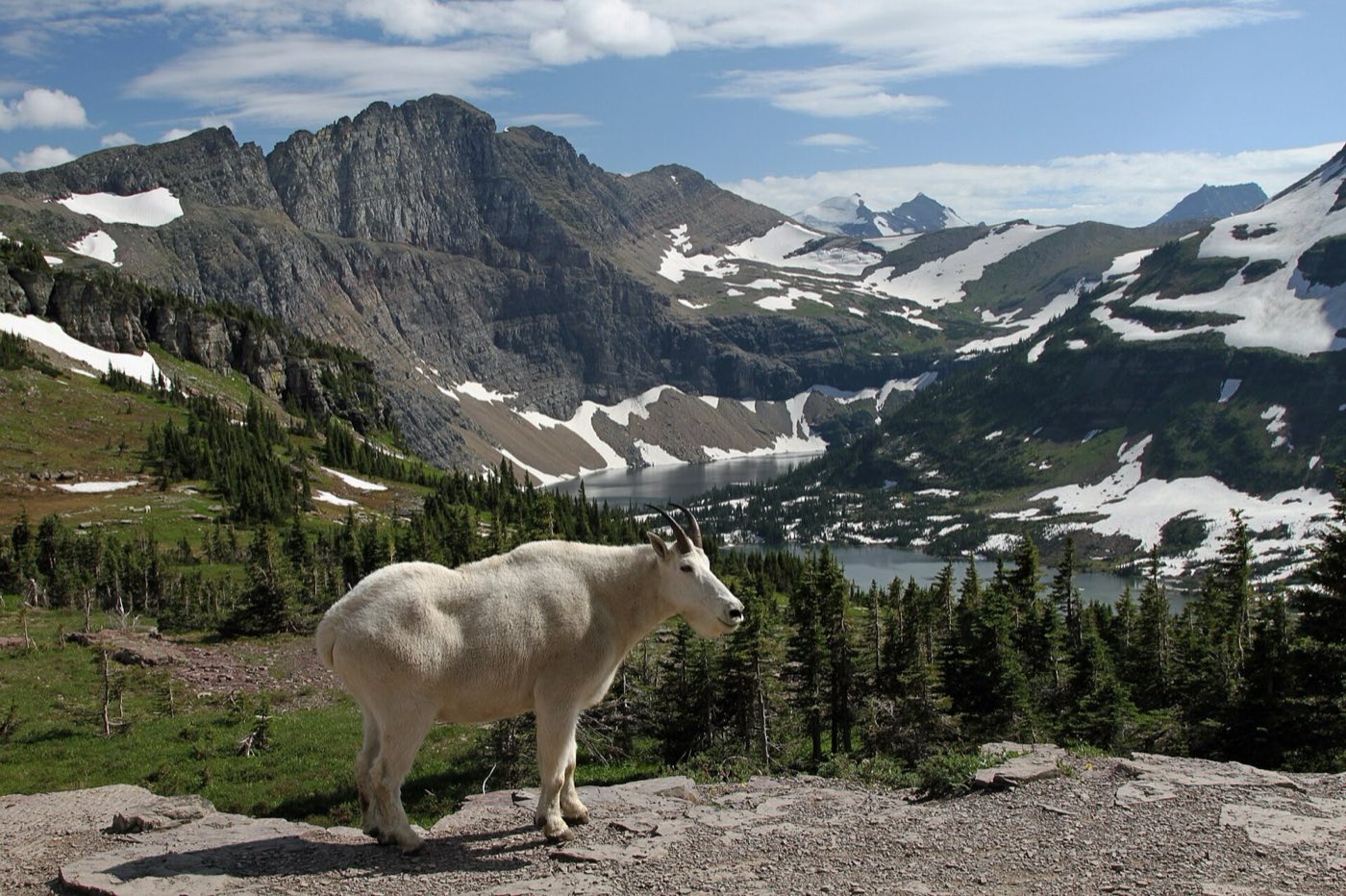
Hidden Lake Overlook from Logan Pass visitor center
The easy top-of-the-park trail everyone with two hours should do: 2.7 miles round-trip from Logan Pass, mostly on a raised boardwalk across an alpine meadow, climbing to an overlook of Hidden Lake 700 feet below. Mountain goats and marmots nearly always show. Continue another 1.2 miles (and 750 feet down) to the lakeshore if you want more solitude. Go early — the Logan Pass parking lot fills by 7:30 a.m. in July, and the free shuttle is the backup plan.
Two Medicine Lake kayaking beneath Rising Wolf Mountain
Two Medicine, on the park's southeast side, is what Glacier felt like before Going-to-the-Sun Road opened it up. Rent a kayak or canoe at the general store on the lake, paddle out under Sinopah and Rising Wolf Mountain, and watch the afternoon wind come up — plan to be back by early afternoon. The ranger-led Two Medicine boat tour runs across to the far end of the lake for a short hike to Twin Falls. Fewer cars, fewer crowds, and some of the park's oldest lodges.
Iceberg Lake trail to a glacial cirque with floating ice
Nine miles round-trip from Many Glacier's Swiftcurrent area, with the payoff of a cirque lake rimmed by 3,000 vertical feet of cliffs and dotted with icebergs that stay floating well into August. The trail rolls gently and is one of the park's easier long hikes. Grizzly sightings are frequent on the lower half — rangers sometimes hike-restrict this trail when bear activity is heavy. Start at 7 a.m. to grab a Many Glacier parking spot and have the lake mostly to yourself for an hour.
Many Glacier Hotel on Swiftcurrent Lake
The 1915 Swiss-chalet-style hotel on Swiftcurrent Lake is the visual centerpiece of Many Glacier — six stories of dark-timber balconies with a view straight into the Grinnell Glacier cirque. Even if you're not staying, stop in for a drink on the lakeside patio at sunset, when the light moves up Grinnell Point and the hotel fills with hikers back from the day's trails. Rooms book out 12 months ahead through Pursuit; the waitlist sometimes opens closer in.
Getting There & When to Go
Fly into Glacier Park International (FCA) at Kalispell, about 30 minutes from West Glacier, or Great Falls (GTF) for the east side, about three hours to St. Mary. Amtrak's Empire Builder stops right at West Glacier and East Glacier, which is a genuinely scenic way in from Chicago or Seattle. The season that matters is mid-July through mid-September, when Going-to-the-Sun Road is fully open and the high trails are snow-free. No vehicle reservation is required for the Sun Road corridor in 2026 after NPS eliminated the requirement, but the policy has changed year to year, so verify current rules on the NPS website before your trip. Early October is quieter with brilliant larch color on the North Fork, but snow can close the Sun Road by the second week.
Where to Stay
Inside the park, three historic lodges anchor the classic Glacier experience: Many Glacier Hotel on Swiftcurrent Lake (the showpiece, book 12 months ahead through Pursuit), Lake McDonald Lodge on the west side, and Glacier Park Lodge just outside the east entrance at East Glacier. Rising Sun Motor Inn and Swiftcurrent Motor Inn offer simpler, cheaper rooms in great locations. Campgrounds fill early — reserve via recreation.gov six months out. Gateway towns give flexibility: Whitefish (20 minutes from West Glacier) has restaurants and flights, East Glacier and Babb sit right at the park's east entrances, and Waterton Village across the border is the quietest base of all.
Frequently Asked Questions
- Do I need a vehicle reservation for Going-to-the-Sun Road?
- No — NPS eliminated the Going-to-the-Sun Road vehicle reservation for 2026, so your standard park entrance pass is enough to drive the corridor. Logan Pass parking is limited to three hours starting July 1, 2026, and the free Sun Road shuttle runs July through September if you'd rather skip parking altogether. This policy has changed from year to year, so confirm current requirements on the NPS website before you go.
- When is Going-to-the-Sun Road fully open?
- Typically late June or early July through mid-October, depending on snow. Logan Pass is the last section to open after plow crews clear the Big Drift, which can exceed 80 feet of snow. Check the NPS road status page — opening dates have slid earlier or later by as much as three weeks in recent years.
- Are the glaciers still here?
- Barely. The park had 150 glaciers in 1850 and today has 26 that meet the scientific size threshold. Grinnell, Sperry, and Jackson are the most accessible for hikers. At current rates, most will be gone as functional glaciers within a couple of decades — part of why the park is seeing record visitation from people who want to see them while they're here.
- How should I handle grizzly bears in the park?
- Carry bear spray on every hike (not in your pack — on your belt or hip), hike in groups of three or more when possible, make noise on blind corners, and store all food and scented items in bear boxes at camp. Glacier has one of the highest grizzly densities in the lower 48; sightings are common and incidents are rare.
Plan Your Visit
Book Nearby HotelsGlacier Planning Guides
Compare focused Glacier National Park lodging, itinerary, and activity guides before you book.
Where to stay
Where to Stay Near Glacier National Park
Compare where to stay near Glacier National Park, including West Glacier, Apgar, Lake McDonald, Many Glacier, St. Mary, Whitefish, and Kalispell.
Itinerary
Glacier National Park Itinerary
Plan a Glacier National Park itinerary with Going-to-the-Sun Road, Many Glacier, and current vehicle access rules.
Things to do
Things to Do in Glacier National Park
Explore the best things to do in Glacier National Park, including Going-to-the-Sun Road, the Highline Trail, and Many Glacier hikes.
Best time to visit
Best Time to Visit Glacier National Park
Compare the best time to visit Glacier National Park by road access, weather, wildlife, and crowd levels.
Have you visited Glacier?
Track all 63 national parks on your map