National Park · WY · Est. 1929
Grand Teton
Overview
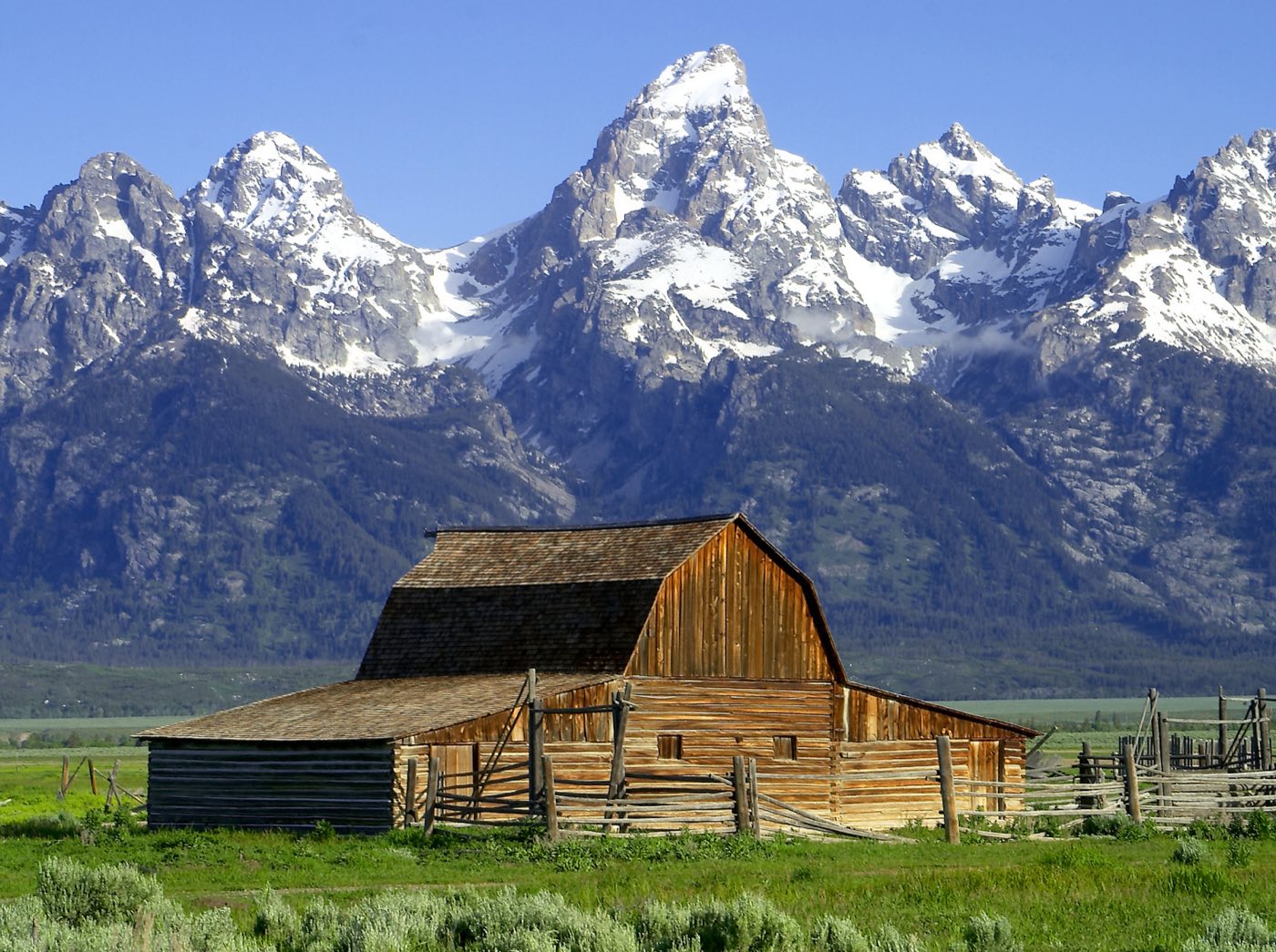
Grand Teton has the most dramatic mountain profile in the Lower 48 — a 40-mile wall of granite spires that rises straight out of the flat Jackson Hole valley floor without a single foothill. The tallest peak, the Grand itself, tops out at 13,775 feet, about 7,000 feet above the valley. The effect is that everywhere you look, the mountains are the whole sky. The park is compact and navigable in a way Yellowstone isn't; most of its iconic views sit along a 40-mile stretch of U.S. 89 and the inner Teton Park Road. You can be at Mormon Row for sunrise, on a Jenny Lake boat by 9 a.m., having lunch at Jackson Lake Lodge overlooking the Tetons, and floating the Snake River by late afternoon. Wildlife is abundant — moose in the willow flats, elk and bison on the sage benches, black and grizzly bears in the timber, pronghorn running across the valley. The park shares its south entrance with Jackson Hole, so the gateway town is already there, full of restaurants and outfitters. Come June through September for the full park experience; late September brings the aspen gold and the elk bugling that makes many repeat visitors insist it's the best week of the year.
What to See & Do
Jenny Lake boat shuttle and Inspiration Point hike
The Jenny Lake shuttle boat cuts a two-mile walk off the classic hike to Hidden Falls and Inspiration Point — it runs continuously from mid-May through late September and costs about $20 roundtrip. From the west shore dock, it's a half-mile to Hidden Falls and another half-mile to Inspiration Point, where you break out above the treeline for a panoramic view back across the lake. Push on to Cascade Canyon from there for deeper solitude and the best chance of seeing moose.
Mormon Row historic barns with the Tetons as backdrop
The Moulton barns on Mormon Row are the most photographed barns in America — weathered gray wood against the Teton skyline, with sage and aspens in between. Sunrise is the only time for the classic shot, when the first light hits the peaks while the valley floor is still in shadow. Arrive 30 minutes before sunrise on a June morning and you'll find a dozen photographers already set up. The road turns to gravel past the barns; just walk from the main parking area.
Snake River scenic float trip
Several Jackson-based outfitters run guided scenic floats on the Snake River between Jackson Lake and Moose — a gentle two-to-three-hour drift past willow flats, cottonwood galleries, and the Teton skyline. Wildlife sightings are near-constant: bald eagles, ospreys, great blue herons, moose, beavers. Late afternoon and evening floats catch the best light. This is not whitewater; it's a wildlife-and-scenery experience suitable for all ages.
Cascade Canyon trail into the heart of the Tetons
Cascade Canyon is the signature Teton day hike — a glacially carved valley that runs due west between the Grand and Mount Owen, with a rushing creek and walls rising thousands of feet on both sides. Most day hikers go 4.5 miles in to Forks of the Cascade and turn around (9 miles roundtrip, mostly flat past the Inspiration Point climb). The canyon is prime moose habitat and one of the best places in the park to see them. Take the boat shuttle to avoid the first two miles of trail.
Schwabacher Landing reflections at dawn
Schwabacher Landing is a beaver-dammed side channel of the Snake River that creates the park's most famous reflection pond — the Tetons mirror themselves in still water an hour after sunrise. The access road is a short gravel spur off U.S. 89 between Moose and Moran. Arrive 30 minutes before sunrise, walk a few hundred yards north along the water, and you'll find the view. Mosquitoes in June and July are ferocious; bring repellent.
Elk bugling in the fall rut near Kelly
From mid-September through mid-October, bull elk gather cow harems and challenge rivals with the eerie, whistling bugle that echoes across the sage flats. The Kelly area and Gros Ventre Road on the park's east side are among the best spots to hear it — pull over in the evening, kill the engine, and wait for the sound. Keep at least 25 yards from any elk and don't approach bulls in rut; they're focused and unpredictable.
Taggart Lake trail with Cathedral Group views
The 3.3-mile Taggart Lake loop is the best moderate family hike in the park — a gentle climb through lodgepole forest to a shallow lake that reflects the Cathedral Group (the Grand, Middle, and South Teton) on calm mornings. The trailhead off Teton Park Road fills up by 9 a.m. in summer; start early. Continue to Bradley Lake for a 5.9-mile loop if you have the time and energy.
Getting There & When to Go
Jackson Hole Airport sits inside the park boundary — it's the only commercial airport in a national park, and landing on approach gives you a view that seeded dozens of future park visits. Salt Lake City is the main alternative, a five-hour drive. The park is open year-round, but most services and the inner park road close from November through April. June through September is full-service season; late September through mid-October is elk rut, aspen gold, and thinner crowds. Winter brings cross-country skiing, snowshoeing, and the adjacent National Elk Refuge sleigh rides. U.S. 89 runs from Jackson to Yellowstone's south entrance and is open year-round.
Where to Stay
Inside the park, Jackson Lake Lodge (famous for its enormous lobby windows framing the Tetons), Jenny Lake Lodge (luxury cabins near the lake), Signal Mountain Lodge, and Colter Bay Village each anchor a different corner and cut drive time. All book 13 months ahead through Grand Teton Lodge Company. The park's five campgrounds reserve on recreation.gov. Outside the park, Jackson has the full range from hostels to the Four Seasons plus a dense food scene; Teton Village at the base of the ski resort has hotels and condos that work as a park base in summer. Moose, just outside the south park entrance, has a few small motels and restaurants.
Frequently Asked Questions
- Do I need a separate pass for Grand Teton and Yellowstone?
- No — a single $35 per-vehicle entrance fee (or an America the Beautiful pass) covers both parks, and they're connected by the John D. Rockefeller Jr. Memorial Parkway. Many visitors combine them in a single trip: Grand Teton for a few days, then drive north into Yellowstone via the south entrance.
- Is the Jenny Lake boat shuttle worth it?
- Yes, unless you specifically want a longer hike. The shuttle is about $20 roundtrip and saves you a two-mile walk each way along the lake's south shore. It runs every 15 minutes in peak season from mid-May through late September and lets you focus your energy on Inspiration Point and Cascade Canyon, which are the actual destinations.
- When can I see moose?
- Moose live in the willow flats and along creeks year-round. Best viewing is dawn and dusk in the Gros Ventre River corridor, Moose–Wilson Road, and Cascade Canyon. Willow Flats just below Jackson Lake Lodge is a reliable spot in early morning. Keep 25 yards away; moose injure more visitors in the greater Yellowstone ecosystem than bears do.
- Which entrance should I use?
- Most visitors use the Moose entrance at the south end, closest to Jackson and the town airport; that's also where the Craig Thomas Visitor Center sits. The Moran entrance on U.S. 89 is better if you're driving down from Yellowstone. There's no reservation system for entry, so pick based on where you're coming from and where you're staying.
Plan Your Visit
Book Nearby HotelsGrand Teton Planning Guides
Compare focused Grand Teton National Park lodging, itinerary, and activity guides before you book.
Itinerary
Grand Teton National Park Itinerary
Plan a Grand Teton National Park itinerary with Jenny Lake, Mormon Row, Snake River viewpoints, Jackson, wildlife drives, and Yellowstone add-ons.
Where to stay
Where to Stay Near Grand Teton National Park
Compare where to stay near Grand Teton National Park, including Jackson, Teton Village, and in-park lodging near Jenny Lake.
Things to do
Things to Do in Grand Teton National Park
Explore the best things to do in Grand Teton National Park, including Jenny Lake, Mormon Row, and Snake River float trips.
Best time to visit
Best Time to Visit Grand Teton National Park
Compare the best time to visit Grand Teton National Park by weather, wildflowers, elk rut, and Yellowstone pairing.
Have you visited Grand Teton?
Track all 63 national parks on your map