National Park · FL · Est. 1947
Everglades
Overview
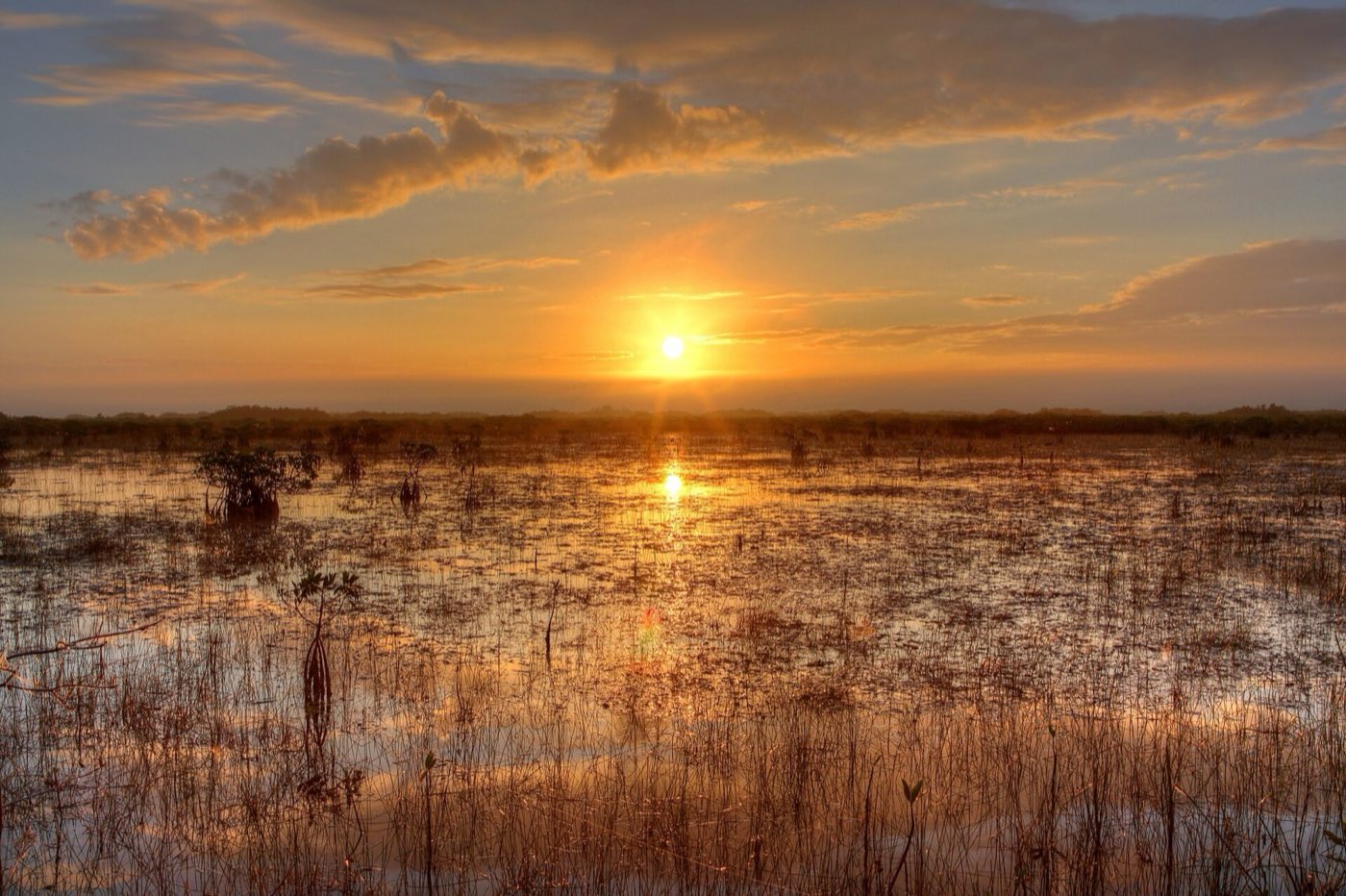
The Everglades is easy to misread at first. From the road it looks like a table-flat horizon of sawgrass, a wind moving through it, and a sky that takes up most of your field of view — not much to see. Spend a day here and the place starts to resolve. That sawgrass is actually a river, shallow and impossibly wide, flowing about a quarter mile a day from Lake Okeechobee to the Gulf. Alligators sun along the levee banks by the dozens in winter, anhingas dry their wings with feathers fanned wide on the boardwalk railings, and roseate spoonbills work the shallows in pink flocks at sunset. The park covers 1.5 million acres of interlocking subtropical ecosystems, from mangrove coasts to cypress domes to freshwater marl prairies, and you won't see all of it in one visit. Most travelers stick to the main road from the Homestead entrance through Royal Palm and down to Flamingo on Florida Bay, a 38-mile drive that passes every major habitat in turn. The wildlife viewing is some of the best in the lower 48 — roseate spoonbills, American crocodiles, manatees, and the only place in the world where alligators and crocodiles share territory. Go in winter. Summer is humid, hot, and mosquito-ridden to a degree that genuinely limits what you can do outdoors. A good first trip splits two days between the main Homestead entrance and the Shark Valley entrance 50 miles to the north, with a boat tour or ranger slough-slog to break up the driving and windshield-viewing.
What to See & Do
Anhinga Trail boardwalk at Royal Palm for guaranteed wildlife
Half a mile of paved and boardwalk trail just inside the Homestead entrance, and the single highest wildlife-density walk in the park. In winter you'll see alligators piled along the banks of Taylor Slough, anhingas and double-crested cormorants drying their wings on the railings, great blue herons stalking gar in the shallows, and often a soft-shell turtle or two cruising under the footbridge. Go at dawn or late afternoon; the midday crowds are substantial and the animals retreat into the brush.
Shark Valley tram ride and observation tower
On the park's north edge off Tamiami Trail, a 15-mile loop road runs out across the sawgrass prairie to a 65-foot observation tower overlooking the Everglades in every direction. You can walk it, bike it (rentals at the visitor center), or take the two-hour narrated tram. Alligators line the road by the hundreds in dry season — so close in places that you'll understand why rangers ask you to keep a bike's width between you and the bank.
Nine Mile Pond canoe trail through mangrove tunnels
About halfway down the main park road, Nine Mile Pond has a marked 5.2-mile canoe loop that threads through open pond, sawgrass sloughs, and low mangrove tunnels where you duck under branches and the water goes glassy-dark. Bring your own canoe or rent one from Flamingo. Plan three to four hours, start early to avoid afternoon thunderstorms, and pick up the numbered-post trail map at the launch — side channels look identical and it is easy to wander off-route.
Flamingo waterfront for manatee and crocodile sightings
Flamingo sits at the end of the main park road on Florida Bay, 38 miles from the entrance, and is the best single spot in the park for American crocodile sightings. Manatees loiter around the marina in winter, and bottlenose dolphins work the bay just offshore. The new Flamingo Lodge (reopened 2023) offers boat tours and kayak rentals. Wander the marina dock at sunset and you'll usually spot a crocodile lying motionless under the pilings.
Pa-hay-okee Overlook across the river of grass
A short raised boardwalk loop, about a quarter mile, that climbs to a platform over the sawgrass prairie. 'Pa-hay-okee' is the Seminole name meaning 'grassy waters.' This is the clearest way to see the Everglades for what it is: an actual river, shallow and impossibly wide, flowing south from Lake Okeechobee to the Gulf. Go in late afternoon when the sun rakes low across the grass and turns it copper.
Slough Slog ranger-led walk through waist-deep water
In winter, rangers lead small groups off-trail into a cypress dome, wading through clear tea-colored water up to your thighs or waist. You'll see bromeliads, orchids, air plants, and an ecology that makes no sense from the road. Wear sneakers you don't mind getting soaked and long pants. Sign up at the Ernest Coe Visitor Center as soon as you arrive — the slogs are capped at around a dozen people and fill the same day.
Birdwatching at Eco Pond near Flamingo
A short loop trail at Flamingo around a freshwater pond that concentrates roseate spoonbills, great egrets, wood storks, white ibis, and a dozen other wading birds in tight numbers at dawn and dusk. Bring binoculars and a zoom lens. The pond was damaged by Hurricane Irma and has been slowly recovering; the birding is still good, just not what old Everglades hands remember from the 1990s.
Getting There & When to Go
The main Homestead entrance is about an hour southwest of Miami International Airport — easy by rental car on the turnpike. The Shark Valley entrance on Tamiami Trail and the Gulf Coast entrance at Everglades City are separate drives from Miami or Naples and don't connect to the main road inside the park. Peak season is December through April — dry, comfortable in the 70s, with wildlife concentrated around shrinking water holes. May through October is the wet season: afternoon thunderstorms, heavy humidity, and mosquitoes aggressive enough that the Flamingo area regularly scores the highest mosquito counts recorded in the NPS system. Hurricane season runs through November.
Where to Stay
Flamingo Lodge reopened in late 2023 with 24 rooms and eco-tents at the end of the main park road, and staying here puts you first in line for dawn wildlife and sunset on Florida Bay — book months ahead in winter. Long Pine Key and Flamingo campgrounds both take reservations through recreation.gov. Most visitors base in Homestead or Florida City on the park's edge, where chain hotels sit within 15 minutes of the entrance. Miami is a reasonable day-trip base if you already have lodging booked there, though the two-hour round trip eats into wildlife-viewing hours. For the Gulf Coast and Ten Thousand Islands side, stay in Everglades City.
Frequently Asked Questions
- When is the best time to visit Everglades National Park?
- December through April, the dry season. Temperatures are in the 70s, mosquitoes are manageable, and wildlife concentrates around receding water holes. May through October is hot, wet, and buggy to the point that long outdoor activities become difficult.
- Will I actually see alligators?
- Yes, essentially guaranteed in winter. Anhinga Trail and the Shark Valley loop road both produce alligator sightings within minutes of arriving. Keep 15 feet of distance, never feed them, and watch children and pets closely near any water.
- Can I drive through the entire park?
- Not on one road. The main park road runs 38 miles from the Homestead entrance to Flamingo on Florida Bay. The Shark Valley entrance and the Gulf Coast entrance at Everglades City are separate and require their own drives — none of the three are connected inside the park.
- Do I need a boat to experience the park?
- No — the Anhinga Trail, Pa-hay-okee Overlook, Mahogany Hammock, and Shark Valley all deliver the core Everglades experience on foot. But a kayak, canoe, or guided boat tour opens up mangrove tunnels, backcountry camping chickees, and coastal wildlife you cannot reach any other way.
Plan Your Visit
Book Nearby HotelsEverglades Planning Guides
Compare focused Everglades National Park lodging, itinerary, and activity guides before you book.
Where to stay
Where to Stay Near Everglades National Park
Compare where to stay near Everglades National Park, including Homestead, Florida City, Everglades City, and Miami.
Itinerary
Everglades National Park Itinerary
Plan an Everglades National Park itinerary with the Anhinga Trail, Shark Valley, Flamingo, and dry-season timing tips.
Things to do
Things to Do in Everglades National Park
Explore the best things to do in Everglades National Park, from the Anhinga Trail and Shark Valley to Flamingo and airboat tours.
Have you visited Everglades?
Track all 63 national parks on your map