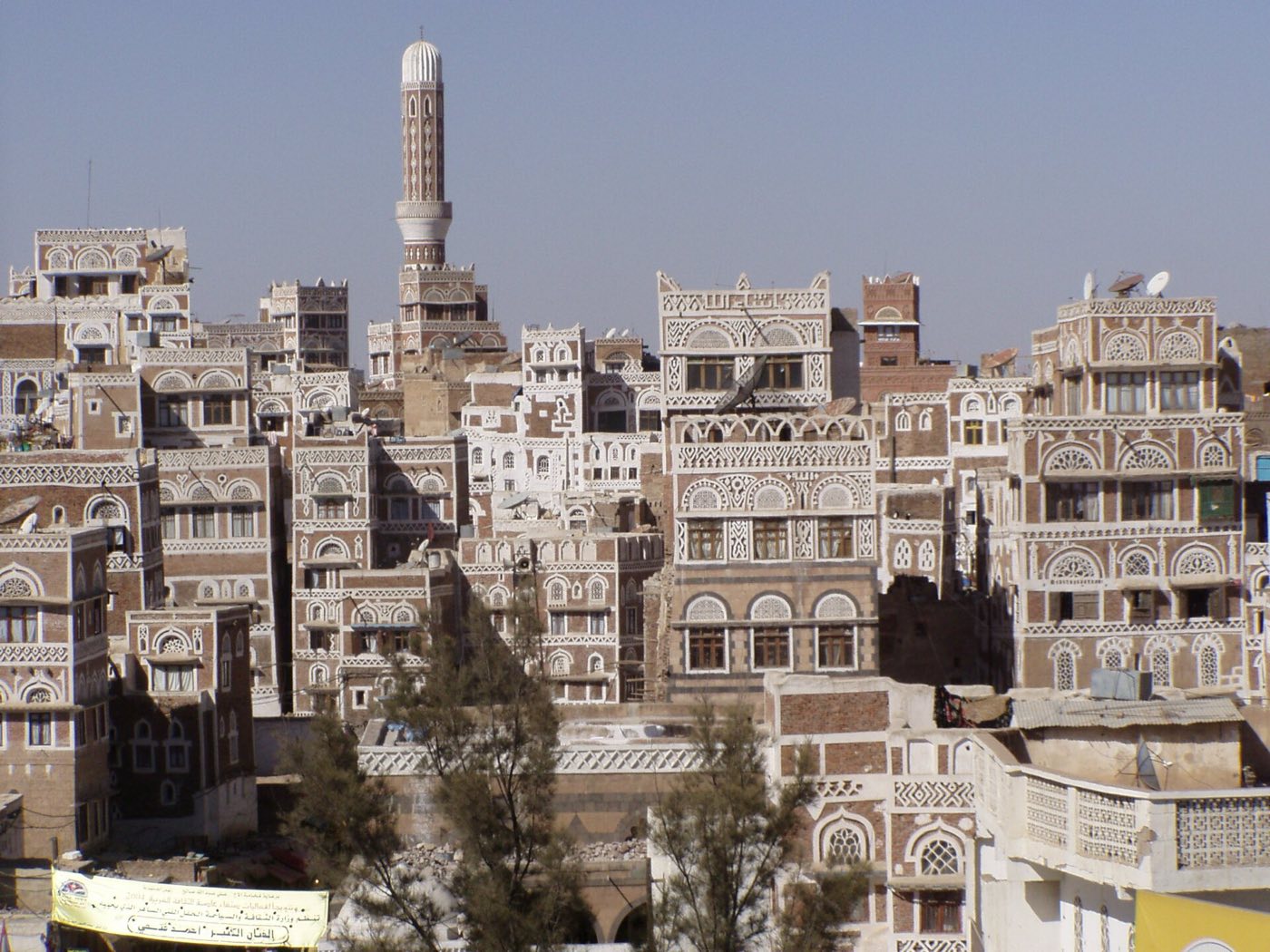
Yemen
- Capital
- Sana'a
- Population
- 34M
- Currency
- YER
- Languages
- Arabic
Overview
A country of extraordinary ancient civilization — gingerbread-colored tower houses in Sana'a, mud-brick skyscrapers at Shibam the world has called the Manhattan of the Desert, and the alien flora of Socotra Island out in the Arabian Sea. Yemen once sat on every overland itinerary through Arabia, and travelers came home describing the architecture as unlike anything else on the peninsula. Mainland Yemen is not somewhere independent travelers can reasonably visit today. A civil war that began in 2014 between the internationally recognized government and Houthi forces has killed hundreds of thousands, displaced millions, and produced what the UN has repeatedly described as one of the worst humanitarian crises in the world. Most Western governments — the US, UK, Canada, Australia — advise against all travel, commercial flights into Sana'a are suspended or severely limited, and the risk of kidnapping, drone strikes, and wrongful detention is real across most of the country. Socotra Island is the exception that some determined travelers still reach. A small archipelago 380 kilometers south of the mainland in the Arabian Sea, it sits outside the active front lines and is run administratively under a separate authority. Charter flights operate from Abu Dhabi and Cairo on a handful of specialist tours that visit for a week at a time. What you go for is the biodiversity — roughly a third of the plants are found nowhere else, and the dragon blood tree forests of the Dixam Plateau are a landscape few travelers alive have seen. The mainland attractions in this guide are written for the record and for whenever conditions change; for now, assume they are not accessible.
Things to Do
Socotra Island and dragon blood trees
The only part of Yemen realistically visitable, Socotra is a UNESCO-listed island the size of Long Island whose eight-day reachable weeks of the year produce some of the strangest landscapes on Earth. The umbrella-canopied dragon blood trees of the Dixam Plateau bleed red sap when cut and appear on no other land mass; frankincense groves cover limestone ridges; white-sand dunes climb against the Indian Ocean at Arher. Tours fly in from Abu Dhabi on charter with local Bedouin-style camping and guided walks as the standard setup.
Old City of Sana'a UNESCO site
The old walled city of Sana'a contains more than 6,000 tower houses dating to before the eleventh century, built of earth and stone and banded with white gypsum around windows and doorframes. The skyline at dusk is one of the great Arabian sights. The old city has sustained damage from airstrikes and mortar fire during the civil war, and Sana'a itself is effectively off-limits to Western travelers; the site remains on UNESCO's danger list pending an eventual return.
Shibam — the "Manhattan of the Desert" mud skyscrapers
In the Hadhramaut Valley in eastern Yemen, the walled town of Shibam rises out of a dry wadi in some 500 tower houses of packed earth, some of them eight stories tall and 500 years old. The architecture is utterly singular — an entire city of mud apartment blocks, still inhabited, still being re-plastered each rainy season. Shibam is in a region that has seen AQAP activity and kidnapping of foreigners, and is not currently reachable; it remains one of the great architectural sites of the Islamic world.
Hadhramaut Valley canyon cities
Beyond Shibam, the 160-kilometer Wadi Hadhramaut is a broad green canyon of date palms winding through orange cliffs, with mud-brick towns — Tarim, Seyun — stacked along its length. Tarim alone is said to hold more than 300 mosques and was historically a center of Sufi scholarship that exported imams across the Indian Ocean. Like Shibam, the Hadhramaut is currently inaccessible to foreign travelers.
Dar al-Hajar rock palace near Sana'a
A five-story former imam's summer residence perched on a finger of rock in the Wadi Dhahr just outside Sana'a, Dar al-Hajar is the picture Yemen most often appears in. The palace was built in the 1930s on much older foundations and sits so perfectly on its stone that it looks carved. It sits in a region currently outside Western-traveler access, but the image of it is worth filing for whenever conditions allow a return.
Aden's historic port and crater
Aden, in the south on the Gulf of Aden, is built around the volcanic crater of an extinct volcano and has served as a major port since antiquity. The old town district of Crater holds colonial-era British buildings, a 13th-century cistern system cut into volcanic rock, and Ottoman remains. Aden has changed hands several times during the civil war and remains a conflict area; it is not a realistic destination for travelers now.
Kawkaban mountaintop fortress town
A fortified village perched on a 2,800-meter cliff plateau north of Sana'a, Kawkaban was a refuge for the imams who ruled Yemen for centuries and holds a well-preserved old town of stone houses and a dramatic cistern. The hike down the escarpment to the valley below was one of the classic one-day walks in the country. It is part of the currently inaccessible highlands.
When to Go
For Socotra, October through April is the only realistic window — from May to September the southwest monsoon pushes winds above 60 knots, seas are unswimmable, and the island is effectively closed to tourism. December through February is the most comfortable stretch with mild temperatures and minimal rain. On the mainland, when conditions eventually allow a return, October through March is the coolest and driest season in the highlands around Sana'a, while the Hadhramaut is best from November to February when desert temperatures drop to comfortable walking levels.
Getting Around
For the mainland, there is effectively no realistic travel for foreign visitors at present — commercial flights into Sana'a have been suspended or severely restricted for years, and overland crossings from Oman and Saudi Arabia are closed or heavily restricted. Socotra is reached by charter flight from Abu Dhabi or Cairo on routes booked through specialist tour operators (Welcome Socotra, Socotra Island Expeditions, and a few others). On Socotra itself, movement is by 4x4 with a local driver-guide, with camping or basic guesthouse nights between sites. Bring cash in US dollars in small bills — there are no functioning ATMs for foreign cards.
Cost & Currency
Yemen's currency is the Yemeni rial (YER), which has lost most of its value during the war and is effectively not accessible to foreign travelers. Socotra tours price in US dollars — expect around $2,500–$4,000 per person for a week including charter flights from Abu Dhabi, all meals, camping equipment, and a 4x4 with driver. Bring cash in US dollars in small bills for extras and tips. Cards do not work anywhere on the island and there are no reliable ATMs. Mainland Yemen has no functional tourist economy; prices quoted in older guidebooks are not meaningful today.
Frequently Asked Questions
- Is it safe to travel to Yemen?
- Mainland Yemen is not safe — most Western governments advise against all travel due to ongoing civil war, airstrikes, landmines, kidnapping by AQAP and other armed groups, and outbreaks of cholera. Socotra Island sits outside the front lines and is visited by small groups on specialist tours, but the US and UK government advisories still technically apply to the whole country. Going requires accepting that consular help is extremely limited if anything goes wrong.
- How do I visit Socotra Island?
- Socotra is reached by charter flight from Abu Dhabi or Cairo on fixed-date tours run by a handful of specialist operators such as Welcome Socotra. The standard trip is seven to ten days with camping and guesthouse nights, a 4x4 with a local driver, and visits to the dragon blood tree forests, Detwah Lagoon, and the island's beaches. Visas are arranged by the operator as part of the package.
- Can I visit mainland Yemen?
- Realistically, no. Commercial flights into Sana'a are suspended or heavily restricted, the US passport is not valid for travel there without a special validation, and every Western government advises against all travel to the mainland. A very small number of journalists and aid workers operate with institutional support, but independent tourism to the mainland is not currently a viable option.
- What vaccinations do I need?
- Routine boosters plus typhoid and hepatitis A are strongly recommended, and cholera vaccination is worth discussing with a travel clinic given Yemen's ongoing cholera outbreaks. Yellow fever is required if you're arriving from a country with transmission. Malaria is present in some coastal lowland areas but not in the Socotra highlands. Consult a travel medicine specialist well in advance.
- Will I meet other tourists on Socotra?
- A few dozen to a few hundred travelers visit Socotra in a good season, clustered on roughly the same tour circuits, so you will occasionally cross paths with other groups at the main camp sites and beaches. Most days, though, you and your group will be the only visitors in sight at a particular wadi or plateau. The island remains one of the most lightly visited UNESCO sites in the world.
Plan a Trip to Yemen
Have you been to Yemen?
Track 195 countries, 50 states & 63 national parks on your map