Vatican City
- Capital
- Vatican City
- Population
- 800
- Currency
- EUR
- Languages
- Italian, Latin
Overview
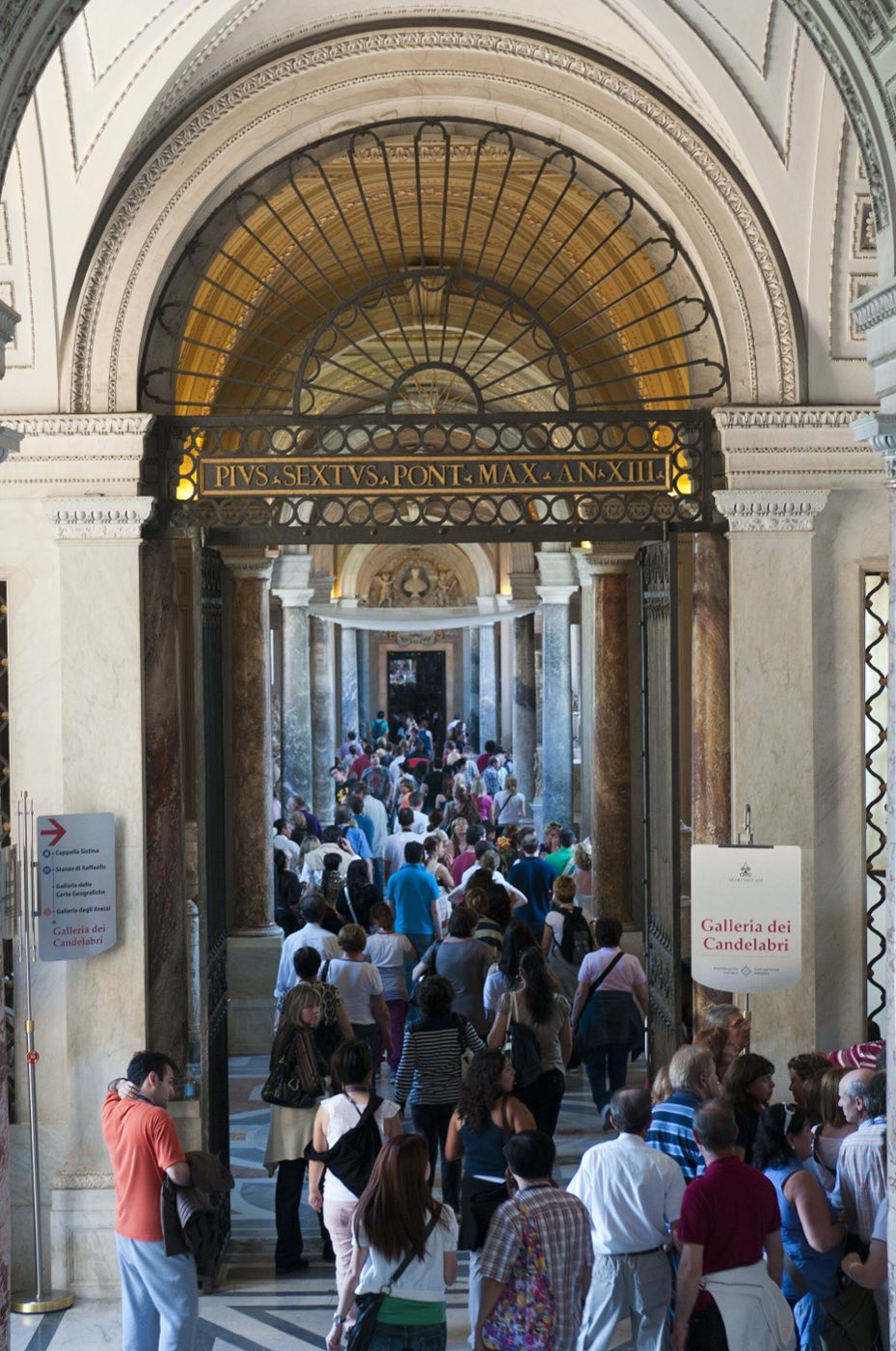
The world's smallest sovereign state sits inside Rome as an enclave of 44 hectares — about the size of a small city park — and holds within it the greatest concentration of Renaissance art on Earth. This is the spiritual center of roughly 1.3 billion Catholics, the seat of the Pope, and the home of Michelangelo's Sistine Chapel ceiling, Bernini's St. Peter's Square colonnade, and the Vatican Museums' holdings of Raphael, ancient Egypt, classical Rome, and the maps of a pre-Copernican world. You don't travel to the Vatican the way you travel elsewhere. There are no hotels here, no restaurants inside the walls beyond a handful of museum cafés, and you'll spend half a day or a long day rather than nights. Stay in Rome — ideally in Prati, Borgo, or Trastevere, all within walking distance — and time your visit carefully. The museums open at 8 a.m. on most days and the first ninety minutes are the closest thing to a peaceful experience you'll have; by 11 the corridors to the Sistine Chapel are packed. Dress matters here. You will not be admitted to St. Peter's Basilica or the Sistine Chapel with bare shoulders, exposed knees, or a hat on indoors — this applies to everyone regardless of the weather. Bring a light scarf or a shirt that covers. Photography is allowed almost everywhere except in the Sistine Chapel itself, where it's still enforced, and speaking is meant to be hushed. Go with the understanding that the Vatican is first a religious site and second a museum — and it will reward your respect with some of the finest art humans have made.
Things to Do
Sistine Chapel and Michelangelo's ceiling
Michelangelo painted the ceiling between 1508 and 1512 — on his back, largely alone, against his will, and at the height of his powers. The Last Judgement on the altar wall came three decades later and is the darker, angrier work. You'll reach the chapel at the end of the Vatican Museums route and you can only be there as long as the guards allow, which isn't long at peak hours. Sit on the benches along the side wall, let your eyes adjust, and look up. Book the earliest entry slot you can and you'll have space to breathe.
St. Peter's Basilica and dome climb
The largest church in Christendom, built between 1506 and 1626 over the traditional tomb of the apostle Peter. Inside, Michelangelo's Pietà sits behind glass just inside the entrance on the right — the 24-year-old sculptor's signed masterpiece. Bernini's bronze baldachin marks the high altar above Peter's tomb. For the view, climb the dome: 551 steps with a first elevator option, and the reward is the 360-degree panorama of Rome from 136 meters up. Go early; the basilica itself is free but the dome has its own ticket queue.
Vatican Museums' Raphael Rooms and Gallery of Maps
The four Raphael Rooms were painted by Raphael and his workshop between 1508 and 1524 as the papal apartments, and they include the School of Athens — the painting that has Plato and Aristotle at the center and every Greek philosopher around them. The Gallery of Maps, a 120-meter corridor lined with 16th-century topographical frescoes of Italy, is one of the most memorable walks in any museum in the world. Don't rush the first half of the museums to save time for the Sistine Chapel; there's enough good art along the way to ruin you for lesser places.
St. Peter's Square colonnade by Bernini
Bernini designed the oval colonnade in 1656 as a pair of arms reaching out to embrace the faithful, 284 Doric columns in four rows, topped with 140 saints carved in travertine. Stand on either of the two round markers on the pavement between the central obelisk and each of the fountains and the four rows of columns align into one — a bit of baroque architectural theater that still works four centuries later. Come at dawn before the crowds gather for an audience; the square's proportions only make sense when it's empty.
Vatican Gardens guided tour
About half the Vatican state is private papal gardens — 23 hectares of formal Italian gardens, fountains, a small wood, and the pope's former vegetable garden. You can only enter with a guided tour booked in advance through the Vatican Museums website, typically in the morning and including museum entry as a combined ticket. The gardens give you a view of St. Peter's dome from angles you can't get anywhere else and the crowd density is one percent of what you'll meet inside the museums. A restful counterweight to the rest of the visit.
Papal Audience on Wednesday mornings
When the Pope is in Rome, he holds a general audience most Wednesdays at 9 a.m. in St. Peter's Square (spring to autumn) or the Paul VI Audience Hall (winter). Tickets are free — request them several weeks ahead through the Prefecture of the Papal Household or pick them up the day before from the Swiss Guards at the bronze gates under the colonnade. The audience lasts about 90 minutes and includes greetings in multiple languages, a short catechesis, and a blessing. You don't need to be Catholic; everyone's welcome.
Vatican Necropolis and St. Peter's tomb
Beneath St. Peter's Basilica, archaeologists in the 1940s uncovered a Roman burial ground that had been intentionally buried under Constantine's original 4th-century basilica — and at its heart, a simple grave traditionally identified as the tomb of the apostle Peter. The Scavi tour (about 90 minutes) is the most restricted access in the Vatican: only 250 people a day, children 15 and over only, and you have to apply months ahead in writing via the Ufficio Scavi. If you can get in, it's a genuinely extraordinary underground walk through the real foundations of Christianity.
When to Go
October through March is the best stretch — shorter queues at the museums, cooler weather for waiting in St. Peter's Square, and fewer tour groups moving through the galleries. Avoid July and August if you have any choice; the combination of heat (often 35°C), humidity, and summer crowds makes the wait outside the basilica genuinely unpleasant. Wednesday mornings are the time to catch a Papal Audience when the Pope is in Rome. Easter Week and Christmas are the most significant ceremonies of the Catholic year and among the most crowded; book accommodation six months ahead if you want to be in Rome for them.
Getting Around
You'll get to the Vatican from Rome rather than stay in it — there are no hotels inside the walls. Metro Line A to Ottaviano or Cipro is the standard route; both stations are about a 10-minute walk from the entrance. Rome buses 40 and 64 also serve the area and are useful from Termini. Inside the Vatican Museums, expect a well-signed one-way route through 7 kilometers of corridors, ending at the Sistine Chapel. You can walk between St. Peter's Square, the basilica entrance, and the museum entrance in 15 minutes. Take the metro back into Rome for lunch rather than eating at the museum cafés, which are serviceable but uninspired.
Cost & Currency
Vatican City uses the euro and has its own mint that produces rare collectible euro coins. The key costs are admission tickets: Vatican Museums including Sistine Chapel runs €20 online in advance (strongly recommended) or €17 at the door with a long queue; St. Peter's Basilica is free but the dome climb is €8 on foot or €10 with elevator to the roof. Guided tours in English through the museums run €30–€45 including admission. Budget around €8–€12 for a panino lunch in the Borgo neighborhood outside the walls, and €4 for an espresso. Cards are accepted for admission and in shops; small cash helps for street food and the post office, which sells Vatican stamps that can only be mailed from the Vatican's own letterboxes.
Frequently Asked Questions
- Do I need a visa to visit Vatican City?
- No — Vatican City has no border controls, and you'll walk in from Rome the same way you walk into any other part of the city. The Schengen visa that lets you into Italy covers your visit to the Vatican. You do not get a Vatican passport stamp, though the Vatican Post Office will cancel a postcard with a Vatican frank if you want a souvenir.
- How far in advance do I need to book tickets?
- For the Vatican Museums, at least a week ahead in shoulder season and 2–3 weeks ahead in peak season (Easter, summer, Christmas). The Scavi (necropolis) tour requires applying 2–3 months ahead in writing. Papal Audience tickets should be requested 1–2 weeks ahead through the Prefecture of the Papal Household. St. Peter's Basilica itself is free and doesn't require a booking, though arriving before 9 a.m. avoids the worst of the security queue.
- What's the dress code?
- Strict for St. Peter's Basilica and the Sistine Chapel: shoulders covered (no tank tops, no sleeveless), knees covered (no shorts or short skirts), no hats for men indoors. This applies in hot weather too. The dress code is enforced at the entrance to the basilica by staff who will turn people away. The rest of the museums are more relaxed but being covered helps you avoid re-dressing later. Carry a light scarf or a button-up shirt in your day bag.
- Can I see the Pope?
- Yes, during the Wednesday General Audience (9 a.m.) when he's in Rome, or at the Sunday Angelus from his apartment window at noon in St. Peter's Square — no ticket needed for the Angelus. The Pope spends summers at Castel Gandolfo historically, so August audiences are less regular. Tickets for the Wednesday audience are free and are requested through the Prefecture of the Papal Household, or picked up from the Swiss Guards the day before.
- How much time do I need?
- A half-day minimum for a focused visit — St. Peter's Basilica (1–2 hours), Square (30 minutes), and a tight pass through the Vatican Museums ending at the Sistine Chapel (2–3 hours). A full day if you want to climb the dome, see the Raphael Rooms properly, and not rush. Two days if you're including the Scavi, the Vatican Gardens, and an audience with the Pope. The museums have 7 kilometers of corridors; wear comfortable shoes.
Plan a Trip to Vatican City
Have you been to Vatican City?
Track 195 countries, 50 states & 63 national parks on your map