Vanuatu
- Capital
- Port Vila
- Population
- 326K
- Currency
- VUV
- Languages
- Bislama, English, French
Overview
A Y-shaped chain of 80 islands in the southwestern Pacific, halfway between Fiji and the Solomon Islands, where active volcanoes, genuinely preserved tribal customs, and some of the best reef diving on Earth converge. Travelers come to climb the rim of Mount Yasur on Tanna and watch a volcano throw lava at the stars, to witness the land-diving ritual on Pentecost that predated and inspired modern bungee jumping, and to dive the wreck of the SS President Coolidge off Espiritu Santo. What sets Vanuatu apart from its Pacific neighbors is kastom — the living customary culture of the outer islands, which never fully gave way to colonial Christianity or Western cash economies. On Tanna you'll meet villages who follow kastom ways, wear nambas, and treat the volcano as an ancestor. On Pentecost the land divers are farmers and fathers, not performers. This is Melanesia in a form that genuinely still exists, and visitors are welcomed in it with warmth as long as they come with respect and a local guide. The infrastructure is modest. Port Vila on Efate is the capital and main hub, with a few comfortable resorts; outside it, expect guesthouses, simple bungalows, and internal flights on small turboprops that don't always run to schedule. Cyclones do happen, mostly between December and April, and occasional earthquakes are a fact of life on the Ring of Fire. Budget time, stay patient with the schedule, and Vanuatu will give you a week unlike anything you'll get anywhere else.
Things to Do
Mount Yasur active volcano on Tanna
Yasur is one of the few continuously active volcanoes in the world you can walk up to the rim of, and at night the view straight down into the crater — molten rock launching up in showers of red — is one of the genuine wonders of Pacific travel. You go up at dusk with a local guide from a nearby village; the hike from the parking area is short, maybe 15 minutes. The guides take volcano activity readings seriously and will turn you back if the level spikes. Pair it with a stay in one of Tanna's treehouse or bungalow lodges.
Naghol land diving on Pentecost Island
For about three months a year — April through June — men and boys on southern Pentecost jump from wooden towers up to 30 meters high with vines tied around their ankles, aiming to brush their shoulders on the soil below to bless the yam harvest. This is the ritual that inspired AJ Hackett's bungee jump. It's a genuine ceremony rather than a show, held in specific villages on specific Saturdays, and visitors are welcomed for a fee that supports the community. A tour operator in Port Vila will arrange the charter flight, the village visit, and a local host.
SS President Coolidge wreck dive at Espiritu Santo
An American luxury liner converted to a World War II troopship, the Coolidge struck a friendly mine off Espiritu Santo in 1942 and sank in shallow water. The wreck is now one of the world's most celebrated dive sites — a 200-meter ship accessible from shore, lying on its side at 20 to 70 meters with cargo, guns, a swimming pool, and a porcelain figure called The Lady still in place. You'll need advanced certification for the deeper sections; Santo has several experienced dive shops who know the wreck intimately.
Blue Holes of Espiritu Santo
Santo's interior hides a series of freshwater sinkholes where the water runs an improbable, translucent blue — Nanda, Matevulu, and Riri are the three most visited. You can swim in them, swing in from a rope off the trees, or kayak the creek that connects Matevulu to the coast at Champagne Beach. The drive out to them is half the trip: a dirt road through coconut plantations and small villages. Pair with a lunch at one of the roadside restaurants and a stop at Million Dollar Point, where the US military dumped equipment at the end of WWII.
Champagne Beach
Consistently ranked one of the Pacific's finest beaches — a long, gentle arc of sugar-fine white sand on Espiritu Santo's east coast, with water so clear the reef fish feel close enough to touch. The name comes from the small freshwater springs that bubble up through the sand at low tide. It's quiet most days; cruise ships occasionally dock and the beach fills for an afternoon, but check the schedule and aim for a day when no ship is in. Bring your own snorkel gear and a picnic — facilities are limited.
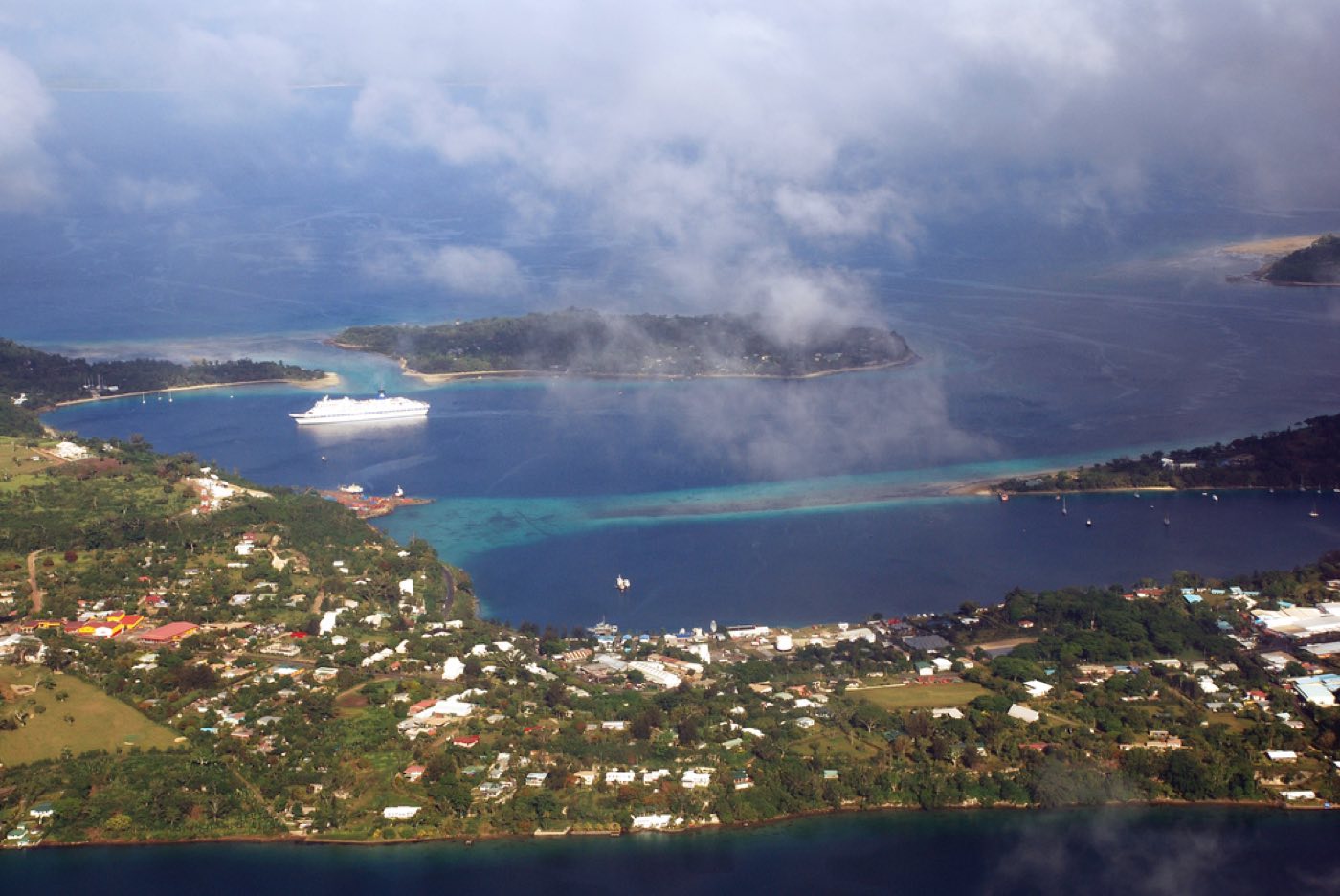
Port Vila waterfront and Iririki Island
The capital is small — a single waterfront strip with a fresh market, a handful of restaurants, and a view across the harbour to Iririki Island. Spend a morning at the Mama's Market (the downstairs section) where women from villages around Efate sell produce, woven baskets, and kava. Take the short ferry across to Iririki for lunch at the resort's beach bar. The Vanuatu Cultural Centre is worth a serious hour for an introduction to kastom and the country's 100-plus languages before you head out to the islands.
Millennium Cave adventure on Espiritu Santo
A full-day hike-swim-raft trip out of the village of Vunaspef in Santo's interior, through rainforest to a limestone cave you wade and swim through in waist-deep water, then down a canyon river where you float sections on bamboo rafts. It's organized by the village as a community enterprise, the guides are relatives of the chief, and the experience is a genuine working example of responsible tourism. Wear shoes that can get wet, bring a dry bag for a camera, and expect to be muddy by the end.
When to Go
Dry season runs April through October and is the stretch you want — warm days around 25–28°C, lower humidity, and the trade winds that keep the islands comfortable. Cyclone season and the heaviest rains fall from November through March, with January and February the peak risk — not impossible to travel then but less predictable and occasionally dangerous. The Naghol land diving ceremony on Pentecost falls specifically in April, May, and June — aim for one of these months if witnessing it is a priority. June through August are the coolest and driest, favored by divers visiting the Coolidge.
Getting Around
Internal travel in Vanuatu means flights — Air Vanuatu (now rebranded as Air Vanuatu 2023 after restructuring; check current status when booking) and small charter operators run turboprops from Port Vila to Tanna, Santo, Pentecost, and a handful of other outer islands. Flights are not always on schedule, sometimes cancelled for weather, so don't book tight onward connections. Within Efate, minibuses (look for the B on the license plate) run flexible routes for 150 vatu anywhere in Port Vila; for out-of-town day trips rent a car or hire a driver. On outer islands, transport is usually arranged by your guesthouse — a pickup truck, a longboat, or a guide on foot.
Cost & Currency
The currency is the Vanuatu vatu (VUV), and costs are higher than you might expect — Vanuatu imports nearly everything. Budget around US$120–$200 a night for a mid-range hotel in Port Vila, US$60–$100 for a basic island bungalow, and US$15–$30 for a restaurant dinner. Internal flights are a significant cost; a return to Tanna or Santo is typically US$250–$400. Major hotels and dive shops accept cards; the rest of the country runs on cash. ATMs exist in Port Vila and Luganville (Santo's main town) only — draw vatu before heading to outer islands. Tipping is not part of local culture and not expected.
Frequently Asked Questions
- Do I need a visa to visit Vanuatu?
- Most Western travelers — US, UK, EU, Canadian, Australian, and New Zealand citizens — can enter visa-free for 30 days with a passport valid six months beyond arrival and an onward ticket. Extensions are possible at the immigration office in Port Vila. Other nationalities should check with the Vanuatu immigration service; most can obtain a visa on arrival but it's worth confirming ahead of travel.
- Is it safe to climb Mount Yasur?
- Generally yes, with the usual caveats that apply to an active volcano. Local guides from the villages around Yasur monitor activity readings (rated 0 to 4) and will turn visitors back when the crater is too active. The rim is exposed and rocks do occasionally fly out, and there have been rare fatalities over the years. Go with a reputable guide, follow their instructions, and don't try to go closer than they allow. Travel insurance that covers volcanic activity is worth having.
- Do I need malaria prophylaxis?
- Malaria is present in Vanuatu, particularly on the outer islands, though not at the levels you'd see in parts of Africa. Most travel clinics recommend prophylaxis for anyone traveling beyond the main resort areas of Efate. Mosquito bite prevention is the first line of defense — long sleeves at dusk, repellent, and sleeping under a net if your accommodation doesn't have screens. Talk to a travel doctor 4–6 weeks before your trip.
- How do I get to Vanuatu?
- International flights land at Port Vila (VLI) on Efate, mainly from Brisbane, Sydney, Auckland, and Nadi in Fiji. From North America or Europe, the typical routing is via Australia or New Zealand. Air Vanuatu, Qantas, Fiji Airways, and Virgin Australia have operated the main routes (check current schedules, as the national carrier has had recent restructuring). Allow a buffer day in case of schedule changes.
- Can I attend a kastom ceremony as a visitor?
- Yes, with a local guide or tour operator acting as intermediary, and with the understanding that these are genuine religious and cultural events rather than shows. A fee is normally paid to the hosting village, and that's appropriate — it supports the community that maintains the tradition. Dress modestly, follow your guide's direction on photography (sometimes allowed, sometimes not), and treat what you're seeing as you would any ritual at home.
Plan a Trip to Vanuatu
Have you been to Vanuatu?
Track 195 countries, 50 states & 63 national parks on your map