Micronesia
- Capital
- Palikir
- Population
- 115K
- Currency
- USD
- Languages
- English
Overview
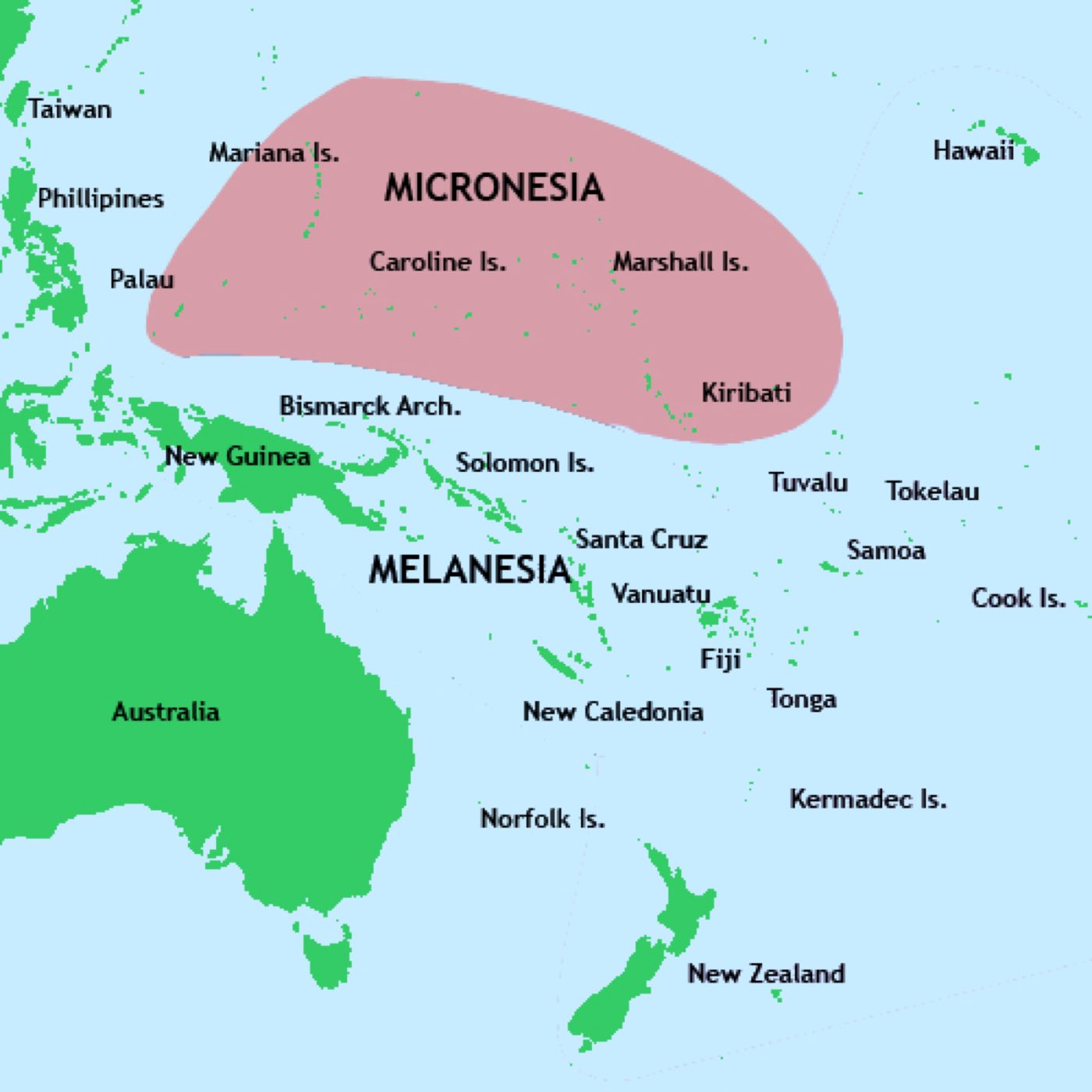
A Pacific island federation of four states — Chuuk, Pohnpei, Yap, and Kosrae — scattered across more than a million square miles of open ocean in the western Pacific. The Federated States of Micronesia is what you come to when you want travel that hasn't been shaped by tourism: small airfields, handshake island politics, and reefs the rest of the world hasn't gotten around to ruining. Chuuk Lagoon holds the single biggest reason most divers make the trip. In February 1944 a surprise American air raid called Operation Hailstone sent most of a Japanese naval fleet to the bottom in a few hours, and the lagoon has sat quiet ever since — more than 50 wrecks now carpeted in soft coral, with cargo holds of trucks, gas masks, sake bottles, and aircraft still inside them. Other islands tell different stories. Pohnpei has the basalt-columned ruins of Nan Madol, an entire stone city built on artificial islets by a lost dynasty. Yap still uses giant stone money quarried in Palau and floated home by canoe. Travel here takes patience. Flights between states are limited, infrastructure is thin outside the main ports, and English is widely understood but the pace is firmly local. Go for the diving, the archaeology, and the rare experience of Pacific cultures that have negotiated modernity on their own terms.
Things to Do
Chuuk (Truk) Lagoon WWII wreck diving
The world's largest ship graveyard lies within a protective reef fifty miles across, where a few days of American bombing in 1944 sent an entire Japanese supply fleet to the bottom. Operators based in Weno run daily trips to the San Francisco Maru, Fujikawa Maru, and Shinkoku Maru — cargo holds of trucks, torpedoes, and shell casings still sit where crews left them. Visibility runs 60 to 100 feet and water temperatures stay around 82°F year-round. Bring advanced certification for the deeper wrecks and a flashlight for the engine rooms.
Nan Madol ancient stone city on Pohnpei
On the southeast coast of Pohnpei, 92 artificial islets were built from massive basalt columns stacked log-cabin style over centuries, creating a royal and ceremonial complex that archaeologists still struggle to fully explain. You reach it by small boat at high tide through narrow canals between the islets — climbing onto Nandauwas, the central royal tomb, feels more like entering a forgotten civilization than visiting a monument. A UNESCO site since 2016. Arrange a local guide in Kolonia; access crosses private land and requires permission.
Kepirohi Waterfall on Pohnpei
Twenty minutes from Kolonia along the Madolenihmw road, a short jungle trail leads to a wide curtain of water falling about 70 feet into a clear swimming pool. The hike in is shaded and flat enough for most travelers, and local kids usually have the place spoken for on weekends. Pohnpei is one of the wettest places on Earth, which means the falls are reliably full and the forest around them thick with ferns, lianas, and sakau plants used in traditional drinking ceremonies.
Yap's traditional stone money and manta rays
Yap is where stone disks the size of small cars still function as ceremonial currency, and where a 1,500-year-old caste system survives in village protocols any visitor is expected to observe. The diving is world-class — Mi'l Channel draws reef mantas that cruise cleaning stations from December through April, with individual wingspans pushing 12 feet. Book through one of the two dedicated dive resorts on the main island. Wear a lap-lap over swim shorts on village visits, and ask before photographing anyone or anything.
Kosrae's Lelu ruins and pristine reefs
The smallest of the four states, Kosrae is the one you choose for untouched coral and a slower day. The Lelu Ruins on the east side preserve basalt-walled compounds where the island's paramount chiefs lived in the 14th and 15th centuries — quieter, smaller, and easier to access than Nan Madol, and no less impressive up close. The reefs ringing the island have been protected for decades and have some of the healthiest hard coral in the Pacific. Utwe-Walung mangrove tours add another dimension on rainy afternoons.
Blue Hole diving on Kosrae
A natural vertical tunnel cut into the reef off Kosrae's Lelu harbor drops divers through a chimney of coral into an open chamber around 90 feet down, where light from above shafts in like cathedral windows. You exit through an arch into the outer reef wall and drift along gardens of branching Acropora and clouds of anthias. Conditions are typically calm and clear, and the site works well for experienced divers who want something more technical than a pure wreck or reef day.
Traditional sailing canoe experiences
Across the outer atolls — especially in Yap's Ulithi group and Chuuk's outer islands — traditional outrigger canoes built without metal fasteners are still used for inter-island voyaging and fishing. A handful of communities run short sails for visitors, sometimes arranged through the cultural centers in Colonia or Weno, and the experience is about as close as you can get to pre-industrial Pacific navigation. Expect the logistics to take days not hours to line up, and expect the sail itself to be quiet, physical, and unforgettable.
When to Go
December through April delivers the driest conditions across the federation, the most reliable diving visibility, and the peak manta season on Yap. Chuuk Lagoon diving holds up year-round thanks to the sheltered reef, though the May-to-November wet season brings more afternoon squalls. Pohnpei earns its reputation as one of the wettest spots on Earth — expect rain in any month — but January to March is marginally drier and more pleasant for jungle hikes to Nan Madol and Kepirohi. Avoid the core typhoon window from August through October if you have flexibility.
Getting Around
Inter-island travel relies almost entirely on United Airlines' Island Hopper route, which runs a few times a week connecting Honolulu to Majuro, Kwajalein, Kosrae, Pohnpei, Chuuk, and Guam. Missing a flight can mean a three- or four-day wait for the next one, so build in buffer days at either end. Within each state, roads are limited — Pohnpei and Kosrae each have a single coastal ring road, Chuuk has a few miles of paved road on Weno, and Yap has a small network around Colonia. Rental cars are available on the main islands but informal; hotels can arrange drivers. Small boats are how you reach outer islands and dive sites, and schedules often bend to weather and tides.
Cost & Currency
Micronesia uses the US dollar, which simplifies budgeting but doesn't necessarily make the trip cheap — flights in are the biggest expense, and most diving and accommodation packages are priced like remote Pacific trips anywhere. Expect $150 to $250 per night for a mid-range hotel room on Pohnpei or Chuuk, $10 to $18 for a local plate of reef fish with rice at a family restaurant, and $150 to $200 for a two-tank dive day including lunch and tanks. Credit cards work at major hotels and dive shops but cash is essential for taxis, markets, and the outer islands. Bring small bills; ATMs exist in Kolonia and Weno but can be temperamental.
Frequently Asked Questions
- Do I need a visa to visit Micronesia?
- Most visitors including US, EU, UK, Australian, and Canadian citizens can enter visa-free for up to 30 days on arrival with a valid passport and onward ticket. The federation has a Compact of Free Association with the United States, which makes US citizens effectively residents on arrival. Check the state-specific requirements — Yap and some outer islands require additional permits for certain villages.
- How do I get to Micronesia?
- The only realistic route is United Airlines' Island Hopper, which runs from Honolulu westward or Guam eastward through Majuro, Kwajalein, Kosrae, Pohnpei, and Chuuk a few days a week. Plan on at least 24 hours of flying and connections from most origin cities, and expect the schedule to matter more than the fare when you book — gaps between flights can be several days.
- Is Micronesia safe for travelers?
- Generally yes — violent crime is rare and the culture is hospitable, though petty theft does occur on Chuuk and Pohnpei. The practical risks are more about infrastructure: limited medical facilities, unreliable flights, and tropical storms in wet-season months. Follow dive operators' safety protocols closely, carry travel insurance that covers evacuation, and respect village protocols and land-access customs everywhere outside the main towns.
- What should I know about diving Chuuk Lagoon?
- The wrecks are war graves and contain unexploded ordnance, fuel oil, and still-sealed cargo holds — go with an experienced local operator, do not penetrate wrecks beyond your training, and do not remove artifacts. Water is warm (around 82°F) and visibility is strong most of the year. Advanced open water certification is the practical minimum; many of the best sites (San Francisco Maru, Aikoku Maru) sit at 100 to 200 feet and call for technical training.
- What is the local culture like?
- Each of the four states has its own language, customs, and traditional authority structures, and Yap in particular maintains a formal caste system that governs land, fishing rights, and village access. Dress modestly away from resort beaches — women should cover their thighs, and a lap-lap sarong is appreciated in villages. Ask before photographing people, and accept that village-level permission is often required to visit sites or swim at certain beaches.
Plan a Trip to Micronesia
Have you been to Micronesia?
Track 195 countries, 50 states & 63 national parks on your map