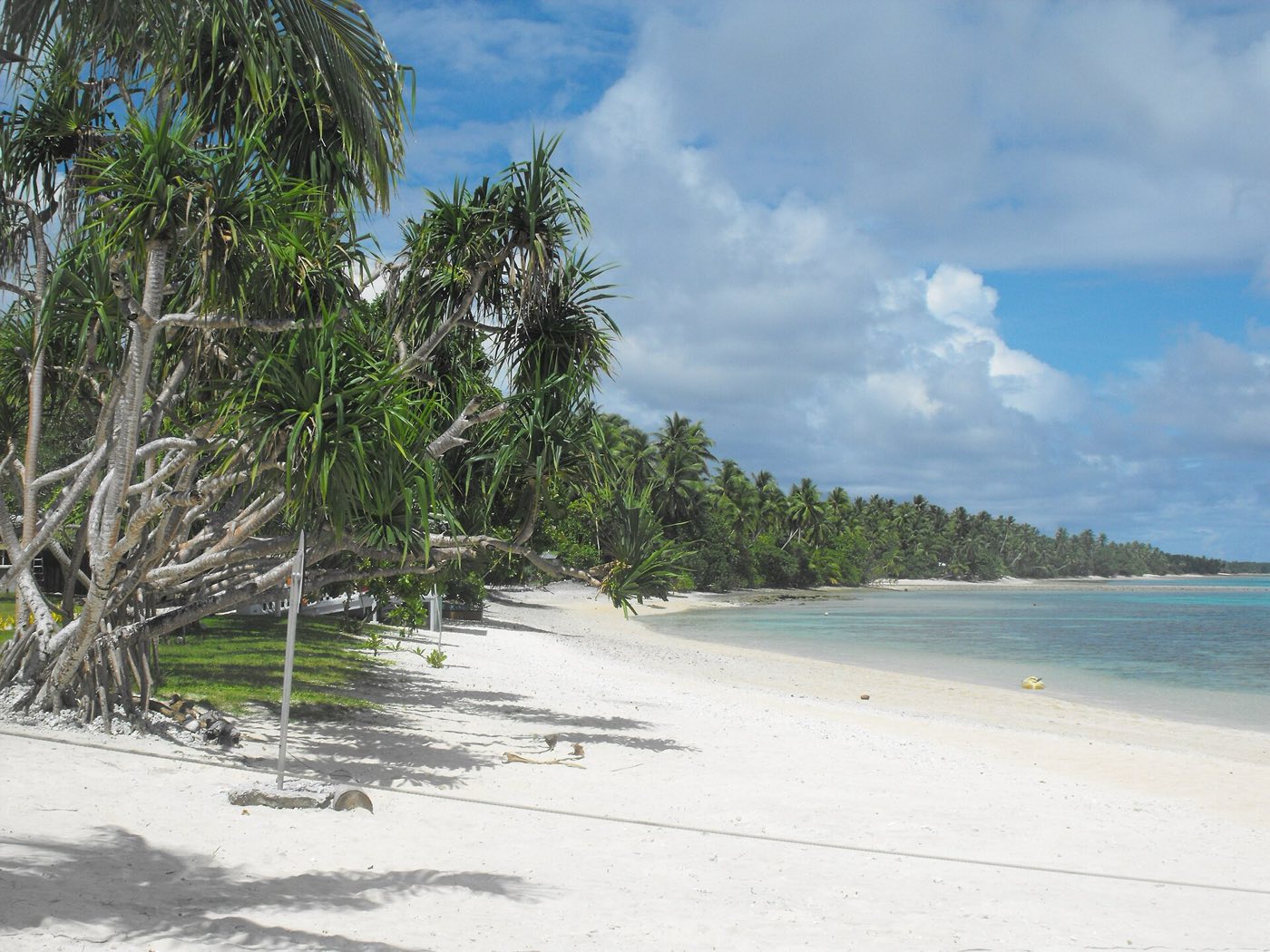
Marshall Islands
- Capital
- Majuro
- Population
- 42K
- Currency
- USD
- Languages
- Marshallese, English
Overview
A remote Pacific nation of 29 low-lying coral atolls and five islands scattered across 750,000 square miles of open ocean, the Marshall Islands sit roughly halfway between Hawaii and Australia. WWII naval battle sites lie submerged under some of the clearest and most fish-rich diving waters on Earth, and the Marshallese navigational tradition — reading swells with memorized stick charts — still survives in a handful of communities. You feel the remoteness the moment you arrive. The runway at Majuro is a thin strip of coral and asphalt squeezed onto an atoll barely wide enough to hold it, with lagoon on one side and open Pacific on the other. There are no high-rise resorts, no cruise terminals, and outside the capital no paved roads to speak of. Travel between outer atolls happens by Air Marshall Islands prop plane when it's running, by supply ship when it's not, and patience is a requirement rather than a virtue. The country rewards divers, cultural travelers, and anyone drawn to places that haven't been smoothed for tourism. You go for the Bikini wrecks and the Kwajalein ghost fleet, for the manta rays and the chance to sit with a canoe-builder on an outer atoll — not for comfort or convenience. Pack flexibility, a hard backup plan for canceled flights, and a real respect for the nuclear-testing history that still shapes this nation.
Things to Do
Bikini Atoll UNESCO site and wreck diving
The site of 23 US nuclear tests from 1946 to 1958 is now a UNESCO-listed diving cemetery of sunken warships — the aircraft carrier USS Saratoga, the battleship Nagato, the submarine Apogon — all lying in 40 to 55 meters of startlingly clear water. Only technical divers with advanced certifications and a week-long liveaboard booking can visit; the original islanders have not been permitted to resettle because of lingering radiation in the soil. The diving is bucket-list serious and the history weighs on every briefing.
Majuro's Laura Beach and Alele Museum
The capital atoll is a sliver of land wrapped around a lagoon, and Laura Beach at the far western end is the widest, quietest stretch of sand — about a 45-minute drive from downtown. Pack food and water; there's no resort, just palms, coral shallows, and the occasional local family on weekends. The Alele Museum in downtown Majuro covers the Marshallese stick chart tradition, colonial history, and the nuclear legacy in a compact, well-labeled collection that you can cover in an hour.
Kwajalein Atoll WWII shipwrecks
The world's largest coral atoll lagoon — 1,100 square miles of enclosed water — still holds dozens of Japanese ships and planes sunk during the 1944 US invasion. Visiting requires careful planning because Kwajalein itself is a US Army missile-testing base with restricted access; most divers base on Ebeye, the densely populated Marshallese island adjacent, and dive the more accessible wrecks from there. Water clarity averages 30 meters. Book with a local operator who has the necessary permissions.
Arno Atoll snorkeling and village stays
Just east of Majuro, Arno is reachable by a small fishing-boat charter across the passage in calm weather — about 90 minutes each way. The atoll is ringed with pristine coral, and a handful of families take in homestay guests with advance arrangement through Majuro tour operators. Expect coconut-frond houses, fresh reef fish for dinner, and an immersive slice of outer-island life. Bring your own mask and fins — gear rental doesn't exist.
Traditional outrigger canoe sailing
Marshallese sailing canoes — called walap and tipnol — are engineering marvels with asymmetric hulls that allow one hull to stay aligned with the wind no matter which direction the boat sails. The Waan Aelon in Majel program on Majuro trains young Marshallese to build and sail them, and offers short sailing sessions in the lagoon to visitors by arrangement. A half-day outing gives you a crash course in a navigational tradition that crossed the Pacific a thousand years before any European set out.
Mili Atoll Japanese WWII relics
Southernmost of the Marshall chain, Mili housed a major Japanese airbase during the war, and the atoll still holds rusting Zero fighter wrecks, concrete bunkers, and anti-aircraft guns half-swallowed by vegetation. Getting there requires either a chartered flight or a multi-day supply-ship ride and serious coordination, but the combination of wartime archaeology and empty beaches rewards the effort. Arrange with a Majuro-based guide who has current relationships with the community.
Stick chart navigation cultural demonstrations
The stick chart — a lashed-bamboo frame mapping ocean swell patterns between atolls — is unique to the Marshall Islands and was used by master navigators to cross hundreds of miles of open sea from memory. Demonstrations and workshops happen periodically at the Alele Museum and the University of the South Pacific campus on Majuro. Ask at your hotel or the tourism office — schedules are informal and usually depend on which master navigators are in town that week.
When to Go
December through April offers the driest conditions and calmest seas, which matters hugely for diving visibility and for any small-boat inter-atoll travel. Water temperatures stay at a steady 28°C year-round, so thermal comfort isn't the issue — rain and wind are. The rainy season from May through November brings more frequent squalls and less reliable flight schedules, though the diving remains good between storms. Typhoons occasionally pass through from July through October; check forecasts closely if you travel in that window.
Getting Around
Majuro atoll has a single main road running the length of the island, and a regular minibus service runs it from six in the morning to eight at night for about 75 cents a ride. Taxis are cheap and plentiful in the capital. Getting to outer atolls is the real logistical challenge — Air Marshall Islands flies a small fleet of prop planes on shifting schedules, and cancellations for weather or maintenance are common. Budget extra days on either end of any outer-atoll visit. Inter-island supply ships run occasionally and take 8 to 48 hours depending on destination. Car rental is available on Majuro and worth it for a beach day at Laura.
Cost & Currency
The Marshall Islands uses the US dollar as its official currency, which simplifies planning for American travelers and keeps prices relatively high by Pacific island standards — everything is imported. Budget $5 to $10 for a plate lunch of fish and rice at a Majuro local restaurant, $150 to $220 a night for a mid-range hotel room in the capital, and considerably more for outer-atoll charters and liveaboard diving trips (Bikini liveaboards run $6,000 and up for a week). Cash is essential — ATMs exist on Majuro but are unreliable, and credit-card acceptance is patchy outside the main hotels. Tipping is not expected locally, though a few dollars to boat crews and guides is appropriate.
Frequently Asked Questions
- Do I need a visa to visit the Marshall Islands?
- US citizens can enter and stay up to a year without a visa under the Compact of Free Association. Most other nationalities, including EU and UK passport holders, receive a 30-day entry stamp on arrival. Bring a passport valid for six months beyond arrival and proof of onward travel.
- How do I get to the Marshall Islands?
- United Airlines operates the Island Hopper, a milk-run flight from Honolulu that stops at multiple Micronesian atolls before landing at Majuro — the whole flight takes about 15 hours with five stops. It runs a few times a week in each direction and is the only regular commercial access point, so book early and stay flexible on dates.
- Is radiation still a concern at Bikini and nearby atolls?
- Short visits to Bikini for diving are considered safe — external radiation levels on the reef are low and dives are conducted in open water away from the main testing sites. The concern is internal exposure from eating locally grown food, which is why the original islanders have not been resettled. Bring your own food if staying overnight on any of the northern atolls.
- Are the Marshall Islands safe for travelers?
- Yes — violent crime against visitors is very rare, and Marshallese hospitality to guests is genuine. Petty theft can happen on Majuro and Ebeye, so don't leave valuables in a parked car or on the beach. The main risks are logistical — canceled flights, weather-delayed boats, and limited medical care on outer atolls.
- Can I dive Bikini Atoll on a standard open-water certification?
- No — Bikini dives are all beyond recreational limits (40 to 55 meters), requiring advanced nitrox or trimix certifications depending on the operator. You'll need documented experience with decompression diving. Operators run Bikini trips as week-long liveaboards only, typically from May through October, and book up a year or more in advance.
Plan a Trip to Marshall Islands
Have you been to Marshall Islands?
Track 195 countries, 50 states & 63 national parks on your map