Australia
- Capital
- Canberra
- Population
- 26.4M
- Currency
- AUD
- Languages
- English
Overview
A continent that happens to also be a country, Australia stretches from the bleached limestone cliffs of the Great Australian Bight to the tropical rainforest of Far North Queensland, taking in the red-dirt interior, the Great Barrier Reef, and some of the oldest living culture on earth along the way. You come for Sydney Harbour on a blue winter afternoon, the silence around Uluru at dawn, the coral walls dropping into indigo off Cairns, and the wine country of South Australia where the Shiraz vines are older than most European vineyards. What surprises most first-time visitors is the scale. Melbourne to Perth is roughly the distance of New York to Los Angeles, and it's mostly empty between. You don't drive that — you fly, and you pick your corners. What also surprises is how coastal the country actually is: more than 80% of Australians live within 100 kilometers of the ocean, and the cities have grown up facing it. There's a surfboard-tanned ease to Sydney, Melbourne, and Perth that's hard to fake. Australia rewards travelers who are willing to plan for distance and to pay for it. Domestic flights, fuel, and restaurant meals all cost more than you might expect, but the trade is a country that still feels uncrowded, a landscape that doesn't look like anywhere else, and a wildlife list — kangaroos, wombats, saltwater crocodiles, quokkas, every snake you've ever heard of — that you can actually tick off in two or three weeks on the ground.
Things to Do
Great Barrier Reef snorkeling and diving
The world's largest coral reef system runs 2,300 kilometers up the Queensland coast, and the easiest way in is a day boat from Cairns or Port Douglas out to the outer reef. You slide off the back of the pontoon into 27-degree water and float over coral gardens, reef sharks, giant clams with iridescent blue lips, and whatever turtles happen to be passing. If you've got an open-water certification, go deeper — the drop-offs at Osprey Reef or the Ribbon Reefs on a liveaboard are a different experience altogether, with bigger fish and water so clear the visibility blurs your sense of scale.
Sydney Opera House and Harbour Bridge
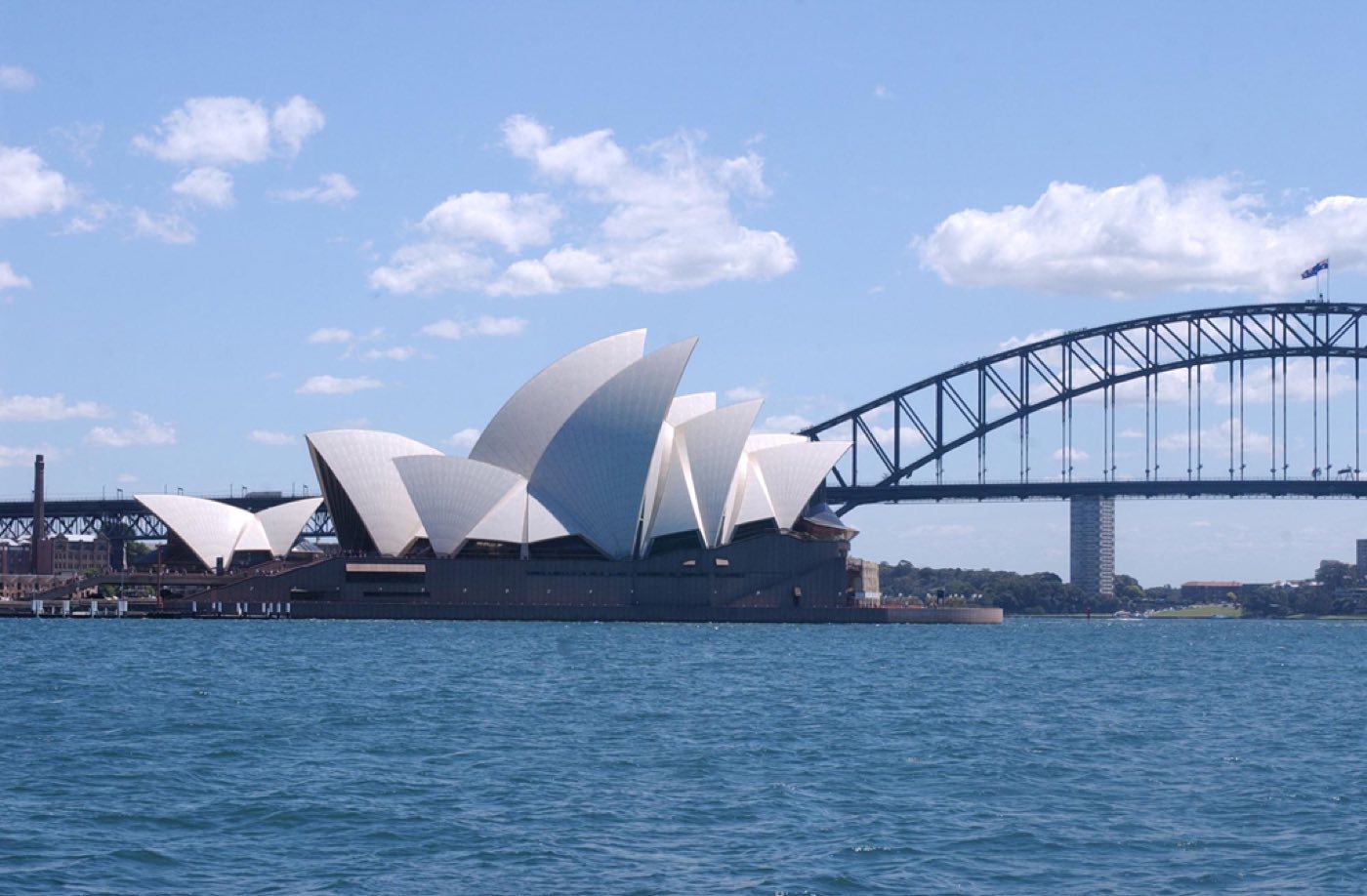
Sydney's two icons sit across the harbor from each other, and the easiest way to appreciate them both is the free ferry from Circular Quay to Manly — forty minutes each way, deck seats, the Opera House's white sails sliding past on the outbound run. For the Bridge, either walk across it (free, about twenty minutes) or climb it (not free, but you end up on the arch looking down). Back on land, the Opera House's interior tour is worth doing; so is sitting on the front steps at sunset with a bottle of something.
Uluru and Kata Tjuta at sunset
The great red monolith in the center of the country is sacred to the Anangu people, and since 2019 you can no longer climb it — which, frankly, makes the visit better. Instead you walk the ten-kilometer base trail in the early morning while it's cool, watching the rock shift through ochre, rust, and violet as the light moves. At sunset everyone gathers at the designated viewing area with sparkling wine, and the color shift really is worth the fuss. Stay two nights so you get both Uluru and the equally extraordinary domes of Kata Tjuta thirty kilometers west.
Great Ocean Road and the Twelve Apostles
Victoria's coastal highway runs 243 kilometers from Torquay to Allansford, and the right way to drive it is slowly — two days with an overnight in Apollo Bay or Port Campbell. The Twelve Apostles are the headline: limestone stacks rising out of the Southern Ocean, best caught at sunrise before the tour buses arrive from Melbourne. On either side of them are the Loch Ard Gorge, the Razorback, and a string of beaches where you can pull over, walk down, and not see another car for an hour.
Daintree Rainforest
North of Cairns, the Daintree is the oldest continuously existing rainforest on earth — 180 million years of unbroken growth, which is twice the age of the Amazon. You cross the Daintree River by cable ferry and enter a country of canopy walks, strangler figs, cassowaries (big flightless birds that will absolutely attack you if they have chicks), and a coastline where the forest runs right down onto white-sand beaches you cannot swim off because of box jellyfish and crocodiles. Cape Tribulation is the end of the sealed road and the essential overnight.
Kangaroo Island wildlife
A short ferry from the South Australian coast, Kangaroo Island is roughly a third the size of Corsica and feels genuinely wild. Sea lions sleep on the beach at Seal Bay while you walk past them with a guide; koalas doze in the gum trees along the Flinders Chase roads; and the Remarkable Rocks, wind-sculpted granite boulders on the southwest tip, look like modern sculpture someone forgot to collect. The 2020 bushfires burned roughly half the island and regrowth is visible everywhere — it's a story worth asking locals about.
Barossa Valley wine tasting
An hour northeast of Adelaide, the Barossa is Australia's most storied wine region, with Shiraz vines planted in the 1840s by German Lutheran settlers that are now among the oldest continuously producing vines in the world. Henschke's Hill of Grace and Penfolds' Grange are the legends; a dozen smaller cellar doors — Rockford, Torbreck, Yalumba — will pour you tastings without an appointment. Hire a driver or stay in Tanunda, and make sure one meal happens at Fino at Seppeltsfield.
Kakadu National Park
Kakadu, in the Northern Territory's Top End, is the size of Slovenia and protects wetlands, sandstone escarpments, and some of the world's oldest rock art — the galleries at Ubirr and Nourlangie have paintings dating back up to 20,000 years. You come in the dry season, May through October, when the roads are passable and the waterfalls at Jim Jim and Twin Falls are running. Crocodile safety is not optional here: swim only where rangers have cleared the water, and take the warnings seriously.
When to Go
Southern Australia's seasons are a mirror of the northern hemisphere — summer from December to February, winter from June to August — so Sydney and Melbourne beach time runs December through March, while the tropical north around Cairns, Darwin, and the Kimberley flips to dry-season travel from May through October. Shoulder months of March-April and September-October are the sweet spot for most of the country: warm days, cool nights, lower prices, and fewer crowds. Avoid Queensland during January cyclone season, and skip the Top End in the November-to-April Wet unless you want the drama of full waterfalls and empty roads.
Getting Around
Distances in Australia will undo any itinerary built for European scales, and flying is the only realistic way to cover the country — Qantas, Virgin, and budget carrier Jetstar run frequent east-coast hops and a handful of trans-continental routes. Once you're in a region, a rental car is almost always the answer: highways are well-signed, speed limits are strictly enforced, and fuel stations in the outback can be 300 kilometers apart, so fill up early. Sydney, Melbourne, and Brisbane have decent urban rail and tram networks plus Uber, while the Ghan train from Adelaide to Darwin and the Indian Pacific from Sydney to Perth are multi-day journeys worth considering as experiences in themselves rather than transport.
Cost & Currency
Australia uses the Australian dollar (AUD) and sits firmly on the expensive end of the global travel spectrum — expect prices in line with Western Europe or the US West Coast, sometimes higher. A flat white in a Melbourne cafe runs AUD 5–6, a pub lunch 22–30, a mid-range hotel room in Sydney 220–350 a night, and dinner with wine for two at a good restaurant 180–250. Domestic flights and fuel are the real budget line items: Sydney to Perth one-way is often AUD 300–500. Cards are accepted essentially everywhere, contactless is standard, and tipping is not expected — a 10% round-up at a sit-down restaurant is generous, nothing at cafes or bars is normal.
Frequently Asked Questions
- Do I need a visa to visit Australia?
- Most travelers do — Australia has no visa-on-arrival, but US, UK, EU, and many other passport holders can apply online for the ETA (Electronic Travel Authority) or eVisitor visa, which costs around AUD 20 and is usually approved within hours. Both allow stays of up to three months per visit for tourism. Apply before you fly; airlines will not board you without one.
- How long should I plan for a first trip?
- Two weeks is the realistic minimum for a first visit, and three weeks is better. A common loop is Sydney (3 nights), the Red Centre for Uluru (2 nights), Cairns and the Great Barrier Reef (3 nights), and Melbourne with the Great Ocean Road (4 nights). Trying to add Perth or Tasmania on top generally means shortchanging everything else — consider those for a second trip.
- Is Australia safe for travelers?
- Yes — violent crime is very low, infrastructure is excellent, and emergency services are quick to respond. The real risks are environmental: ocean rips on unpatrolled beaches, bushfires in summer, saltwater crocodiles north of about the 20th parallel, and dehydration in the outback. Swim only between the red-and-yellow flags at patrolled beaches, check fire warnings in summer, and never underestimate driving distances in remote country.
- Can I see kangaroos in the wild?
- Yes, and you probably will without trying. Kangaroos are everywhere in rural Australia, especially at dawn and dusk along country roads — which is also why you don't drive those roads at night if you can avoid it. Reliable viewing spots include Kangaroo Island, Pebbly Beach on the New South Wales south coast, and the grasslands around Canberra. Wildlife parks are fine backups if you want guaranteed sightings of koalas, wombats, and Tasmanian devils.
- What's the deal with drop bears and other wildlife stories?
- Drop bears are a practical joke Australians play on tourists — there's no such thing. The real wildlife to respect is snakes (give them space and they'll give you space), saltwater crocodiles in the north (swim only where rangers clear the water), and box jellyfish in tropical waters from November through May (wear a stinger suit or swim in netted enclosures). Spiders sound scary but almost never cause serious injury; shake out your shoes and move on.
Plan a Trip to Australia
Have you been to Australia?
Track 195 countries, 50 states & 63 national parks on your map