Solomon Islands
- Capital
- Honiara
- Population
- 724K
- Currency
- SBD
- Languages
- English
Overview
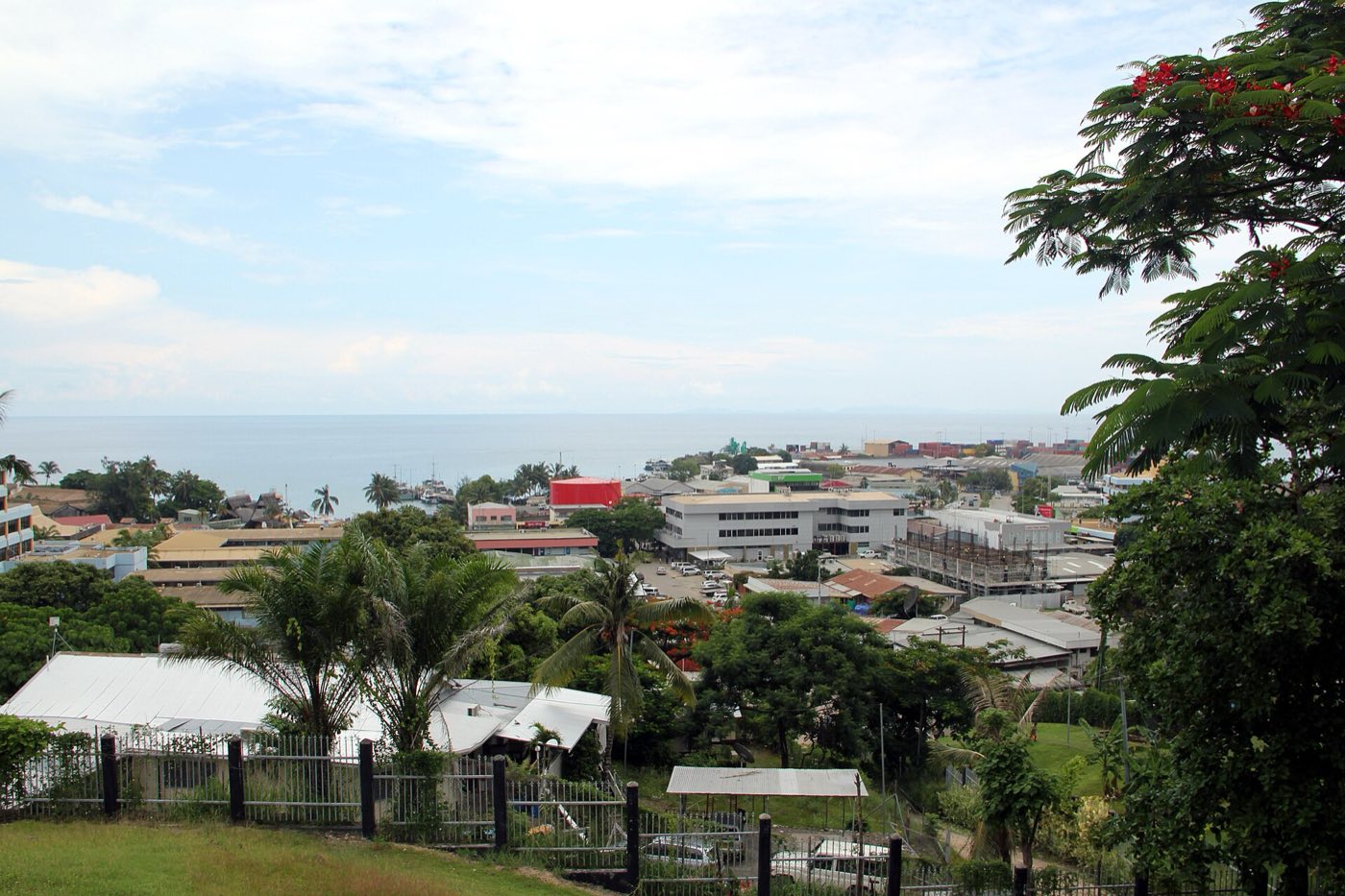
A Melanesian archipelago of nearly a thousand islands in the South Pacific, where dense jungle-covered peaks rise straight out of warm, coral-fringed water and the wrecks of the 1942–43 Guadalcanal campaign still rust on the seabed. Travelers come to dive the Iron Bottom Sound's WWII fleet, paddle through the vast Marovo Lagoon, and encounter traditional kastom culture in villages that still run on canoe time. The Solomons are not polished. Honiara, the capital on Guadalcanal, is a working Pacific town with a lively waterfront market and a handful of WWII memorials, not a resort strip. To get anywhere else you fly Solomon Airlines in small turboprops to Munda, Gizo, or Seghe, and from there it's a boat ride — sometimes a long one — to the lodge or village you are staying at. Infrastructure is thin, power may be solar or generator, and what you trade that for is ocean scenery with no development in any direction, reef diving you will have largely to yourself, and a warm welcome from communities that see few outsiders. The Solomons reward travelers who want the South Pacific as it was before the resort chains arrived. You come for diving or for the WWII history or for the slow pace of life in a saltwater village, and you leave having genuinely left the grid for a week or two. Pack patience for flight delays, reef shoes for every beach, and cash — the Solomons is a cash economy almost everywhere outside Honiara.
Things to Do
Iron Bottom Sound WWII wreck diving
The narrow channel between Guadalcanal and the Florida Islands holds more than 40 sunken ships and 700 aircraft from the 1942–43 campaign — American, Japanese, Australian — and earned its nickname for the sheer density of steel on the seafloor. Recreational divers can reach wrecks like the USS Aaron Ward, the John Penn, and B-17 and Wildcat airframes in 40–60 meters of clear water. Operators in Honiara run day trips; a few are deep-tech dives that need trimix certification. The scale is genuinely sobering.
Guadalcanal WWII battle sites
The six-month Guadalcanal campaign was the turning point of the Pacific war, and the island still carries the evidence across a handful of accessible sites. Bloody Ridge, where Marines held a decisive night battle in September 1942, is a short drive from Honiara with interpretive signs. The American and Japanese memorials on either side of Mount Austen look across at each other. The Vilu Open Air Museum preserves wrecked aircraft and field guns pulled from the jungle. Hire a local guide in Honiara for context — the terrain alone doesn't tell the story.
Marovo Lagoon — world's largest saltwater lagoon
A 700-square-kilometer maze of emerald water and raised coral islets in the Western Province, Marovo is protected by a double barrier reef and feels like paddling through a Pacific version of Halong Bay. Stay at one of the handful of community-run eco-lodges (Uepi Island, Matikuri, Ropiko) for diving, kayaking, and carver villages where ebony bowls are still worked by hand. Flights go from Honiara to Seghe, then a skiff takes you another hour across the lagoon. Three nights is the sweet spot.
Skull Island near Munda
A sacred islet in the Roviana Lagoon, Skull Island holds the stacked and bleached skulls of headhunting-era chiefs and their enemies in a small stone shrine — a striking and respectful site that predates European contact. Local guides from Munda take you across by outboard skiff in about thirty minutes. Photographs are restricted to certain angles, and a small kastom payment is customary. Pair it with snorkeling the nearby reefs, which are among the best in the Western Province.
Bonegi Beach WWII ship wreck snorkeling
An hour west of Honiara, the Japanese transport ships Hirokawa Maru and Kinugawa Maru sit beached and half-submerged just off Bonegi Beach, close enough that you can snorkel directly from shore to their holds. Fish school inside the bow plates and the decks are carpeted in soft coral. It is a rare wreck dive you can do in a swimsuit and mask, and one of the few truly accessible WWII sites for non-divers. The beach itself is black volcanic sand — pleasant enough for a full afternoon.
Rennell Island UNESCO lake and raised coral atoll
East Rennell, a UNESCO natural heritage site and the largest raised coral atoll on earth, holds Lake Tegano — a brackish inland lake dotted with islets and home to endemic birds and flying foxes. Getting there is a short flight from Honiara followed by a long truck ride, and stays are in simple village guesthouses. The site is listed as 'in danger' by UNESCO due to logging pressure, which is part of why visiting responsibly — and spending money with the communities that protect it — matters.
Tetepare Island — largest uninhabited tropical island
A 118-square-kilometer island abandoned by its inhabitants in the 19th century and now managed as a community conservation area by descendants of the original population. You can stay at the Tetepare Eco-Lodge, which funds the conservation work directly, and see nesting turtles, coconut crabs, dugongs offshore, and reefs that have never been commercially dived. Access is from Munda by boat, about two hours each way. Basic accommodation, genuinely wild setting, and one of the clearest conservation-tourism stories in the Pacific.
When to Go
May through October is the dry season — calmer seas, better diving visibility, and less daily rain — and this is when most lodges run at full capacity. November through April is cyclone season, bringing heavier rains and the occasional named storm; diving in sheltered lagoons like Marovo and Roviana stays viable, and prices drop, but flight cancellations happen and some lodges close for maintenance. Temperatures are tropical year-round, rarely out of the 24–32°C range, and the humidity is constant. Pack reef-safe sunscreen, quick-dry clothing, and light rain protection in any season.
Getting Around
Domestic travel is almost entirely by air or by boat. Solomon Airlines runs turboprop flights from Honiara to Munda, Gizo, Seghe (for Marovo), and a handful of outer islands — book well ahead because schedules are thin and delays are routine. From airstrips, you transfer by outboard skiff to lodges or villages, sometimes an hour or more across open water, so dry bags matter. On Guadalcanal, shared minibuses and taxis cover Honiara and the road west toward Bonegi; a rental 4x4 is the flexible option if you want to explore battle sites at your own pace. Roads outside the capital are limited and mostly unsealed.
Cost & Currency
The Solomons use the Solomon Islands dollar (SBD), currently around 8 SBD to 1 USD. Costs are higher than you might expect for a remote island economy because almost everything is imported. Expect SBD 30–50 for a café meal in Honiara, SBD 80–150 for a sit-down dinner, and SBD 250–500 a night for a Honiara hotel. Eco-lodges in Marovo or Tetepare are all-inclusive and typically run SBD 1,500–3,500 per person per night with meals and activities. Cards work at Honiara's larger hotels and the main banks; everywhere else is cash, and ATMs outside Honiara are unreliable — draw what you need in the capital. Tipping is not customary but always welcome.
Frequently Asked Questions
- Is the Solomon Islands safe for travelers?
- Generally yes, but with caveats. Honiara has had episodes of civil unrest — most recently riots in 2021 — and petty theft is a steady concern in the capital, especially after dark. Avoid walking alone at night in Honiara, leave valuables in hotel safes, and check current advisories before travel. The outer islands and dive lodges are calm and welcoming; most incidents involve Honiara specifically.
- Do I need a visa to visit?
- Most Western travelers (US, UK, EU, Australia, New Zealand) get a free 90-day visitor permit on arrival. You will need an onward ticket, a passport valid for six months, and proof of accommodation at your first destination. Check current requirements close to travel since conditions occasionally change.
- What vaccinations and health precautions do I need?
- Malaria is present across most of the country and prophylaxis is essential — talk to a travel clinic well before travel. Routine vaccinations plus typhoid and hepatitis A are recommended, and dengue is present year-round, so insect repellent matters day and night. Medical facilities outside Honiara are very limited; comprehensive travel insurance with evacuation cover is not optional.
- How do I get to the Solomon Islands?
- Honiara International Airport is served by Solomon Airlines, Fiji Airways, and Virgin Australia, with direct flights from Brisbane, Port Moresby, Nadi, and sometimes Auckland. There are no direct flights from North America or Europe — most travelers route through Brisbane or Nadi. Connections can be awkward, so build buffer days into your itinerary.
- Is English widely spoken?
- Yes — English is the official language and used in government, business, and tourism. Day to day, most Solomon Islanders speak Pijin, a Melanesian creole that is easy to follow after a day or two. Learning a few Pijin phrases is always appreciated in villages, but English will get you through anything a traveler needs to do.
Plan a Trip to Solomon Islands
Have you been to Solomon Islands?
Track 195 countries, 50 states & 63 national parks on your map