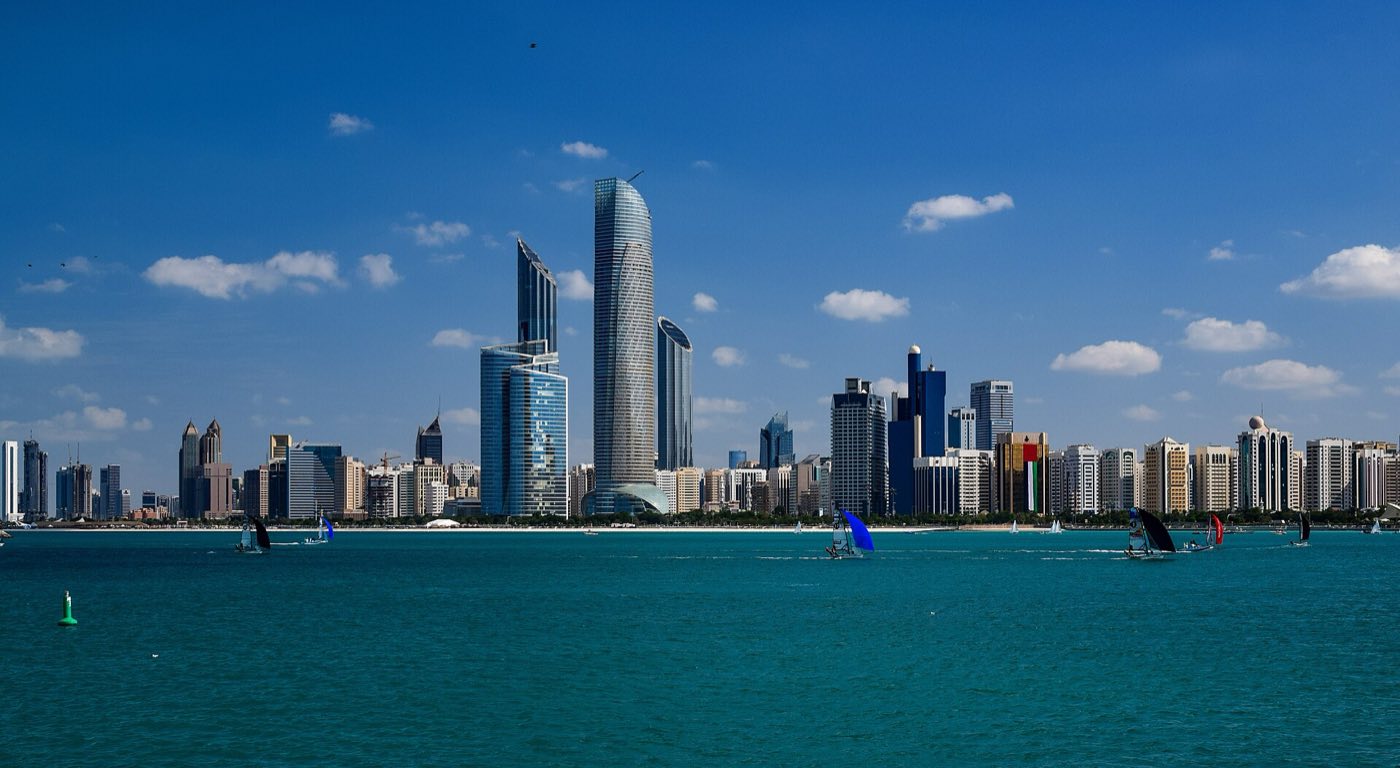
United Arab Emirates
- Capital
- Abu Dhabi
- Population
- 10M
- Currency
- AED
- Languages
- Arabic
Overview
The UAE is a federation of seven emirates on the southeastern tip of the Arabian Peninsula, welded together in 1971 and transformed across two generations from a string of pearl-diving and fishing towns into one of the world's most recognizable urban experiments. Dubai and Abu Dhabi draw the headlines — the tallest building on the planet, a Louvre with a perforated metal dome the size of a square, indoor ski slopes, artificial palm-shaped islands — and between them they account for most of the country's tourism. What the surface rendering misses is how quickly you can leave it. An hour east of Dubai the desert starts for real — the red dunes of the Sharqiya Sands, the Hajar Mountains rising 2,000 meters above the flats, Bedouin camps where the coffee is still served from a long-spouted brass pot and the quiet at midnight is total. The old towns of Ras Al Khaimah, Fujairah, and Al Ain carry architectural and cultural layers that predate oil by centuries. You can spend a morning on the Dubai Metro and an afternoon watching a falcon hunt. The UAE rewards travelers who let the country be more than one thing. It is the family-friendly resort destination the marketing materials describe and it is also a serious cultural capital with the Louvre Abu Dhabi, a world-class architecture scene, and a food culture that draws from Persia, India, the Levant, and the Gulf in equal measure. It is expensive but not wildly so if you skip the marquee hotels. Local laws are more relaxed than they were a decade ago — alcohol in licensed venues, unmarried couples sharing rooms — but public behavior norms still matter. Dress modestly off the beach, moderate public displays of affection, and you'll be welcomed everywhere.
Things to Do
Burj Khalifa observation deck in Dubai
At 828 meters, the Burj Khalifa has held the world's tallest building title since 2010 and will likely hold it for some time. The At The Top observation deck on level 124 is the standard ticket; At The Top SKY on levels 125 and 148 adds a higher outdoor viewing platform and a guided experience. Go at sunset — book the slot 60 to 30 minutes before, watch the city turn gold and then purple, then stay for the dark when the fountain show starts at the base below. Tickets book out, so reserve several days ahead.
Sheikh Zayed Grand Mosque in Abu Dhabi
Completed in 2007, the Grand Mosque is the largest in the UAE and one of the few major mosques in the Gulf that welcomes non-Muslim visitors outside prayer times. Eighty-two white marble domes, reflecting pools that double its scale, and the world's largest hand-woven carpet fill the main prayer hall. Free guided tours run throughout the day; women are given abayas at the entrance and everyone is expected to cover shoulders and legs. Evening visits, when the mosque is lit, are the most atmospheric — park in the visitor center and walk in.
Dubai Mall and Dubai Fountain show
The world's largest shopping mall by total area sits at the base of the Burj Khalifa and includes an aquarium, an Olympic-size ice rink, 1,200 stores, and enough food to feed a small country. The real draw for visitors is outside: the Dubai Fountain on the lake between mall and tower runs 15-minute water shows set to Arabic, Bollywood, and classical music every 30 minutes from sunset until 11pm. Stand on the bridge, eat shawarma from Bait Al Mandi first, time it with the Burj Khalifa light show and you have an evening.
Desert safari with dune bashing and Bedouin camp dinner
Half-day and overnight trips into the Sharqiya or Liwa desert leave from every hotel in Dubai and Abu Dhabi and follow a familiar structure: 4x4 dune-bashing for an hour, camel rides and sandboarding at a camp, dinner around a fire, a shisha and belly dance performance, then either the drive back or a night under the stars. Platinum Heritage and Arabian Adventures are the more thoughtful operators; skip the budget packages that bus 40 people into the same camp. A morning hot-air balloon flight over the dunes is the more beautiful alternative.
Louvre Abu Dhabi museum
Jean Nouvel's 2017 museum on Saadiyat Island sits under an 180-meter perforated steel dome that filters the Gulf sun into what the architect called a 'rain of light.' The collection is organized chronologically across human civilizations rather than regionally — a Ming vase next to a Mesopotamian cuneiform tablet next to a Rembrandt — and the effect is genuinely striking. Allow three hours, go in the late afternoon so you leave as the dome starts glowing against the dusk, and eat at Fouquet's or stay on Saadiyat for dinner.
Palm Jumeirah and Atlantis resort
The Palm is the most photographed of Dubai's artificial islands, a palm-shaped archipelago of villas and resorts with Atlantis The Palm as its anchor hotel. Non-guests can visit Aquaventure waterpark — one of the region's best, with waterslides and shark lagoons — or eat at one of the fronds' restaurants. The monorail gives you a sense of the scale. The newer Atlantis The Royal, opened 2023, is the design showpiece if you want to look at contemporary luxury architecture up close.
Old Dubai Creek and Gold Souk
The original Dubai was built around a tidal creek that separated the neighborhoods of Deira and Bur Dubai, and the old town on both banks remains the most interesting part of the city to walk. Cross by abra — a wooden water taxi — for one dirham, thread through the spice souk, then the Gold Souk, then the Textile Souk. The Al Fahidi historic neighborhood on the Bur Dubai side holds restored wind-tower houses, small galleries, and the Coffee Museum. This is Dubai at a completely different speed.
Al Ain Oasis and Jebel Hafeet
An hour and a half east of Abu Dhabi, Al Ain is the country's greenest city and a UNESCO site — a working oasis with over 147,000 date palms irrigated by centuries-old falaj channels you can walk alongside. A raised wooden boardwalk lets you explore without disturbing the system. The same day drive up Jebel Hafeet, the 1,249-meter mountain rising from the flats, on what is regarded as one of the world's great driving roads. The view from the top takes in Oman's border and the Empty Quarter beyond.
When to Go
November through March is the window — daytime temperatures in the mid-20s Celsius, clear skies, and pleasantly cool evenings on rooftop restaurants. January and February are peak, with European and Russian winter visitors filling the resorts. April and October are shoulder months, still warm but workable. May through September brings serious heat — often above 45°C by July — and the city retreats indoors into malls, hotels, and air-conditioned walkways; a summer visit is mostly pool and indoor activities, with meaningful discounts on hotel rates to compensate.
Getting Around
Dubai's metro is clean, cheap, air-conditioned, and runs from the airport to the length of Sheikh Zayed Road; within the city it handles most tourist needs with just a Nol card for tap-on payment. Between emirates the 140-kilometer E11 highway makes Dubai-to-Abu Dhabi a 90-minute drive and rental cars are cheap and well-maintained — left-hand-drive, international driving permits accepted. Fuel is inexpensive. Uber and the local Careem app are widely used for short hops in both cities. Inter-emirate buses run from Ibn Battuta station in Dubai; the etihad rail intercity passenger line is expanding but not yet fully open for tourist use.
Cost & Currency
The UAE uses the dirham (AED), pegged at 3.67 to the US dollar — the same rate for decades, which makes mental math easy. Costs range widely: a mid-range hotel room runs AED 400–800 (US$110–220), a decent meal at an independent restaurant AED 80–150 per person, a shawarma from a street-level kitchen AED 15–20. The marquee hotels run into the thousands per night. Metro and taxi fares are modest; alcohol in licensed bars is heavily taxed. Cards are accepted everywhere except small traditional-market stalls. Tipping 10% at restaurants is standard; taxi drivers appreciate rounded-up fares. ATMs are ubiquitous and dispense dirhams.
Frequently Asked Questions
- Do I need a visa to visit the UAE?
- Citizens of around 85 countries — including the US, UK, EU member states, Australia, and most Gulf countries — receive a free visa on arrival valid for 30 to 90 days depending on nationality. Others can apply for a pre-arrival e-visa through Emirates, Etihad, or a UAE embassy. A 60-day tourist visa can be extended once on shore without leaving the country. Check the GDRFA's current guidance for your specific passport.
- Is the UAE safe for travelers?
- Yes — the UAE consistently ranks among the safest countries in the world for visitors, with very low street crime, high police presence, and well-run tourist infrastructure. Traffic is the main risk; drive defensively on the highways and be careful as a pedestrian. Regional tensions in the wider Middle East occasionally touch public events but the country itself has remained stable. Standard travel precautions are sufficient.
- What should I know about cultural norms and dress?
- In malls, government buildings, and public spaces dress modestly — shoulders covered, skirts and shorts at or below the knee. Beachwear is fine on hotel beaches and in pool areas but not between them. Alcohol is available in licensed hotel bars and restaurants only; drinking in public is illegal. Public displays of affection beyond hand-holding are discouraged. Ramadan eating and drinking in public during daylight hours is more relaxed than a decade ago but still worth avoiding out of respect.
- Can unmarried couples stay together in a hotel?
- Yes — a 2020 legal reform decriminalized unmarried cohabitation and hotels no longer ask for marriage certificates at check-in. Same-sex public affection remains legally risky and same-sex relationships are not recognized; discretion in public is sensible. Couples should carry their own accommodation documentation in case of any administrative question, though in practice issues rarely arise in mainstream tourist hotels.
- Is it worth going beyond Dubai and Abu Dhabi?
- Yes. Ras Al Khaimah offers mountain hiking and one of the world's longest zip lines; Fujairah on the east coast has uncrowded beaches and snorkeling in the Gulf of Oman; Sharjah houses serious Islamic art and heritage museums; Al Ain preserves oasis agriculture and traditional forts. Renting a car for two or three days opens up a side of the country most package visitors miss entirely and connects the modern cities to older Emirati culture.
Plan a Trip to United Arab Emirates
Have you been to United Arab Emirates?
Track 195 countries, 50 states & 63 national parks on your map