Tuvalu
- Capital
- Funafuti
- Population
- 11K
- Currency
- AUD
- Languages
- Tuvaluan, English
Overview
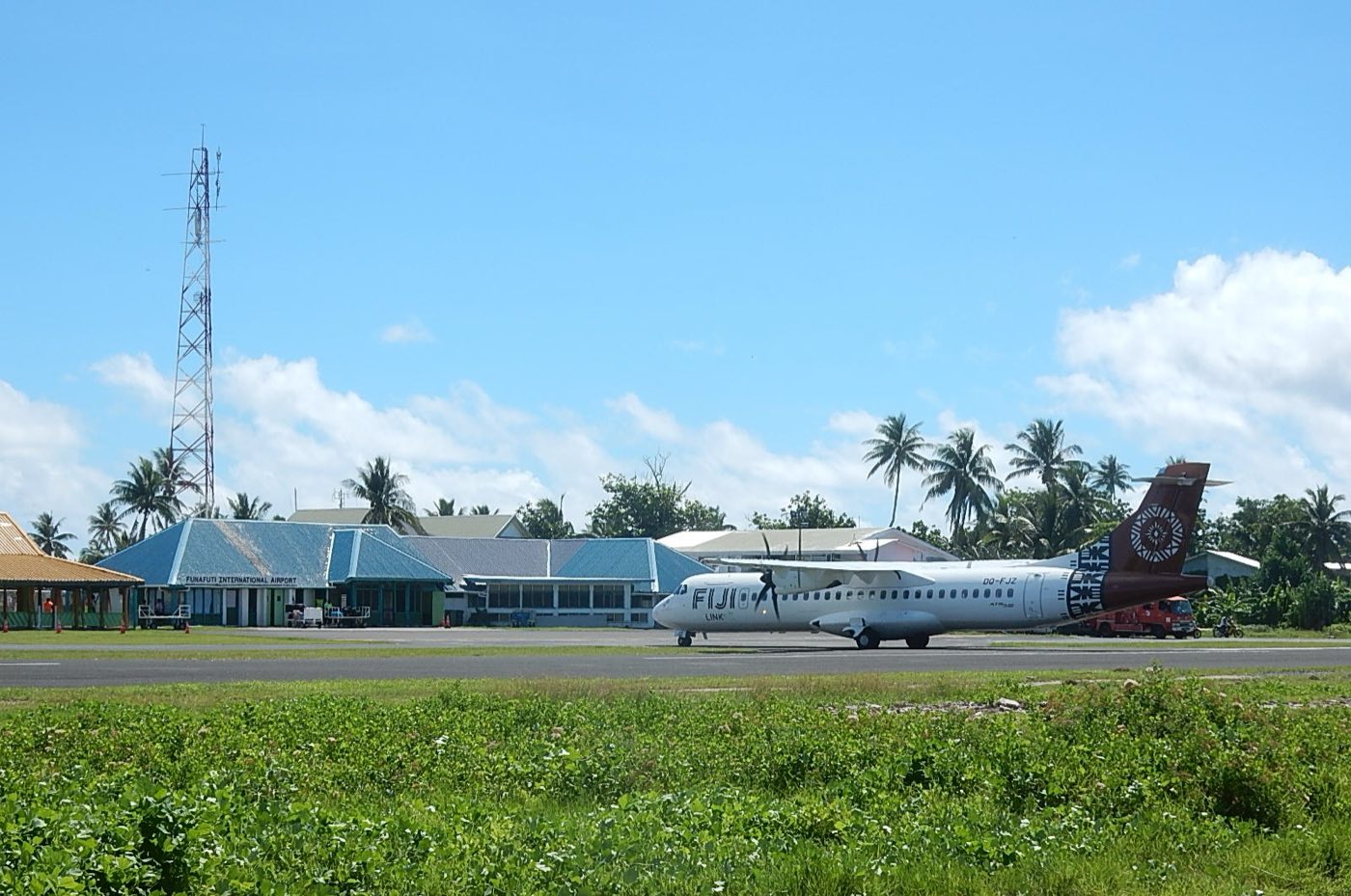
Tuvalu is one of the smallest and most remote countries on Earth — nine low-lying atolls strung across 420 miles of open Pacific, home to about 11,000 people, with a mean elevation barely above sea level. Most visitors arrive on the twice-weekly Fiji Airways flight from Suva into Funafuti, the capital atoll, and step off the plane directly onto a road that doubles as the nation's airstrip between arrivals. What you notice first is how thin the land is. Funafuti's main islet, Fongafale, is a strip of coral and sand rarely more than 200 yards wide, with the lagoon on one side and the open ocean on the other. In the evenings the airstrip turns into a public space — kids play football, teenagers ride motorbikes, families walk the length of it as the sun drops. There is no resort strip, no tourist district, almost no tourism infrastructure at all. Tuvalu rewards travelers who are genuinely curious about a country most of the world has never visited and who can sit with the uncomfortable fact that rising seas threaten its existence within a lifetime. You come for the lagoon, for conversations with people whose cultural home may not outlast the century, and for the experience of a place where every arrival is news. This is not a stamp-collecting trip — flights are expensive, rooms are few, and reaching the outer islands takes days. Go with patience, respect, and the understanding that you are a guest in a country making its case to the world.
Things to Do
Funafuti Conservation Area marine reserve
On the western side of Funafuti lagoon, a protected 33-square-kilometer reserve covers six uninhabited islets and some of the clearest water in the Pacific. A day trip by small boat from Fongafale drops you into coral gardens thick with parrotfish, reef sharks, and the occasional green turtle; the snorkeling is excellent and the motu themselves are castaway-quiet, with nesting seabirds and driftwood beaches. Arrangements go through the local conservation office or your guesthouse — expect to pay for boat hire, a guide, and a small reserve fee, and to bring your own snorkel gear if you can.
Funafuti lagoon kayaking and snorkeling
The lagoon is enormous — 275 square kilometers enclosed by the atoll rim — and the water on the inner side is still, warm, and turquoise in the shallows. Guesthouses can point you toward kayaks or paddleboards, and you can swim straight off the shore in front of town for immediate reef life. Late afternoon is the right time: the wind drops, the light turns gold, and local kids are usually in the water with you.
WWII relics and airstrip on Funafuti
The US built Funafuti's airstrip during the Pacific War as a forward base for the Gilbert and Marshall campaigns, and the runway that still receives your flight today is the one Marines graded in 1942. Rusting aircraft fuselages, an old bunker, and a few anti-aircraft emplacements remain scattered across Fongafale — ask at the guesthouse for directions, or walk the length of the islet and you'll stumble into them.
Traditional fatele dance performances
Fatele is the social and ceremonial dance of Tuvalu, performed in the maneapa — the large open-sided community halls that anchor every village — with seated singers, a rhythm pounded on a wooden box, and dancers in grass skirts who build from slow gestures into full-bodied climaxes. Performances happen at holidays, weddings, and welcomes for visitors; if you coincide with one you'll be invited in. Clap with the beat, don't photograph without asking, and stay for the food afterward.
Nanumea and Nanumanga outer island visits
The outer islands — Nanumea and Nanumanga in the north, Nukufetau and others to the south — are reachable only by the government ship Nivaga III, which sails monthly on a schedule that shifts with weather and need. Passage takes 20 to 36 hours each way, accommodation on arrival is with local families, and the pace is glacial. This is not a side trip; it's a commitment of 10 days at minimum. For travelers with the time, it's the only way to see the country beyond its capital.
Tuvaluan handicraft workshops
Women's handicraft cooperatives on Funafuti produce woven pandanus mats, fans, hats, and the distinctive shell-and-coconut necklaces that are worn at fatele. The Tuvalu Handicraft Centre near the airstrip sells directly and sometimes runs demonstrations; buying here supports the artisans and takes home the only souvenirs the country really produces. Bring cash — the Australian dollar is the currency and cards work almost nowhere.
Fongafale islet exploration by bicycle
Fongafale is about 12 kilometers long end to end, and a morning's bike ride takes you past the whole country more or less. You pass the government offices, the single hospital, the national stadium, the Mormon and Catholic churches, the lagoon-side villages of Tekavatoetoe and Funafuti proper, and eventually the northern tip where the road runs out. Bikes can be borrowed or cheaply rented from most guesthouses.
When to Go
May through October is the dry season, with steadier trade winds, calmer lagoon water, and temperatures in the low 30s Celsius — the practical window for most visitors and the only time the outer-island ferry runs reliably. November through April is the wet season and cyclone period, bringing heavier rain, choppier crossings, and the occasional serious storm; flights are sometimes cancelled and the country closes in on itself. King tides occur several times a year regardless of season and can flood parts of Fongafale for hours at a time — worth witnessing, and worth planning around.
Getting Around
Fiji Airways operates the only international flight, twice weekly from Suva, and seats book out weeks ahead — reserve your return the moment you confirm your outbound. On Funafuti itself a single sealed road runs the length of Fongafale and a motorbike, bicycle, or your own feet will cover everything; there are no taxis in any formal sense but lifts can be hitched in minutes. Moving between islands means the Nivaga III passenger-cargo ferry, run by the government on a schedule that depends on weather, demand, and whatever else — treat it as an adventure rather than transport. There is no car rental in the country.
Cost & Currency
Tuvalu uses the Australian dollar (AUD) and issues its own commemorative coins that collectors prize. Costs are higher than you'd expect for such a small economy because almost everything is imported: expect AUD $100–$180 per night for a guesthouse room with fan and shared bathroom, AUD $15–$25 for a plate of fish, rice, and taro at one of the handful of restaurants, and AUD $30–$50 for a half-day boat trip into the lagoon. Credit cards are not accepted anywhere useful — withdraw Australian dollars in Fiji before your flight, and bring more than you think you'll need. Tipping is not expected.
Frequently Asked Questions
- How do I actually get to Tuvalu?
- Fiji Airways flies from Suva to Funafuti twice a week, usually Tuesdays and Thursdays, on a route that's been the country's only scheduled air link for decades. Seats are limited and the plane is often full, so book two to three months ahead and confirm your return the moment you arrive — if the flight is overbooked on your departure day, you may be bumped to the next one. No other airline serves the country.
- Do I need a visa to visit Tuvalu?
- Most nationalities receive a visitor permit on arrival that allows a stay of up to 30 days, provided you have a valid passport, an onward ticket, and evidence of accommodation. There is no formal tourist visa scheme. Check the Tuvalu High Commission or your embassy's guidance before travel, as rules can shift without much notice in a country this small.
- Where do visitors stay on Funafuti?
- There are only a handful of places to sleep, ranging from the government-run Vaiaku Lagi Hotel next to the airstrip to a scattering of family-run guesthouses along Fongafale. None are luxury, all have fans rather than reliable air conditioning, and wi-fi is generally weak. Book by email well before arrival — walk-in availability is unpredictable and the country sometimes fills completely for official events.
- Is the tap water safe to drink?
- The tap water on Funafuti is rainwater collected from roofs into household tanks and is generally fine for washing, but most visitors and many locals drink bottled or boiled water for drinking and brushing teeth. During dry spells water rationing happens, and during heavy rains contamination is possible. Bring a filter bottle if you want to reduce plastic waste.
- Is it appropriate to visit a country threatened by climate change as a tourist?
- Tuvaluans themselves generally welcome visitors and see tourism as one of the few ways the world takes notice of their situation. The government has been vocal at international climate negotiations and actively courts respectful travelers. Go with genuine interest, spend locally, listen to people's stories about the sea, and share what you learn when you get home — that's the quiet bargain of a visit here.
Plan a Trip to Tuvalu
Have you been to Tuvalu?
Track 195 countries, 50 states & 63 national parks on your map