Samoa
- Capital
- Apia
- Population
- 222K
- Currency
- WST
- Languages
- Samoan, English
Overview
A Polynesian nation of two main islands — Upolu and Savai'i — plus a handful of smaller ones, set at the heart of the South Pacific where fa'a Samoa, the Samoan way, still organizes village life around chiefs, church, and the extended family. Travelers come for the To Sua Ocean Trench, a collapsed lava cave you descend by ladder into water the color of green glass; for the volcanic fields and blowholes of Savai'i; and for nights spent in open-sided beach fales on the south coast of Upolu. What Samoa gets right is pace. The country observes Sunday strictly — shops close, villages go quiet for church, and if you wander through a settlement during evening sa prayers you're expected to sit down and wait it out. Once you adjust, you realize you're in one of the last places in the Pacific where daily rhythm is still set by something other than tourism. The food is simple and excellent: taro, fresh fish wrapped in banana leaves, oka raw fish marinated in coconut cream. The practical experience is beach-and-reef by day, fale dinner by night, and a two-hour ferry to Savai'i when you want to see what the Pacific looked like before most of it was packaged. Bring reef shoes, a light rain shell, and the willingness to let a village matai explain custom before you swim off his beach. A week is enough to see both main islands without rushing; two is better.
Things to Do
To Sua Ocean Trench natural swimming pool
On the south coast of Upolu, a 30-meter sinkhole opens into a green lagoon connected to the sea by an underwater tunnel. You descend a long wooden ladder from the rim to a platform just above the water, then jump or climb down into a pool that rises and falls with the tide. Surrounded by gardens planted by the village that owns the site, it's the country's single most photographed spot and still lives up to its pictures. A small entry fee goes to the family who maintain it.
Lalomanu Beach
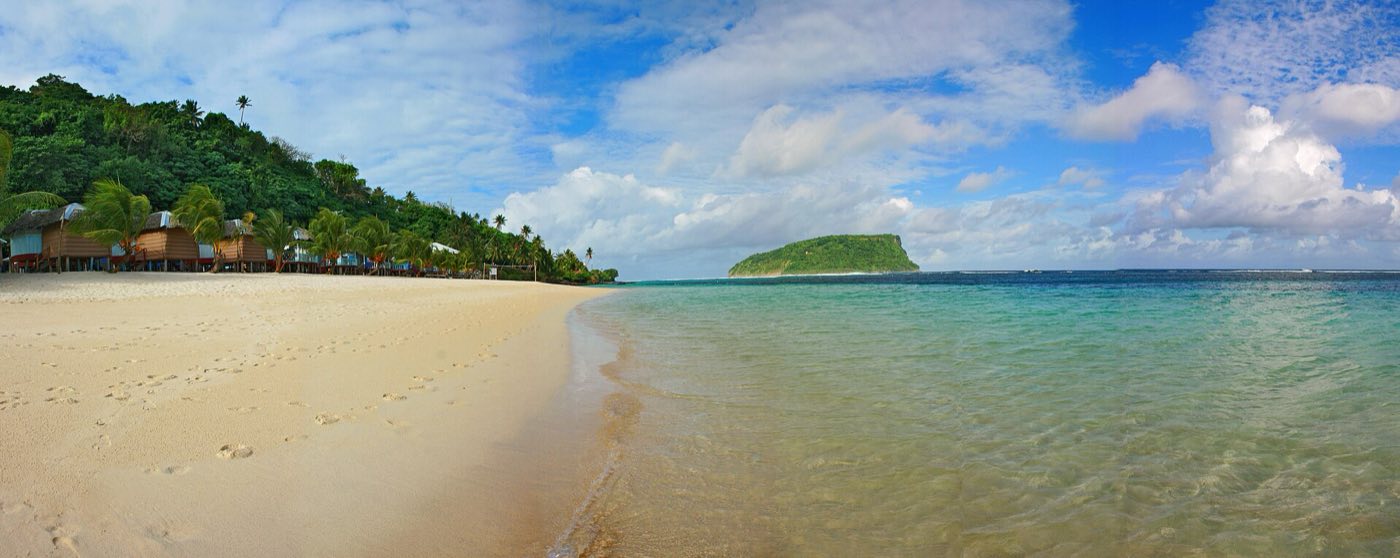
A curve of white sand on the southeast tip of Upolu, lined with traditional open-sided beach fales run by village families for overnight stays. The reef starts fifty yards out, snorkeling is excellent, and a meal and mat-and-mosquito-net accommodation together run around WST 80–120 per person. It's the closest you'll come to classic South Pacific castaway living, and the Sunday church services at Lalomanu village are open to visitors who dress modestly.
Papapapaitai Falls and Fuipisia Falls
The Cross Island Road between Apia and Lalomanu passes a series of waterfalls, with Papapapaitai's 100-meter drop visible from a roadside viewpoint and Fuipisia's 55-meter plunge reached by a short walk through a family-owned estate. Combine them with a stop at Papase'ea Sliding Rocks, smooth basalt chutes you ride down into freshwater pools, for a half-day loop out of Apia.
Robert Louis Stevenson Museum and tomb
The author of Treasure Island spent the last four years of his life at Vailima, a plantation house in the hills above Apia, where Samoans knew him as Tusitala, the teller of tales. The house is preserved as a museum with his writing room, his library, and the Tongan-style fireplace he installed. From the back, a steep one-hour trail climbs Mount Vaea to his tomb at the summit, marked with the famous Requiem he wrote himself. Go early; afternoons are hot and the path is slick after rain.
Piula Cave Pool natural spring
A freshwater cave pool that sits directly below the Piula Methodist Theological College on Upolu's north coast, filled with cold, clear spring water that connects by a short underwater swim to a second inner cave. The site is open to visitors for a small fee, the water is gentle enough for children, and the adjoining beach is good for a picnic lunch. An easy half-hour drive east from Apia and one of the simplest pleasures on the island.
Savai'i's Alofaaga Blowholes and lava fields
The larger and less-visited of Samoa's two main islands, Savai'i is a one-hour ferry ride from Upolu and feels a generation quieter. The Alofaaga Blowholes on the southwest coast send seawater 30 meters into the air as swells hit holes in the lava shelf; locals toss coconuts into the spouts for an extra show. The Saleaula lava fields on the north coast preserve a church half-swallowed by 1905 volcanic flow. Hire a driver for a day loop or stay two nights.
Village fiafia night cultural performances
Hotels and village cultural centers around Upolu host weekly fiafia evenings — a word that translates roughly as 'happy gathering' — with umu earth-oven feasts, slap dancing, siva dancing, and fire-knife performances that originated in Samoa and now appear on stages across the Pacific. The Aggie Grey's Thursday night event is the longest-running; smaller village versions at Return to Paradise or on Savai'i feel less polished and more real. Either way, book ahead; both sell out.
When to Go
May to October is the dry season and the window most travelers aim for — daytime highs around 28 to 30 degrees Celsius, lower humidity, and steady trade winds. November to April is the wet and cyclone season with warmer water and lush landscapes but genuine storm risk. The Teuila Festival in early September brings a week of dance, fire-knife competitions, and traditional sports in Apia and is the cultural high point of the year. Easter Sunday and Samoa's Independence Day in early June also fill hotels, so book ahead for either.
Getting Around
Rental cars are the easiest way to explore Upolu, and the island's ring roads are paved, well-marked, and quiet outside Apia. Driving is on the left (Samoa switched sides in 2009), and you'll need a temporary local license issued at the rental counter. Public buses run from Apia's market to villages all over Upolu for a few tala, though routes and schedules follow their own logic and stop early in the evening. The Lady Samoa III ferry crosses from Mulifanua on Upolu to Salelologa on Savai'i in about 90 minutes; cars go on the same ferry for an extra fee. Taxis in Apia are metered but drivers often quote a flat fare.
Cost & Currency
Samoa uses the tala (WST), roughly 2.7 to the US dollar. Prices run reasonable by Pacific standards: a night in a village beach fale with breakfast and dinner included runs WST 80–150 per person, a mid-range Apia hotel room WST 250–400, and a meal at a local cafe WST 15–30. Rental cars start around WST 150 per day. Cards are accepted at hotels, larger restaurants, and fuel stations in Apia, but you'll need cash in villages, at roadside stalls, and for entry fees to natural sites — usually WST 10–20 paid to the family whose land it sits on. Tipping is not traditional and not expected.
Frequently Asked Questions
- Do I need a visa to visit Samoa?
- Most travelers receive a free 60-day visitor permit on arrival, including visitors from the US, UK, EU, Australia, New Zealand, and Canada. You'll need a passport valid for at least six months, a return or onward ticket, and proof of accommodation. A yellow fever certificate is required only if you're arriving from a country where yellow fever is endemic.
- What is fa'a Samoa and how should I behave as a visitor?
- Fa'a Samoa, the Samoan way, is the customary system that governs village life — chiefs, extended family obligations, Sunday observance, and evening sa prayer times when villages go silent for about 20 minutes. Dress modestly in villages, cover your shoulders and knees at churches, ask before entering village land or swimming off village beaches, and sit down if you're walking through during sa. Locals are generous and direct about explaining what is expected.
- Is Samoa safe for travelers?
- Samoa is one of the safest countries in the Pacific, with very little violent crime and a strong social fabric that keeps villages self-policing. Petty theft from unattended bags on beaches is the main concern, along with road hazards — loose dogs, pigs, and potholes — if you're driving at night. Avoid swimming alone in unfamiliar spots; strong currents claim visitors most years.
- Can I stay in a traditional beach fale?
- Yes, and you should — village-run beach fale accommodation is a defining part of a Samoan trip. A fale is an open-sided thatched hut on a family compound with mats, a mattress or futon, and a mosquito net, with shared bathrooms nearby. Most include breakfast and dinner in the price. Lalomanu on Upolu and Manase on Savai'i are the classic spots. It's basic and it's excellent.
- Are Sundays really that strict?
- Yes, more than you expect. Most shops, restaurants, and businesses close on Sunday, especially in villages outside Apia, and swimming or loud activity in villages during the morning service is considered disrespectful. Plan Sundays as a quiet day — reading at your fale, attending a service if you're curious, or eating the traditional toonai family lunch at a hotel that caters to visitors. Apia itself has a handful of places that stay open.
Plan a Trip to Samoa
Have you been to Samoa?
Track 195 countries, 50 states & 63 national parks on your map