Tunisia
- Capital
- Tunis
- Population
- 12.5M
- Currency
- TND
- Languages
- Arabic
Overview
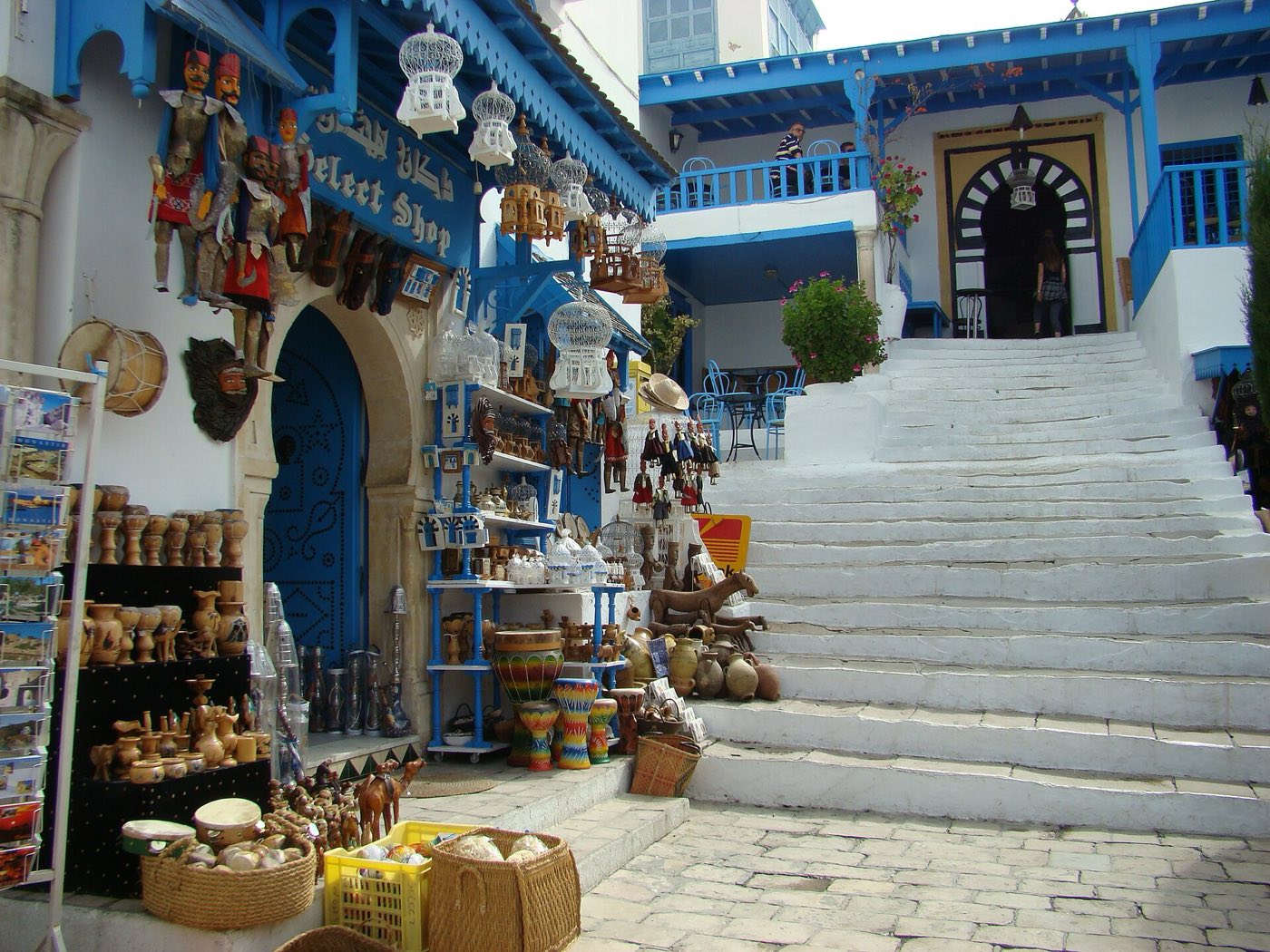
A small North African country that packs in Carthaginian ruins, Roman amphitheaters, whitewashed Mediterranean medinas, and Saharan ksour inside a landmass you can drive across in a long day. Tunisia gives you Rome and the desert within a week, and neither experience feels abbreviated. Tunis, the capital, opens with a walled medina whose alleys are still organized by trade — coppersmiths one lane, perfumers the next, shoemakers the one beyond that — and spills north along the coast to the blue-and-white cliffside village of Sidi Bou Said and the headland ruins of ancient Carthage. Out in the countryside it gets stranger. The El Djem amphitheater rears up from a field of olive trees, preserved better than the Colosseum and less than half as visited. South of Douz, the Sahara begins in earnest: dune seas, palm oases, and the cracked salt crust of Chott el-Jérid where George Lucas filmed a young Luke Skywalker's Tatooine farm. Tunisia is affordable by Mediterranean standards, safe in most of the areas travelers visit, and still unfashionable enough that you can have Roman ruins more or less to yourself at nine in the morning. A week gets you a sensible loop; two weeks lets you sleep out under the Saharan stars.
Things to Do
Medina of Tunis UNESCO site
The walled old city at the heart of Tunis is a labyrinth of 270 monuments — mosques, madrasas, tiled fountains, and covered souks — most of them still functioning as they have for centuries. Enter through the Bab el Bhar (the French Gate) and wander inward: the Zitouna Mosque courtyard, the perfume market at Souk el-Attarine, and the painted tiles of Dar el-Bey. Stop for a mint tea on the roof terrace of a converted palace-café and watch the maze reveal itself from above.
El Djem Roman amphitheater
Two hours south of Tunis by train or car, in a sleepy market town, stands one of the best-preserved Roman amphitheaters in the world — a three-tiered oval that once held 35,000 spectators. You can walk the upper galleries, climb down into the gladiator holding cells, and stand alone at center of the arena in the first hour after opening. A small museum nearby holds some of the finest Roman mosaics in the country. Go early and you will often have the place almost entirely to yourself.
Sidi Bou Said blue-and-white cliffside village
A half-hour light-rail ride from central Tunis deposits you at the base of the hill that leads up to Sidi Bou Said, a whitewashed village where every door and shutter is painted the same specific cobalt blue. The main street climbs to a café at the top with a view east over the Gulf of Tunis and Cap Bon. Stop at the Café des Nattes for a mint tea on reed mats and at the Dar el Annabi museum-house to see how old local families actually lived.
Carthage archaeological ruins
The once-great rival of Rome, burned in 146 BCE and then rebuilt as a Roman city, is now a scatter of ruins across a leafy suburban hillside above the sea. The Antonine Baths, the Punic Ports, the amphitheater, and the hilltop Byrsa with its museum collectively sketch out the shape of the ancient city; a guide or a careful audio tour is the difference between seeing stones and reading a history. Combine with a lunch and walk in Sidi Bou Said next door.
Star Wars filming locations in Matmata and Tozeur
George Lucas shot pieces of the original Star Wars and the prequels across southern Tunisia, and several locations are still intact. In Matmata, the Hotel Sidi Driss is a working troglodyte guesthouse whose courtyards doubled as the Lars homestead — you can eat lunch in the same room. Near Tozeur, the dune sets from Mos Espa and the Onk Jemel dune are reached by 4x4. Pair the locations with actual Berber desert culture — the granaries at Ksar Ouled Soltane, the oasis at Chebika — for a weeklong southern loop.
Chott el-Jérid salt flat
An enormous seasonal salt lake that stretches for roughly 7,000 square kilometers between Tozeur and Kebili in the south. In summer it dries to a cracked white crust under a heat shimmer that bends the horizon; in winter small flamingo-populated lagoons remain. A single paved causeway runs across the middle, and most trips stop at a truck-stop café for tea before continuing on to the mountain oases of Chebika and Tamerza. It is an hour of genuinely otherworldly driving.
Dougga Roman ruins
Two hours southwest of Tunis in the rolling olive-country of the Tell, Dougga is the best-preserved Roman town in North Africa and a UNESCO site — a forum, a 3,500-seat theater, a Capitol temple, and entire paved streets laid out on a ridge overlooking wheat fields. It sees a fraction of El Djem's visitors. A rental car or private driver makes a long day of it, and the quiet up there by the Capitol on a weekday is part of what you're paying for.
Ksar Ouled Soltane fortified granaries
Deep in the southern desert near Tataouine, Ksar Ouled Soltane is a four-story Berber granary compound of stacked earthen vaults (ghorfas) once used by nomadic families to store grain and olive oil. The honeycomb courtyards are startling to walk into, and the morning light brings out the texture of the mud-plaster walls. Combine with Ksar Hedada and Chenini on a two-day southern loop for the most dramatic Berber architecture in the country.
When to Go
March through May and September through November are the comfortable stretches — warm days, cool evenings, and manageable desert temperatures for the southern loop. Summer on the Mediterranean coast means hot beach weather, but inland and in the south July and August bring genuinely punishing heat above 40 Celsius that makes daylong sightseeing at Dougga or El Djem exhausting. Winter is mild on the coast and actively cold in the desert at night — pack warm layers if you plan to sleep in a ksar. Major Islamic holidays shift each year and alter restaurant and museum hours; check the calendar for your dates.
Getting Around
Between Tunis and the major coastal and inland towns, the national rail network SNCFT is cheap and reliable — Tunis to Sousse, Sfax, and El Djem by train takes two to three hours each, and first-class is an easy upgrade. Louage shared minivans are the workhorse for smaller towns and depart when full from signed stations; they are faster than buses and cheaper than taxis. A rental car unlocks the south properly — the ksour, Chott el-Jérid, Matmata, and the Djerid oases are hard to piece together without one. Within Tunis, a light rail and the TGM suburban train handle most central routes cheaply.
Cost & Currency
Tunisia uses the dinar (TND), a non-convertible currency you can only exchange in-country and must spend down or convert back before leaving. Prices are low by Mediterranean standards: 40–80 TND for a mid-range hotel room in Tunis, 15–25 TND for a sit-down restaurant meal of couscous or tagine, and 1–2 TND for a street brik or chapati. Cards work at better hotels and some restaurants; carry cash for souks, louages, and small guesthouses, and exchange at banks or official counters rather than street dealers. Tipping is customary — round up café bills and leave 10% at restaurants where service is attentive.
Frequently Asked Questions
- Do I need a visa to visit Tunisia?
- Citizens of the US, UK, Canada, most EU countries, and many other nationalities receive a free visa-free stay of up to 90 days on arrival. Check current requirements with the Tunisian embassy in your country before you travel, especially if you hold a passport from outside Europe or North America. Your passport should be valid for at least six months from the date of entry.
- Is Tunisia safe for travelers?
- Most areas travelers visit — Tunis, Carthage, Sidi Bou Said, Sousse, El Djem, Djerba, and the main southern tourist routes — are considered safe and tourism-ready. Most governments advise against travel to the remote border areas with Libya and parts of the southern interior; check your own foreign office guidance before the trip. Ordinary precautions apply in crowded medinas and transit hubs where pickpocketing can occur.
- Is alcohol available?
- Yes — Tunisia produces its own wine and beer, and alcohol is served at most tourist hotels, licensed restaurants, and dedicated shops (Magasin Général and supermarket sections). Availability is more limited during Ramadan and in conservative interior towns. Drinking in public outside licensed venues is not appropriate, and dressing and behaving modestly in non-tourist areas is the right call.
- Is the tap water safe to drink?
- Tap water in Tunis and the main cities is chlorinated and technically potable, but most visitors and many locals drink bottled water because of taste and occasional stomach reactions to the mineral content. In rural areas and the south, stick to bottled or filtered water. Ice at established restaurants is generally fine; street juice and ice from informal stalls is where more care is warranted.
- How long should I plan for a first trip?
- Seven to ten days gives you a proper loop: two or three nights in Tunis for the medina, Carthage, and Sidi Bou Said, a day trip to Dougga, two nights around El Djem or Sousse, and three nights in the south between Douz, Tozeur, and the Djerid oases. If you want to add Djerba island or a serious desert camping leg, budget twelve to fourteen days.
Plan a Trip to Tunisia
Have you been to Tunisia?
Track 195 countries, 50 states & 63 national parks on your map