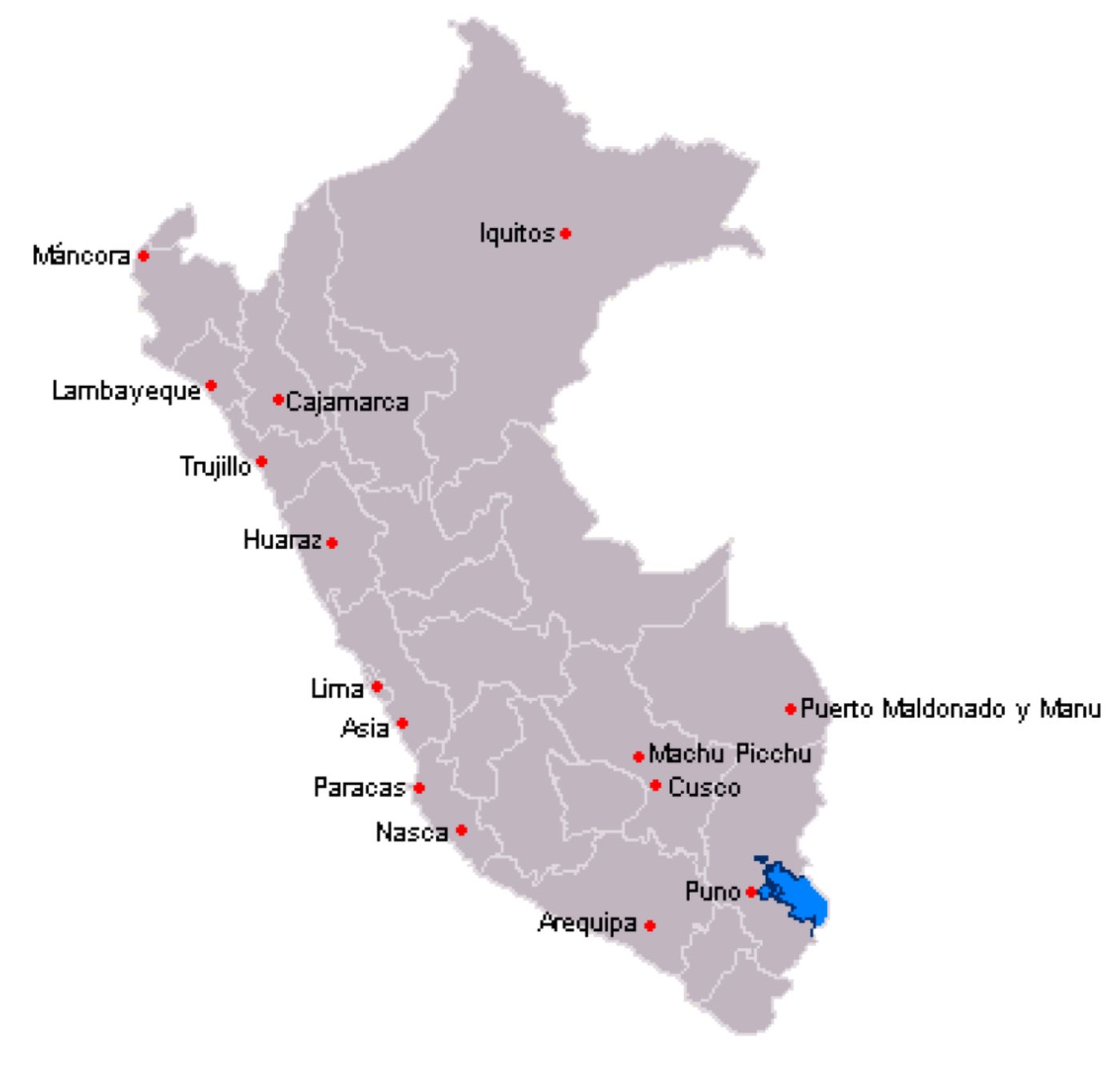
Peru
- Capital
- Lima
- Population
- 34M
- Currency
- PEN
- Languages
- Spanish
Overview
A South American country that stacks Pacific coast, Andean highlands, and Amazon basin into a single passport stamp, Peru carries the weight of the Inca empire and the lost citadel of Machu Picchu alongside one of the world's great living food traditions. Travelers come for the Inca Trail, the Nazca Lines, the Sacred Valley, and a capital — Lima — whose ceviche and tasting menus have rewritten the map of South American dining. Altitude is the first thing you notice in Cusco. The air thins fast at 3,400 meters, and even the stroll from your guesthouse to the Plaza de Armas leaves you breathing harder than you'd like. The trick is to land and rest — coca tea, a light lunch, an early night — then let the Sacred Valley at 2,800 meters ease you down a thousand feet for a day or two before climbing back up. Everyone who skips this step regrets it by sundown. Peru rewards travelers who want more than one country on a single trip. You can eat tiradito at a Miraflores cevichería on Monday, walk the Inca ridgeline at dawn on Thursday, and be watching pink river dolphins from a wooden boat on the Amazon by Sunday. Ten days is the honest minimum; two weeks lets the distances breathe. Pack layers — you'll wear all of them in a single afternoon.
Things to Do
Machu Picchu and the Inca Trail
The 15th-century Inca citadel sits on a saddle between two peaks 2,400 meters above the Urubamba River, and the four-day Inca Trail trek is still the most meaningful way to arrive — through cloud forest, over the Warmiwañusca pass at 4,215 meters, and down to the Sun Gate for sunrise on the ruins below. Permits are capped at 500 a day including porters and sell out six months in advance for high season. If the trail is full, the Salkantay route or a direct train from Ollantaytambo both get you there.
Cusco's Inca walls and Plaza de Armas
The former Inca capital keeps its mortarless stonework under half the Spanish colonial city — stand on Calle Hatun Rumiyuq and run your hand along the twelve-angled stone that fits its neighbors without a millimeter's gap. The Plaza de Armas is ringed by two cathedrals and the galleries of the San Blas artisan quarter rise behind it. Spend a full day on foot, drink plenty of water, and climb to the Qorikancha Sun Temple at dawn before the tour buses arrive.
Sacred Valley of the Incas
Between Cusco and Machu Picchu, the Urubamba River drops through a wide agricultural valley that the Inca terraced for maize and potatoes — still in use today. The key stops are Pisac for the Sunday market and hillside ruins, Ollantaytambo for the last living Inca town with original street grid, and the circular agricultural terraces of Moray. Stay two nights in the valley to sleep lower than Cusco and acclimatize, and time your visits outside the late-morning bus windows.
Lima's culinary scene and Miraflores district
The capital's restaurants have topped world rankings for a decade, and you don't need a tasting-menu budget to understand why. Ceviche at La Mar, tiradito at Isolina, pork belly at Kjolle, and a neighborhood menú del día for fifteen soles are all part of the same conversation. Miraflores, along the Pacific cliffs, is the comfortable base — jog the malecón at sunset, surf the breaks at Waikiki, and end in Barranco for pisco sours at Ayahuasca before dinner.
Nazca Lines aerial viewing
On the coastal desert six hours south of Lima, enormous geoglyphs — a hummingbird, a monkey, a spider, a 200-meter figure called the astronaut — were scratched into the pampa over 2,000 years ago and are only legible from the air. A 30-minute Cessna flight from the town of Nazca loops over the main figures and is the standard way to see them. Take motion-sickness pills beforehand; the plane banks hard and repeatedly so every passenger gets both windows.
Lake Titicaca and Uros floating islands
At 3,810 meters on the Bolivian border, Titicaca is the highest commercially navigable lake on Earth and one of the Andean world's spiritual centers. The Uros people live on islands they continuously rebuild from totora reeds, and a boat from Puno will take you to a working community for a few hours — touristy on the surface, and still genuinely interesting underneath. Pair it with a night on Amantaní or Taquile, where families host guests in stone houses and meals are shared around a shared kitchen.
Colca Canyon condor watching
Three hours north of Arequipa, the Colca Canyon cuts more than 3,000 meters deep — nearly twice the depth of the Grand Canyon — and Andean condors ride the morning thermals out of it at the Cruz del Cóndor viewpoint. Get there by 8:30 a.m., stay until the birds lift high enough to disappear, and then descend into the valley on foot or by mule for a night at one of the riverside lodges. The drive from Arequipa climbs past 4,900 meters, so acclimatize first.
Amazon rainforest lodges from Iquitos
Iquitos, the largest city in the world unreachable by road, is the jumping-off point for Amazon lodges on the Pacaya-Samiria and Allpahuayo Mishana reserves. Three- and four-night programs include river cruises for pink dolphins, night walks for caimans and tarantulas, and visits to Ribereño communities along the tributaries. Manu and Tambopata from Puerto Maldonado in the southeast offer drier and sometimes better wildlife viewing; choose based on whether you want Amazon scale or denser rainforest.
When to Go
May through September is dry season in the Andes and the right window for Machu Picchu, the Inca Trail, and Lake Titicaca — expect cold nights, sunny days, and clear skies. The Inti Raymi sun festival in Cusco on June 24 is the cultural centerpiece, and July and August see peak trekking crowds. Lima keeps a persistent gray coastal fog (the garúa) from May through October but stays pleasant year-round. The Amazon is accessible anytime; June to October runs drier with better wildlife viewing, while November to April brings flooded waterways and easier canoe access to hidden channels.
Getting Around
Domestic flights are the sensible way to cover Peru's vast distances — LATAM and Sky Airline connect Lima with Cusco, Arequipa, Iquitos, and Puerto Maldonado in under two hours for under $100 if you book ahead. Overnight buses on companies like Cruz del Sur and Oltursa run long-haul routes in comfortable reclining seats; the Lima-to-Cusco overland slog is 21 hours but cheaper than flying. Within Cusco and the Sacred Valley, shared colectivo vans and taxis from the Pavitos terminal are the local way, and the PeruRail and IncaRail trains are the only way to reach Aguas Calientes for Machu Picchu. In Lima, stick with metered taxis or ride-hailing — traffic is heavy and metro lines are limited.
Cost & Currency
Peru uses the sol (PEN) and runs cheap to mid-range by South American standards. Expect 20–35 soles for a lunch menú del día in Cusco or Lima, 250–500 soles a night for a comfortable mid-range hotel, and 15–25 soles for a taxi across most cities. Machu Picchu pushes the budget — the train plus entry plus bus up from Aguas Calientes runs around 600–800 soles per person round-trip from Cusco, before guides. Cards are accepted at hotels, larger restaurants, and supermarkets; carry cash for markets, small colectivos, and remote areas. Tipping is 10% at sit-down restaurants, a few soles for taxi drivers, and $15–$25 per day per trekker for guides and porters on the Inca Trail.
Frequently Asked Questions
- Do I need a visa to visit Peru?
- Most Western travelers — US, EU, UK, Canada, Australia, New Zealand — enter Peru visa-free for stays of up to 90 or 183 days depending on nationality, with the stamp issued on arrival. Bring a passport valid for at least six months and a printed onward or return ticket in case border officials ask.
- How do I avoid altitude sickness in Cusco?
- Spend your first two nights lower — either in Lima before flying up, or down in the Sacred Valley around Urubamba or Ollantaytambo at 2,800 meters. Drink coca tea, eat lightly, avoid alcohol for 48 hours, and consider acetazolamide (Diamox) from a travel clinic if you're prone to altitude issues. Go slow the first day and you'll acclimatize well for Machu Picchu later in the week.
- Is it safe to drink the tap water?
- No — stick to bottled or filtered water throughout Peru, including for brushing your teeth in rural areas. In Lima and Cusco most hotels provide filtered water refills, and reusable bottles with built-in filters are worth bringing. Ice is usually fine in established restaurants but risky at street stalls.
- How far in advance should I book the Inca Trail?
- Book six months ahead for the classic four-day trail during high season from May to September — the 500-permit daily cap includes guides and porters, so the real hiker count is closer to 200, and spots sell out fast. February is closed for trail maintenance. If you miss the window, the Salkantay and Lares alternatives require no permits and are arguably more scenic.
- Is Peru safe for tourists?
- Peru is broadly safe for visitors on the standard tourist circuit — Lima, Cusco, the Sacred Valley, Arequipa, and Puno. Petty theft and bag-snatching happen in crowded markets and bus terminals, so keep valuables in a money belt and stay alert in central Lima and at Cusco's main plaza. Occasional political protests can disrupt transport; check news before traveling and build a buffer day into your itinerary for the Inca Trail.
Plan a Trip to Peru
Have you been to Peru?
Track 195 countries, 50 states & 63 national parks on your map