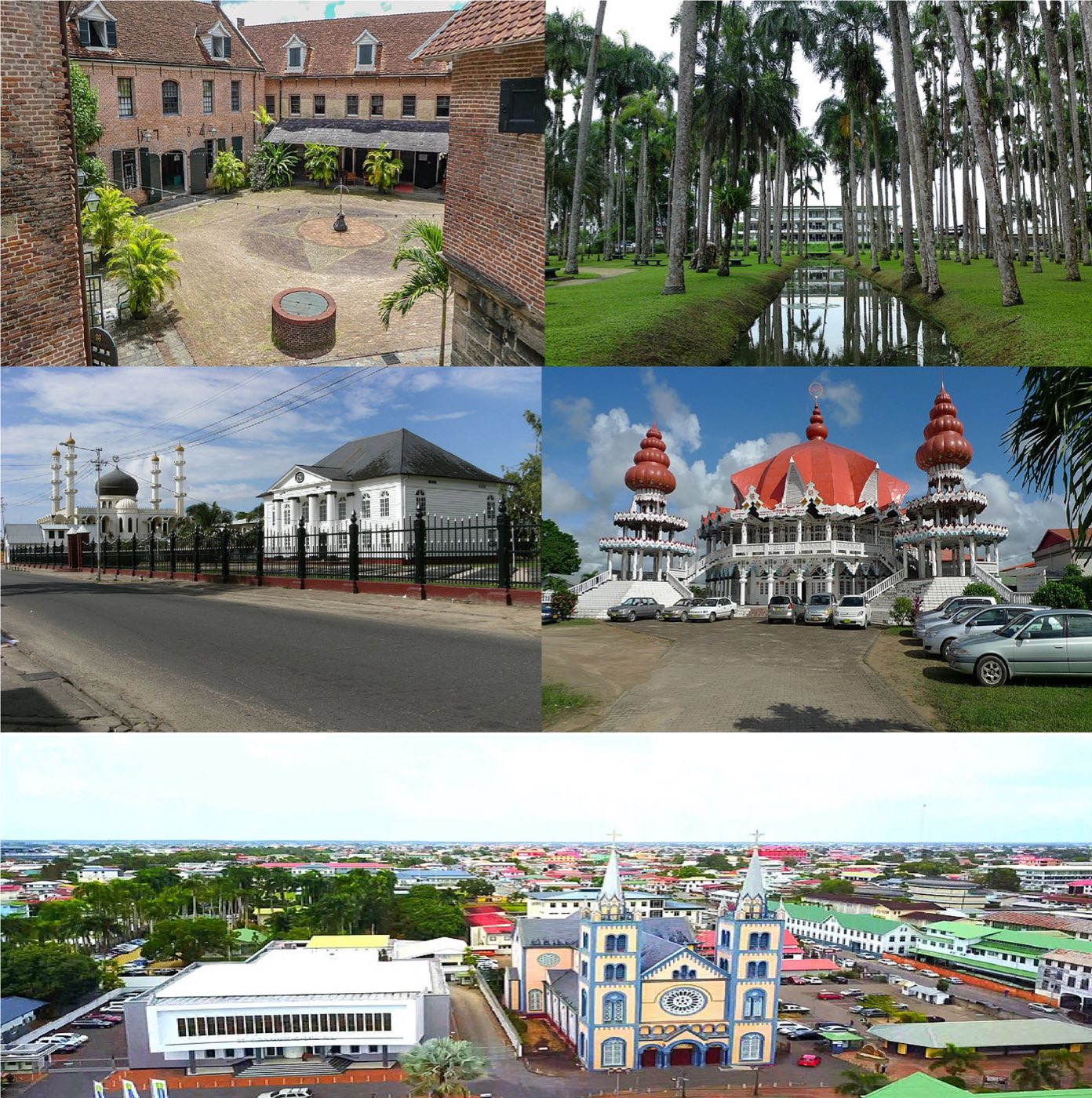
Suriname
- Capital
- Paramaribo
- Population
- 618K
- Currency
- SRD
- Languages
- Dutch
Overview
The only Dutch-speaking country in South America, Suriname is a small, thickly forested nation on the northern shoulder of the continent where Creole, Hindustani, Javanese, Maroon, and Indigenous communities share a coastline roughly the size of Florida. Travelers come for dugout-canoe trips deep into old-growth Amazon, the painted wooden facades of Paramaribo, and birdwatching in rainforest that still covers more than 90% of the country. What strikes you first in Paramaribo is the quiet. After a week in Brazil or the Guianas, the capital feels almost village-scale — white colonial timber houses leaning at soft angles, a mosque next door to a synagogue on Keizerstraat, Javanese warungs serving bami goreng three doors down from a roti shop. The language on the street shifts between Dutch, Sranan Tongo, Sarnami Hindi, and Javanese in a single conversation, and nobody seems to find that unusual. Once you leave the coast, the country is essentially jungle. You fly in a small Cessna over unbroken canopy, land on a grass strip, and take a longboat upriver to a Maroon or Indigenous village where you sleep in a hammock and wake to howler monkeys. It is not difficult travel — the lodges are well run and the guides experienced — but it is remote in a way few countries still offer, and it rewards anyone who likes their rainforest without crowds and their cultural mix genuinely layered.
Things to Do
Paramaribo's UNESCO wooden colonial center
The historic heart of the capital is a cluster of white-painted wooden buildings laid out by the Dutch in the 17th century — the Presidential Palace, Fort Zeelandia on the Suriname River, and a main square lined with tamarind trees. Walk Waterkant at sunset when locals come out to eat pom and fried bakabana from riverside stalls, and stop into the Neveh Shalom synagogue, whose sand-covered floor sits across a narrow lane from the Keizerstraat mosque. The juxtaposition is the city in miniature.
Central Suriname Nature Reserve rainforest
A 1.6-million-hectare UNESCO-protected wilderness covering about 11% of the country, reached by small plane from Paramaribo to a grass airstrip at Raleighvallen. From there you take a boat to lodges operated by the conservation organization that manages the reserve. Dawn walks bring howler monkeys, eight species of primate, and 400-plus bird species; a scramble up the Voltzberg granite dome at sunrise gives you unbroken canopy to the horizon in every direction.
Brownsberg Nature Park hiking and waterfalls
A plateau rising 500 meters above the Brokopondo Reservoir, Brownsberg is the most accessible patch of serious rainforest from Paramaribo — a three-hour drive plus a steep climb in 4x4. The trails lead to Leo Falls and Irene Falls, both worth the scramble, and the lookout over the reservoir at dusk turns the water bronze. You can day-trip it, but the simple STINASU guesthouse on the ridge lets you catch the dawn chorus properly.
Maroon village stays on the Upper Suriname River
Descendants of escaped enslaved Africans who fought the Dutch to a standoff in the 18th century, the Saramaka and Aukan Maroons still live in riverside villages along the Upper Suriname, maintaining distinct West African-derived languages, music, and woodcarving traditions. Lodges at Awarradam and Danpaati arrange homestays and guided visits with a local elder, who walks you through the village and explains what you are allowed to photograph. Arrive by a six-hour drive plus longboat, or fly in.
Galibi Nature Reserve sea turtle nesting
On the Marowijne River at the border with French Guiana, the Galibi reserve protects one of the largest leatherback turtle nesting sites in the western Atlantic. From late March through July, female turtles — up to 2 meters long — haul themselves onto the dark-sand beach at night to lay eggs, guided only by red-filtered flashlights and Indigenous Kalinya park rangers. You reach it from Albina by a three-hour boat ride and sleep in a basic guesthouse in a Kalinya village.
Jodensavanne historic Jewish settlement ruins
A short drive south of Paramaribo, Jodensavanne preserves the ruins of one of the Americas' oldest Jewish settlements — a 17th-century sugar-plantation community of Sephardic refugees who built the New World's earliest masonry synagogue in 1685. The brick foundations sit on a forested bluff above the Suriname River next to a cemetery whose Hebrew-inscribed stones the jungle is steadily reclaiming. A local guide opens the site and tells the history well.
Raleighvallen and Voltzberg granite dome
Inside the Central Suriname Nature Reserve, Raleighvallen is a series of rapids on the Coppename River, and the Voltzberg is a bald granite mountain rising 240 meters out of the forest next to it. The three-hour hike to the summit goes through thick jungle and then up bare rock chains; at dawn the canopy below is often cloud-pooled in the valleys with the dome sticking out like an island. Brown capuchins and Guianan cocks-of-the-rock are commonly seen on the walk.
When to Go
Target February to April or August to November, when Suriname's two dry seasons open up the interior. The long dry season from August into November is the more reliable of the two, with firmer trails, easier river travel, and peak conditions for birdwatching. The short dry from February to April aligns with the start of the leatherback turtle nesting season at Galibi, though roads and trails can still be patchy. The long rains from April through July flood trails and ground some charter flights, and December is variable. Sranan (Emancipation Day) on July 1 and Diwali in October are good cultural moments to overlap with a city stay.
Getting Around
Travel is split between paved coastal roads and light aircraft or longboats for the interior. A rental car or hired driver handles the coastal strip — Paramaribo to Albina, or south to Brownsberg — on roads that are rough but passable. For anywhere in the rainforest proper, you fly in a small charter from Zorg en Hoop airfield in Paramaribo, or take a multi-hour 4x4 and longboat combination arranged by the lodge you are visiting; going independently is not realistic for interior trips. Within Paramaribo, taxis are the easiest way around — there are no formal meters, so agree the fare before you get in, and keep small Surinamese dollars for the ride. Minibus wagons (wagontjes) connect coastal towns cheaply if you want to travel local-style.
Cost & Currency
Suriname uses the Surinamese dollar (SRD), which has been volatile against the US dollar — check the current rate before you go, and expect most tour operators, lodges, and higher-end restaurants to quote prices directly in USD or EUR. A mid-range Paramaribo hotel runs US$80–US$140 a night, a plate of nasi with fish or chicken at a warung is US$5–US$8, and a fresh-squeezed juice on Waterkant runs about a dollar. Interior rainforest lodges are all-inclusive and are the real expense of a trip here — budget US$250–US$500 per person per night at places like Awarradam or Kabalebo. Cards work at city hotels and some restaurants; carry USD cash for everything else and for tipping guides (US$10–US$20 per day is appropriate).
Frequently Asked Questions
- Do I need a visa to visit Suriname?
- Most travelers can enter visa-free for short visits using an e-Tourist Card, which you apply for online before departure for about US$50. Check your nationality's current requirements on the Surinamese foreign ministry site a few weeks ahead, and carry a printout of the approval plus a yellow fever vaccination certificate on arrival.
- Is Suriname safe for travelers?
- Paramaribo is generally safe by day and in the main central and Zorg en Hoop neighborhoods, with petty theft the main concern. Avoid walking alone after dark in outer districts, take taxis at night, and keep an eye on your phone in crowded markets. The interior jungle is safer than the city in most respects, since you travel with guides at all times.
- Do I need malaria prophylaxis?
- Yes if you are traveling to the interior — malaria is present in rainforest areas including the Central Suriname Nature Reserve, Brownsberg, and Maroon village regions. Consult a travel clinic four to six weeks before departure. Paramaribo and the coastal strip are considered low risk, so a city-only trip generally does not require antimalarials.
- What language should I learn before going?
- Dutch is the official language and the one you will hear at hotels, government offices, and most signage. Sranan Tongo, an English-based creole, is the lingua franca on the street and easier for English speakers to pick up basics. English is widely spoken in tourism but rarely elsewhere, so a phrasebook helps in the interior.
- How many days do I need for a first trip?
- Seven to ten days is about right — three nights in Paramaribo to absorb the city and a day trip to Jodensavanne, then four to six nights split between a coastal reserve like Galibi and a proper interior rainforest lodge. Shorter than a week and you will skip the jungle, which is most of the point of coming.
Plan a Trip to Suriname
Have you been to Suriname?
Track 195 countries, 50 states & 63 national parks on your map