Guyana
- Capital
- Georgetown
- Population
- 808K
- Currency
- GYD
- Languages
- English
Overview
An English-speaking country on the northern shoulder of South America, Guyana leans culturally toward the Caribbean and ecologically toward the Amazon. The coast is flat, wet, and populated; the interior — which fills most of the map — is some of the most intact tropical forest left on the continent, home to giant river otters, harpy eagles, black caiman, and jaguars that still occasionally stroll across a sandbar in daylight. Arriving in Georgetown gives you a misleading first impression. The capital is humid, low-slung, and built around wooden Demerara-style colonial houses on stilts, with a tidal Atlantic slapping at a sea wall that holds back a city technically below sea level. Within a day or two most travelers are on a small plane heading inland, because that is where Guyana delivers what nowhere else in South America quite does — a rainforest you can drop into without crowds, and a vast ranching savanna in the Rupununi where Macushi and Wapishana communities run eco-lodges that put the tourist dollar straight back into village hands. This is not a country for rigid itineraries. Flights into the interior hinge on weather, road travel is long and rough, and the power can go out. Come with flexibility, a dry bag, and the willingness to trade comfort for genuine wilderness, and you will have an experience almost no one you know has had.
Things to Do
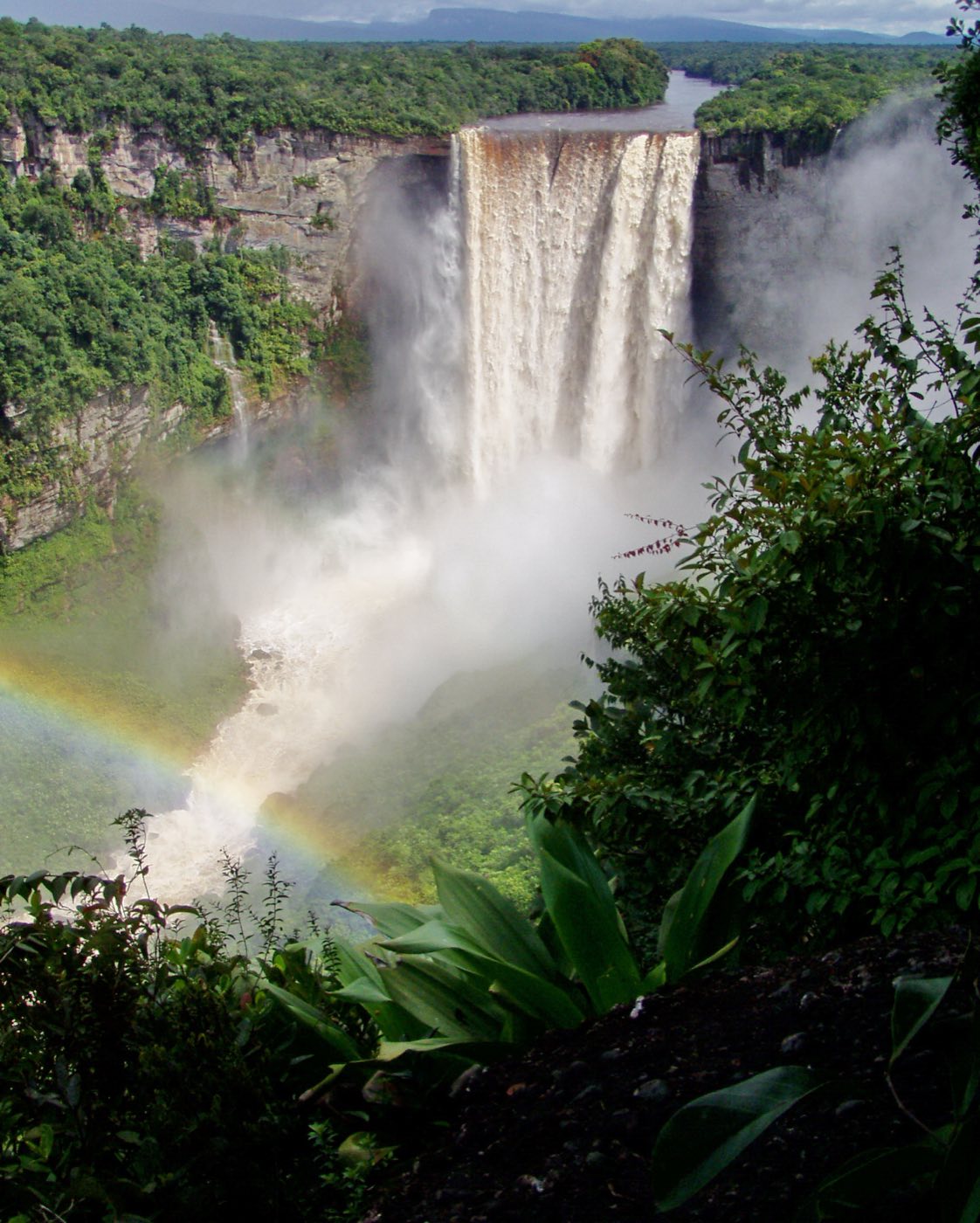
Kaieteur Falls — world's largest single-drop waterfall
A 226-meter plunge of the Potaro River over a sandstone escarpment in the middle of old-growth forest — roughly five times the height of Niagara with none of the infrastructure. The usual way in is a small-plane day trip from Georgetown, landing on a grass strip and walking fifteen minutes through leaf-litter trails to three viewpoints that put you almost uncomfortably close to the lip. Watch the white-collared swifts dive into the mist at dusk and look for golden frogs the size of a thumbnail in the giant tank bromeliads.
Iwokrama Rainforest canopy walkway
In the center of the country, Iwokrama is a million-acre reserve that operates as a working conservation and research project rather than a pure tourism operation. The canopy walkway runs 30 meters above the forest floor across suspended platforms, and dawn here is when you have the best odds of red howler monkeys, toucans, and the crimson-topped guianan cock-of-the-rock. Night drives along the road leading in often turn up jaguars, which cross the track more reliably here than anywhere else in the Americas.
Rupununi savannah and ranch stays
South of Iwokrama the forest breaks into a savanna the size of a small country — a patchwork of golden grass, gallery forest, palm swamps, and termite mounds. Working cattle ranches like Karanambu and Dadanawa take guests for river trips in search of giant river otters, arapaima, and the black caiman that laze on the banks at dusk. You sleep in hammocks or simple rooms, eat what the ranch cooks, and ride horses out at first light with vaqueiros whose families have worked this land for four generations.
Georgetown's St. George's Cathedral and Stabroek Market
The capital is worth a day before you fly onward. St. George's Cathedral is one of the tallest wooden buildings in the world, a 43-meter Gothic Revival structure built entirely of greenheart timber in the 1890s. A few blocks away, Stabroek Market sits under a red cast-iron clock tower beside the Demerara River — the place to pick up cassava bread, salted fish, and a Banks beer before heading inland. Walk Main Street to see the white wooden mansions with their Demerara shutters angled against the tropical sun.
Shell Beach sea turtle nesting
On the remote northwestern coast toward the Venezuelan border, a 120-kilometer stretch of beach hosts four species of nesting sea turtle — leatherback, green, hawksbill, and olive ridley — from roughly March through August. Access is a long journey by 4x4 and then small boat from the Pomeroon River, and you sleep in basic bush camps run by a community conservation project. Night patrols with rangers walking the sand in the dark to tag females hauling up to lay are the draw.
Surama indigenous village eco-lodge
A Makushi village on the edge of Iwokrama runs its own lodge and training program, with guides drawn from the community who grew up walking these forests. Activities run from predawn birdwatching climbs up Surama Mountain to paddling the Burro Burro River in handmade dugouts, and evenings end with cassava bread and a campfire in the benab. Staying here means the money lands where it should — and the local knowledge of where to find a particular bird or troop of spider monkeys is better than any guidebook's.
Orinduik Falls on the Brazilian border
A series of jasper-stepped cascades on the Ireng River where Guyana meets Brazil, Orinduik is a common pairing with Kaieteur on a single day flight from Georgetown. Unlike Kaieteur you can swim here — a stepped series of terraces creates natural pools at different levels, with warm tea-colored water stained by tannins from the savanna catchment. The savanna around the falls is open Pakaraima country, and on a clear day Roraima is a shadow on the southwestern horizon.
When to Go
Guyana has two dry seasons and two wet ones, and the windows matter for different things. February through April is the main dry stretch with the best interior access, road travel, and birdwatching conditions, while September through November is a shorter second dry period that still works well. The wet season from May through August is when Kaieteur is at its most powerful — water volume doubles or triples — but dirt roads become impassable and some lodges close. The coastal weather is warm year-round at 26–30°C, and the interior savanna is a few degrees hotter and drier than Georgetown at any time of year.
Getting Around
Distances in Guyana are punishing and infrastructure is thin — most travelers fly. Trans Guyana Airways and Roraima Airways run small-plane charters and scheduled hops from Ogle Airport in Georgetown to Kaieteur, Lethem in the Rupununi, and most of the interior lodges; flights are weather-dependent and schedules shift. The overland alternative is the Linden-Lethem road, a rough 500-kilometer track through the interior that takes 14–20 hours in a 4x4 and is sometimes closed by rain. Within Georgetown, shared minibuses and metered taxis cover the city cheaply; always agree a taxi fare before you get in. Do not rent a self-drive car for the interior — you want a driver who knows the road, the river crossings, and where the next fuel drum is kept.
Cost & Currency
Guyana uses the Guyanese dollar (GYD), pegged loosely around 210 GYD to 1 USD — most interior lodges and tour operators quote prices in US dollars and accept either. This is not a cheap destination despite appearances: the domestic flights, small-plane charters, and remote lodges push daily costs to US$250–$500 per person all-in on interior itineraries, and organizing independent travel is difficult enough that most visitors go with one of a handful of Georgetown operators. In Georgetown itself a good meal runs US$10–$20, a mid-range hotel US$80–$150, and a taxi across the city US$5–$10. Cards work in Georgetown; the interior is cash-only, so carry enough US dollars in small bills for tips and extras.
Frequently Asked Questions
- Do I need a visa to visit Guyana?
- Citizens of the US, UK, EU, Canada, Australia, New Zealand, and CARICOM countries do not need a visa for stays of up to 90 days — you get a stamp on arrival at Cheddi Jagan International. A yellow fever vaccination certificate is required if you are coming from or have recently transited a country with risk of transmission.
- Is Guyana safe for travelers?
- Georgetown has real street-crime risk after dark and in certain neighborhoods, and standard precautions apply — taxis rather than walking at night, no flashy jewelry, attention on your surroundings around Stabroek Market. The interior is genuinely very safe, as the lodges and villages are small communities where visitors are known and looked after.
- How do I actually book an interior trip?
- Through a Georgetown-based operator — Wilderness Explorers, Evergreen Adventures, and Rainforest Tours are the established names. They handle the flights, lodge bookings, and ground transfers as a package because trying to assemble it yourself from overseas is almost impossible. Book three to six months ahead in high season; the small planes and remote lodges fill.
- What should I pack for the rainforest?
- Quick-dry long sleeves and trousers for sun and insects, a good rain shell, sturdy closed shoes plus sandals, a headlamp, a dry bag for electronics, and strong DEET. A pair of binoculars makes the forest come alive. Laundry is easy at most lodges so you do not need much; weight limits on small-plane charters are tight, typically 20 kg per passenger.
- Is there good food in Guyana?
- Yes — the cuisine is a fusion of Indian, African, indigenous, Chinese, and Portuguese influences. Look for pepperpot (a slow-cooked Amerindian meat stew with cassareep), curry and roti, cook-up rice, metemgee, and fresh river fish. Georgetown's Backyard Cafe and German's Restaurant are standouts for local cooking.
Plan a Trip to Guyana
Have you been to Guyana?
Track 195 countries, 50 states & 63 national parks on your map