Palau
- Capital
- Ngerulmud
- Population
- 18K
- Currency
- USD
- Languages
- Palauan, English
Overview
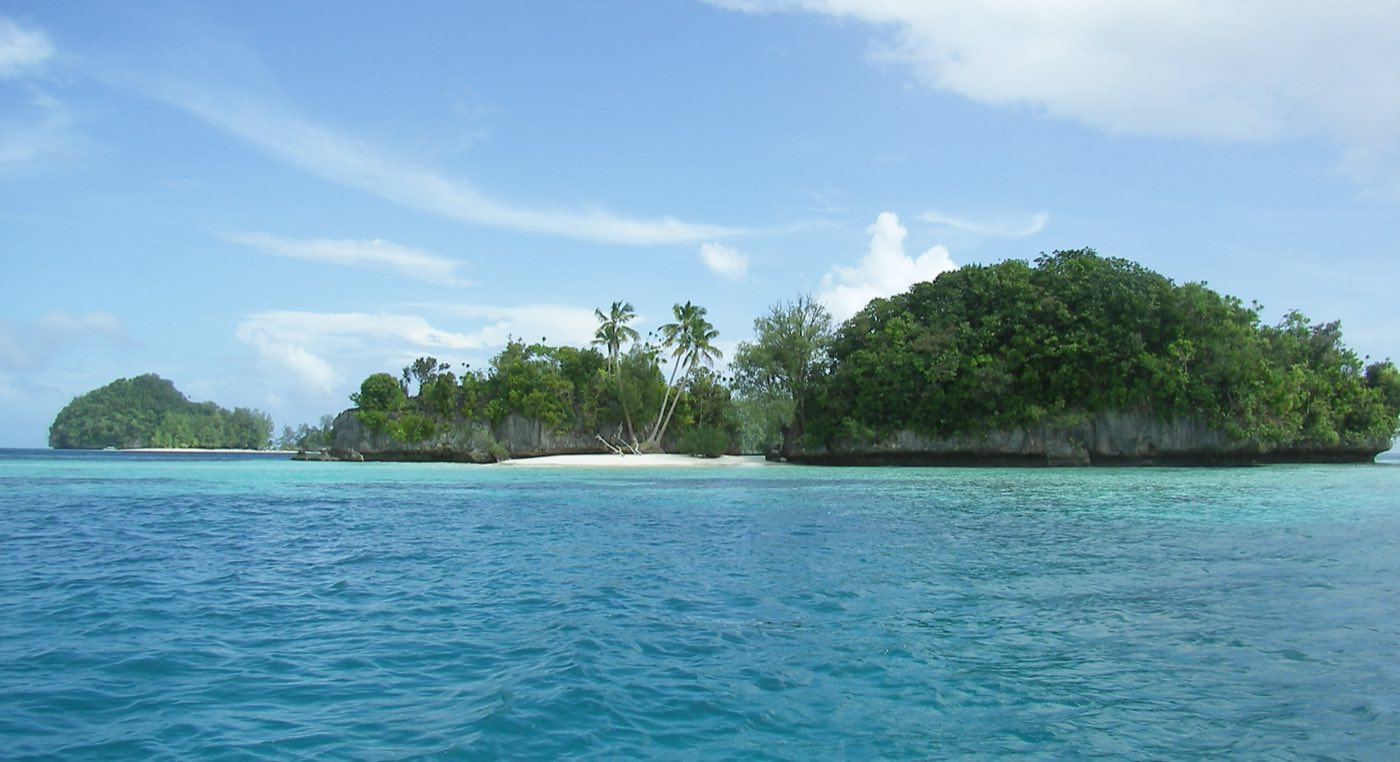
A western Pacific archipelago of around 340 islands scattered over a lagoon the color of a swimming pool, Palau is small enough to see end-to-end in a week and weird enough that you'll want twice that. Travelers come for the Rock Islands, the drift dives at Blue Corner, a saltwater lake full of harmless golden jellyfish, and a national marine sanctuary that protects about 80% of its ocean. You feel the scale of the water first. From a dive boat leaving Koror, the Rock Islands rise ahead of you — 445 uninhabited mushroom-shaped limestone islets, undercut by centuries of waves, in a UNESCO-protected lagoon. The water is that specific tropical green that doesn't quite photograph. Above the surface it's quiet: the whole country has fewer than 20,000 residents and tourism has dialed back substantially since the pandemic. Palau built the world's first shark sanctuary in 2009 and in 2020 banned reef-toxic sunscreens outright. Every visitor signs the Palau Pledge, stamped into your passport on arrival, promising to tread lightly. Bring reef-safe sunscreen — you will be refused the unsafe kind at customs — and expect a place that takes conservation seriously because its economy and identity both depend on the reef holding together.
Things to Do
Jellyfish Lake snorkeling
Ongeim'l Tketau is a marine lake on Eil Malk Island that hosts millions of golden jellyfish — a species that evolved in isolation and lost its sting. You hike ten minutes over a low ridge, drop into still brackish water, and swim through a cloud of them as they track the sun across the lake. No scuba is allowed (the sulfurous lower layer is toxic), just snorkel gear and reef-safe sunscreen. The population crashes and rebounds with ENSO cycles, but when it's on, it is one of the strangest and gentlest things you will ever do in water.
Blue Corner world-class wall diving
Blue Corner is the reef promontory that made Palau's reputation — a wall that drops into 300 meters where an incoming current sweeps grey reef sharks, schooling jacks, barracuda, and the occasional hammerhead past you in formation. Divers hook into the reef at around 20 meters and hang in the flow to watch the parade. You need a minimum of around 25 logged dives, and you should dive it twice: first trip you stare at the sharks, second trip you notice everything else the current is bringing through.
Rock Islands Southern Lagoon UNESCO site
Three hundred-plus mushroom-shaped limestone islets, undercut by tide and rimmed by white beaches inside protected coves, make up the core of Palau's lagoon landscape. Take a full-day boat tour from Koror that combines snorkeling the Big Drop-off, lunch on a private beach at Ulong, and a pass through the natural arch at Ngermeaus. For a full day on the water in near-silence, it is hard to do better anywhere in the Pacific. Book through an operator licensed with the Koror State rangers.
German Channel manta ray cleaning station
On the southwestern edge of the lagoon, a dredged WWI channel has become a cleaning station where reef mantas come in at incoming tide to be groomed by wrasse. Divers settle on the sand at 15 meters and watch mantas wheel overhead, sometimes four or five in a single dive. It's an easy dive technically — no current to speak of — which makes it one of the best big-animal encounters in Palau for less experienced divers. Best conditions are November through April.
Milky Way natural mud bath lagoon
A small calm cove in the Rock Islands where the bottom is soft white limestone silt, Milky Way is the stop on every day tour where the boat guides scoop up buckets of the chalky mud, and everyone on board slathers it on. Locals swear by its skin-softening effect, and whether that's true or not, the water itself is a surreal milky turquoise you don't see anywhere else. A silly, memorable fifteen minutes in the middle of a full day of snorkeling.
Peleliu Island WWII sites
In September 1944, American forces landed on Peleliu in what became one of the bloodiest battles of the Pacific war. The island today is a quiet agricultural community of a few hundred people with rusted tanks on reefs, a Japanese command post in a cave system, and the cemetery at Bloody Nose Ridge. Take a guided day trip from Koror with a veteran-run operator who can explain the topography of the landings. It pairs naturally with an afternoon dive on nearby wrecks or reef walls.
Ngardmau Waterfall — Palau's tallest
On Babeldaob, the large northern island most visitors skip, a boardwalk and old mining rail track lead through jungle to a thirty-meter waterfall with a deep pool at its base. The hike in takes about forty-five minutes through dense forest and along a creek crossed by wooden bridges. It's a counterpoint to the salt-and-reef days of the rest of the trip, and it gives you a reason to rent a car and drive the 85-kilometer loop around Babeldaob — quiet villages, the capital at Ngerulmud, and Stone Monoliths of Badrulchau along the way.
When to Go
November through May is the drier, calmer stretch and the peak diving window, with the best underwater visibility (30 meters and more) and the most reliable boat days. January through April tend to have the clearest water. June through October is the wetter season with more squally afternoons, but dives still run most days and you will have fewer boats on the reef. Jellyfish Lake is generally dramatic year-round when the bloom is on, though populations have fluctuated sharply with El Niño cycles — check recent trip reports before planning around it. Typhoons are rare; Palau sits outside the main track.
Getting Around
Palau is small and most visitors base in Koror, the main commercial island, and take boats from there. A rental car on Koror and a one-day drive around Babeldaob (connected by a Japanese-built bridge) covers most of what you can do on land. For the lagoon and the dive sites, you book through a licensed tour operator — boat transfers, guides, and Rock Island permits are bundled into most packages. There is no real public transport; taxis exist but are called rather than hailed. Flights to Peleliu and Angaur are available but most visitors go by boat on organized day trips. Domestic travel beyond day tours is minimal.
Cost & Currency
Palau uses the US dollar and is priced accordingly — noticeably more expensive than Southeast Asia. Expect $150–$250 per night for a mid-range hotel in Koror, $180–$240 for a two-tank dive day including gear, and $25–$40 for a sit-down dinner of sashimi or reef fish. A full-day Rock Islands boat tour with lunch and the Jellyfish Lake permit runs around $150. There is a $100 Pristine Paradise Environmental Fee bundled into your departure tax on arrival; you also pay Rock Island permits ($50 for 10 days) and Jellyfish Lake permits ($100) separately. Cards are accepted at most dive shops and hotels, but carry cash for smaller restaurants and taxis. Tipping is not expected but appreciated — $5–$10 per dive day to guides is common.
Frequently Asked Questions
- Do I need a visa to visit Palau?
- Most nationalities, including US, EU, UK, Australian, and Japanese passport holders, receive a free 30-day visa on arrival with proof of onward travel. Longer stays can be extended at immigration in Koror. You will sign the Palau Pledge — a conservation promise stamped into your passport — at the immigration counter.
- How do I get to Palau?
- Direct flights connect Palau's Roman Tmetuchl International Airport (ROR) with Manila, Taipei, Seoul, and Tokyo, with additional charters from Hong Kong and mainland China seasonally. There are no direct flights from North America or Europe — most travelers route through Manila or Taipei, then take the short final leg into Palau. Flight schedules are limited and booking well in advance is smart.
- Is Palau suitable for non-divers?
- Yes, though diving is the main draw. Snorkeling at Jellyfish Lake, the Big Drop-off, and in the Rock Islands covers most of the underwater highlights at the surface. Kayaking through the Rock Islands, WWII history on Peleliu, the waterfall hike at Ngardmau, and food and drink in Koror easily fill a week without a single tank dive. Palau has one of the world's best non-diver snorkel experiences.
- What sunscreen can I bring?
- Since 2020, Palau has banned reef-toxic sunscreens — anything containing oxybenzone, octinoxate, or any of the other ten banned chemicals. Customs officers will confiscate non-compliant bottles on arrival. Bring reef-safe mineral sunscreen (zinc or titanium oxide-based) from home, or buy it locally in Koror shops. It's a serious conservation rule and enforced.
- Is Palau safe for travelers?
- Yes — violent crime is very rare and Palau is one of the safer destinations in the Pacific. Normal precautions apply: secure your gear on boats, watch for strong currents when snorkeling outside supervised areas, and take reef hazards (fire coral, lionfish) seriously. Medical facilities are limited to the Belau National Hospital in Koror; serious emergencies require medevac to Guam or Manila, so travel insurance with evacuation coverage is essential.
Plan a Trip to Palau
Have you been to Palau?
Track 195 countries, 50 states & 63 national parks on your map