Indonesia
- Capital
- Jakarta
- Population
- 277M
- Currency
- IDR
- Languages
- Indonesian
Overview
An archipelago of 17,000 islands strung for more than three thousand miles along the equator, Indonesia contains so many distinct cultures, ecologies, and climates that trying to describe it as a single destination is a bit like describing all of Europe that way. Travelers come for Bali's rice terraces and temples, Komodo's dragons, orangutans in Sumatra, the reef-walls of Raja Ampat, and Borobudur at dawn. Indonesia is a country of volcanoes. More than a hundred of them are active, and the chain of cones from Sumatra to Flores gives the country its geology of fertile soil, sulfurous hot springs, and the occasional sunrise climb to a crater rim at 2 a.m. Even Bali — which most visitors mistake for the whole country — is really a Hindu outlier in a Muslim-majority archipelago, and a single island among thousands. Spend two weeks and you will only have seen a sliver. This is a country that rewards a specific plan rather than a general one. The divers head to Raja Ampat or Bunaken; the surfers to the Mentawais and G-Land; the culture travelers to Yogyakarta, Ubud, and the Toraja highlands; the wildlife travelers to Sumatra's Gunung Leuser for orangutans and Flores for dragons. Domestic flights on Garuda, Citilink, and Lion Air make it all reachable, but the distances are real — Jakarta to Papua is farther than London to Istanbul.
Things to Do
Bali's Ubud rice terraces and temples
The cultural heart of Bali sits inland in the hills around Ubud, where the Tegallalang rice terraces descend in emerald steps and Hindu temples appear on every riverbank. Start your morning at Tirta Empul for the holy-spring purification ritual, spend the middle of the day on a rice-field walk through Sayan or Penestanan, and end at a warung in town for nasi campur. Base yourself in Ubud for three nights rather than day-tripping from the south coast.
Komodo National Park and Komodo dragons
The three-meter monitor lizards that gave this UNESCO park its name live only on Komodo, Rinca, and a few smaller islands in the Lesser Sundas. Multi-day liveaboard boats from Labuan Bajo on Flores are the way to see them, combining guided walks on Rinca — where sightings are close to guaranteed — with snorkeling on Pink Beach, manta-ray diving at Manta Point, and a sunset climb up Padar Island for its three-bay panorama. Book a reputable boat; the cheap ones cut corners on safety.
Borobudur Temple at sunrise in Java
The world's largest Buddhist monument is a 9th-century stone mandala the size of a small hill, carved with 2,600 bas-relief panels and topped by 72 bell-shaped stupas. Sunrise access was restricted in 2023 and is now capped at a few hundred visitors a day with timed tickets — book well ahead through Manohara Hotel. Even the standard morning entry is extraordinary when the mist lifts off the Kedu plain and the volcanoes of Merapi and Sumbing appear to the north.
Raja Ampat diving and snorkeling
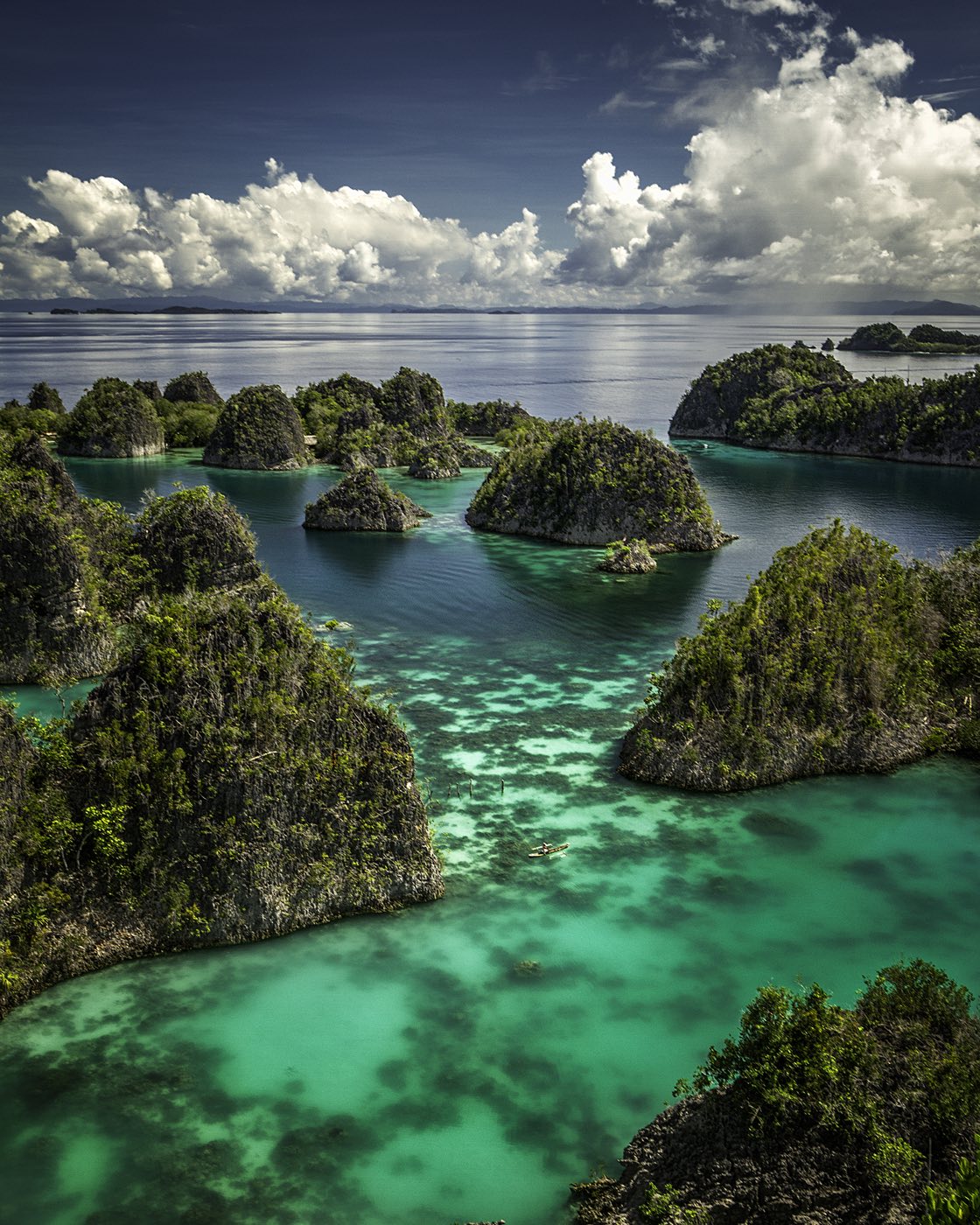
The four-islands region off West Papua sits at the heart of the Coral Triangle and holds the highest marine biodiversity on earth — 75 percent of the world's coral species live here. Liveaboard dive boats from Sorong are the classic way to see it, though shore-based lodges on Waisai and Kri offer excellent reef access at about a third the price. Underwater you get walls, pelagics, manta cleaning stations, and reefs so thick with fish the visibility drops. Above water the karst islets of Wayag are the signature landscape.
Orangutan trekking in Sumatra or Borneo
Indonesia shares the world's remaining wild orangutan population with Malaysia, and the two best places to meet them on foot are Gunung Leuser National Park around Bukit Lawang in northern Sumatra, and the Sekonyer River in Tanjung Puting on Borneo. Bukit Lawang is the easier option — a half-day bus from Medan and a two-day jungle trek with established camps. Tanjung Puting is done by klotok riverboat over three days, drifting past proboscis monkeys and sleeping on deck.
Mount Bromo volcanic sunrise in Java
The caldera of the Tengger massif in East Java holds five cones rising out of a black volcanic sand sea, with Bromo itself steaming gently at the center. The classic itinerary: arrive the night before in Cemoro Lawang, leave your guesthouse at 3 a.m. by jeep for the King Kong viewpoint, watch sunrise from the rim, then descend across the sea of sand and climb Bromo's crater stairs for the sulfurous crater view. Pair it with nearby Ijen's blue-flame trek for a two-volcano couple of days.
Gili Islands beach life
Three small car-free islands just off Lombok's northwest coast — Trawangan, Meno, and Air — offer turquoise water, healthy coral, and the laid-back Southeast-Asia beach life you came for. Trawangan is the party island and has the best sunset views over Bali's Mount Agung; Meno is the quietest and has resident sea turtles off the east beach; Air sits in the middle on both counts. Get here by fast boat from Padangbai on Bali or by slow public ferry from Bangsal on Lombok.
Tana Toraja funeral ceremonies in Sulawesi
The highlands of south-central Sulawesi are home to the Toraja people, whose elaborate funeral ceremonies are one of the world's more extraordinary cultural practices — multi-day events involving buffalo sacrifices, feasting, and burial in cliff-face niches watched over by wooden tau-tau effigies. Visits are welcomed when arranged through a local guide out of Rantepao, who can take you to a family ceremony as a respectful observer. Combine with hikes through the tongkonan-studded villages of Kete Kesu and Batutumonga.
When to Go
Most of Indonesia has two clear seasons: a dry season from roughly April to October and a wet one from November to March. Bali, Java, Komodo, and the Lesser Sundas are best from May through September when skies are clear and the diving is calm. Raja Ampat and the far east flip it — October through April is the best window there, with glassy seas and visibility past 30 meters. Sumatra's rainforest regions are wet year-round; you just choose how wet. Avoid Bali at Christmas and New Year unless you enjoy Western crowds and peak pricing, and check for Nyepi — the Balinese day of silence in March — when the whole island shuts down for 24 hours.
Getting Around
Flights are the practical answer to long distances: Garuda, Batik, Citilink, and Lion cover every major island for modest fares, and a multi-stop trip usually means a domestic flight every few days. Within Java, trains are excellent — the Argo Parahyangan, the overnight services between Jakarta and Yogyakarta, and the new fast line to Surabaya are all worth the booking. On Bali, rent a scooter if you are confident (traffic is heavy in the south), or use Gojek and Grab, the local ride-hailing apps that work exactly like Uber. Ferries move people between smaller islands, but they can cancel in rough weather, so keep a day's buffer before any flight.
Cost & Currency
Indonesia uses the rupiah (IDR), which runs around 15,000–16,000 to the US dollar. Mid-range boutique hotels in Ubud, Yogyakarta, or Jakarta cost 700,000–1,400,000 rupiah a night ($45–$90); a nasi goreng or nasi campur at a local warung is 25,000–60,000 rupiah, and a beach-bar Bintang costs 35,000–60,000. Raja Ampat and Komodo liveaboards are the other end entirely at $300–$600 per day. Cards are accepted at most hotels and upscale restaurants, but warungs, taxis, and rural areas are cash-only. Use BCA or Mandiri ATMs and watch out for the 3,500,000-rupiah per-withdrawal limit. Tipping is not traditional but a rounded-up bill and 10,000 rupiah to the driver is appreciated.
Frequently Asked Questions
- Do I need a visa to visit Indonesia?
- Most travelers need a visa on arrival, which costs 500,000 rupiah (about $33) and gives you 30 days, extendable once for another 30. Apply in advance through the official e-VOA site at molina.imigrasi.go.id to skip the airport queue. Nationals of ASEAN countries enter free for 30 days.
- Is Bali safe for solo travelers?
- Yes — Bali is one of the more relaxed destinations in Southeast Asia for solo travel, with a deep expat and backpacker community and good English almost everywhere. Petty theft from scooters and bag-snatching in the south happens, so wear your bag across your body and do not leave valuables visible. Watch the traffic carefully on a scooter, and only drink arak from a reputable bar.
- When is the best time for diving in Raja Ampat?
- October through April, when the seas are calmest and visibility regularly exceeds 30 meters. The peak months of November to March are also when manta aggregations at Manta Sandy are most reliable. Outside this window the region gets rougher and some liveaboards relocate to Komodo for their dry-season runs.
- How do I avoid Bali belly?
- The usual rules: drink only sealed bottled water and skip ice at smaller warungs, eat at places with high turnover, wash fruit in bottled water or peel it, and ease into street food rather than starting with it. Carry rehydration salts and a course of antibiotics from home. Most travelers who get sick in Bali recover in a day or two — it is uncomfortable rather than dangerous.
- Is it worth going beyond Bali?
- Yes, absolutely. Bali is a beautiful island but it is also one of the most developed corners of the country and not representative of the rest of Indonesia. Even a short hop to Yogyakarta for Borobudur, or a week in Komodo and Flores, will show you a completely different side of the archipelago. Add Sumatra, Sulawesi, or Raja Ampat if you have three weeks or more.
Plan a Trip to Indonesia
Have you been to Indonesia?
Track 195 countries, 50 states & 63 national parks on your map