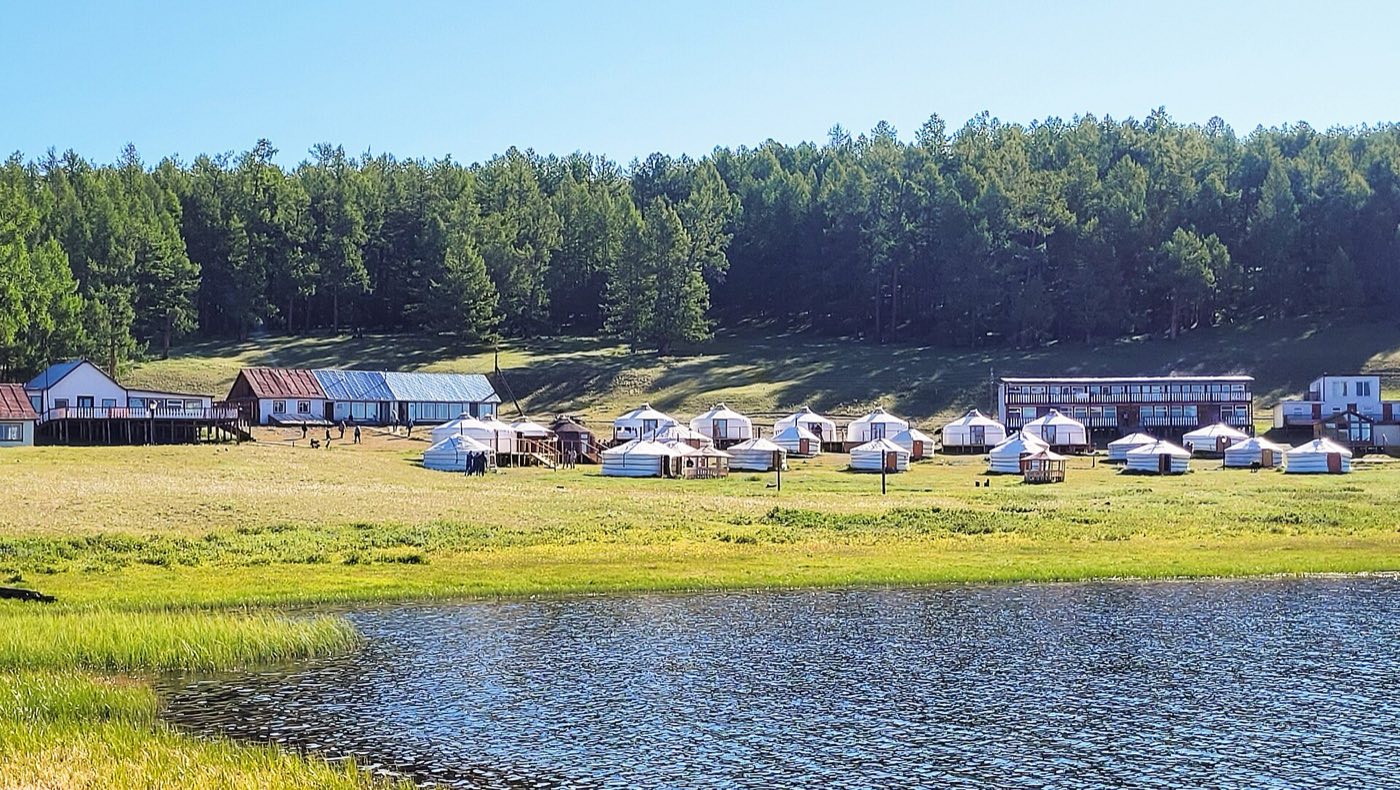
Mongolia
- Capital
- Ulaanbaatar
- Population
- 3.4M
- Currency
- MNT
- Languages
- Mongolian
Overview
Mongolia is the landscape you picture when you picture emptiness — a country three times the size of France with the population of a mid-sized American city, most of it grassland, the rest either desert or mountains. Traffic, outside Ulaanbaatar, is livestock. A horse culture 3,000 years old still underwrites daily life across the steppe, and nomadic families move their round white felt gers four or more times a year to follow grass and water. What travellers come for depends on the season. Summer draws visitors to the Naadam Festival in July, a three-day national holiday of Mongolian wrestling, archery, and long-distance horse racing where jockeys as young as six cover 25 kilometres of open country. Others come for the stone deer steles and 13th-century ruins at Karakorum, the dune fields of the Gobi at Khongoryn Els, or the simple experience of sleeping in a nomad family's spare ger beside Khövsgöl Lake with nothing on the horizon but pine forest and stars. Travel here takes commitment. Distances are enormous, paved roads thin out an hour from the capital, and most interior travel happens in Russian-built UAZ vans that cover 200 kilometres in a day on dirt tracks. Winters can drop below −30°C and last from October through April. Go with a reputable local operator, a packed list of warm layers, and an open calendar — the rewards are landscapes and a way of life that have almost no analogue left on the planet.
Things to Do
Naadam Festival in July — archery, wrestling, horse racing
The national festival runs July 11–13 each year — Ulaanbaatar's central stadium hosts the opening ceremonies and the wrestling and archery finals, while the cross-country horse races happen on open plains 30 kilometres outside the city. Smaller local Naadams in rural aimags happen in the surrounding weeks and are often more atmospheric than the capital version. Buy stadium tickets through a local operator months in advance, and dress in layers — summer highs can flip from 30°C sun to hail in an afternoon.
Khövsgöl Lake ger camps and horseback riding
Ninety per cent of Mongolia's fresh water sits in Khövsgöl Lake, 700 kilometres north of Ulaanbaatar near the Russian border, ringed by pine-covered mountains and backed by taiga forest where reindeer-herding Tsaatan families still live. Ger camps on the southern and western shores offer horseback trips ranging from day rides to multi-day packhorse trips north along the shore. The water is cold enough to stop a swimmer inside a minute in July, but the sauna tents and wood-stoved gers warm you up fast.
Gobi Desert dunes and dinosaur fossil sites
Southern Mongolia's Gobi is a desert of gravel plains broken by a few spectacular features — the 180-kilometre dune field of Khongoryn Els that moans in the wind, the red-orange Flaming Cliffs of Bayanzag where Roy Chapman Andrews found the first dinosaur eggs known to science in 1923, and the ice-filled Yolyn Am canyon that holds glacier ice into August. Most visitors cover it on a week-long loop from Ulaanbaatar with a driver, cook, and ger stays along the way. Two-humped Bactrian camels are the right way to see the dunes.
Golden Eagle Festival in Bayan-Ölgii
In the far-western province of Bayan-Ölgii, ethnic Kazakh families still hunt with trained golden eagles — the birds taken from cliff-face nests as juveniles, flown for seven years, and released back to the wild. The Golden Eagle Festival in early October draws around 80 eagle hunters into competition: mounted calls, fox-fur lures dragged across the steppe, speed and accuracy tests. The setting, the eagles, and the costumes (heavy wool cloaks and fox-fur hats) make it one of the more striking cultural events anywhere in Asia.
Gorkhi-Terelj National Park
Seventy kilometres north-east of Ulaanbaatar, Terelj is the easiest way to see steppe-and-forest Mongolia without committing to a multi-day drive. Granite tors rise out of green valleys, a few permanent Buddhist monasteries sit among the hills, and a strip of small ger camps runs along the valley floor for overnight stays. Day activities include short horse rides, hikes to Turtle Rock, and visits to Aryabal Meditation Temple up a long wooden-staired path. A good one- or two-night introduction if you are tight on time.
Genghis Khan Equestrian Statue
Fifty kilometres east of Ulaanbaatar, the world's tallest equestrian statue stands 40 metres high on a visitor centre dressed like a truck-stop — 250 tonnes of stainless steel in the shape of Genghis Khan on horseback, built in 2008 on the supposed spot where he found a golden whip. Inside, the visitor centre holds a small museum of Mongolian history and a lift to a viewing platform at the top of the horse's head. Silly and spectacular at the same time, worth combining with a Terelj day.
Erdene Zuu Monastery at Karakorum
In the central Orkhon Valley, the site of Karakorum was the capital of the Mongol Empire under Ögedei Khan in the 13th century — the city itself is long gone, but the ruins are the basis of modern archaeology across the valley. Erdene Zuu Monastery, built in 1585 out of stones from the ruins and surrounded by a walled enclosure of 108 stupas, still functions as a Buddhist monastery despite Soviet destruction in the 1930s. The site pairs well with a stop at the granite deer steles at Bayan-Ulgii on the drive out.
When to Go
June through early September is the core travel window — warm days, the Naadam Festival in mid-July, wildflowers on the steppe, and nomadic families at their summer pastures where you are most likely to be invited in for fermented mare's milk. May and September are cooler shoulder options with fewer visitors, still snow-free on most routes. October is worth timing around the Golden Eagle Festival in Bayan-Ölgii. Winters from November through March are spectacular — frozen-lake trips to Khövsgöl, ice festivals, reindeer-sledding in the taiga — but temperatures dropping to −40°C mean you need serious cold-weather gear and an operator who knows what they're doing.
Getting Around
Most travellers base out of Ulaanbaatar and head out in Russian-built UAZ 4x4 vans with a driver and guide on pre-arranged itineraries — the country has only a few thousand kilometres of paved road, and dirt tracks beyond the capital require local knowledge to navigate in either direction. Domestic flights by Hunnu Air and MIAT connect the capital to Ölgii (for the Golden Eagle Festival), Khovd, Dalanzadgad (Gobi), and Mörön (Khövsgöl) — worth the money to save two days each way. The Trans-Mongolian Railway runs south to the Chinese border and north to Russia, and is a classic overland route. Inside Ulaanbaatar, taxis (flag any car) are cheap and traffic is grim; use the metered taxi apps like UB Taxi where possible.
Cost & Currency
Mongolia uses the tögrög (MNT), which runs around 3,500 to the US dollar at typical rates — carry US dollars or euros in new, clean bills to exchange, as ATMs work in Ulaanbaatar and provincial capitals but not reliably in rural areas. Expect 15,000–30,000 MNT for a local restaurant meal of khuushuur dumplings or mutton stew, 150,000–300,000 MNT for a mid-range hotel room in Ulaanbaatar, and around $150–$250 per person per day for a full-board driver-guide-van Gobi trip with ger camp stays. Cards work at hotels, supermarkets, and bigger restaurants in the capital, but carry cash for everything outside the city. Tipping drivers and guides at the end of a multi-day trip is standard — budget 10–15% of the trip total.
Frequently Asked Questions
- Do I need a visa to visit Mongolia?
- Many Western citizens including US, UK, Canadian, and most EU nationals can enter visa-free for 30 to 90 days depending on nationality — check current rules before you travel as the list changes. Others can apply online for an eVisa through the Ministry of Foreign Affairs portal. Register with immigration if you plan to stay longer than 30 days, and make sure your passport is valid for at least six months beyond your arrival date.
- Is it safe to travel in Mongolia?
- Yes, generally — violent crime against foreigners is rare and hospitality is genuine across the countryside. Ulaanbaatar has pickpocketing on the State Department Store area and at the Naran Tuul market, and alcohol-related incidents are worth avoiding in the late-night bar districts. In the countryside the bigger concerns are environmental: extreme cold, altitude at higher passes, and the sheer distance between settlements if a vehicle breaks down. Travel with a reputable operator and register any long rural trips.
- When is the Naadam Festival?
- Naadam runs July 11–13 every year — these are fixed national holiday dates tied to the 1921 revolution. Opening ceremonies and wrestling finals in Ulaanbaatar sell out months in advance, and hotel prices in the capital typically double for the week. Smaller regional Naadams in provincial aimags are often held on slightly different dates in July and are a less crowded way to see the same wrestling, archery, and horse-racing traditions.
- What should I pack for a Mongolia trip?
- Layers, always — even summer days on the steppe can swing 25°C between morning and night. Bring a warm fleece, a windproof outer layer, sun hat, sunglasses, sturdy walking shoes, a head torch for ger camps without electricity, a sleeping-bag liner for hygiene, basic first-aid kit with rehydration salts, and plenty of wet wipes. For winter travel add a down jacket rated to at least −20°C, wool base layers, insulated boots, and balaclava. Cash in clean USD or EUR bills for exchange helps in remoter regions.
- Can I visit a nomad family?
- Yes — most ger-camp itineraries include short visits to working nomad families, often with tea, cheese curds, and fermented mare's milk (airag) offered as hospitality. Bring a small gift like fruit, sweets for the children, or a bottle of Mongolian vodka for the host. Take what is offered even if just a sip, avoid stepping on the threshold of the ger, and do not whistle indoors (tradition holds it summons the wind). A guide with translation is essential to make the experience meaningful.
Plan a Trip to Mongolia
Have you been to Mongolia?
Track 195 countries, 50 states & 63 national parks on your map