Monaco
- Capital
- Monaco
- Population
- 39K
- Currency
- EUR
- Languages
- French
Overview
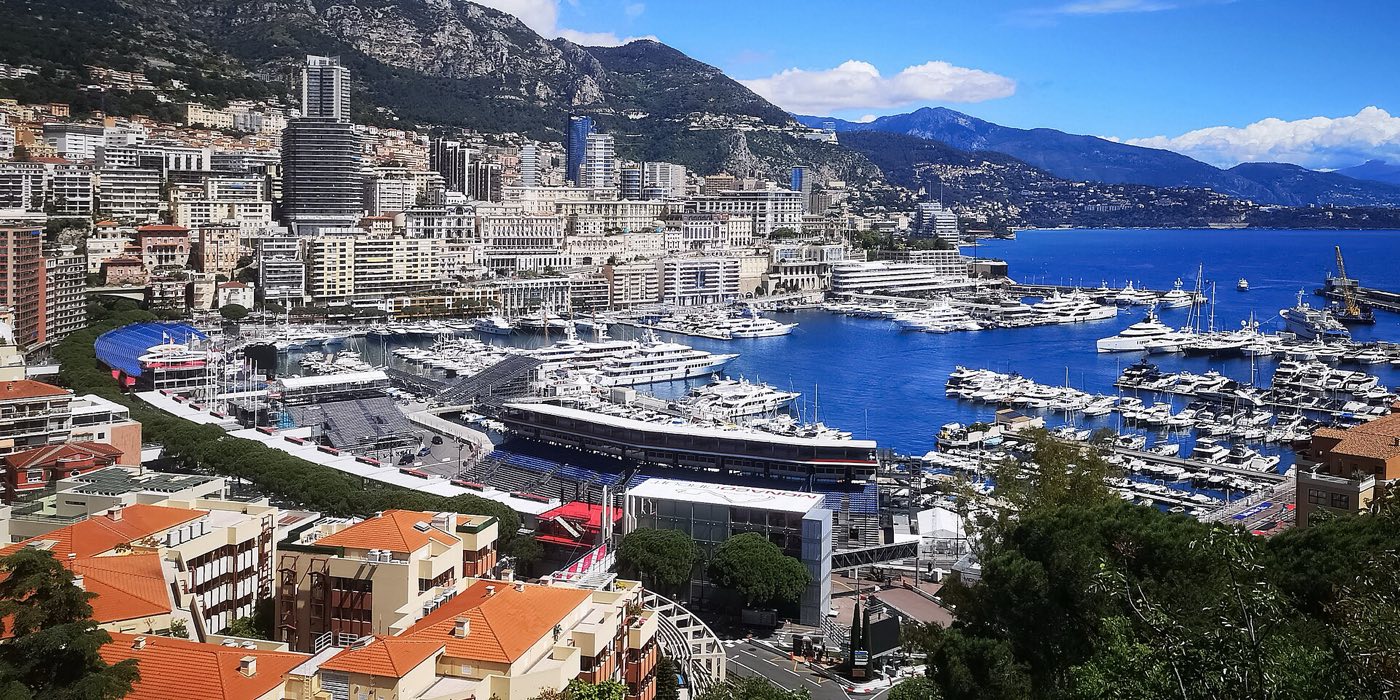
At 2.08 square kilometres, Monaco is the world's second-smallest country and easily its most concentrated — a stack of pale stone apartment towers, casinos, and superyachts climbing the cliff face above the French Riviera like an Art Deco layer cake. It has no airport, no income tax for residents, and a standing army smaller than the orchestra at the Opera. You can walk across the entire country in under an hour. Many people do, unknowingly, thinking they are still in France. What brings visitors is the spectacle. Monte Carlo's casino opened in 1863 and still operates inside its original gilded Belle Époque rooms, where the stakes are high enough that tour groups are politely asked to leave the baccarat tables. The harbour at Port Hercules holds a rotation of the world's largest yachts. Grace Kelly lived out her second act here as Princess of Monaco, and the current Grimaldi family still occupies the pink Prince's Palace above the old town. In late May, the entire city becomes a Formula 1 circuit, with the track running past hotel lobbies and through the harbour tunnel. Monaco works best as a day or two built into a longer Riviera trip. The food and hotel prices run at the top of European rates, but the museums are excellent, the old town (Monaco-Ville) is genuinely charming, and the sheer density of wealth on display is its own experience. Come for the Grand Prix, the casino, or the Oceanographic Museum — and use the train from Nice as your cheap ticket in.
Things to Do
Monte Carlo Casino
The Casino de Monte-Carlo opened in 1863 and remains one of the few places in Europe where gamblers still dress for the occasion in the evening rooms. By day you can tour the Belle Époque public rooms for a small admission — the Salle Garnier opera hall, the Salon Rose ceiling painted with female figures smoking cigars, the inlaid parquet floors. From two in the afternoon you can actually play in the outer rooms (passport required, smart-casual dress enforced). The inner Salons Privés open in the evening for higher-stakes baccarat and chemin de fer.
Monaco Grand Prix circuit
The Formula 1 circuit is the streets of Monte Carlo themselves, and any time of year you can walk or drive the lap — starting line on Boulevard Albert 1er, up the hill to Casino Square, hairpin at the Fairmont, down to the harbour, through the tunnel past Portier, along the quayside, into the chicane, and past Tabac and the swimming pool back to the start. During Grand Prix week in late May the whole city turns into grandstands, celebrity-filled yacht decks, and closed roads. Outside race week, small guided tours can arrange a passenger lap in a sports car for the right price.
Oceanographic Museum and Aquarium
Perched on a cliff above the Mediterranean in Monaco-Ville, the Musée Océanographique was founded by Prince Albert I in 1910 and run for decades by Jacques Cousteau. The ground-floor aquarium holds 90 tanks of reef fish, sharks, and live coral, while upper floors trace Cousteau's career and Mediterranean conservation. The rooftop terrace has one of the best panoramic views of the coast — up past Cap Martin toward Italy and down across the harbour. Allow two hours; more if you are travelling with kids.
Prince's Palace and changing of the guard
The pink-stoned Palais Princier has been the Grimaldi family residence since 1297, and from April to October the state apartments open to the public with audio tours covering the throne room, the gallery of mirrors, and family portraits. The changing of the Carabinier guard happens daily at 11:55 am on the palace square — small ceremony, white uniforms, and tourists with phones. Arrive ten minutes early and combine it with a walk through the narrow streets of Monaco-Ville and the cathedral where Grace Kelly and Prince Rainier are buried.
Exotic Garden and Observatory Cave
Terraced into the cliff on the western side of the country, the Jardin Exotique holds thousands of succulents and cacti from around the world, with views across the entire principality from its upper paths. Included with the ticket is a guided tour of the Observatory Cave — a limestone cavern discovered in the 1920s, with stalactites and prehistoric artefacts from Paleolithic human use. Note that the garden has been partially closed for renovation in recent years; check current status before you plan a visit.
Port Hercules yacht harbour
The main harbour curves around the lower town between the casino district and Monaco-Ville, and a walk along its quays is free entertainment — hundred-metre yachts, helicopter pads, and occasional celebrity sightings. During the Monaco Yacht Show in late September, the largest in the world, the harbour holds around 120 superyachts open for private viewings (by industry invitation). The rest of the year, cafés along Quai Antoine 1er give you a seat, a €6 espresso, and an hour of looking at boats.
Japanese Garden and Larvotto Beach
A quiet counterweight to the casino and the harbour, the Jardin Japonais on the eastern side of the country was designed by landscape architect Yasuo Beppu and is free to enter — koi pond, zen garden, tea house, and a few minutes of breathing room between appointments. Adjacent is Larvotto, the principality's only public beach, recently rebuilt with imported sand and a crescent of modern restaurants. Swimming is clean and lifeguarded in summer, and the whole area gets busy from late June through August.
When to Go
May and September are the strongest months — warm Mediterranean weather, open-air events and restaurants, and slightly lower rates than midsummer. The Monaco Grand Prix in late May is the marquee event and the reason many people visit, but book hotels 6 to 12 months ahead and expect rates to quadruple during race week. July and August bring beach weather and peak yacht traffic but also the most crowded streets. Winters are mild (rarely below 10°C) and much cheaper — the casino still runs, the museums are open, and you can have Monte Carlo almost to yourself. The Monte Carlo Rally in late January adds a motorsport bookend to the year.
Getting Around
Monaco is small enough to walk end to end, but the old town sits on a cliff 60 metres above the harbour, so public elevators and escalators cut between levels — use them. The bus network runs six lines around the principality for a couple of euros per ride, and the main station (Monaco-Monte Carlo) connects by frequent train to Nice (about 25 minutes) and Ventimiglia in Italy. Most visitors fly into Nice Côte d'Azur airport and take either the direct train, the 110 express bus, or a helicopter shuttle (seven minutes, pricey but spectacular). Taxis are plentiful but expensive; rideshare is not permitted to operate. Driving is mostly pointless — parking is garage-only and paid by the hour.
Cost & Currency
Monaco uses the euro and operates at some of the highest consumer prices in Europe — noticeably above Paris or Nice. Expect €8–€12 for an espresso at a Monte Carlo café, €40–€70 for a lunch menu at a mid-range restaurant, and €400–€800 a night for a four-star hotel room in the town centre (with the better palaces running €1,000 and up, and racing week four or five times that). Cards are accepted everywhere including the casino for chips, though hotels may ask for an on-file card for incidentals. Tipping follows French custom — service is included, but rounding up or leaving 5–10% at a nice dinner is appreciated. Day-tripping from Nice is the single biggest cost lever for most visitors.
Frequently Asked Questions
- Do I need a visa to visit Monaco?
- Monaco is not in the EU but sits within the Schengen Area by agreement with France, so the same rules apply. US, UK, Canadian, Australian, and EU citizens can enter visa-free for up to 90 days in any 180-day period; travellers from many other countries need a Schengen visa issued by France. Your passport should be valid for at least three months beyond your planned departure date.
- How do I get from Nice Airport to Monaco?
- The cheapest option is the 110 express bus direct from the airport to Monaco's main stops for under €25 one-way (about 45 minutes). The train is marginally cheaper but requires a local bus or taxi to Nice-Ville station first. Helicopter shuttles run from Nice airport to Monaco's heliport at Fontvieille in about seven minutes, starting around €170 per person — scenic, quick, and a genuine Monaco way to arrive.
- Can I visit the casino in shorts?
- No — the Casino de Monte-Carlo enforces a smart-casual dress code in daytime gaming rooms (no shorts, no flip-flops, no sportswear) and a jacket-required rule for men in the Salons Privés after 8 pm. Tour-only tickets in the morning are more relaxed but still no beachwear. Bring a passport for entry (you must be 18), and note that Monegasque citizens are not permitted to gamble.
- Is Monaco safe for travelers?
- Extremely — Monaco has one of the densest police and CCTV presences in the world, and violent crime is essentially unheard of. The practical concerns are pickpocketing in the busiest tourist spots around the casino and harbour, and the steep hilly streets which can be slippery in rain. Driving is safe but parking can be stressful; for day trips the train from Nice is the easier option.
- Is one day enough to see Monaco?
- Yes, for most visitors — a full day lets you cover Monaco-Ville (palace, cathedral, Oceanographic Museum), Monte Carlo (casino, Café de Paris, harbour), and maybe a walk through the Exotic Garden. Two days adds space for a beach afternoon at Larvotto and a slower casino evening. Monaco is compact enough that you do not need to base yourself here — Nice or Menton makes a cheaper hotel base with a short train ride in.
Plan a Trip to Monaco
Have you been to Monaco?
Track 195 countries, 50 states & 63 national parks on your map