Luxembourg
- Capital
- Luxembourg
- Population
- 660K
- Currency
- EUR
- Languages
- Luxembourgish, French, German
Overview
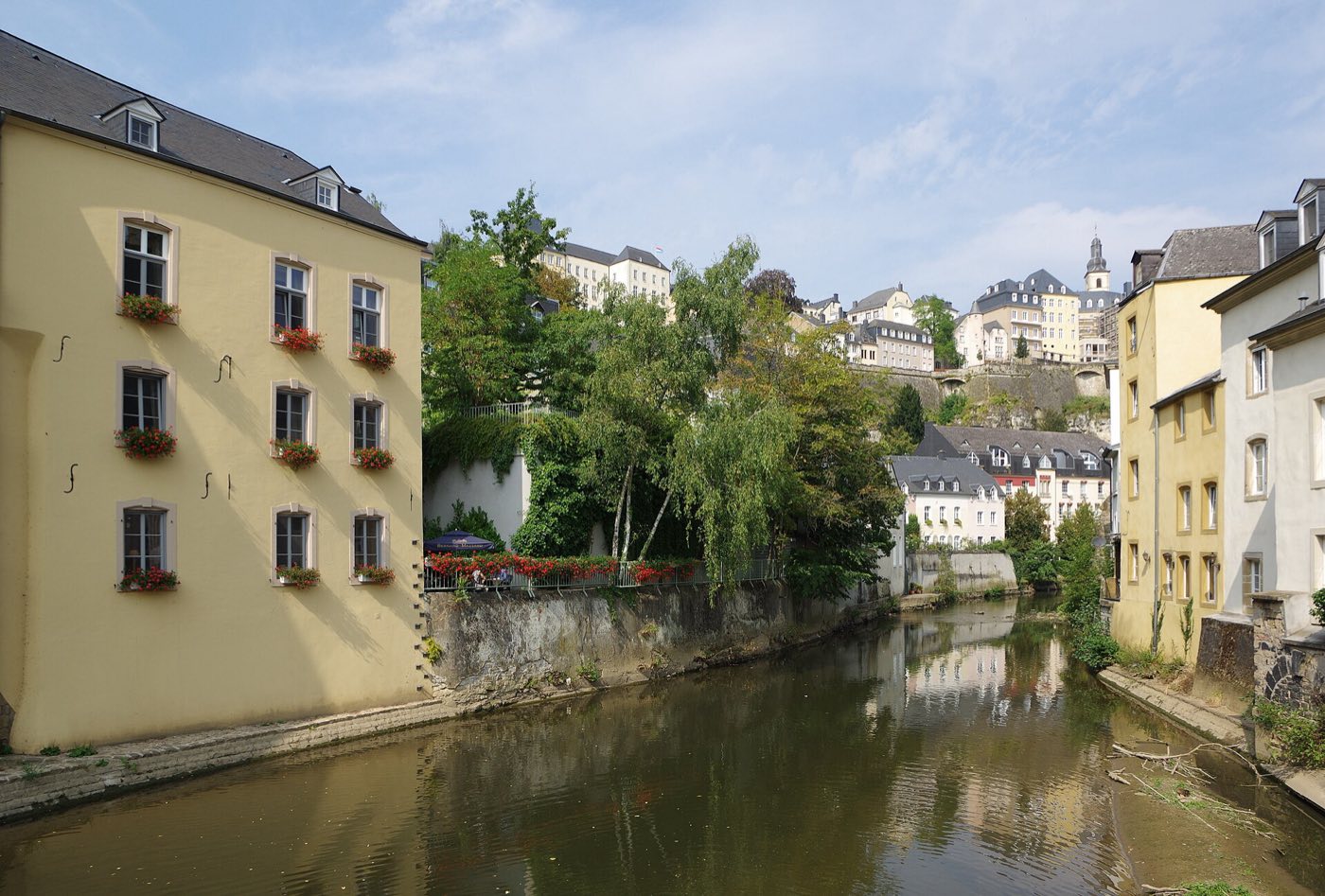
A grand duchy of 660,000 people tucked between Belgium, France, and Germany, Luxembourg is one of Europe's smallest sovereign states and, quietly, one of its most surprising. The capital city sits astride two river gorges with a walkable upper town and a storybook lower quarter called the Grund laced with stone bridges and old mill buildings. Beyond the capital the country opens into the Müllerthal's sandstone canyons, the primeval Ardennes forest in the north, and terraced Riesling vineyards along the Moselle. What catches you first is the dramatic geography of the capital. The old city — a UNESCO World Heritage site — perches on a rocky plateau ringed by ravines that drop 70 meters to the Alzette and Pétrusse rivers below. Walk the Chemin de la Corniche along the edge and the city unfolds beneath you like a model village: red roofs, a winding river, the green tops of plane trees in the Grund. From there you can take a lift or the long staircase down into the lower town and cross stone bridges that were medieval defenses before they became pleasant places to drink an afternoon glass of wine. Luxembourg rewards travelers interested in food, forest, and fortress. It has more Michelin stars per capita than anywhere in the world, a grand ducal capital you can walk in a day, and surprisingly wild terrain within an hour of the city. Three languages operate simultaneously — Luxembourgish, French, German — and most people speak English too. Plan a long weekend for the capital plus a Müllerthal or Vianden day trip; a full week lets you add the Moselle wine region and a proper Ardennes detour.
Things to Do
Bock Casemates underground tunnels
Carved into the sandstone promontory that first attracted the counts of Luxembourg in 963, the Bock Casemates are 17 kilometers of underground tunnels dug by Spanish, Austrian, and French military engineers between the 1600s and 1800s to house garrisons, horses, and cannon. You can walk a signposted two-kilometer section year-round that takes you past barracks rooms carved from living rock, casement windows looking out over the Grund, and the original medieval castle foundations. Surprisingly cool in summer and genuinely cold in winter; wear a jacket and non-slip shoes.
Luxembourg City's Grund quarter and Chemin de la Corniche
The Chemin de la Corniche is a quiet walking path along the upper city's eastern edge that writer Luc Clarkson once called the most beautiful balcony in Europe, and on a blue-sky morning it is hard to argue with. The path takes you past the remnants of fortress walls and drops views straight down into the Grund — the lower quarter along the Alzette where old mills, a brewery, and stone-arched bridges still sit as they did in the 1700s. Take the free public lift from the upper town down into the Grund for a slow lunch by the river at Scott's or Brasserie Melusina.
Müllerthal Trail (Luxembourg's Little Switzerland)
In the east of the country near Echternach, the Müllerthal region is a landscape of dense beech forest, moss-softened sandstone gorges, and narrow passages between giant boulders that wouldn't look out of place in a German fairy tale. The Müllerthal Trail is a 112-kilometer waymarked system split into three loops, and even a half-day walk from Berdorf or Beaufort takes you through remarkable rock formations like the Schiessentümpel waterfall and the Wolfsschlucht canyon. Bring sturdy shoes; the sandstone gets slick after rain.
Vianden Castle
One of the largest feudal residences in Europe during the Holy Roman period, Vianden rises in terraces of pale stone above the Our River in the northern Ardennes, about an hour by road from the capital. The castle was largely ruined by the 1800s and carefully restored from the 1970s — Victor Hugo lived briefly in exile in a house at the foot of the hill and wrote admiringly of the ruin's romantic silhouette. Take the chairlift up for the approach view, explore the great hall and chapel, and have lunch in the small cobbled village below.
Echternach — Luxembourg's oldest town
Thirty kilometers east of the capital along the German border, Echternach grew up around a Benedictine abbey founded in 698 and remains the oldest town in Luxembourg. The restored basilica holds the tomb of Saint Willibrord, and every Tuesday after Pentecost the town hosts the UNESCO-recognized Dancing Procession — thousands of pilgrims progressing through the streets in a ritualized hopping dance that has been performed since at least the 1500s. Outside the procession days, the town is a calm riverside base for Müllerthal walks with a pleasant Marktplatz and plenty of guesthouses.
Bourscheid Castle ruins
Higher on a ridge above the Sauer River valley in central Luxembourg, Bourscheid is one of the most atmospheric castle ruins in the country, dating to the 10th century and expanded over five hundred years before being abandoned after 1700. Partial restoration has stabilized the walls and towers without glossing them over — you can walk through surviving rooms, climb what remains of the keep, and look out across one of the most scenic river valleys in the Ardennes. Combine with a drive through the nearby hill country and a lunch stop in Diekirch.
Moselle Valley wine tasting along the German border
The eastern border of Luxembourg runs along the Moselle River for 42 kilometers, and the south-facing slate slopes on the Luxembourg side produce crisp Riesling, Pinot Gris, and the country's signature sparkling Crémant de Luxembourg. Towns like Remich, Wormeldange, and Grevenmacher host small family domaines with tasting rooms — Caves Bernard-Massard and Domaine Alice Hartmann among them — and a signed wine trail links them. Rent a bike in Remich and cycle the riverside path; the gradient is flat and the stops come at a sensible pace.
When to Go
May through September is the reliable window — mild days in the low to mid-20s Celsius, long evenings on the Grund's terraces, and all castles, hiking trails, and wine tasting rooms at full operation. Late August brings the Schueberfouer, a massive traveling funfair in Luxembourg City that dates to 1340 and runs for two and a half weeks of rides, grilled sausages, and late-night crowds. Autumn color in the Ardennes peaks in mid-October and is remarkable. December has the city's compact Christmas market on Place d'Armes and an atmospheric ice rink in Place de la Constitution, though short days and frequent rain mean it is not ideal for rural touring.
Getting Around
Luxembourg is the first country in the world to have made all public transport free — trains, buses, and the Luxembourg City tram are at no cost for residents and visitors alike since 2020. The national rail network covers the main corridors from the capital to Ettelbruck, Troisvierges, and Wasserbillig, with connecting buses filling every gap. Getting from Luxembourg City to Echternach, Vianden, or Grevenmacher takes 45 minutes to an hour by bus. The capital itself is compact and walkable; the free tram connects the train station, Kirchberg, and the airport. Renting a car helps for flexible access to the Müllerthal and Ardennes but is unnecessary for most itineraries.
Cost & Currency
Luxembourg uses the euro and is expensive — at or slightly above Belgian and French prices across most categories. Expect €3 for an espresso in the capital, €18–28 for a mid-range lunch, and €140–220 per night for a central hotel in Luxembourg City, with rural Ardennes guesthouses running 30% less. Fine dining is a real strength: the country has the highest density of Michelin stars in the world and a proper tasting-menu dinner runs €140–220 per person before wine. Public transport is free. Cards are accepted everywhere. Tipping is light — round up in a cafe, leave 5–10% at a sit-down dinner with warm service, nothing more formal is expected.
Frequently Asked Questions
- Do I need a visa to visit Luxembourg?
- Luxembourg is a Schengen Area country, so the same rules apply as for Belgium, France, or Germany. EU, UK, US, Canadian, Australian, and most Western nationals can enter visa-free for up to 90 days in any 180-day period. Other nationalities need a Schengen visa, which can be used across all Schengen countries on a single application. The grand duchy issues visas through its embassies and consulates in your country of residence.
- How many days do I need in Luxembourg?
- Two to three days covers the capital thoroughly, with time for the casemates, the Chemin de la Corniche, and a meal or two in the Grund. Four to five days adds a proper day trip to Vianden or the Müllerthal, and a week lets you include the Moselle wine region and a slow Ardennes overnight. If you are also visiting Belgium or France, even a single long day in Luxembourg City on a cross-border trip is worthwhile.
- Is public transport really free?
- Yes — since March 2020, all public transport in Luxembourg (trains, buses, trams) has been free for everyone, residents and visitors alike. There are no ticket machines to navigate and no validation required for regular second-class travel. First-class rail and cross-border services are still paid, but for ordinary travel within the country you simply board. It is a genuinely useful policy for visitors and makes day trips from the capital trivial to arrange.
- What languages are spoken in Luxembourg?
- Three official languages operate simultaneously: Luxembourgish (the everyday spoken language, a Moselle Franconian dialect), French (administrative and legal), and German (press and education). English is widely spoken in the capital and by anyone under 40, and most hotels, restaurants, and tourist sites operate comfortably in English. A few words of French or Luxembourgish are appreciated in rural areas and smaller family-run businesses.
- Can I visit Luxembourg as a day trip?
- Easily, though it is worth a night or two if you can spare them. The city is two hours by train from Brussels, just over two hours from Paris on the TGV, and 90 minutes from Metz or Trier. Day visitors can walk the old town, see the casemates, and have lunch in the Grund comfortably. Staying overnight lets you experience the evening light on the Chemin de la Corniche, which is the single best moment most visitors remember.
Plan a Trip to Luxembourg
Have you been to Luxembourg?
Track 195 countries, 50 states & 63 national parks on your map