Liechtenstein
- Capital
- Vaduz
- Population
- 39K
- Currency
- CHF
- Languages
- German
Overview
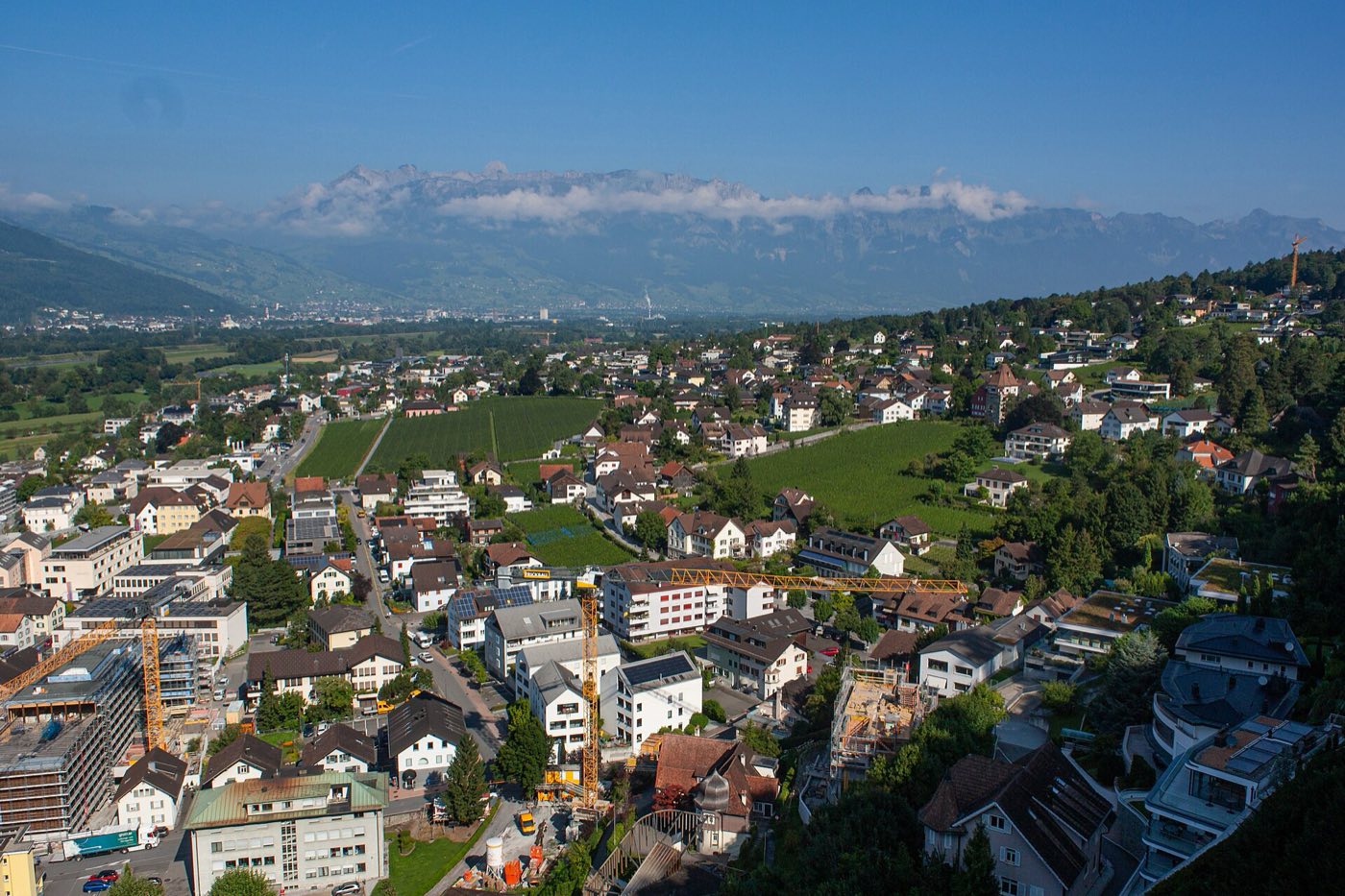
One of the smallest countries in the world — 160 square kilometers, fewer than 40,000 residents, an hour end to end at walking pace — Liechtenstein is a German-speaking principality wedged into the upper Rhine Valley between Switzerland and Austria. It is the only country entirely within the Alps, the only one where the head of state still lives in a medieval castle visible from the capital's main street, and quite possibly the only one where you can hike across the whole nation in a long weekend. The country you see when you arrive is disarmingly quiet. Vaduz, the capital, runs about three blocks long; the pedestrianized Städtle is anchored at one end by the national museum and at the other by the Kunstmuseum's dark, polished concrete box holding one of the best private collections of twentieth-century art in Europe. Above it all, perched on a forested ridge, Vaduz Castle — still the residence of Prince Hans-Adam II — looks down on the Rhine and the vineyards that climb the lower slopes. The whole valley has a clean, Swiss-adjacent efficiency, but with a quieter pulse than Zurich and none of the Alpine resort crush of Austria. Liechtenstein rewards a very particular kind of traveler — someone who likes short, civilized countries, alpine walking, and the novelty of a destination that almost no one else has been to. You can see most of it in two days, but a week lets you walk the Liechtenstein Trail end to end, drink local Vaduzer riesling at a cellar, and ski Malbun in winter. Prices run at full Swiss levels; plan accordingly.
Things to Do
Vaduz Castle overlooking the Rhine Valley
The reigning prince's residence sits on a rocky outcrop directly above central Vaduz, a medieval fortress of pale stone and red tile that has belonged to the Liechtenstein family since 1712. The castle itself is not open to the public — the royals actually live there — but a signed footpath climbs the forested ridge in about thirty minutes, ending at a terrace just below the walls with a wide view down the Rhine to the Swiss peaks. Go in the late afternoon when the light catches the stonework, and bring a bottle of local wine for the walk back down.
Kunstmuseum Liechtenstein modern art
A stark black cube of polished basalt concrete by Swiss architects Meinrad Morger and Heinrich Degelo, the Kunstmuseum sits quietly on Vaduz's main pedestrian street and holds the state's modern art collection — Beuys, Baselitz, Warhol, and the broader twentieth-century German-speaking canon — along with the princely family's own historical holdings, which rotate into the galleries. The building alone justifies the visit. Allow two hours; combine with the attached Hilti Art Foundation when a special exhibition is running.
Malbun ski resort
At 1,600 meters up a twisting road southeast of Vaduz, Malbun is a small family-friendly ski area with a handful of lifts, a decent snow record, and pistes that top out around 2,000 meters. It is never going to compete with Zermatt or Lech, and that is the point — short lift lines, affordable day passes by Alpine standards, wide blue and red runs ideal for intermediates. In summer the same lifts serve hikers and paragliders, and the resort becomes a trailhead for walks into the alpine meadows above.
Liechtenstein Trail — 75km hiking path across the country
Opened in 2019 to mark the country's 300th anniversary, the Liechtenstein Trail is a waymarked 75-kilometer path that threads through all 11 municipalities from Balzers in the south to Schaanwald in the north. Most walkers split it into three or four days, staying in guesthouses along the way and combining valley sections with ridge walks into the alpine zone. The official smartphone app pairs with Bluetooth beacons to narrate history and landscape as you walk. A quietly remarkable way to cover a whole country on foot.
Postage Stamp Museum
Liechtenstein printed its first stamps in 1912 and has since become something of a philatelic legend — miniature national icons, crisply engraved, long considered among the most collectable issues in Europe. The Postmuseum on Vaduz's Städtle is free, small, and seriously well curated, tracing the country's postal history and displaying original artwork alongside the finished stamps. Even if you are not a collector, the graphic design history alone makes an hour worthwhile. A delightful small museum of the kind only a country this size could support.
Gutenberg Castle in Balzers
In the southernmost town of Balzers, Gutenberg Castle is a twelfth-century hilltop fortress that was restored in the 1900s and now hosts summer concerts and occasional public openings in its rose garden. The grounds are accessible year-round by a short walk up from the village, and the views south toward the Graubünden peaks are some of the best in the country. A half-day side trip from Vaduz, easily paired with lunch at a Balzers gasthof and the train back north.
Prince's Wine Cellars and vineyard walk
The royal family's Hofkellerei has been producing wine on the slopes directly below Vaduz Castle since the 1700s — mostly riesling, pinot noir, and a crisp local white called Vaduzer — and runs tastings and cellar tours from its winery building near the center of the capital. A marked footpath loops through the terraced vineyards behind the castle, about an hour's walk, with interpretation signs along the way. Book the tasting a day ahead in high season; the small production sells out fast to locals and Swiss weekenders.
When to Go
June through September is the classic window — long days, wildflower meadows in the alpine zone, outdoor cafes on Vaduz's Städtle, and all hiking trails open including the Malbun lifts running for summer walkers. Early autumn brings the wine harvest and golden larches on the upper slopes. December through March is the quiet winter season, with skiing at Malbun, a compact Christmas market in Vaduz during Advent, and a cold, still quality to the light in the Rhine valley. April and May are shoulder and can be rainy in the valley while snow still blocks the higher trails — not the best choice for a first visit.
Getting Around
Liechtenstein has no airport and no train station — you arrive by train to Sargans or Buchs in Switzerland, or Feldkirch in Austria, and continue by bus. The national LIEmobil bus network is excellent: a single pass covers the entire country, buses run every fifteen to thirty minutes on main routes between Balzers, Vaduz, Schaan, and Malbun, and a day ticket costs only a few francs. Most of Vaduz itself is walkable in under twenty minutes. For hikers, the LIEmobil network also reaches most trailheads, making the Liechtenstein Trail a feasible section-by-section walk without a car. Cycling is straightforward along the flat Rhine valley floor; the lanes are well signed.
Cost & Currency
Liechtenstein uses the Swiss franc (CHF), which in 2026 trades at roughly parity with the US dollar and slightly below the euro. Prices are at full Swiss levels and there is no budget option: expect CHF 5–7 for an espresso, CHF 25–40 for a main course at an ordinary restaurant, and CHF 180–280 per night for a mid-range hotel in or near Vaduz. A Kunstmuseum ticket runs around CHF 15, the LIEmobil day pass about CHF 13. Cards are accepted almost everywhere including small village cafes. Tipping is not expected beyond rounding up the bill; service is included. Getting in a stock of francs from a Swiss ATM before you cross the border is smart — exchange bureaus in the principality are few.
Frequently Asked Questions
- Do I need a visa to visit Liechtenstein?
- Liechtenstein is part of the Schengen Area, so the same rules apply as for Switzerland or Germany — EU, UK, US, Canadian, Australian, and most Western nationals can enter visa-free for up to 90 days in any 180-day period. Other nationalities typically need a Schengen visa, usually arranged through the Swiss embassy, which handles Liechtenstein's consular affairs abroad.
- How do I get a passport stamp?
- Liechtenstein has no border controls with Switzerland, so you will not get one automatically. The tourist office on Vaduz's Städtle sells a souvenir entry stamp for a few francs and will mark your passport on the spot — not an official immigration stamp, but the closest you will get. It has become something of a tradition for visitors who enjoy the novelty of adding one of Europe's smallest countries to their collection.
- How many days do I need in Liechtenstein?
- Two days is enough to see Vaduz, hike up to the castle viewpoint, visit the Kunstmuseum, and take a half-day trip to Balzers or Malbun. Hikers doing the full 75-kilometer Liechtenstein Trail should plan three to four days end to end. If you are pairing the visit with neighboring Switzerland or Austria, even a single long afternoon and overnight in Vaduz covers the highlights.
- Is English widely spoken?
- Yes — German is the official language and what you will hear on the street, but English is spoken confidently in hotels, restaurants, museums, and most shops in Vaduz. Staff in the ski and hiking sectors generally speak good English as well. A few German phrases go a long way in smaller villages like Triesenberg or Schellenberg, where older residents may prefer their local Alemannic dialect.
- Can I visit Liechtenstein as a day trip from Switzerland?
- Easily. The nearest Swiss rail station is Sargans, about fifteen minutes by bus into Vaduz, and Zurich is around 90 minutes away by train and bus combined. Many visitors come across from Chur or St. Gallen for a half-day, see the castle viewpoint and the museums, and return the same evening. If you can stay a night it is worth the experience of walking the quiet Städtle after the day visitors have gone.
Plan a Trip to Liechtenstein
Have you been to Liechtenstein?
Track 195 countries, 50 states & 63 national parks on your map