National Park · MO · Est. 2018
Gateway Arch
Overview
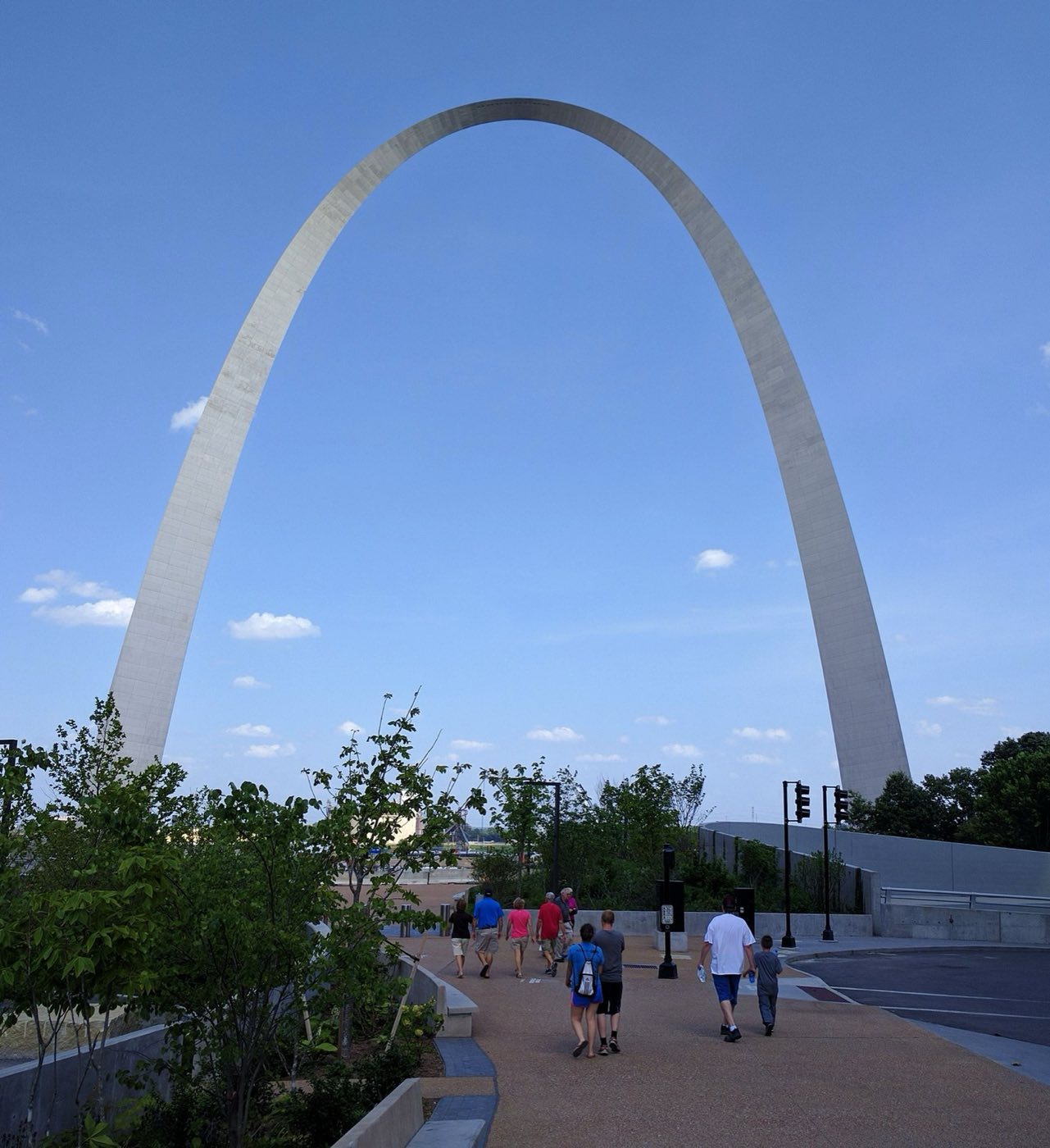
Gateway Arch is the smallest national park in the system and the only one in a downtown core. Its 91 acres wrap around the base of Eero Saarinen's 630-foot stainless steel catenary — the tallest monument in the United States and probably the most recognizable piece of civic architecture built in the 20th century. The Arch stands directly on the Mississippi River at the spot where Thomas Jefferson's Louisiana Purchase unfolded westward across the continent, and the park exists to tell that story: the people who pushed out from here, the people they displaced, and the landscape that was transformed. The visit is unlike any other in the park system. You take a 40-passenger tram pod up one leg of the Arch — a strange, egg-shaped capsule that rotates as it climbs — to an enclosed observation deck 630 feet above the river. The city of St. Louis spreads east, and the Mississippi curls below you. Underneath the Arch, the Museum at the Gateway Arch spans six galleries covering everything from Indigenous trade routes to the engineering feat of the monument itself. Plan on three to four hours total. You won't be sleeping in a campground after this one — but you'll leave thinking about scale and distance differently.
What to See & Do
Tram ride to the top of the 630-foot Arch
The tram is the park's signature experience and the reason most people come. You load into a compact capsule — five pods on each leg, five seats per pod — and ride a tilting, rotating system up the interior of the Arch for four minutes. At the top, the observation deck has 16 small rectangular windows with views 30 miles in every direction. Buy tickets online in advance; walk-up slots often sell out by mid-morning in summer. The ride down takes three minutes.
Museum of Westward Expansion beneath the Arch
The Museum at the Gateway Arch sits underground between the two legs in a recently renovated 46,000-square-foot space, admission included with the tram ticket or free on its own. Six galleries chronicle 200 years of westward expansion from multiple perspectives — Indigenous nations, explorers, enslaved and free Black Americans, immigrants, and settlers. The exhibits are dense but well designed; plan 90 minutes to two hours, more if you pay attention to the reading material. The Arch engineering gallery is worth lingering in.
Riverfront views of the Mississippi River from the observation deck
From the observation deck at the top, the Mississippi River unspools below you in a way you can't see from anywhere else in St. Louis. Look east toward Illinois and you get the full brown-water curve of the river as it carves the floodplain; look west and downtown St. Louis is laid out at your feet. Morning visits catch the sun rising over the Illinois shore through the east windows; late afternoon reverses the geography and lights the Arch itself in gold.
Gateway Arch grounds and Luther Ely Smith Square
The landscaped grounds surrounding the monument were finished in 2018 as part of a major park renovation — a 91-acre expanse of paths, lawns, ponds, and allées of ash and tulip trees, connected across a reconstructed lid over I-70 to downtown's Kiener Plaza. Walk the loop at ground level in any season; it's free and open 24 hours. Fall color along the north and south ponds peaks in late October, and spring magnolias flower in early April.
Old Courthouse where the Dred Scott case was tried
Two blocks west of the Arch, the Old Courthouse is the domed 1839 federal courthouse where Dred and Harriet Scott filed their landmark freedom suit in 1846 — and where the decisions that followed helped push the nation toward civil war. The building is part of the national park and admission is free. A restored courtroom, a Scott exhibit, and a rotunda mural gallery tell the story at close range. Allow an hour. The building has been under restoration; check operating hours before visiting.
Riverboat cruise on the Mississippi
The park concessioner runs paddlewheel sightseeing cruises on the Mississippi directly from the Arch grounds — one-hour narrated day trips, plus dinner and live-music cruises at sunset. It's tourist-y and worth doing once. You see the Arch from the water, where Saarinen's catenary really reads as an abstract form, and you get the working river itself: barges, the Eads Bridge, and the enormous Arch reflections on calm evenings. Book in advance on summer weekends.
Getting There & When to Go
Gateway Arch sits at the foot of downtown St. Louis on the Mississippi River waterfront, walkable from most downtown hotels. St. Louis Lambert International Airport is 15 miles away with a direct Metro Link light rail connection that drops you at the Arch station in 35 minutes for a few dollars — no car needed. Driving in, park in one of the downtown garages and walk across the landscaped lid to the Arch grounds. April through June and September through October give you the most pleasant weather; July and August are humid and mid-90s but still perfectly doable since the Arch interior and museum are air-conditioned. Tram tickets sell out on summer weekends — reserve online before you leave home.
Where to Stay
St. Louis has the most lodging options of any park gateway in the system since you're staying in a real city. The hotels directly across the street from the park — the Hyatt Regency at the Arch and the Drury Plaza Hotel St. Louis at the Arch — give you views of the monument from most rooms and a five-minute walk to the tram. A few blocks west, downtown hotels in the Washington Avenue loft district are cheaper and closer to the restaurant and bar scene. For more character, stay in the Central West End or Soulard neighborhoods — each 10 to 15 minutes by car with better food and leafy older streets. The park has no campground and no in-park lodging.
Frequently Asked Questions
- Do I need a reservation to go up the Arch?
- Yes — you need a timed tram ticket, which you should book online in advance, especially on weekends and in summer. The tram runs every 10 minutes, tickets cost around $16 to $19 for adults, and walk-up slots frequently sell out by mid-morning. Museum admission is free and doesn't require a ticket.
- How tall is the Gateway Arch and how long is the tram ride?
- The Arch is 630 feet tall — the tallest man-made monument in the United States and the tallest arch in the world. The tram ride takes 4 minutes going up and 3 minutes coming down. You spend about 10 minutes at the top. Total tram experience is around 45 minutes including queuing and boarding.
- Is Gateway Arch accessible to visitors with mobility needs?
- Partially. The museum, grounds, and lower levels are fully accessible, but the tram pods have a narrow door that makes wheelchair access difficult and the observation deck itself has a sloped floor. The park offers accessibility tours and virtual alternatives. Contact the park ahead of time for specific accommodations.
- What else should I plan to see in St. Louis?
- The Old Courthouse, two blocks west, is part of the park itself. Forest Park — larger than Central Park and home to the Saint Louis Art Museum, the free zoo, and the History Museum — is 15 minutes west and deserves a half-day. City Museum in downtown is an adult-friendly funhouse of tunnels and slides, and the Anheuser-Busch brewery tour in Soulard is worth the stop.
Plan Your Visit
Book Nearby HotelsHave you visited Gateway Arch?
Track all 63 national parks on your map