Venezuela
- Capital
- Caracas
- Population
- 28.4M
- Currency
- VES
- Languages
- Spanish
Overview
A country of staggering natural wealth — the world's highest waterfall, a Caribbean coast of white cays, tepui table mountains that inspired Conan Doyle, and the Orinoco Delta sliding through four states on its way to the Atlantic. Venezuela used to be one of South America's most visited destinations, and the geography that made it so has not changed. The country around it has. Since the long economic collapse that began in 2014, hyperinflation has been replaced by a dual-currency economy running largely on US dollars, most Western governments advise reconsidering or avoiding travel, and Caracas carries one of the highest violent-crime rates in the hemisphere. A handful of specialist operators still fly travelers directly into Canaima, Los Roques, and Mérida on charter routes that skip the capital entirely, and that is how most of the foreigners now visiting arrive. If you go, you go for Angel Falls dropping a kilometer off Auyán-tepui through cloud, for the turquoise Caribbean sand bars of Los Roques where the only accommodation is a handful of posadas run by fishermen's families, for condor and spectacled bear in the Andes above Mérida. You go through an operator who knows which routes are currently running, you carry US cash in small bills, and you listen carefully to local advice about where to be at what time of day. What you get in return is a country most travelers can no longer reach, still holding some of the most dramatic landscapes on the continent.
Things to Do
Angel Falls — the world's highest waterfall
Salto Ángel drops 979 meters off the rim of Auyán-tepui in one uninterrupted plunge, long enough that the lower half vaporizes into mist before it reaches the ground. You fly into Canaima village on a light aircraft, then take a motorized dugout several hours up the Churún River in the June-to-December wet months when water levels allow, sleeping in hammocks at the base camp opposite the falls. In the dry season the flow is narrower but the Cessna overflight is the reliable way to see it.
Canaima National Park tepui table mountains
The park surrounds the falls with more than 100 tepuis — sheer-walled sandstone plateaus that rise 1,000 meters straight out of rainforest, each one an isolated ecosystem of plants and animals found nowhere else. Roraima is the most-climbed tepui, a six-day trek that is normally entered from the Gran Sabana side on the Brazilian border. It's one of the most otherworldly walks anywhere in South America, summiting onto a rock-and-quartz moonscape shrouded in cloud.
Los Roques Archipelago Caribbean beaches
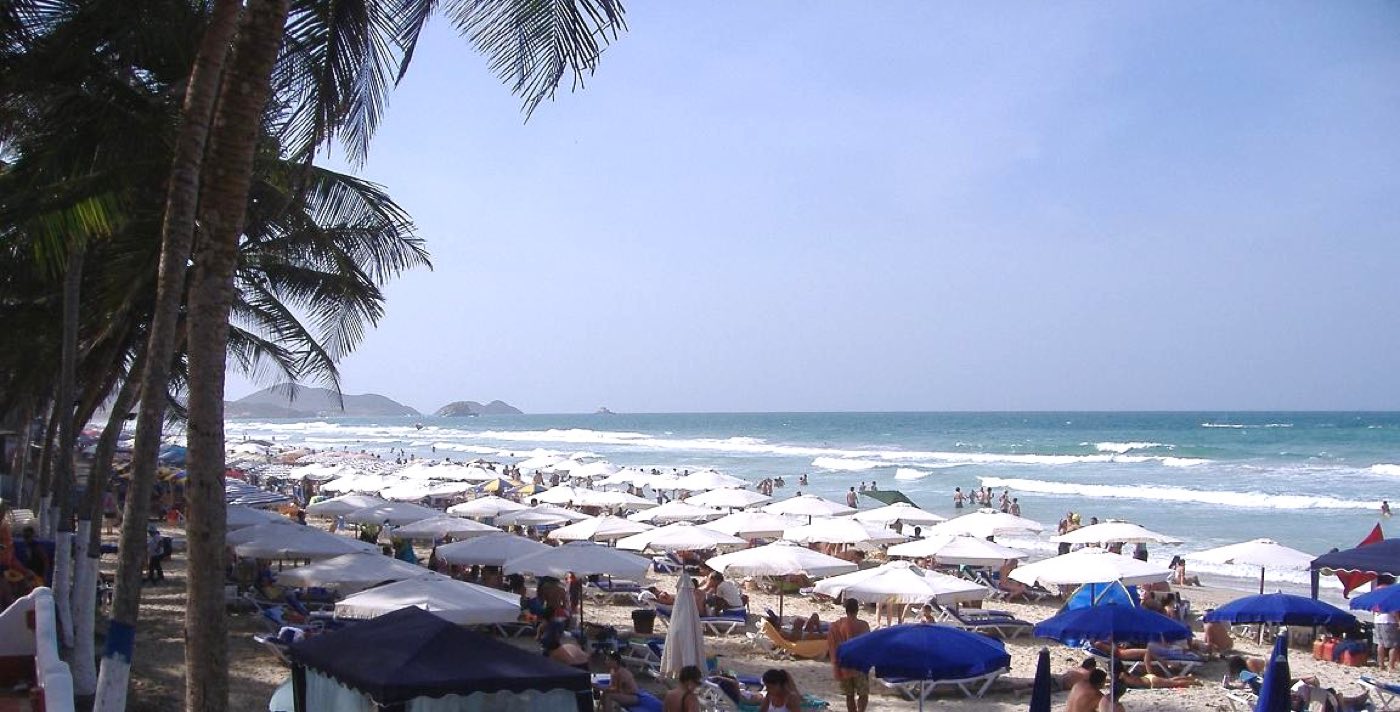
A cluster of 350 coral cays about 170 kilometers off the Venezuelan coast, reached by small plane from Caracas or Maiquetía in about 40 minutes. The water is shallow and turquoise, the sand is white, and the accommodation is a few dozen family-run posadas on the main island of Gran Roque. Days are spent on day-boat trips to empty sandbars with nothing but a palapa and a cooler of fish. It remains one of the Caribbean's least-developed island groups.
Orinoco Delta wildlife and indigenous Warao communities
The Orinoco breaks into a vast maze of river channels as it approaches the Atlantic, and the Warao people — whose name means canoe people — live in stilt villages along the waterways. Multi-day lodge trips out of Tucupita take you through the channels by dugout to see pink river dolphins, howler monkeys, and scarlet ibis at the roost, and include nights with Warao families when arranged through community-based operators.
Mérida cable car and Andes trekking
The Mukumbarí cable car climbs from the colonial city of Mérida to 4,765 meters on Pico Espejo in four stages — the highest and longest cable car system in the world. From the top you can trek into Sierra Nevada National Park for condor, frailejón plants, and routes to Pico Bolívar, Venezuela's highest peak. Mérida itself is the country's mountain-travel hub, with a long tradition of guiding and a student-town feel.
Morrocoy National Park coral cays
A chain of mangrove-fringed cays on the central coast about three hours west of Caracas, reached by boat from the village of Tucacas or Chichiriviche. Cayo Sombrero and Cayo Sal deliver the prototype Caribbean afternoon — clear water, shade under the sea grape trees, fresh fish grilled at the shack on the beach. It's more accessible than Los Roques for anyone already on the mainland and quieter on weekdays.
Coro's UNESCO colonial center
One of the first Spanish cities in the Americas, founded in 1527 and listed by UNESCO for its earthen-walled colonial houses painted in pale pastels. The town sits at the base of the Médanos de Coro — a strip of genuine Sahara-like dunes against the Caribbean — and is reached by road from Maracaibo. Pair a morning walking the grid of flat-faced churches with an afternoon in the dunes for a combination that exists nowhere else in the country.
When to Go
December through April is the dry season and the standard window for Los Roques, Morrocoy, and the Mérida Andes, with reliably sunny days and calmer Caribbean water. Angel Falls peaks in flow from May through November — the wet months — when river levels rise enough to let motorized dugouts reach the base of the falls from Canaima village. The tepui treks on Roraima are best in the drier December-to-March window when the top is less frequently socked in cloud. The Orinoco Delta runs year-round on lodge schedules, with wildlife viewing shifting as water levels rise and fall.
Getting Around
Domestic flights on Conviasa and a handful of smaller carriers are the realistic way to cover the country's distances — Caracas to Mérida, to Puerto Ordaz for Canaima, or to Los Roques on charter. Road travel is possible but long, fuel shortages are common, and most operators route travelers around Caracas rather than through it. Buses run on the major intercity routes and are used by locals at all hours; foreign visitors usually move by pre-arranged car and driver through their tour company. Pack US dollars in small bills for tips, park fees, and any gap where a card reader is not available.
Cost & Currency
Venezuela's official currency is the bolívar (VES), but after years of hyperinflation the on-the-ground economy runs almost entirely on US dollars — carry cash in small bills from $1 to $20 and expect to use them for everything from posada rooms to tips. International cards work at some hotels and airline offices but fail unpredictably elsewhere, and ATMs are not a reliable option for foreigners. Organized multi-day trips to Canaima or Los Roques typically run $1,500–$3,500 per person through a specialist operator, including flights, posada nights, and most meals. Budget well for tips to boatmen and guides in dollars at the end of each leg.
Frequently Asked Questions
- Is it safe to travel to Venezuela right now?
- Most Western governments, including the US and UK, currently advise reconsidering or avoiding travel due to violent crime, kidnapping, wrongful detention, and infrastructure failure. Caracas in particular carries one of the hemisphere's highest murder rates. Specialist operators still run trips to Canaima, Los Roques, and Mérida on routes that skirt the capital, and most visitors now arrive that way rather than independently.
- Do I need a visa to visit Venezuela?
- US and Canadian citizens need a tourist visa arranged in advance through a Venezuelan consulate, a process that has become slower and more paperwork-heavy in recent years. EU, UK, and most Latin American passport holders can enter visa-free for up to 90 days. Your tour operator can usually advise on the current state of the consulate in your home country.
- How do I pay for things in Venezuela?
- Bring US dollars in small denominations ($1, $5, $10, $20) and expect to use them for almost everything — hotels, meals, tips, park fees. International cards work in a few upmarket hotels and airline offices but should never be your main plan. ATMs in Venezuela are not reliable for foreign cards. Some operators now accept USDT (Tether) or bank-to-bank transfers in advance.
- How do you get to Angel Falls?
- You fly into Canaima village on a light aircraft from Caracas, Puerto Ordaz, or Ciudad Bolívar, then take a motorized dugout several hours up the Churún River to the base camp opposite the falls, where you sleep in hammocks. Access by river is only possible from around June to December when water levels are high enough. In the dry season a Cessna overflight is the standard alternative.
- Can I visit Venezuela independently?
- You can, but very few people now do — the practical obstacles and security picture push most travelers toward a specialist operator who handles flights, permits, posada bookings, and local drivers. Spanish is close to essential off the tourist circuit, English is limited outside hotels, and anything going wrong is considerably harder to resolve as a lone foreign visitor than in most other South American countries.
Plan a Trip to Venezuela
Have you been to Venezuela?
Track 195 countries, 50 states & 63 national parks on your map