Ecuador
- Capital
- Quito
- Population
- 18.1M
- Currency
- USD
- Languages
- Spanish
Overview
Ecuador is the smallest Andean country and the most concentrated. In a single week you can start at 2,850 meters in colonial Quito, drop to hot-spring towns in cloud forest, cross the equator more than once, wander through Inca-era markets, and end the trip swimming alongside marine iguanas in the Galápagos. Few countries compress this much variety into this small an area. The mainland is built around what Alexander von Humboldt called the Avenue of the Volcanoes — a corridor of snow-capped peaks south of Quito that includes Cotopaxi, Chimborazo, and half a dozen other five-thousand-meter summits. West of the Andes, the coast runs through banana plantations and beach towns; east of them, the Oriente drops into the Ecuadorian Amazon. The Galápagos sit 1,000 kilometers off the Pacific coast and have their own logistics and their own rhythm — most visitors treat them as a separate sub-trip layered on top of a mainland itinerary. Ecuador uses the US dollar, which simplifies budgeting, and English is reasonably common in tourist-facing businesses. Distances between the big sights are modest by South American standards — Quito to Baños is three hours, Quito to Cuenca is an hour by plane — and a well-planned two-week trip can comfortably cover colonial cities, the volcano avenue, the cloud forest, the Amazon, and a short Galápagos cruise. If you have to pick, Quito, Cotopaxi, and the Galápagos is the three-stop version most travelers end up with.
Things to Do
Galápagos Islands wildlife encounters
The Galápagos is one of the few places on earth where the animals have not yet learned to be afraid of humans — you can sit three feet from a marine iguana, watch a blue-footed booby perform its courtship dance without moving off the trail, or snorkel over a sea lion pup that comes up to investigate you. Most visitors do the islands as either a four-to-eight-day live-aboard cruise or a land-based hop between Santa Cruz, San Cristóbal, and Isabela with day boats to outlying islands. Book six to nine months ahead for the better boats; naturalist-guided landings are mandatory at all sites.
Quito's colonial old town UNESCO site
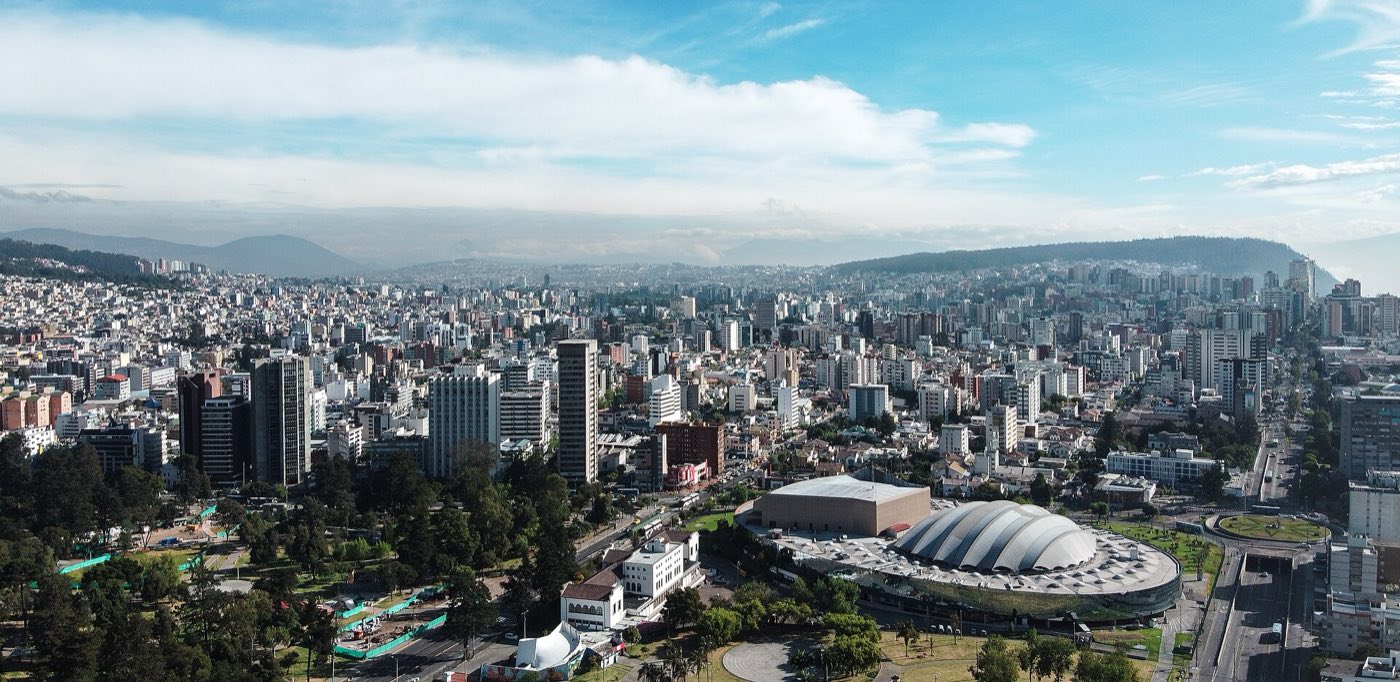
Quito sits at 2,850 meters in a high valley framed by active volcanoes and preserves one of the largest and best-kept colonial centers in the Americas — thirty blocks of 16th- and 17th-century churches, convents, and plazas that became the first UNESCO World Heritage Site in 1978. La Compañía's gold-leaf interior is the standout; the viewpoint from El Panecillo hill above the city gives you the whole urban basin at once. Give yourself a full day and pace accordingly — the altitude will tell you when you have walked too far too fast.
Cotopaxi Volcano
Two hours south of Quito, the perfect snow-cone symmetry of 5,897-meter Cotopaxi rises out of a high-altitude national park of grasslands and wild horses. Day visits from Quito take you to the refuge at 4,800 meters and a short walk toward the glacier; multi-day climbs to the summit are possible with certified guides for experienced mountaineers. Even without climbing, the drive into the park and the views of the volcano on a clear morning are worth the day, and the surrounding Cotopaxi valley has hacienda lodges that are destinations in themselves.
Mindo cloud forest birdwatching
Two hours northwest of Quito, Mindo sits in the Chocó cloud forest belt with more than 500 bird species recorded in a small area, including dozens of hummingbirds, toucans, tanagers, and the bizarre Andean cock-of-the-rock. Lodges have feeders that bring the color to you, and easy trails run to waterfalls and a series of cable-car canyon crossings (tarabitas). The town itself is small, backpacker-friendly, and a good overnight stop for travelers who want rainforest without committing to a full Amazon trip.
Amazon rainforest lodges from Coca or Tena
Ecuador's Oriente drops off the eastern Andes into the upper Amazon basin, and a few days at a lodge inside Yasuní National Park or along the Napo River delivers a serious forest experience with parrot clay licks, canopy towers, and night walks for caiman and tree frogs. Access is via flight from Quito to Coca (about half an hour), then a canoe ride downriver — Sacha Lodge, Napo Wildlife Center, and La Selva are the better-known operations. Three nights is the minimum that makes the logistics worthwhile.
Cuenca's colonial architecture and Panama hat workshops
Cuenca is the country's third-largest city and the most European-feeling — a grid of cobbled streets, blue-domed cathedrals, and the small Tomebamba River running through the center, all at 2,500 meters in the southern Sierra. It is also the world capital of the genuine Panama hat (which, despite the name, has always been Ecuadorian) and you can visit working sombrereros in the city and in nearby villages to see the weaves graded from ordinary to the finest superfinos, which can take six months to weave. Stay two nights.
Baños de Agua Santa adventure sports
Tucked into a valley at 1,800 meters between the Andes and the Amazon, Baños is Ecuador's adventure capital — waterfall rappelling, canyoning, whitewater rafting on the Pastaza, downhill biking along the Ruta de las Cascadas, and bungee jumps off bridges over deep gorges. The town itself sits below the active Tungurahua volcano and has thermal baths fed by the volcanic plumbing. It is the most fun base for travelers who want to burn a few days on outdoor adrenaline between the Sierra and the Amazon.
Avenue of the Volcanoes
The corridor south from Quito through Latacunga, Ambato, and Riobamba to Alausí runs between two parallel ranges of the Andes, with a double row of snow-capped volcanoes — Cotopaxi, Chimborazo, Tungurahua, Altar — visible on clear mornings. The old Devil's Nose train switchback at Alausí has had an on-and-off existence in recent years; even without it, the drive or bus ride south from Quito is one of the great volcanic road trips of South America. Overnight at a converted hacienda along the way.
When to Go
Ecuador sits on the equator, so there are no true seasons — instead there are dry and wet months that vary by region. The Sierra (Quito, Cuenca, Cotopaxi) is driest from June through September, with another clear window in December and January; this is the best stretch for volcano views and highland trekking. The coast and Galápagos have two modes: warm and wet from January to May (warmer water, better snorkeling, rougher seas) and cool and dry from June to December (cooler water but more wildlife activity, calmer cruises). The Amazon is warm and humid year-round with marginally drier weather from August to December.
Getting Around
Long-distance buses are the backbone of mainland Ecuador — clean, cheap (typically $1–2 per hour of travel), and frequent between every major town. Domestic flights on Avianca, LATAM, and Equair cover the distances that matter: Quito to Guayaquil, Quito to Cuenca, Quito to Coca for the Amazon, and Quito or Guayaquil to the Galápagos (Baltra and San Cristóbal airports). Renting a car works on the main Pan-American highway but is overkill if you plan to stay in cities; for Cotopaxi, Chimborazo, and backcountry stops, hiring a driver or joining small group tours is easier. Within Quito, Uber and the new Metro (opened 2023) cover most useful routes. Galápagos movement is by inter-island flights, public ferries, or your cruise itinerary.
Cost & Currency
Ecuador uses the US dollar, which makes budgeting straightforward for American travelers. Mainland Ecuador is a genuinely cheap destination — expect $10–20 for a sit-down almuerzo (set lunch) at a local restaurant, $3–5 for a cheap one, $40–90 per night for a solid mid-range hotel in Quito or Cuenca, and $5–8 for a taxi across most cities. The Galápagos is a different economy: the national park entrance fee is $200 (cash), and budget cruises start around $2,000 per person for five days, with mid-range boats $3,500–5,000. Cards are accepted in cities and tourist areas; carry small bills ($1, $5, $10) in rural areas. Tipping is modest — 10% at restaurants if not already included, a few dollars per day for drivers and guides.
Frequently Asked Questions
- Do I need a visa to visit Ecuador?
- Most travelers from the US, UK, EU, Canada, and many other countries do not need a visa for stays up to 90 days. Your passport should be valid for at least six months from date of entry, and you may be asked for proof of onward travel. Galápagos visits require a separate transit control card purchased at the Quito or Guayaquil airport, plus the $200 national park fee on arrival.
- Is Ecuador safe for travelers?
- Tourist areas in Quito's old town, Cuenca, the Sierra towns, Baños, and the Galápagos are generally safe with normal city awareness. Petty theft is the main concern in crowded spots. Guayaquil and some coastal areas have seen elevated security issues in recent years, and most governments advise additional caution there. Check current UK FCDO or US State Department guidance close to travel.
- How much does a Galápagos trip cost?
- Plan on $2,000–6,000 per person for the Galápagos portion of a trip, depending on whether you go land-based or on a cruise and the level of boat. This covers flights from the mainland, the $200 national park fee, the $20 transit card, accommodation or cruise fare, and most meals. Book cruises six to nine months ahead for the better-rated vessels; last-minute deals are harder to find than they used to be.
- How do I handle the altitude in Quito?
- Quito sits at 2,850 meters and many visitors feel the altitude on the first day — shortness of breath, mild headache, slower walking pace. Plan a rest day on arrival, drink more water than feels natural, skip alcohol the first night, and eat lightly. Coca tea (mate de coca), widely available at hotels, helps. If you are going higher (Cotopaxi refuge at 4,800 meters, Chimborazo at 5,000-plus) acclimatize in Quito first and consider altitude medication in consultation with a doctor.
- Do people speak English in Ecuador?
- Spanish is the national language. English is reasonably common at tourist-facing hotels, tour operators, and in the Galápagos — naturalist guides are required to speak fluent English. In smaller Sierra towns, rural markets, and with taxi drivers, basic Spanish is very useful. A few polite phrases go a long way and Quechua speakers in indigenous communities are often touched by any attempt at their language.
Plan a Trip to Ecuador
Have you been to Ecuador?
Track 195 countries, 50 states & 63 national parks on your map