Netherlands
- Capital
- Amsterdam
- Population
- 17.7M
- Currency
- EUR
- Languages
- Dutch
Overview
A flat, canal-threaded country in northwestern Europe where centuries of water management produced both the world's most efficient cycling culture and some of its greatest painters. Travelers come for Van Gogh and Rembrandt in Amsterdam's museums, the tulip fields around Keukenhof, windmill-dotted polders, and a liberal social tradition that still feels distinct even as the rest of Europe has caught up on some of it. The country you actually see on the ground is smaller and more varied than the postcards suggest. Amsterdam gets the attention, but Rotterdam is a working port rebuilt in wild modern architecture after 1940, Utrecht is a medieval university town with its own canal system at street level, and the north fades into open polder with black-and-white dairy cows and sky that takes up three-quarters of the frame. You can cross the whole country by bike in two days and the infrastructure to do it exists everywhere — separated lanes, route signs, bike bridges over highways. The Netherlands rewards travelers who like cities on a human scale, trains that run on time, and a cultural confidence that does not need to sell itself. English is near-universal, food is better than the old jokes suggest — Indonesian rijsttafel, herring from a street stall, farmstead gouda — and the pace is unhurried without being slow. Four or five days covers the highlights; a week or more lets you get into the countryside where it actually gets interesting.
Things to Do
Amsterdam's canal ring and Anne Frank House
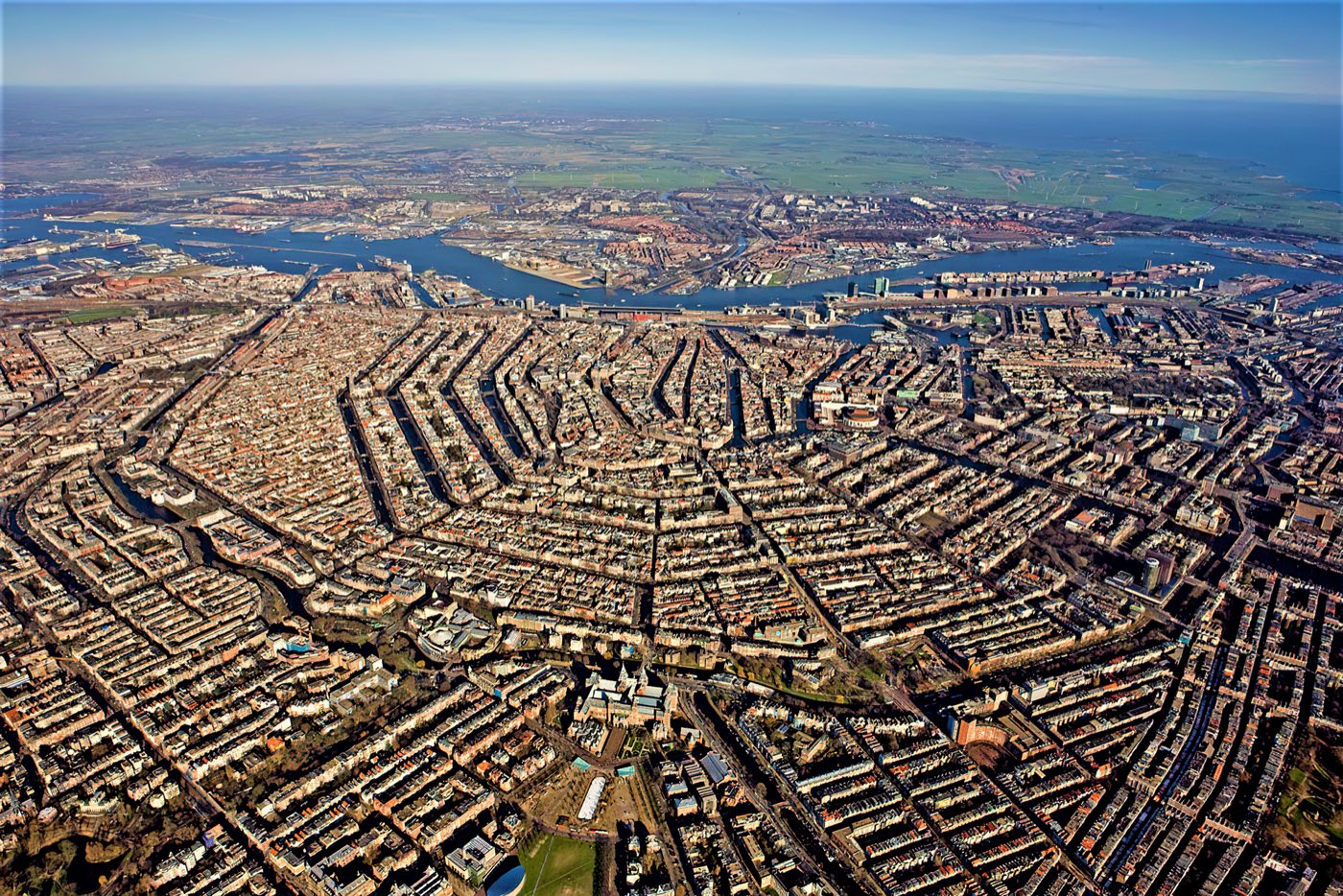
The UNESCO-listed 17th-century canal ring is the city's skeleton — three concentric arcs of gabled merchants' houses built during the Dutch Golden Age, best seen from a boat or on foot during the blue hour when house lights come on along the water. The Anne Frank House on the Prinsengracht requires timed tickets booked weeks ahead; the walk through the hidden annex where the Frank family lived for two years in hiding during the German occupation remains one of the quieter, more serious experiences in any European capital. Pair with an evening walk through the Jordaan district next door.
Van Gogh Museum and Rijksmuseum
Museum Square holds two of the best collections in Europe within 200 meters of each other. The Van Gogh Museum traces the painter's arc from early Dutch peasant studies through Arles and Saint-Rémy to Auvers, with more than 200 works and letters — go on a weekday morning with a pre-booked ticket. The Rijksmuseum across the square holds the Dutch Golden Age collection, including Rembrandt's Night Watch in its newly restored gallery and the Vermeers that draw queues of their own. Allow half a day for each and do not try to combine them.
Keukenhof tulip gardens (spring only)
From mid-March to mid-May, the 79-acre Keukenhof gardens near Lisse open with seven million bulbs laid out in carefully sequenced beds — tulips, daffodils, hyacinths, and crocuses succeeding each other across the eight-week season. Peak tulip is typically the third week of April and the whole operation is aimed at that fortnight. Rent a bike at Lisse station afterward and ride through the bulb fields around the gardens; the commercial fields, as opposed to the ornamental ones, stretch for kilometers in solid bands of red, yellow, and pink.
Kinderdijk UNESCO windmills
Nineteen 18th-century windmills stand in a line along a polder drainage system 15 kilometers east of Rotterdam — the largest concentration of historic windmills in the country and a working demonstration of how the Netherlands was built. The visitor center explains the drainage scheme, two of the mills are open as museums, and the towpath walk or bike ride along the canal gives you the photograph everyone comes for. Go early or late in the day to avoid the cruise-ship groups. Easy half-day trip from Rotterdam by waterbus.
Rotterdam's Cube Houses and Markthal
Rotterdam rebuilt itself after German bombing in 1940 flattened the medieval core, and the result is the most architecturally ambitious city in the country. The Cube Houses, Piet Blom's 1984 tilted residential blocks, are the recognizable icon; the Markthal nearby is a horseshoe-shaped covered food hall with 250 stalls under a ceiling painted with a 11,000-square-meter artwork. Walk the Erasmus Bridge, see the Kunsthal and the Depot Boijmans Van Beuningen, and take the water taxi across the Nieuwe Maas for the skyline view.
Haarlem's Frans Hals Museum and cobbled streets
Twenty minutes west of Amsterdam by train, Haarlem gives you a Dutch Golden Age town without the Amsterdam crowds — the Grote Markt with its St. Bavo church, the Frans Hals Museum in the old almshouse where Hals painted his group portraits, and a ring of canals you can walk in an afternoon. Good day trip on its own or a quieter base if you want to sleep outside the capital and commute in. The Saturday market on the main square is the real thing rather than a tourist setup.
Cycling the countryside and polders
The national cycling network (LF routes) runs to more than 30,000 kilometers of signed paths, most on dedicated lanes separated from traffic. For a half-day ride, rent in Amsterdam and loop through Waterland to the 17th-century village of Marken on a causeway in the IJsselmeer. For something longer, the LF1 coastal route from Den Helder to the Belgian border runs behind the dunes for 300 kilometers. The country is flat, the wind is your only hill, and every village has a café with apple pie waiting at the other end.
When to Go
April and May are the standout months — tulips at Keukenhof, King's Day on April 27 turning Amsterdam orange, long daylight, and the café terraces opening for the season. June through August brings the warmest weather and the busiest crowds, with school-holiday prices in July and August. September and early October are a quieter second window with clear days and autumn color along the canals. November through March is damp and often gray but uncrowded, with Christmas markets in Haarlem and Maastricht and serious museum time available at midweek afternoons. Rain is possible any day of the year — carry a light shell.
Getting Around
The Dutch train network (NS) connects every city and most towns on fast, frequent intercity services — Amsterdam to Rotterdam in about 40 minutes, Amsterdam to Utrecht in 25. Get an OV-chipkaart or use contactless payment on trains, trams, buses, and metros across the country on a single system. Cycling is genuinely the way locals move — you can rent a bike for €10–15 a day in any city, and bike lanes are separated and well signed. A car is unnecessary for most itineraries and a nuisance in Amsterdam, where parking is expensive and controlled. For the remoter wadden islands or the deep countryside, buses fill gaps trains do not reach.
Cost & Currency
The Netherlands uses the euro and sits in the middle range for Western Europe — more expensive than Portugal or Spain, roughly level with Germany, less than France or Switzerland. Expect €3–4 for a coffee on a café terrace, €15–25 for a lunch of soup and sandwich or a rijsttafel starter, and €130–200 a night for a mid-range hotel room in Amsterdam (less in Rotterdam or Utrecht). A train day-pass costs around €70, individual intercity fares €10–30. Cards are accepted almost everywhere and contactless is near-universal; some smaller shops and markets still take only PIN cards on the Maestro system. Tipping is optional — round up a bill or leave 5–10% for good service.
Frequently Asked Questions
- Do I need a visa to visit the Netherlands?
- The Netherlands is in the Schengen Area. Citizens of the US, UK, Canada, Australia, and most other developed-country passports do not need a visa for stays up to 90 days in any 180-day period. From late 2026 the ETIAS electronic travel authorization will be required for visa-exempt visitors — check the current status before booking.
- Is Amsterdam safe for travelers?
- Yes, very safe by global standards, with low violent crime and well-lit central areas. Pickpocketing is the main risk, especially on trams near Centraal Station, in the Red Light District, and at crowded markets — keep your phone and wallet in interior pockets. The Red Light District is safe to walk through in the evening; taking photographs of the women in windows is illegal and will get your phone thrown in a canal.
- Do people in the Netherlands speak English?
- Yes, almost universally. More than 90% of the population speaks English, often fluently, and every tourist-facing service, museum, and restaurant operates in English without hesitation. Dutch politeness is a good reason to learn dank u wel and alstublieft but you will not need more than that. Signage, menus, and websites are typically bilingual or English-available.
- When is the best time to see tulips?
- Mid-April is the reliable peak — Keukenhof gardens open from roughly March 20 through mid-May, and the commercial bulb fields around Lisse and Noordwijk flower for about three weeks from late March through the third week of April. Exact timing varies year to year with spring weather; check Keukenhof's website for current bloom reports before booking.
- Is it easy to rent a bike?
- Extremely easy. Rental shops are in every city and most train stations operate OV-fiets short-term bike rentals for a few euros a day if you have a Dutch bank account or certain credit cards. In Amsterdam, chains like MacBike and Yellow Bike rent city bikes for €10–15 per day. Helmets are uncommon; locals rarely wear them. Stick to bike lanes, signal turns, and do not ride drunk.
Plan a Trip to Netherlands
Have you been to Netherlands?
Track 195 countries, 50 states & 63 national parks on your map