Nepal
- Capital
- Kathmandu
- Population
- 30.9M
- Currency
- NPR
- Languages
- Nepali
Overview
A landlocked country squeezed between India and Tibet, Nepal holds eight of the ten highest mountains on Earth, including Everest, and wraps its Himalayan wall in terraced rice valleys, sacred temple towns, and the last stretches of subtropical lowland jungle where one-horned rhinos still roam. Travelers come for trekking — the Annapurna Circuit, Everest Base Camp, the shorter ridge walks above Pokhara — but the country is also the birthplace of the Buddha at Lumbini and the site of medieval Hindu-Buddhist hybrid cities that somehow survived the 2015 earthquake. What you remember afterward is the altitude and the pace. Kathmandu hits you first — horns, incense, saddhus, a tangle of power lines over an old pagoda square — and then you catch a dawn flight to Lukla or a jeep to Besisahar and the country goes quiet, the air thins, and the days become a slow rhythm of walk, tea, walk, dal bhat, sleep. You turn a corner on a ridge trail and there is Machapuchare or Annapurna South in the full morning light, impossibly close, and you understand why people keep coming back. Nepal rewards travelers willing to move slowly and to give the weather its say. Trekking here is serious — altitude sickness is real above 3,000 meters, weather shifts hour by hour, and teahouse standards are modest — but the infrastructure is better than you expect and the guides are among the most experienced in the world. Come with a working set of layers, a flexible itinerary, and a readiness to accept that the best days on the trail are often the ones you did not plan.
Things to Do
Everest Base Camp trek
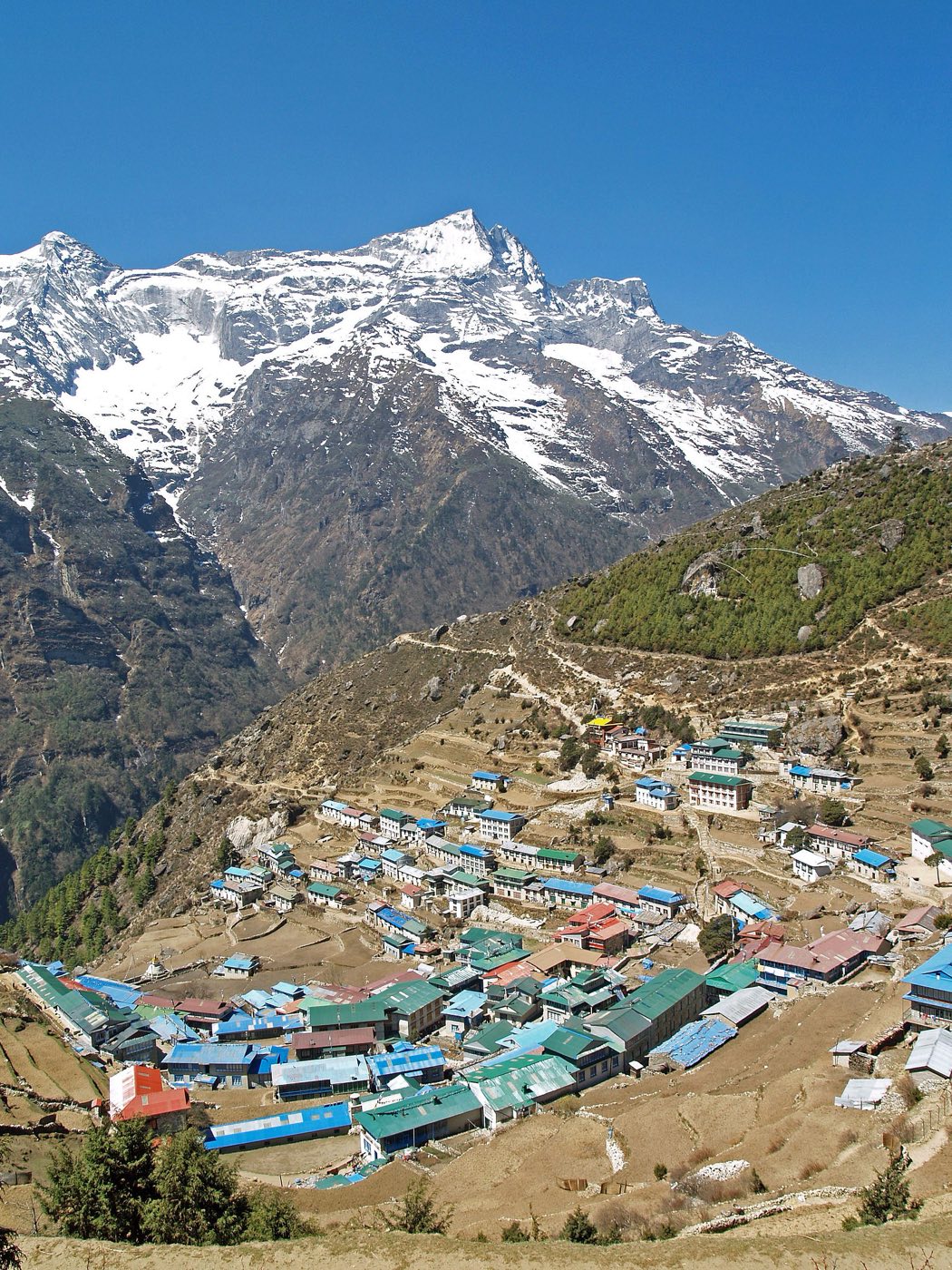
Twelve to fourteen days from Lukla to 5,364 meters at the foot of the Khumbu Icefall, threading Sherpa villages with stone walls and prayer wheels spinning in glacier-fed streams. You acclimatize at Namche Bazaar for a day, climb to Tengboche Monastery for the view that photographers chase, and push through Dingboche and Lobuche toward base camp itself. Kala Patthar at dawn on the way back down is where you actually see Everest — base camp sits below the summit's line of sight. Go with a guide, carry diamox, and do not skip the acclimatization days.
Annapurna Circuit and Poon Hill trek
The classic ten-to-fourteen-day loop circles the Annapurna massif, crossing the 5,416-meter Thorong La pass and dropping into the trans-Himalayan desert of Mustang on the far side. Road construction has shortened the lower sections, but the core traverse from Manang to Muktinath remains one of the great high-altitude walks on the planet. For a shorter taste, the four-day Poon Hill circuit out of Nayapul serves up dawn on Dhaulagiri and Annapurna South without the altitude challenge — rhododendron forests in April, clear skies in November.
Kathmandu's Boudhanath Stupa and Durbar Square
Boudhanath is one of the largest stupas in the world and the center of Nepal's Tibetan Buddhist community — go at dusk when the butter lamps are lit and monks, pilgrims, and locals walk clockwise around the base in a continuous slow current. In the old city, Durbar Square survived the 2015 earthquake with significant damage but most of the palace complex and pagoda temples have been restored; spend an afternoon with a guide who can tell you what was rebuilt and what you are looking at. The newer Garden of Dreams two blocks from Thamel is a quiet place to recover afterward.
Chitwan National Park one-horned rhino safari
In the Terai lowlands on the Indian border, Chitwan protects one of the last strongholds of the greater one-horned rhinoceros along with Bengal tigers, sloth bears, gharial crocodiles, and more than 500 bird species. A two- or three-night stay gives you time for a jeep safari, a canoe trip on the Rapti River at dawn, and a walking excursion with a naturalist through sal forest and elephant grass. Stay in a lodge inside the buffer zone — the lights-out quiet at night, with langur calls in the trees, is part of the visit.
Lumbini — birthplace of the Buddha
In the flat Terai near the Indian border, the exact spot where Siddhartha Gautama was born in 623 BCE is marked by the Maya Devi Temple inside a walled sacred garden. The surrounding master plan has been slowly filling with monasteries built by Buddhist nations from Thailand to Germany, each in its own national style, and you can spend a full day cycling between them. It is a pilgrimage site more than a tourist stop — come with a quiet afternoon and an early morning, and consider overnighting in a simple guesthouse nearby.
Pokhara and Phewa Lake with Annapurna views
The country's second city lies on a lake reflecting the full Annapurna range, including the distinctive fishtail spire of Machapuchare. It is the staging ground for most treks into the Annapurnas but also worth two or three nights on its own — paddle a doonga across the lake to the World Peace Pagoda, paraglide from Sarangkot at dawn, eat trout at a lakeside restaurant. The lakeside strip is touristy in the direct sense but the views from the north shore at first light are a good answer to anyone asking why.
Bhaktapur's medieval Newari architecture
Fourteen kilometers east of Kathmandu, Bhaktapur is the best-preserved of the three royal cities of the Kathmandu Valley, a pedestrian-only old town of red-brick squares, carved wood windows, and Newari pagoda temples that feel closer to 1750 than 2026. Durbar Square, Taumadhi Square with the five-tiered Nyatapola temple, and Pottery Square are the three to walk between slowly. Stay overnight after the day-trippers leave — the town at dusk, lit by small shop lanterns, is the version you want.
Nagarkot sunrise panorama
A ridgetop village 32 kilometers east of Kathmandu at 2,175 meters, Nagarkot gives you a 150-kilometer sweep of Himalaya on a clear morning — from Annapurna in the west to Everest in the east. The guesthouses all have east-facing terraces and most guests are up at 5:30 with tea in hand to watch the light come across the snow peaks. A good single-night stop after arriving in the valley, before you start moving into the country proper.
When to Go
October and November are the classic months — dry, stable weather, clear Himalayan views after the monsoon has washed the sky, and the Dashain and Tihar festivals falling through the period. March through early May is the second window, with pre-monsoon warmth and rhododendron blooms on the middle-altitude trails, though views haze over as the season progresses. December and January are cold but clear and uncrowded, with snow on the higher passes closing them for most trekkers. Avoid mid-June through mid-September unless you specifically want to see the monsoon — trails are leech-ridden, views are gone, and flights to Lukla are unreliable.
Getting Around
Internal travel in Nepal is slow — road quality varies dramatically and landslides are frequent in the monsoon. Tourist buses connect Kathmandu with Pokhara, Chitwan, and Lumbini on reasonable schedules, and private car-and-driver arrangements are affordable and the way most travelers move between the major stops. Domestic flights to Lukla, Pokhara, and Jomsom cut days off the trip but are weather-dependent and occasionally canceled; build slack into your itinerary. Within Kathmandu, ride-hailing through Pathao and inDrive works well; elsewhere taxis are negotiated before you get in. Trekking, by definition, is on foot — expect to walk five to seven hours a day on the main routes.
Cost & Currency
Nepal uses the Nepalese rupee (NPR), pegged informally around 160 to the US dollar, and remains one of the cheapest travel destinations in Asia. Teahouse trekking runs roughly NPR 2,500–4,000 (US$15–25) a night including dinner and breakfast, a dal bhat set meal in town costs NPR 300–600, and a decent hotel in Kathmandu or Pokhara runs NPR 3,000–8,000. A guided trek with porters averages US$30–50 per day per person all-in, more for Everest region routes where flights and altitude logistics push the cost up. Card acceptance is expanding in tourist areas but thin on the trail — carry cash in small denominations, change money at banks in Kathmandu or Pokhara, and tip guides and porters meaningfully at the end of a trek.
Frequently Asked Questions
- Do I need a visa to visit Nepal?
- Most travelers can get a visa on arrival at Kathmandu airport or at land borders, valid for 15, 30, or 90 days. Bring US dollars or another hard currency in cash for the fee (US$30/50/125 respectively) and a passport photo. Indian citizens do not need a visa. Check the Department of Immigration website before traveling for current rules.
- Is trekking in Nepal safe?
- Yes, with preparation — altitude sickness is the main risk and it kills people every year. Build acclimatization days into any trek above 3,000 meters, carry diamox, and turn around if symptoms worsen. Hire a licensed guide for all major routes; solo trekking is now prohibited in national parks. Weather, not crime, is the other concern. Robbery is rare on trails but does happen near trailheads; keep valuables secure.
- How hard is the Everest Base Camp trek?
- Strenuous but not technical — you walk at altitude for 12 to 14 days with daily elevation gains of 400–800 meters, no climbing equipment required. Fitness matters less than patience and the willingness to acclimatize slowly. Most reasonably fit people who have trained with hills and stairs complete the trek. The altitude above 4,000 meters is the genuine difficulty, not the walking itself.
- Do I need a guide to trek in Nepal?
- Yes for most major routes. Since April 2023 the Nepal Tourism Board has required all trekkers in national park areas to hire a licensed guide, which covers Annapurna, Everest, and Langtang regions. You can book through agencies in Kathmandu or Pokhara, with prices starting around US$25 per day for a guide. Porters are a separate hire and widely considered appropriate given local labor economics.
- Is the tap water safe to drink?
- No. Drink only bottled, filtered, or treated water throughout Nepal including in Kathmandu. On the trail, refill from boiled water at teahouses or use a filter bottle or purification tablets to avoid the plastic-bottle waste problem. Stomach bugs from contaminated water and food are the most common health complaint among travelers.
Plan a Trip to Nepal
Have you been to Nepal?
Track 195 countries, 50 states & 63 national parks on your map