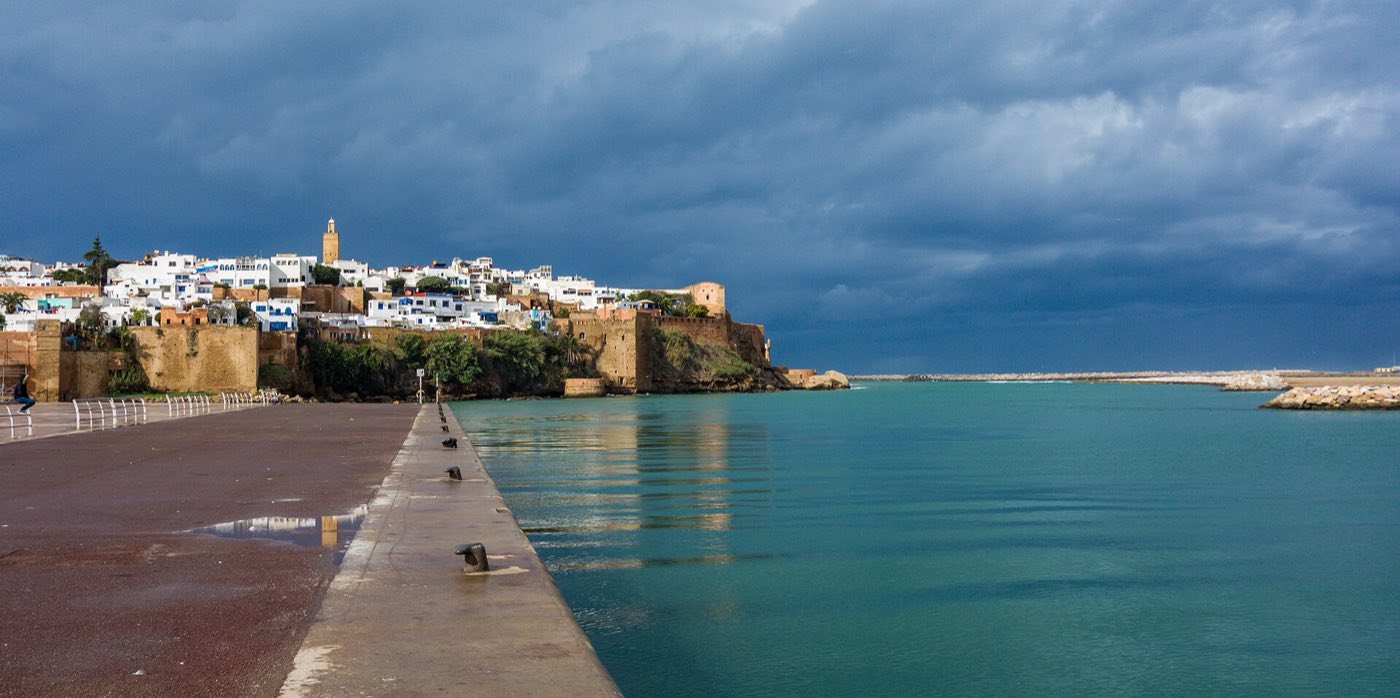
Morocco
- Capital
- Rabat
- Population
- 37.5M
- Currency
- MAD
- Languages
- Arabic, Berber
Overview
A North African kingdom where the High Atlas, Saharan dunes, and labyrinthine medinas press up against an Atlantic surf coast and a slice of the Mediterranean. Travelers come for the tanneries and souks of Fez, a camel trek into the Erg Chebbi dunes, the blue-washed alleys of Chefchaouen, and long slow evenings on Marrakech rooftops. What Morocco does better than almost anywhere else is sensory overload in a form you can actually keep up with. The call to prayer overlaps from five mosques at once in Fez. Mint tea comes in a tall silver pot poured from a foot above the glass. You walk out of a dim souk lane and into a square full of snake charmers, orange-juice stalls, and drum circles, and none of it feels staged even when the tourists clearly outnumber the locals. Morocco rewards travelers who give it time. A week covers Marrakech, a desert night at Merzouga, and Fez, but you miss the coast and the mountains entirely on that timeline. Two weeks lets you add Chefchaouen, Essaouira, and a High Atlas valley, which is when the country starts to feel whole. Haggling is expected in souks and ignoring the touts gets easier after the first day; a patient no-thank-you works better than any clever line.
Things to Do
Fez medina and tanneries
The walled medina of Fez el-Bali is the largest car-free urban zone in the world and one of the oldest continuously inhabited medieval cities anywhere. You'll get lost, which is the point. The Chouara tanneries are the iconic stop — stone vats of dye and lime viewed from leather-shop balconies, mint sprig held under the nose for the smell. Hire a licensed guide for your first afternoon; after that, wander on your own with a paper map and the acceptance that Google directions will fail you in here.
Marrakech's Jemaa el-Fnaa square and souks
The central square of the red city transforms twice daily — quiet at dawn with orange-juice carts setting up, overwhelming by dusk with food stalls, storytellers, musicians, and the crowds circling each. Grab a seat on a Café de France rooftop for sunset, then descend into the souks behind the square for lanterns, leather, and spices. Prices expect negotiation; a fair starting point is roughly one-third to one-half the first quote, settled with patience rather than theatrics.
Chefchaouen's blue-washed streets
Tucked into the Rif Mountains four hours from Fez, Chefchaouen paints every wall, door, and stairway in shades of indigo and cornflower. The origin story varies depending on who you ask — Jewish tradition from the 1930s, a mosquito deterrent, a cooling optical trick — but the effect is unmistakable. Spend two nights here, walk up to the Spanish Mosque at sunset, and eat at one of the small family-run rooftop places off Plaza Uta el-Hammam.
Sahara desert camel trek at Erg Chebbi
The town of Merzouga sits at the edge of Morocco's highest dunes — up to 150 meters tall — and the classic trip is a two-hour camel ride at sunset to a Berber tent camp, dinner around a fire, and sunrise from the top of a dune the next morning. Book a mid-range to upper camp rather than the cheapest option; the difference between a thin foam mat and a proper bed with hot water shows up fast at 4 a.m. The drive from Marrakech takes two long days via Ouarzazate and is best broken up both ways.
Ait Benhaddou kasbah UNESCO site
The fortified mud-brick village on the old caravan route between the Sahara and Marrakech has stood in for Jerusalem, Thebes, and half of Game of Thrones. Most residents moved to the modern village across the river, but a handful of families still live inside the kasbah and will show you their homes for a few dirhams. Come at sunrise or late afternoon when the earth walls turn the color of a ripe apricot; midday tour buses flatten the experience.
Essaouira coastal medina and surf
A three-hour drive west of Marrakech, Essaouira is a walled Atlantic port where 18th-century ramparts meet a working fishing fleet and a consistent cross-shore wind. It's calmer than the inland medinas — smaller, cleaner, easier to read — and the seafood grills along the port serve whatever came off the blue boats that morning. Surfers and kitesurfers head to Sidi Kaouki twenty minutes south; the town itself is for slow mornings, argan-oil cooperatives, and rooftop tagines.
Todra and Dadès gorges
In the southeastern foothills of the High Atlas, two parallel canyons cut narrow slots through limestone walls hundreds of meters high. Todra is the more dramatic — at its narrowest the gorge pinches to 10 meters across under 300-meter cliffs — while Dadès is longer and rougher, the twisting road past the 'monkey fingers' rock formations a highlight in itself. Both work as a two- or three-day loop by car between Ouarzazate and Merzouga.
High Atlas Mountain trekking
The Toubkal region south of Marrakech offers the most accessible serious mountain walking in North Africa — Mount Toubkal itself (4,167 m) is a two-day summit for any fit walker with proper gear. The approach from Imlil threads you through Berber villages, walnut orchards, and stone mule paths, sleeping in refuges or guesthouses. Shorter day walks from Imlil or Setti Fatma in the Ourika Valley cover the same terrain at a gentler pace.
When to Go
March through May and September through November are the forgiving windows — warm days, cool nights, and the desert actually bearable. Summer (June to August) is fine on the Atlantic coast around Essaouira but punishing in Marrakech and Fez where afternoon temperatures hit the high 30s or 40s Celsius. Winter (December to February) is cold in the mountains and at desert night (bring a warm jacket for Merzouga camp) but quiet and clear in the cities, with the best light of the year for photography. Ramadan shifts through the calendar by about eleven days a year; travel is still doable but daytime restaurant hours shrink and the tempo of the country slows.
Getting Around
Morocco's train network (ONCF) is excellent between the main northern cities — the high-speed Al Boraq covers Tangier to Casablanca in under 2.5 hours, and Fez, Meknes, Rabat, and Marrakech are all on fast comfortable lines. Below Marrakech the rails stop and CTM or Supratours coaches take over on reliable schedules to Essaouira, Agadir, Ouarzazate, and Merzouga. Grand taxis (shared old Mercedes) fill the shorter intercity gaps for a few dirhams. Hiring a car with a driver for three to seven days is the sensible way to see the south and the Atlas, budget roughly 800 to 1,200 dirhams per day including fuel. Within cities, small red petit taxis are metered and cheap; insist on the meter ("compteur") or agree a price first.
Cost & Currency
Morocco uses the dirham (MAD) — a closed currency you can't easily get outside the country, so plan to exchange at the airport on arrival or use ATMs, which are plentiful in every town. A mint tea at a café runs 10 to 20 dirhams, a bowl of harira soup or a simple tagine lunch 40 to 80, and a three-course dinner at a mid-range riad 200 to 400. Riad rooms range from 400 dirhams for a basic place in Fez to 1,500+ for an atmospheric mid-range courtyard house with breakfast. Cards work in larger hotels and some restaurants but cash is king in the medinas, markets, and for petit taxis; keep a 100-dirham note ready for tips and small purchases. Tipping is widespread and modest — a few dirhams for porters, 10% at sit-down restaurants.
Frequently Asked Questions
- Do I need a visa to visit Morocco?
- Most Western nationalities (US, UK, EU, Canada, Australia) get 90 days visa-free on arrival — just a stamp in your passport and proof of onward travel. Make sure your passport has at least six months of validity and a couple of empty pages. Always confirm with your own government's travel advice before booking.
- Is Morocco safe for solo female travelers?
- Yes, with some common-sense adjustments. Morocco is broadly safe in terms of violent crime, but street harassment — persistent comments, unwanted following in medinas, sometimes aggressive souk touts — is a reality most solo women experience. Dressing modestly (covered shoulders and knees), staying in well-reviewed riads, and using registered guides for your first medina walk smooth the experience considerably.
- Can I drink the tap water?
- Better to stick to bottled or filtered water, especially outside Rabat and Casablanca. Cheap 1.5-liter bottles are available everywhere. Ice in reputable hotels and restaurants is generally fine; brush your teeth with tap water if you like but keep your mouth closed in the shower for the first day or two while your system adjusts.
- How should I handle haggling in the souks?
- Expect it, enjoy it where you can, and walk away if it stops being fun. A reasonable first counter-offer is roughly one-third of the opening price for crafts and rugs, landing somewhere around half after a few rounds. Tea may be offered; accepting it doesn't obligate you to buy. If you're not interested, a clear "la, shukran" (no, thank you) and moving along is polite and effective.
- Is it okay to visit Morocco as a non-Muslim?
- Absolutely — Morocco has welcomed travelers of all faiths for centuries and hospitality runs deep. You won't be able to enter most working mosques (the Hassan II Mosque in Casablanca is a famous exception with guided tours for non-Muslims), but you'll be welcome almost everywhere else. During Ramadan, eat and drink discreetly in public during daylight hours as a courtesy.
Plan a Trip to Morocco
Have you been to Morocco?
Track 195 countries, 50 states & 63 national parks on your map