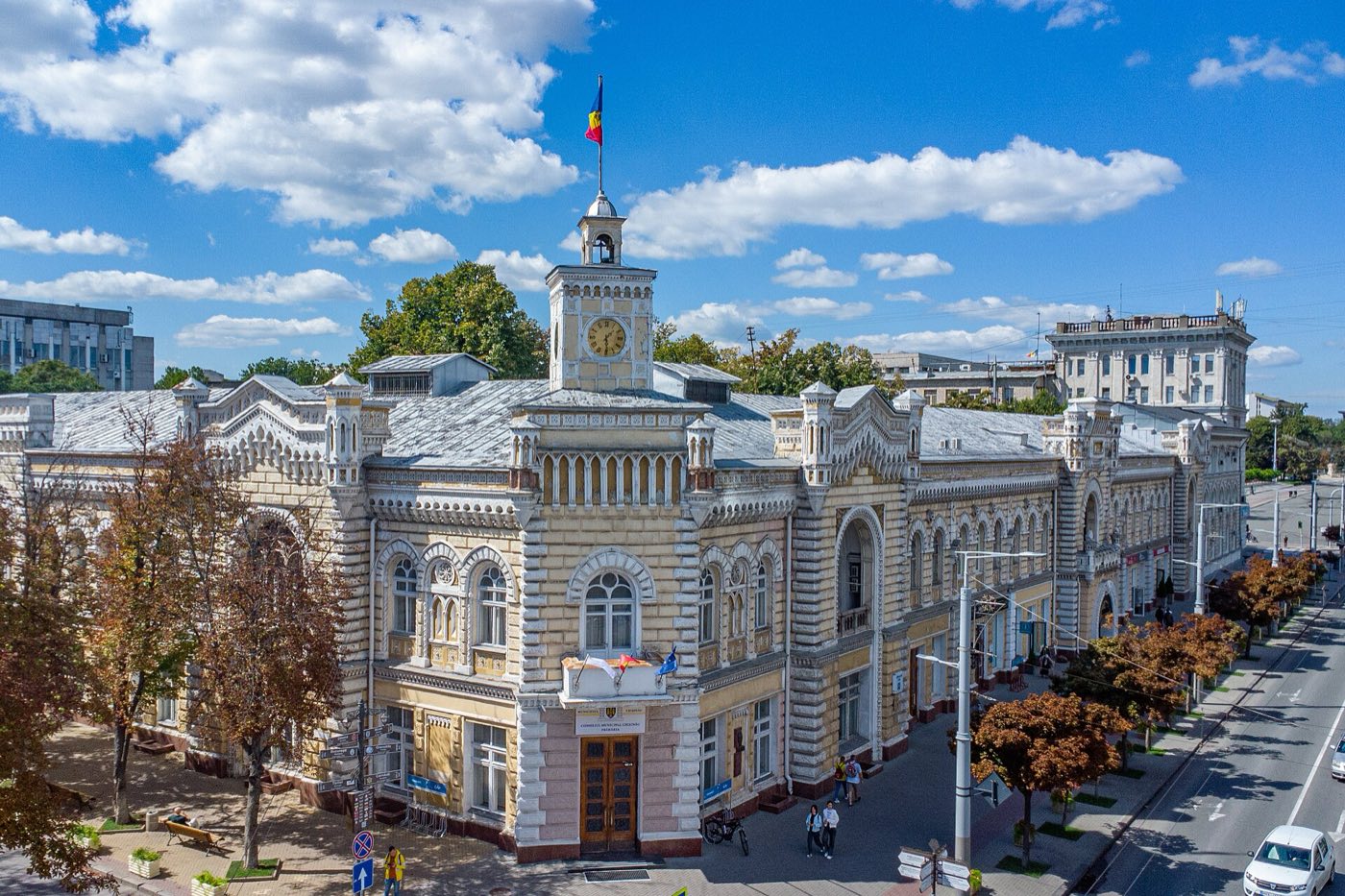
Moldova
- Capital
- Chișinău
- Population
- 2.6M
- Currency
- MDL
- Languages
- Romanian
Overview
Tucked between Romania and Ukraine, Moldova is Europe's least-visited country and — if you care about wine — one of its most rewarding secrets. The cellars here are not metaphors. Cricova and Mileştii Mici store millions of bottles in limestone tunnels long enough to drive through, and a half-day tour involves a golf cart ride through stone-arched streets named after the varietals they hold. Above ground, Moldova is gentler than its Soviet reputation suggests. Chișinău is a low-rise capital of tree-lined boulevards, cheap cafés, and a central market where babushkas sell farmer's cheese and homemade wine from two-liter plastic bottles. Drive an hour in any direction and you are in rolling hills of vineyards and sunflower, punctuated by wooden village churches, stork nests on utility poles, and the improbable cave monasteries of Orheiul Vechi carved into a limestone cliff above the Răut River. Moldova rewards travelers willing to arrive without expectations. Infrastructure is basic, English is patchy outside the capital, and the sightseeing circuit can be covered in four or five days. What you get in return is wine at producer prices, hospitality that still runs on old Soviet warmth, and the mild novelty of telling people where you went. A side trip to Transnistria — the self-declared Soviet-holdout statelet east of the Dniester — only deepens the trip's strangeness.
Things to Do
Cricova underground wine city tour
Fifteen kilometers north of Chișinău, Cricova's cellars stretch 120 kilometers through a former limestone mine, with underground streets wide enough for electric carts and named after the wines stored along them — Cabernet Street, Pinot Alley, and so on. Tours move by vehicle through vaulted galleries holding more than a million bottles, ending in reception rooms where the sparkling wines (made by the traditional method) are poured alongside local cheese. Book ahead and take the English tour if you can; walk-ins are possible but not guaranteed.
Mileştii Mici — world's largest wine collection
Twenty kilometers south of the capital, Mileştii Mici holds the Guinness-certified largest wine collection on the planet — more than two million bottles stored in 200 kilometers of underground limestone corridors. You drive your own car (or the guide's) through the tunnels, stopping at the Golden Collection vaults where dust-frosted bottles go back to the 1960s. The tasting room at the end pours six to eight wines with a cellar lunch, and bottles are available at prices you will not find at home.
Orheiul Vechi cave monastery and landscape
An hour's drive north-east of Chișinău, a horseshoe bend of the Răut River carves a dramatic limestone gorge where monks tunneled cells and chapels into the cliff face during the 13th century. Climb from the modern village of Butuceni along a footpath to the working cave monastery, a small stone church above it, and views across farmland that have barely changed in 500 years. Stay overnight at one of the pensions in Butuceni for homemade mămăligă and plum brandy by a wood stove.
Chișinău's central market and Stefan cel Mare Park
Moldova's capital is best experienced on foot over a leisurely afternoon. The Piaţa Centrală sprawls for several blocks selling everything from white cow's cheese in brine to sacks of pumpkin seeds and plastic jerry cans of house wine. Walk north up Stefan cel Mare Boulevard through its namesake park — the statue of the medieval Moldavian prince is a national landmark — then stop at one of the wine bars along Mihai Eminescu Street for a flight of Fetească Neagră or Rara Neagră.
Soroca Fortress on the Dniester River
On the Ukrainian border 160 kilometers north of Chișinău, the round tower-and-wall fortress of Soroca was built in 1543 by Stefan cel Mare to guard the river crossing and has been carefully restored. Inside, small exhibits cover the town's Roma heritage and the hilltop mansions above the fortress — the so-called Gypsy Hill, where local Romani families have built the most extravagant houses in Moldova. A one-day round trip from Chișinău or an overnight in Bălți works well.
Purcari Winery tasting
In the south-east near the Ukrainian border, Purcari is the boutique Moldovan winery foreign wine writers are most likely to know — Queen Elizabeth II reportedly kept a case of their Negru de Purcari at Balmoral. The estate is a tidy complex of 19th-century vaulted cellars, a small boutique hotel, and vineyards running down to the Dniester. Lunch in the tasting hall pairs six wines with traditional dishes — expect stuffed cabbage leaves, cornmeal mămăligă, and Black Sea fish.
Transnistria — the self-declared Soviet time-capsule republic
A breakaway strip of land along the east bank of the Dniester still uses Soviet iconography, prints its own rubles, and operates as a de facto country most governments do not recognize. A day trip from Chișinău takes you across a simple checkpoint to Tiraspol, where Lenin still stands outside the parliament, the main avenue is named after the 25th of October Revolution, and the Kvint brandy distillery offers surprisingly good tours. Bring your passport, keep your immigration slip, and do not photograph soldiers or border posts.
When to Go
May through October is the sweet spot — warm days, long evenings, and the countryside at its greenest and then golden. Early October hosts the National Wine Day in Chișinău's central square, when most producers open cellars and pour generously, and it is the best single weekend to visit. September is ideal for harvest tours at working wineries like Purcari and Castel Mimi. Winters are cold, grey, and quiet but cellar tours run year-round, and the Christmas markets in Chișinău have a quiet old-world charm if you catch them.
Getting Around
Chișinău is the centre of everything — the main airport, the intercity bus station, and most wine-country day trips radiate from the capital. Distances are short: Soroca is a three-hour drive at most, Purcari about two, and Orheiul Vechi under an hour. Renting a car at the airport is the most practical option if you want to cover multiple cellars in a day; roads are generally in good shape on primary routes, though rural ones can narrow and pothole fast. Marshrutka shared minibuses connect every town for a few dollars and are how most Moldovans travel, but schedules are informal and luggage space is tight. Winery tours arranged through Chișinău agencies include a driver and are the easiest option if you plan to taste.
Cost & Currency
Moldova uses the leu (MDL), one of Europe's weaker currencies — roughly 20 MDL to the euro at typical rates, which makes the country a genuine bargain. Expect 70–120 MDL for a sit-down lunch of zeama soup and mămăligă in Chișinău, 400–800 MDL for a mid-range hotel room in the capital, and 300–600 MDL for a half-day winery tour with tastings. Cards are accepted at hotels, bigger restaurants, and the major wineries, but carry cash for the central market, rural guesthouses, and Transnistria (where Moldovan lei are not used at all — you will exchange a small amount into Transnistrian rubles at the border). Tipping is modest — round up or leave 10% for warm service.
Frequently Asked Questions
- Do I need a visa to visit Moldova?
- Most Western visitors — US, EU, UK, Canadian, Australian, and most of Latin America — can enter visa-free for up to 90 days within a 180-day window. You need a passport valid for at least three months beyond your stay and proof of onward travel. Travelers from many Asian and African countries do need a visa or e-visa; check the Moldovan Ministry of Foreign Affairs site before booking.
- Is it safe to visit Transnistria?
- Day trips to Tiraspol are routinely made by travelers and are generally uneventful, but Transnistria is not recognized by the international community and Moldova considers it occupied territory, so your home embassy cannot help you there. Keep the entry slip the border guards issue, return before the date on it expires, do not photograph military or official buildings, and expect to pay a small bribe if one is suggested — though most visitors pass through without incident.
- Do people speak English in Moldova?
- In Chișinău, younger staff at hotels, wine tours, and restaurants usually speak workable English, but outside the capital it thins quickly. Romanian is the official language (effectively the same as Romanian spoken in Romania), and Russian is widely understood by anyone over about 40. A phrase app with Romanian offline pack will make rural travel considerably smoother.
- Is Moldova safe for tourists?
- Yes — violent crime is rare and Chișinău is safe to walk at night in the centre. The usual big-city cautions apply at the central railway station and late-night taxi stands. Driving conditions are the bigger practical risk: watch for aggressive overtaking on the two-lane highways, unlit horse-carts at dusk on rural roads, and livestock in the roadway outside towns.
- Can I do a wine tour without renting a car?
- Yes — Chișinău has several reliable operators who run half-day and full-day trips to Cricova, Mileştii Mici, Castel Mimi, and Purcari with a driver, guide, and tastings included. Prices start around 700 MDL per person for a half-day. Booking direct through the wineries themselves is also possible, and most can arrange a transfer for an added fee if you prefer.
Plan a Trip to Moldova
Have you been to Moldova?
Track 195 countries, 50 states & 63 national parks on your map