Maldives
- Capital
- Malé
- Population
- 521K
- Currency
- MVR
- Languages
- Dhivehi
Overview
The Maldives is 1,192 coral islands scattered across 26 atolls in the central Indian Ocean, and the country is the lowest-lying nation on Earth — no point more than about three meters above sea level. Most islands are small enough to walk around in twenty minutes, ringed by white sand, and surrounded by water so clear that the seafloor looks five feet deep at twenty. The picture of the Maldives is the overwater bungalow, and for most visitors that is still the core experience: a private deck, a ladder straight into the lagoon, and a week of slow meals and long fins on the house reef. But the country has opened up significantly since guesthouse tourism became legal on local islands in 2009. You can now stay on Malé for a night, take a public ferry to a local island for half the price of a five-star resort, and reach most of the same reefs. The trip looks different depending on which path you take. What connects them is the water. Manta rays feed at Hanifaru Bay, whale sharks cruise the south end of Ari Atoll year-round, and the dive sites are consistently ranked among the best in the world. Even on a shoestring guesthouse trip, a half-day snorkel will show you more reef fish, rays, and turtles than almost anywhere outside a protected reserve. Five to seven nights is the sweet spot — any less and you have barely decompressed; much more and you start to notice how small these islands really are.
Things to Do
Overwater bungalow resort stays
The Maldives basically invented the overwater bungalow format, and the country still has the highest concentration and best-executed versions in the world. Expect a villa on stilts over a turquoise lagoon, a private sundeck, steps down into the water, and a house reef you can swim along straight from your door. Book half-board at a mid-range resort to keep food costs sane — the all-inclusive packages are worth it if you like cocktails, the half-board plan if you do not. Five nights is the comfortable minimum.
Manta ray diving at Hanifaru Bay
A UNESCO biosphere reserve in Baa Atoll, Hanifaru Bay draws hundreds of reef manta rays from June through November when plankton concentrates in the shallow bay on incoming tides. Snorkel-only access, limited permits, and mandatory ranger supervision keep numbers controlled, and the season peaks from August through October when feeding aggregations can include fifty or more rays in a single swim. Book with a liveaboard or a Baa Atoll resort for reliable daily access and an eight-night trip minimum.
Bioluminescent beaches (Vaadhoo and others)
On moonless nights from May through October, bioluminescent dinoflagellates wash up on certain beaches and light the sand and shallow water with glowing blue pinpricks wherever a wave breaks or a footprint hits. Vaadhoo in Raa Atoll is the most photographed location, but the phenomenon happens across the country and conditions — dark sky, right tide, specific plankton bloom — are unpredictable. Stay at a local island in the region and ask guesthouse owners to tip you off when it happens.
Malé's Friday Mosque and fish market
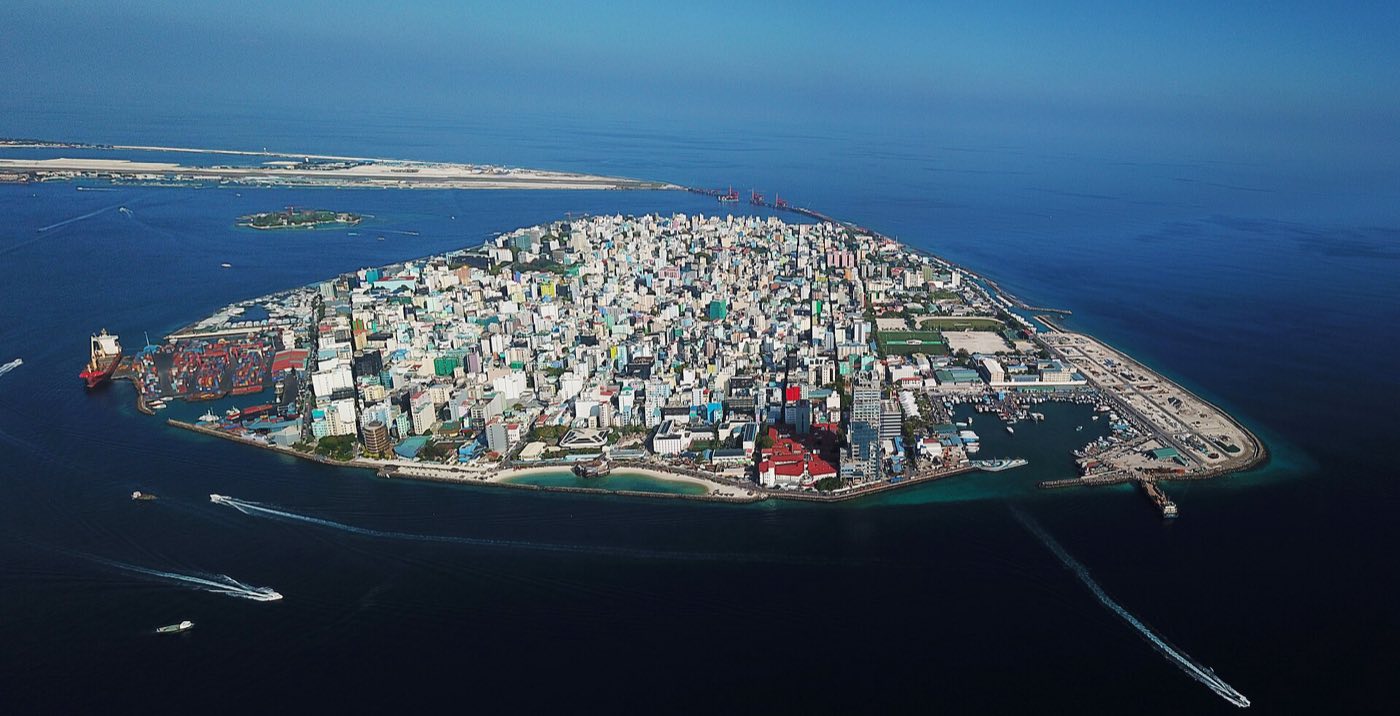
The capital is a dense, concrete grid of 250,000 people packed onto 2.2 square kilometers, and one night here on the front or back end of a trip is worth the detour. The 17th-century Hukuru Miskiy (Old Friday Mosque) is carved from coral blocks and holds one of the oldest wooden Qurans in the Islamic world. The afternoon fish market at the waterfront runs hot with yellowfin tuna, reef fish, and mahi, and tea shops serve hedhikaa snacks for under a dollar. Dress modestly in the mosque area.
Ari Atoll whale shark snorkeling
The south end of South Ari Atoll is one of the few places on Earth where whale sharks are seen year-round rather than seasonally, and a half-day snorkel trip from a local island or resort in the region will give most visitors a close encounter with the world's largest fish. The sharks cruise the reef edge in three to ten meters of water, so swimmers with basic fin skills can keep up briefly. Book with a dive shop that follows the Maldives Whale Shark Research Programme code of conduct — some operators don't.
Underwater restaurant dining
The Maldives has more underwater restaurants than anywhere else — a consequence of resort one-upmanship over the past fifteen years. Ithaa at Conrad Rangali was the first, five meters below the surface of the Indian Ocean in a curved acrylic tunnel; Hurawalhi's 5.8 Undersea and Anantara Kihavah's Sea now compete for the best version. Dinner runs $200–$400 per person and is worth doing once if you are already at a resort — lunch is a cheaper way in. Book weeks ahead; capacity is small.
Local island guesthouse experience
Since 2009 independent guesthouses have been legal on inhabited local islands, and the category has grown to several hundred properties. Staying on an island like Maafushi, Dhigurah, Fulidhoo, or Thoddoo puts you among Maldivian communities at a fraction of resort prices — expect $60–$150 per night, simple restaurants serving mas huni and curry, shared snorkel boats, and dry island rules (no alcohol, modest dress on public beaches, bikini beaches set aside separately). It is a different and in some ways more rewarding version of the country.
When to Go
November through April is the dry northeast monsoon (iruvai) season with calmer seas, excellent underwater visibility, and the least rain — and correspondingly the highest prices. January through April is peak tourist season. May through October is the wet southwest monsoon (hulhangu) with more showers, rougher seas between atolls, and occasional storm days, but also manta aggregations at Hanifaru Bay, whale shark sightings in Ari Atoll, and rates that drop by 30 to 50 percent. Water temperatures stay at 27–29°C year-round; air temperature barely varies from the high 20s.
Getting Around
Velana International Airport at Malé is the single gateway, and how you leave it depends on where you are going. Seaplane transfers from the airport to resorts in the farther atolls run $400–$800 round-trip and operate only in daylight. Domestic flights reach regional airports in the outer atolls, usually followed by a short speedboat transfer. Speedboat transfers from Malé to resorts in North and South Malé atolls take 20 to 90 minutes and cost $150–$300 per person round-trip. Public ferries connecting local islands are cheap ($2–$5) and slow — useful if you are doing the guesthouse route and not in a hurry. There are no roads between islands; everything moves by water or air.
Cost & Currency
The Maldives uses the Maldivian rufiyaa (MVR), but US dollars are accepted everywhere and most resort bills are denominated in dollars. Rufiyaa trades at about 15.4 to the dollar. The country is expensive for the polished resort version — $500–$2,000 per night for overwater villas, $200–$400 extra per day for food and diving — and moderate for the local-island version, where guesthouses run $60–$150 per night including breakfast, excursions are $50–$100 per day, and you can eat at local cafes for $10–$15 per meal. A 12% GST and 10% service charge are usually added to resort bills. Carry some cash for local island tips and small purchases.
Frequently Asked Questions
- Do I need a visa to visit the Maldives?
- No — a free 30-day tourist visa is issued on arrival to all nationalities, provided you have a valid onward ticket and a confirmed hotel booking. The Maldives Immigration form, IMUGA, is filled out online within 96 hours of arrival and is required alongside your passport.
- Can I drink alcohol in the Maldives?
- Alcohol is legal only inside resort islands, which are private and exempt from the country's Islamic alcohol ban. Local islands, including Malé, are dry — you cannot buy or consume alcohol at guesthouses, restaurants, or in public. Do not bring any in your luggage, as customs will confiscate it at Velana airport.
- Is the Maldives safe for solo female travelers?
- Yes — crime rates are low and Maldivians are warm and respectful hosts. On local islands, observe modest dress codes in public (cover shoulders and knees away from the designated bikini beaches), which is the same standard Maldivian women follow. Resorts are their own international zones where normal beachwear is fine everywhere.
- How do I choose between a resort and a guesthouse?
- Resorts get you the overwater villa, all-day alcohol, and a manicured private island for three to ten times the cost. Guesthouses on local islands give you authentic Maldivian hospitality, simpler beach access, and most of the same snorkeling for a fraction of the price. A common hybrid: three nights on a local island, three nights at a resort. That way you see both versions of the country.
- What should I pack?
- Light, breathable clothing, a reef-safe sunscreen (reef-damaging sunscreens are banned at many resorts and on marine park visits), polarized sunglasses, a hat, and more snorkel time than you think you will use. Bring modest cover-ups for local island walks away from the beach. If you wear prescription lenses, a mask with your prescription will quadruple the snorkeling experience.
Plan a Trip to Maldives
Have you been to Maldives?
Track 195 countries, 50 states & 63 national parks on your map