National Park · MN · Est. 1975
Voyageurs
Overview
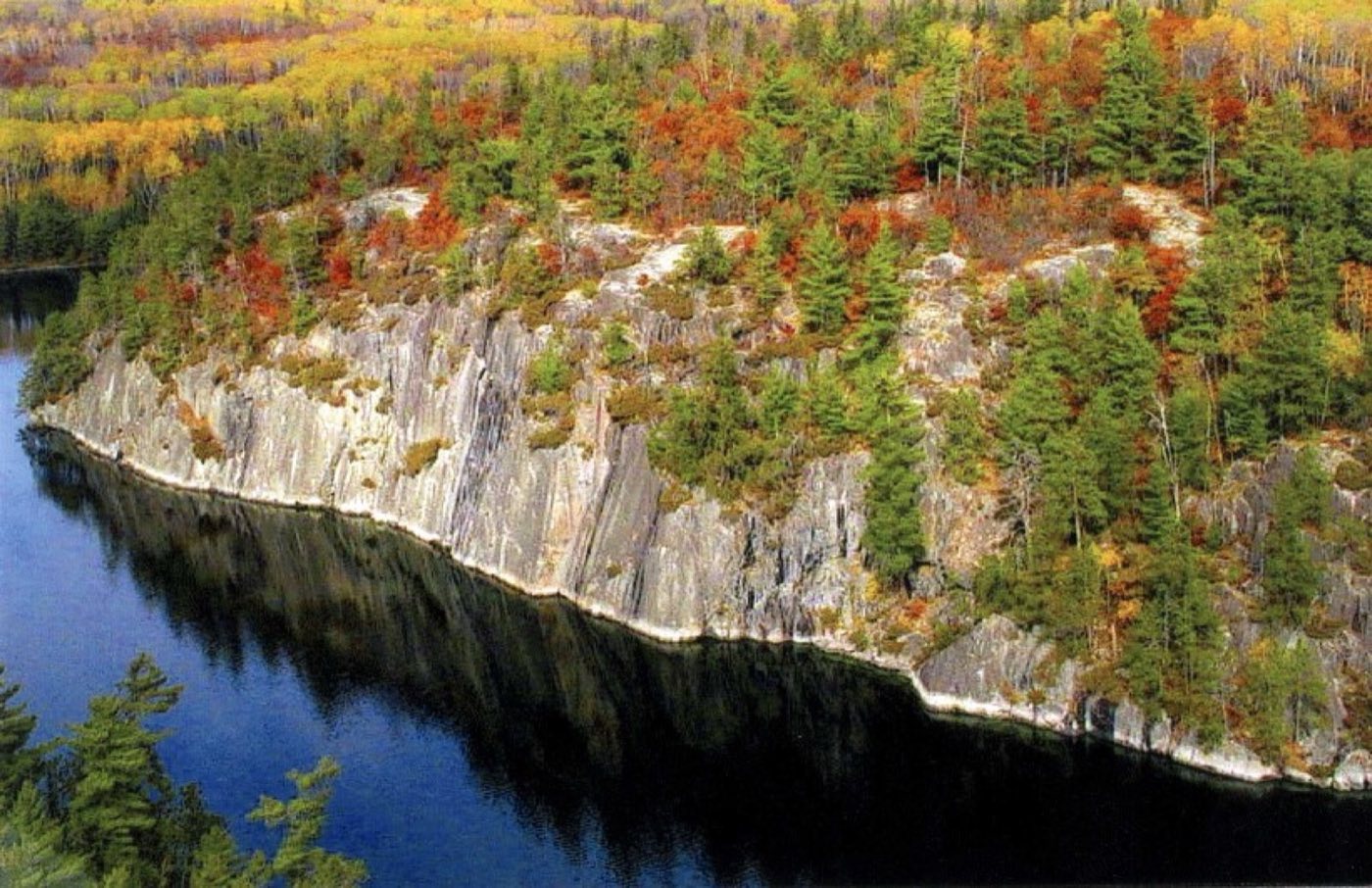
Voyageurs National Park protects 218,000 acres of interconnected lakes, boreal forest, and Precambrian-rock islands along Minnesota's border with Ontario, in the heart of the old fur-trade canoe route that gave the park its name. More than a third of the park is water, and most of what's worth seeing is reachable only by boat — a fact that keeps the visitation numbers modest and the experience quiet in a way almost no other national park can match. You make peace with the water or you miss the park. The four big lakes — Rainy, Kabetogama, Namakan, and Sand Point — form a single navigable chain connecting more than 500 islands, and the park rents houseboats and runs summer boat tours for visitors without their own craft. Winter changes everything: the lakes freeze thick enough for an ice road, snowshoes and cross-country skis replace canoes, and the park becomes one of the best spots in the lower 48 for reliable aurora borealis viewing. Whichever season you pick, come with a flexible plan, a tolerance for mosquitoes in summer or layers in winter, and an appreciation for the kind of northern-woods silence that most national parks lost a century ago.
What to See & Do
Canoe or kayak camping on the park's 500+ islands
Voyageurs runs a network of over 270 boat-in campsites scattered across the four main lakes, each with a tent pad, bear-proof locker, fire grate, and pit toilet — and each reservable in advance through Recreation.gov. Stringing a few together into a multi-day paddle is the classic Voyageurs experience. First-timers should start on Kabetogama Lake, which is more sheltered than Rainy. Rent canoes and kayaks at the Kabetogama Lake Visitor Center or through outfitters in Ash River. Weather moves fast on these big lakes; always carry a marine radio or check forecasts before a long crossing.
Northern Lights viewing from Rainy Lake
Voyageurs is certified as an International Dark Sky Park, and its latitude just below the 49th parallel makes it one of the most accessible aurora-viewing sites in the continental U.S. Rainy Lake's wide north-facing horizon from the visitor center deck or the nearby Black Bay overlook is the easy public spot — no hiking, no boat, just a dark parking lot and a view across frozen water in winter or open water in summer. Check the NOAA Kp-index forecast and aim for clear nights between 10 p.m. and 2 a.m. Best odds run September through March.
Ellsworth Rock Gardens on Kabetogama Lake
On the north shore of Kabetogama Lake, accessible only by boat, the Ellsworth Rock Gardens are a quirky 1940s-era sculpture garden and flower terrace built by a single local artist, Jack Ellsworth, over 20 summers. Stacked-stone animals, arches, and abstract forms are set among terraced plantings with a long view across the lake. Park boat tours stop here, and private boaters can tie up at the dock. Plan 45 minutes to an hour for the full walk, and bring bug spray in June and July — the mosquitoes here are enthusiastic.
Kettle Falls Hotel — accessible only by boat
Built in 1913 as a logging-camp boarding house on a narrow isthmus between Rainy and Namakan lakes, the Kettle Falls Hotel is still operating as a small hotel, restaurant, and bar — and still only reachable by boat. The floor of the bar famously slopes several inches from one end to the other, a novelty from when the building was hauled onto its current foundation. Park-run boat tours from the Ash River and Rainy Lake visitor centers stop here in summer and give you an hour or two for lunch and a walk. Staying overnight is possible but books fast.
Walleye and northern pike fishing on the big lakes
The border lakes have been serious walleye water for a century, and a Minnesota fishing license plus basic tackle opens up as much fishing as you can handle. Prime walleye spots cluster around rocky points, wind-blown shorelines, and the mouths of small bays at dawn and dusk. Northern pike run large here — 40-inch-plus fish turn up every year — especially in weedy bays in early summer. Local guides out of International Falls and Ash River make the learning curve short; a half-day charter will usually put you on fish and teach you how to do it on your own after.
Snowshoeing and cross-country skiing frozen lake routes
From roughly late December through March, the lakes freeze two feet thick and open up as a giant playground of groomed and unplowed winter travel. The park maintains the seven-mile Rainy Lake Ice Road for cars, and grooms cross-country ski trails and snowshoe routes from the visitor centers. Rent snowshoes free of charge from the Rainy Lake and Ash River visitor centers in season. Dress in layers for temperatures that routinely drop below zero, and tell someone your route — this is remote country and cell coverage is spotty away from the main lodges.
Dark-sky astronomy programs in summer
Park rangers run regular summer-evening astronomy programs, usually at the Kabetogama Lake or Rainy Lake visitor center, where portable telescopes go out on the deck once the sky is fully dark. The combination of an International Dark Sky certification and almost zero light pollution to the north means the Milky Way is routinely naked-eye-obvious. Bring a red-filtered flashlight if you have one, a jacket even in July (the nights cool fast over the water), and insect repellent. Programs are free with park entry; check the schedule at any visitor center on arrival.
Getting There & When to Go
The park has three main entry points, each with its own visitor center: Rainy Lake near International Falls, Kabetogama Lake, and Ash River. International Falls is the nearest town and has a small regional airport with limited service; most visitors drive in from the Twin Cities (about 4.5 hours) or Duluth (about 3 hours). Summer runs roughly Memorial Day through mid-September, with warm days, long daylight, and active biting insects — pack a head net for June and July. Fall brings crisp weather and reflected color through early October. Winter from late December through March is a completely different park, with ice roads, snowshoeing, and consistent aurora.
Where to Stay
Because the park is mostly water, most lodging sits on the lakeshore just outside park boundaries. International Falls has chain hotels and the easiest road access, about 15 minutes from Rainy Lake Visitor Center. On Kabetogama Lake, a handful of family-run resorts — Gateway, Kec's Kove, Northern Lights — offer cabins with docks and boat rentals right outside your door, which is how most returning visitors do it. Houseboat rentals out of Ash River and Crane Lake are a uniquely Voyageurs option: a full week moving between anchorages with a boat that is also your hotel. Inside the park, tent-only boat-in campsites are reservable on Recreation.gov up to 120 days ahead.
Frequently Asked Questions
- Can I experience Voyageurs without a boat?
- Partially, yes. Each of the three visitor centers has land-based trails, beaches, and overlooks, and the Rainy Lake Visitor Center alone has enough for a good half day. Park-run boat tours from Rainy Lake and Kabetogama in summer are the easiest way to get out on the water without renting your own craft, and they visit Kettle Falls, Ellsworth Rock Gardens, and other island sites. To really see the park, though, you'll want to paddle, motor, or in winter snowshoe onto the lakes themselves.
- When is the best time to see the Northern Lights?
- Late fall through early spring — roughly mid-September through mid-April — gives you the longest dark nights, the highest aurora probability, and the coldest-clearest skies. Solar activity drives everything, so check the NOAA Space Weather aurora forecast before each evening. A Kp index of 4 or higher plus a clear sky plus a dark horizon to the north is the recipe. In summer there's too little darkness for easy viewing; winter is peak season despite the cold.
- How bad are the mosquitoes and black flies?
- Bad enough in June and early July that you should genuinely plan for them. Pack DEET or picaridin repellent, long sleeves, long pants, and a head net for evenings and portages. Black flies peak late May through mid-June; mosquitoes take over through July and start to taper in August. By September most of the biting insects are gone and the weather is still warm — it's the quiet shoulder-season sweet spot for paddling if the mosquitoes worry you.
- Is there cell service or Wi-Fi in the park?
- Mostly no. Cell service is spotty even at the visitor centers and essentially nonexistent on the far sides of the lakes or deep in the islands. Do not plan on using your phone for navigation, weather, or emergencies once you're out on the water. Carry paper maps (available at the visitor centers), a compass, and if you're heading far from a developed lake, a marine VHF radio or satellite messenger. This remoteness is part of the park's appeal — come ready for it.
Plan Your Visit
Book Nearby HotelsHave you visited Voyageurs?
Track all 63 national parks on your map