National Park · VI · Est. 1956
Virgin Islands
Overview
Virgin Islands National Park covers about two-thirds of St. John, the smallest and least-developed of the three main U.S. Virgin Islands, along with the turquoise reef waters surrounding it. Laurance Rockefeller donated the core of the land in 1956 with the express aim of keeping the island from being paved over, and the result is the only U.S. national park in the tropics — a place where you can drive a jeep to a white-sand beach, snorkel over a living coral reef, and be back in time for a rum punch at sunset. The scale is deceptively small. St. John is only nine miles long, and you can drive its full perimeter on North Shore Road and Centerline Road in an afternoon, stopping at a different crescent beach every 15 minutes. What stays with you is the water — a clear, warm, approachable Caribbean that invites you in from the sand without a boat or a guide, where five minutes of easy snorkeling puts you over parrotfish, stingrays, sea turtles grazing on turtle grass, and the occasional nurse shark sleeping under a ledge. Bring reef-safe sunscreen (regular sunscreen is now banned), a mask and snorkel, and the patience to let the rhythm of the island — which is slow — set your pace.
What to See & Do
Trunk Bay underwater snorkeling trail
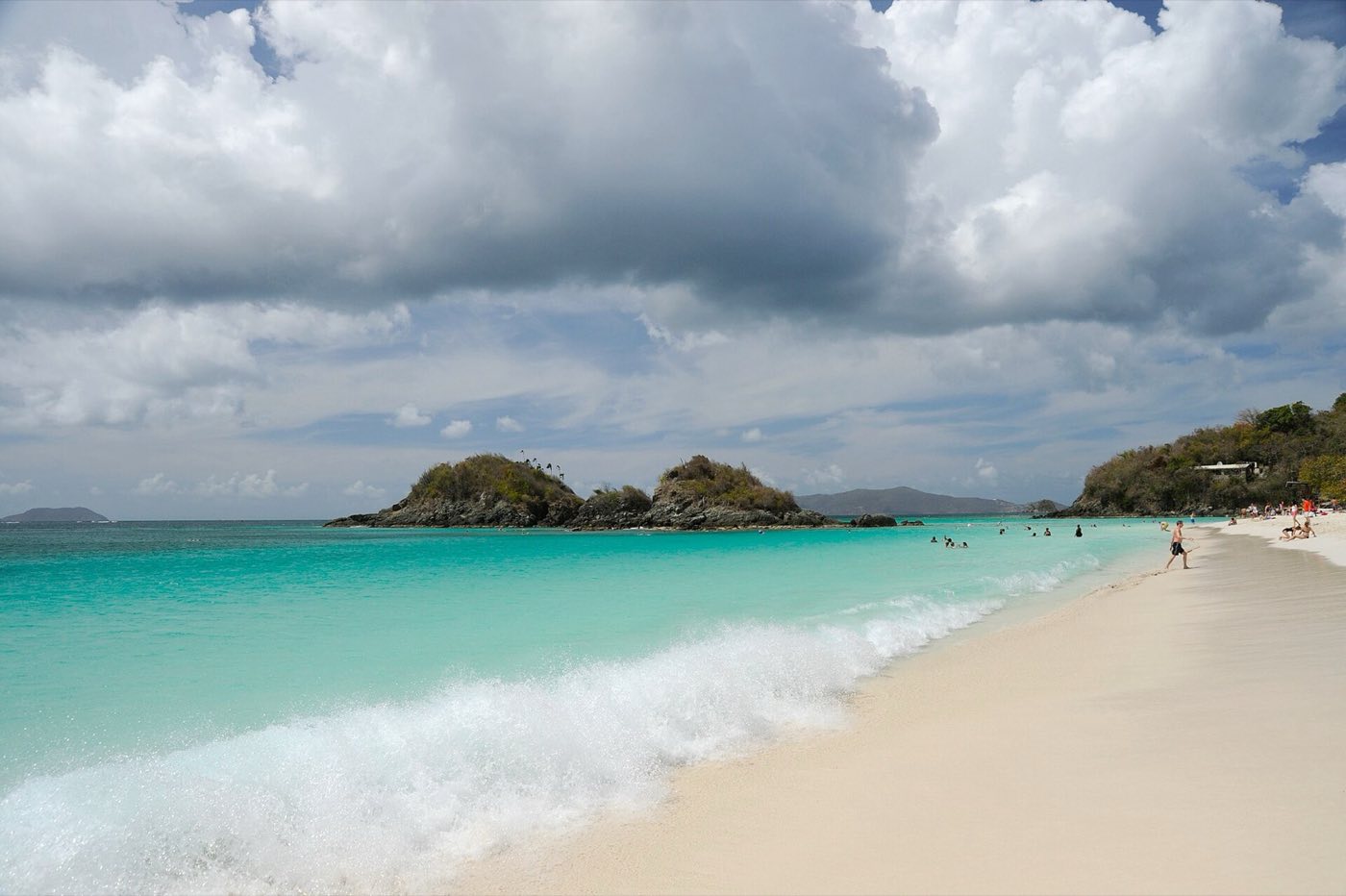
Trunk Bay is the postcard — a quarter-mile arc of white sand with a small offshore cay — and home to the park's self-guided underwater snorkeling trail. Submerged interpretive signs mounted on the reef identify coral species, fish, and sponges as you swim a short loop in chest-deep water. It's the only national park reef trail in the country and a great first snorkel of the trip. Go early, ideally before 10 a.m., to beat the cruise-ship day-trippers coming over from St. Thomas; after 11 the bay fills up fast. Entrance fee is $5 per adult.
Reef Bay Trail hike past Taino petroglyphs to a sugar mill
The Reef Bay Trail is the park's flagship hike — a 2.4-mile descent from Centerline Road down the forested southern slope to the ruins of an 1860s sugar mill on the coast. Along the way a short spur drops you to a rock pool fed by a waterfall and ringed with Taino petroglyphs carved by the island's original inhabitants. The catch is the 800-foot climb back up in Caribbean heat; the park runs a seasonal shuttle program that drops you at the trailhead and picks you up by boat from the beach, turning the hike into a downhill-only day. Check availability at the Cruz Bay Visitor Center.
Cinnamon Bay beach and watersports
Cinnamon Bay is the longest beach on St. John, a wide pale crescent with the ruins of a sugar plantation at one end and, usually, a small rental shack on the sand for kayaks, paddleboards, windsurfers, and beach chairs. The reef just off the western point is one of the better spots on the island to see green sea turtles and spotted eagle rays; paddle out 50 yards with a mask and drop in. The campground and small eco-tent resort here give it the easiest in-the-park overnight option, with a beachfront restaurant that opens for breakfast and dinner.
Ram Head Trail to a dramatic coastal headland overlook
At the far east end of the park, the Ram Head Trail leaves from Salt Pond Bay and climbs a mile out onto a bare, wind-scoured volcanic peninsula ending 200 feet above the sea. The trail is exposed cactus-and-thorn scrub with zero shade, so go early and bring twice the water you think you need. Your reward is one of the most spectacular viewpoints in the park — 360 degrees of open Caribbean, Norman Island and the British Virgin Islands to the east, and humpback whales passing offshore January through April.
Caneel Bay's seven beaches and historic resort ruins
The old Caneel Bay Resort, destroyed by Hurricane Irma in 2017, is slowly being rebuilt, but its seven small beaches remain open to the public via the park and are worth stringing together into a half-day walk. Honeymoon and Salomon — both on the Lind Point Trail from the Cruz Bay Visitor Center — are the quietest, with almost no facilities and excellent snorkeling along the rocky points at either end. Hawksnest, accessible by car, is the friendliest for families. Pack snorkel gear, lunch, and more water than you'd bring to a city beach.
Hawksbill sea turtle spotting while snorkeling
St. John's reefs host a resident population of hawksbill and green sea turtles, and there are few easier places in the world to swim with one. Maho Bay is the single best bet — a long, shallow, calm bay where the turtles come in to graze turtle grass within 30 feet of the beach. Float quietly, stay at least 10 feet away, and let them move around you; touching or chasing a turtle is illegal and stresses the animal. Bring a mask, fins help but aren't required in Maho's flat water, and a hat and rash guard for the sun on your back.
Annaberg Sugar Plantation ruins and cultural demonstrations
On the North Shore Road between Cinnamon and Leinster Bays, the Annaberg Sugar Plantation preserves the stone ruins of an 18th-century windmill, boiling room, and slave village that once produced sugar and rum for export. Interpretive signs along a short self-guided loop walk through the ruins; several days a week in season, park rangers and local cultural demonstrators lead talks on Afro-Caribbean cooking, basketry, and Crucian traditions. It's a sobering, important counterweight to the beach days, and the ocean view from the mill ruins is extraordinary.
Getting There & When to Go
There is no airport on St. John. Fly into Cyril E. King Airport on St. Thomas and take a 20-minute taxi to the Red Hook ferry dock, followed by a 20-minute public ferry across Pillsbury Sound to Cruz Bay on St. John; total door-to-door is about 90 minutes. Many visitors rent an open-sided jeep at Cruz Bay for the week — the island's roads are steep and narrow and a 4WD is genuinely useful. December through April is the dry, calm, postcard-perfect high season, with prices and crowds to match; late April through June trades slightly hotter weather for fewer people and lower rates. Hurricane season runs June through November, peaking in September.
Where to Stay
Cruz Bay is the main town and has the highest concentration of small hotels, villas, and rentals — a good base if you want restaurants and evening activity within walking distance. Coral Bay, on the quieter east end, feels more like a sailing village and suits travelers looking to get away from the ferry-dock bustle. Inside the park, Cinnamon Bay Beach and Campground offers eco-tent cottages, bare sites, and cottages with kitchens right on the beach and books out 6–12 months in advance for peak season. Private villas — everything from modest hillside rentals to multi-million-dollar estates — are the dominant lodging category on St. John and can be more economical for groups of four or more.
Frequently Asked Questions
- Do I need a passport to visit Virgin Islands National Park?
- No, not if you are a U.S. citizen flying in directly. The U.S. Virgin Islands are a U.S. territory, so you can travel there with a government-issued photo ID, the same as any domestic flight. A passport is only required if you plan to take a ferry day trip over to the British Virgin Islands, which many visitors do — bring it along if that's on your list.
- Is the snorkeling really good for beginners?
- Yes — St. John is one of the most beginner-friendly snorkeling destinations in the Caribbean. Many of the best reefs sit within 50 feet of the shore in calm, shallow, protected bays like Trunk, Maho, and Waterlemon Cay, so you can walk in from the sand without a boat. Water is clear, warm, and typically flat in the morning. Rental gear is available at Cruz Bay shops, but a cheap mask and snorkel from home will pay for themselves in a week.
- Are there dangerous animals I should worry about on St. John?
- Not really. There are no venomous snakes on the island and no large predators. The most common hazards are sunburn, dehydration, and the manchineel tree — a beachside tree whose leaves, bark, and apple-like fruit are all toxic and can cause blisters if touched or stood under during rain. Rangers mark the park's manchineels with red bands on the trunk; give them space. In the water, watch for sea urchins in rocky areas and don't touch any coral.
- Can I visit the park on a day trip from St. Thomas or a cruise?
- Yes, and many people do — the Red Hook ferry runs hourly and gets you to Cruz Bay in 20 minutes. A reasonable day plan is ferry over, taxi to Trunk Bay or Cinnamon Bay for the morning, lunch at a beach grill, one more beach in the afternoon, and ferry back before sunset. To really see the park, though, stay at least three nights so you can hit the quieter bays, do a longer hike like Reef Bay, and slow down to the island's pace.
Plan Your Visit
Book Nearby HotelsHave you visited Virgin Islands?
Track all 63 national parks on your map