National Park · ND · Est. 1978
Theodore Roosevelt
Overview
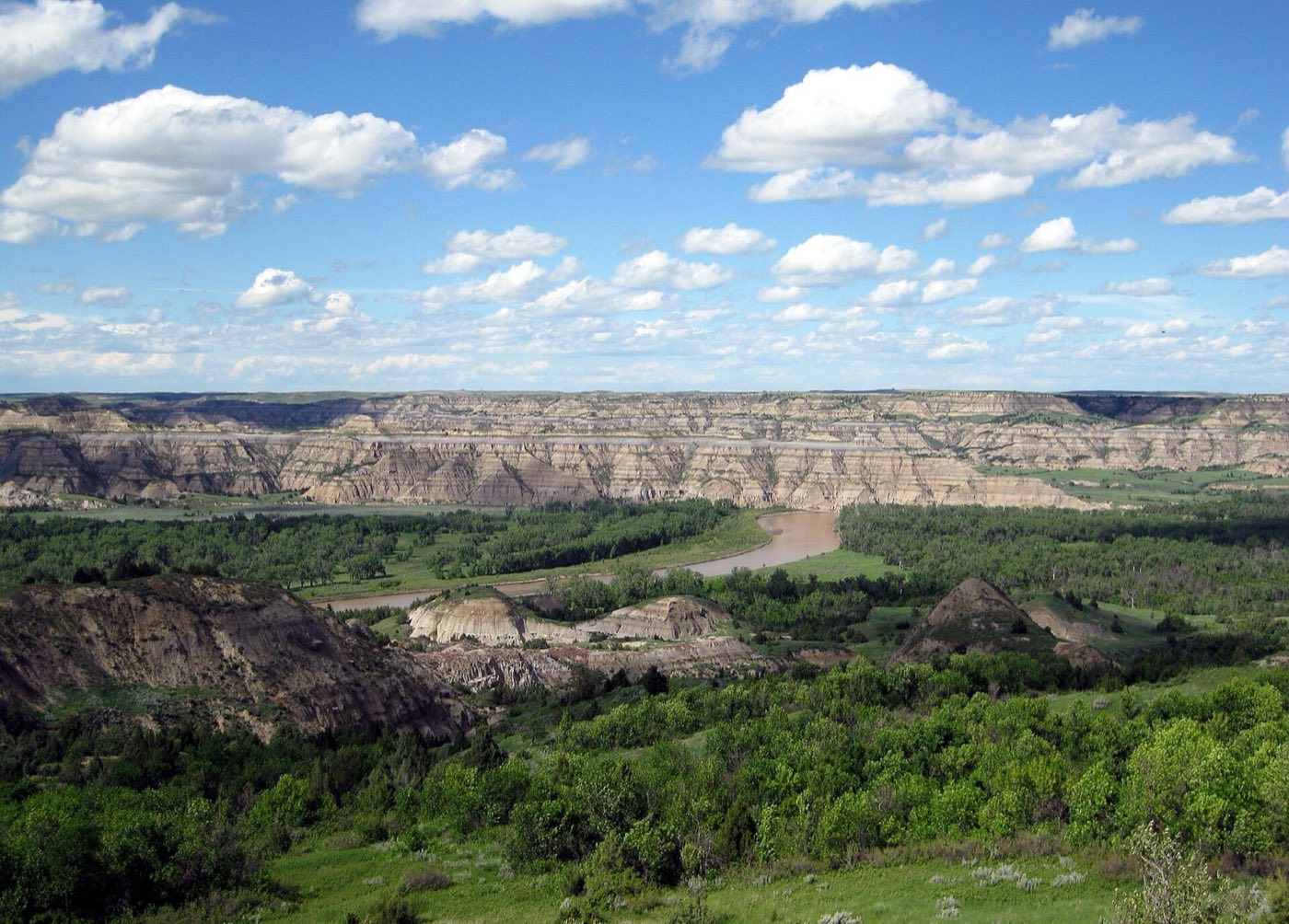
Theodore Roosevelt National Park protects the stretch of western North Dakota badlands where a grieving 25-year-old future president came to ranch cattle, mourn the same-day deaths of his wife and mother, and quietly become the conservationist who would later sign off on 230 million acres of public land. The park commemorates that transformation with 70,000 acres of eroded, striped badlands split into two units along the Little Missouri River. You'll notice right away that this is not a park built around one iconic view. The appeal is the slow accumulation of it: bison crossing the road at dawn, a band of wild horses moving along a distant ridge, prairie dogs whistling alarm calls from their towns, the sandstone and bentonite stripes in the canyon walls shifting from gray to rose to ochre as the sun moves. The South Unit, reached from Medora, gets most of the visitors and has the scenic loop and the Maltese Cross Cabin. The North Unit, an hour's drive north on US-85, is quieter, greener, and arguably the more rewarding half if you can only pick one. Bring binoculars, drive slowly, and plan to be out at dawn and dusk — the middle of the day on the badlands prairie is when everything interesting goes to take a nap.
What to See & Do
South Unit Scenic Loop Drive through painted badlands
The 36-mile South Unit loop is the park's signature drive and the single best introduction to what you're looking at. Start from Medora and go counterclockwise so the overlooks sit on your side of the road. Build in stops at Skyline Vista, Boicourt Overlook, and Buck Hill, which at 2,855 feet is one of the highest points in the park and gives you a 360-degree read on how the Little Missouri has chewed its way through the plains. A full circuit without hikes takes about two hours; with a couple of short walks and wildlife pauses, plan on half a day.
Wild horse viewing in the South Unit
Roughly 180 feral horses roam the South Unit — descendants of ranch and Native American stock that were allowed to remain when the park was established. The best odds of spotting a band are along the scenic loop between Peaceful Valley Ranch and the Painted Canyon turnoff, and out on the old East River Road. Look for them on open ridgelines in the morning and in the cottonwood bottoms around midday. Stay in or near your vehicle; a stallion defending his band will charge, and the park is unfenced open range.
Bison herds — especially active at dawn and dusk
Both units of the park support free-roaming bison herds, and an encounter is less an if than a when. Dawn and dusk are when they're most likely to be moving, grazing, and crossing the road; midday you'll usually find them bedded in the draws. Give them a minimum of 25 yards and never step between a cow and her calf — bison are the single most dangerous animal in the park and can sprint 35 mph from a standstill. If one has lowered its head or started swinging its tail, you're already too close.
Maltese Cross Cabin — Roosevelt's original ranch cabin
The small square-hewn log cabin next to the South Unit Visitor Center in Medora is the real thing: Roosevelt's first Dakota ranch cabin, built in 1883 and later hauled around the country for World's Fairs before being returned here. Step inside and you can see the writing desk, the rocking chair, and the trunk where he kept his books. Rangers lead short talks on the porch in summer; even without one, 20 minutes in the cabin does more to connect the landscape outside with the man it was named for than any exhibit panel could.
Painted Canyon Visitor Center overlook on I-94
If you're driving across North Dakota on Interstate 94, take exit 32 even if you weren't planning to stop. The Painted Canyon Visitor Center sits on the rim with a free, walk-right-up overlook that opens onto one of the most dramatic panoramas in the Great Plains — layered badlands stretching to the horizon, often with bison grazing the flat below. Half-hour stop, no entrance fee required, and it will probably make you change your itinerary. Short rim trails extend the visit by another 30 to 60 minutes.
Wind Canyon Trail to a stunning river bend viewpoint
The Wind Canyon Trail is a short, 0.4-mile loop off the South Unit scenic drive that punches far above its weight. Climb the sandy path to the rim and you look down on a near-perfect oxbow bend of the Little Missouri River, with cottonwoods lining the water and badlands spilling off into the distance. This is the classic sunset spot in the South Unit — go about an hour before sundown, bring a light jacket for the wind that gives the canyon its name, and stay until the color leaves the cliffs.
North Unit's Oxbow Overlook and Caprock Coulee Trail
Most people never make it to the North Unit, which is why it's worth the hour-long drive from Medora. The 14-mile scenic drive ends at Oxbow Overlook, where the Little Missouri River curves beneath you in a broad, cottonwood-lined bend that is probably the finest view in the park. Pair the drive with the Caprock Coulee Nature Trail, a 1.5-mile loop that drops into a side canyon past cannonball concretions and bentonite clay flats. Longleaf cedar and juniper scent the air, and you're likely to have the trail to yourself.
Getting There & When to Go
The nearest sizable airports are Bismarck, about 135 miles east of Medora, and Billings, Montana, about four hours to the west. Most visitors road-trip in along I-94, which passes directly through the South Unit at Medora. The North Unit is 70 miles farther north on US-85 from Belfield and feels genuinely remote. May through September is the core season, with pleasant daytime temperatures, long daylight, and active wildlife; June brings wildflowers and greenery, and September delivers golden cottonwoods along the river plus the bison rut. The South Unit is open year-round but winter can close roads with little warning; the North Unit's scenic drive often closes with the first significant snow.
Where to Stay
Medora, at the South Unit gate, is a seasonal tourist town of a few hundred people that wakes up in a big way from Memorial Day through Labor Day. The historic Rough Riders Hotel is the in-town classic, with rocking-chair porches and walking distance to the Medora Musical amphitheater; the Badlands Motel and AmericInn cover midrange needs. Cottonwood Campground inside the South Unit is the best option for tents and small RVs, with sites along the Little Missouri. For the North Unit, base in Watford City, 15 miles north, where a handful of new hotels serve the Bakken oil region and put you at the quieter unit's entrance in 20 minutes.
Frequently Asked Questions
- Do I need a reservation or timed entry to visit Theodore Roosevelt National Park?
- No — the park uses the standard National Park Service entry fee ($30 per vehicle, good for seven days and covering both units) with no timed-entry system. You can drive in any time the gates are open. In-park camping at Cottonwood and Juniper campgrounds is reservable on Recreation.gov and fills up on summer weekends; book a few weeks ahead if you want a specific site.
- Are the South Unit and North Unit worth visiting both?
- Yes if you have the time. The two units sit 70 miles apart by road and feel quite different: the South Unit is more visited, more varied in wildlife, and anchored by Medora's tourism; the North Unit is greener, quieter, and has the park's most striking river bend view at Oxbow Overlook. If you only have one day, pick the unit nearest your approach — the drive between them eats most of a half day on its own.
- When is the best chance to see wild horses and bison?
- Dawn and dusk, without question. Both wild horses and bison spend the heat of the day bedded in draws where you can't see them, and come out to graze the open ridges and flats in the first and last two hours of daylight. Drive the South Unit scenic loop slowly with the windows down, stop at every high point, and look with binoculars across the basins below — movement is what gives them away.
- Is Theodore Roosevelt National Park a good park for kids?
- Yes, especially for kids who like wildlife and open space more than dramatic day hikes. Short, flat trails like Wind Canyon and the Boicourt spur, the prairie dog towns along the scenic loop, and the Maltese Cross Cabin tour all work well for small legs and short attention spans. The park also runs an active Junior Ranger program out of both visitor centers. Bring binoculars, sunscreen, and plenty of water — there is no shade once you leave the cottonwood bottoms.
Plan Your Visit
Book Nearby HotelsHave you visited Theodore Roosevelt?
Track all 63 national parks on your map