National Park · VA · Est. 1935
Shenandoah
Overview
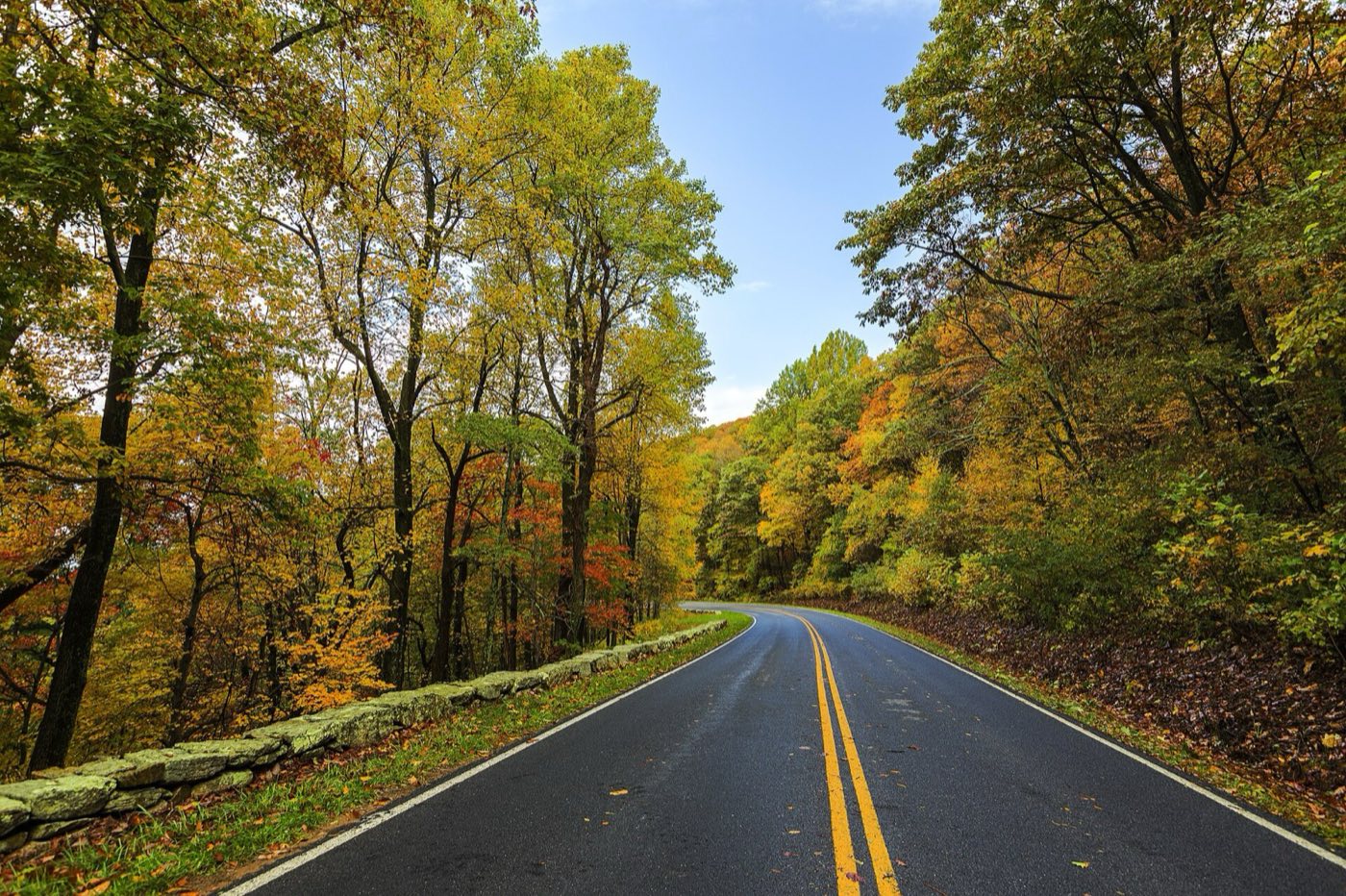
Shenandoah runs like a long ribbon along the crest of Virginia's Blue Ridge Mountains for 105 miles, and almost everyone experiences it through one road: Skyline Drive. The road was carved during the Great Depression by the CCC, it has 75 overlooks, and the speed limit is 35 mph — which is the whole point. A full end-to-end drive takes most of a day, and you won't want to rush it. On either side you look down into the Shenandoah Valley to the west and the Piedmont farmland rolling east toward DC. What the photos don't tell you is how approachable this park is. From Washington, DC, the Front Royal entrance is about 90 minutes away, which means Shenandoah is a common weekend park — it books out hard for fall foliage and the mid-October leaf-peeping weekends are genuinely bumper-to-bumper. Deer materialize at every overlook; black bears are common enough that nearly every visitor sees one; the Appalachian Trail runs 101 miles through the park, paralleling Skyline Drive and dropping into the coves. Build in at least two days so you can actually hike — Old Rag, Dark Hollow Falls, Stony Man — rather than just drive overlooks.
What to See & Do
Skyline Drive — 105 miles along the Blue Ridge crest with 75 overlooks
The park's spine, running from Front Royal at the north to Rockfish Gap at the south where it connects with the Blue Ridge Parkway. Mile markers run north-to-south and orient everything else in the park. Plan 3 hours one-way without stops, a full day with them. The speed limit of 35 mph is strictly enforced and exists for the deer and bears that wander into the road regularly, especially at dusk. In peak fall weekends, expect slow convoys.
Old Rag Mountain scramble — the most popular hike in Virginia
A 9-mile circuit from the Nethers trailhead (outside the park, east side) that ends with a full mile of genuine hand-and-foot rock scrambling through granite passageways to a 3,291-foot summit. A timed-entry permit is required March through November — reserve on recreation.gov. Start early, bring a headlamp, and be honest about your comfort with exposure and boulder squeezes. The summit views are worth the work, but this is not a hike to underestimate.
Dark Hollow Falls — the closest waterfall to Skyline Drive
A 1.4-mile round-trip from Mile 50.7 on Skyline Drive, dropping 440 feet on the way down (and climbing it on the way back) to a 70-foot multi-tiered waterfall. It's the most popular short hike in the park for a reason — the payoff is disproportionate to the effort. Spring snowmelt and after-rain periods are the fullest flow. Parking overflows by mid-morning on weekends; go before 9 a.m. or after 4 p.m.
Stony Man summit for Shenandoah Valley panoramas
A 1.6-mile round-trip lollipop from Mile 41.7, with just 340 feet of gain — the easiest way to stand on a classic Blue Ridge summit. The 4,011-foot top of Stony Man is the second-highest point in the park, and the valley panorama opens to the west toward Luray. Bring a picnic; the rocky outcrops are made for lounging. Combine it with the adjacent Skyland Resort for lunch before or after.
Hawksbill Peak — the park's highest point at 4,051 feet
Two trail options: a short 1.7-mile steep climb from Hawksbill Gap (Mile 45.6), or a 2.9-mile gentler loop from Upper Hawksbill (Mile 46.7). Both end at a summit pavilion and stone viewing platform with a 360-degree view across the Blue Ridge. The summit is one of the best sunrise or sunset spots in the park. Bring a layer even in July — the wind up there can knock ten degrees off the valley temperature.
Whiteoak Canyon cascading waterfalls
A series of six waterfalls along the White Oak Run, accessible from either the top (Mile 42.6 on Skyline Drive, a shorter 4.6-mile round-trip to the upper falls) or the bottom (Berry Hollow trailhead outside the park, 7 miles round-trip past all six). The bottom-up route is the better day if you've got the miles — it follows the creek through hemlock shade. Swimming is not allowed in the pools but wading at the lower falls is common on hot days.
Big Meadows for deer, wildflowers, and stargazing
A 130-acre open meadow at Mile 51, kept open by periodic controlled burning, that serves as the park's most reliable wildlife viewing area. White-tailed deer graze there every evening; black bears, coyotes, and the occasional bobcat pass through. It's also the park's best summer wildflower field — milkweed, asters, black-eyed Susans — and the designated International Dark Sky Park area for stargazing. Big Meadows Lodge and the adjacent visitor center anchor this part of the park.
Getting There & When to Go
Shenandoah is easy to reach. Washington Dulles (IAD) is about 60 miles from the north entrance at Front Royal, and Richmond International (RIC) is about 90 miles from the Rockfish Gap entrance at the south. The park is open 24 hours year-round, though sections of Skyline Drive close in winter storms. Mid-October is the foliage peak and the busiest weekends of the year — arrive at dawn or stay midweek. May and June bring wildflowers, mountain laurel blooms, and peak waterfall flow; July and August are green and warm with afternoon thunderstorms. Winter offers solitude and ice-rimed trails.
Where to Stay
Inside the park, Skyland Resort (Mile 41.7) and Big Meadows Lodge (Mile 51) are the two historic lodges, both run by the park concessioner; both have rooms, cabins, and restaurants with Blue Ridge views. Lewis Mountain has small rustic cabins. The park's four campgrounds — Mathews Arm, Big Meadows, Lewis Mountain, and Loft Mountain — spread along Skyline Drive; reserve on recreation.gov six months ahead for fall. Gateway towns outside the park offer more variety: Front Royal at the north, Luray (with its famous caverns) on the west, and Charlottesville a scenic hour south of the Rockfish Gap exit.
Frequently Asked Questions
- When is the best time to see fall foliage?
- Peak color in Shenandoah typically lands around October 15-25, with higher elevations turning a week earlier than the lower coves. The park publishes weekly fall-color reports in September and October. Weekends during peak are bumper-to-bumper on Skyline Drive — visit on a weekday if at all possible, or arrive at dawn to beat the crowds.
- Do I need a permit for Old Rag?
- Yes — day-use tickets are required for Old Rag Mountain from March 1 through November 30 and must be reserved on recreation.gov up to 30 days in advance. The permit is in addition to the park entrance fee. Off-season (December through February) does not require the ticket, though winter conditions on the rock scramble are dangerous.
- How common are black bear sightings?
- Very common — Shenandoah has one of the densest black bear populations in the East, and most multi-day visitors see at least one. Bears are usually seen in the early morning or evening in meadows, near campgrounds, or along roadsides. Keep 100 feet of distance, never feed them, and use the bear-proof boxes at campsites and picnic areas for all food.
- Is Skyline Drive open in winter?
- Usually yes, but the NPS closes sections temporarily during ice storms, heavy snow, and for freeze-thaw damage. The road is typically passable with caution throughout December, January, and February, and chains or all-season tires may be required. Check the park's road status page before driving up from the DC area in winter.
Plan Your Visit
Book Nearby HotelsShenandoah Planning Guides
Compare focused Shenandoah National Park lodging, itinerary, and activity guides before you book.
Where to stay
Where to Stay Near Shenandoah National Park
Compare where to stay near Shenandoah National Park, including Front Royal, Luray, and Waynesboro along Skyline Drive.
Itinerary
Shenandoah National Park Itinerary
Plan a Shenandoah National Park itinerary with Skyline Drive overlooks, Old Rag Mountain, and peak fall foliage timing.
Things to do
Things to Do in Shenandoah National Park
Explore the best things to do in Shenandoah National Park, including Old Rag Mountain, Skyline Drive overlooks, and waterfall hikes.
Have you visited Shenandoah?
Track all 63 national parks on your map