National Park · AS · Est. 1988
National Park of American Samoa
Overview
The only U.S. national park south of the equator, the National Park of American Samoa is unlike any other in the system — a working cultural landscape rather than a preserved wilderness. The park leases its land from Samoan villages under a 50-year arrangement, and the people who live along its edges still fish the reefs, harvest breadfruit from the forest, and run it by the rules of fa'a Samoa, the Samoan way. The park is spread across three islands in the South Pacific — Tutuila, Ofu, and Ta'u — with no connecting bridges and only a handful of short flights between them. You won't find visitor center shops or lodge buffets. What you will find is coral reef that hasn't been bleached into ghost color, tropical rainforest walked mostly by fruit bats the size of crows, and villages where a guest's arrival still gets offered kava. Most visitors come through Pago Pago, on Tutuila, and stay on the main island — but the park's real gift is Ofu Beach, an arc of white sand fronting a lagoon-like reef you can snorkel from shore. Come for a week, move slow, and accept that plans get rearranged by weather, church services, and Sunday, when the whole country stops.
What to See & Do
Snorkeling pristine coral reefs off Ofu Beach
Ofu Island's park-protected beach is the single best snorkeling in the U.S. national park system and arguably in the entire Pacific. Walk in from the beach in front of the Vaoto Lodge, and within 50 feet you're above living coral gardens with reef sharks, parrotfish, and giant clams. Because the reef is geographically isolated and the water stays cool from deep-ocean currents, it has largely escaped the bleaching that has devastated reefs elsewhere. Go at low tide for the easiest entry; wear reef shoes.
Mount Alava trail and aerial tramway route on Tutuila
The most-hiked trail in the park climbs from the Fagasa Pass to the 1,610-foot summit of Mount Alava, following the cut line of the old aerial tramway that once shuttled workers to the ridge. The round-trip is 5.6 miles and takes most of a morning. The payoff is a panoramic view down onto Pago Pago Harbor — one of the deepest natural harbors in the Pacific — framed by palms and the ridge dropping straight into the sea. Start early; the humidity is brutal by 11 a.m.
Homestay program experiencing fa'a Samoa culture
The park runs a homestay program matching visitors with Samoan families in villages on Tutuila, Ofu, and Ta'u. You stay in the family's open fale (traditional house), eat what they cook, and take part in whatever they're doing — a church service, a weaving session, a communal fishing trip. It's the best way to understand fa'a Samoa, the Samoan way of life, which is the park's other protected resource alongside the reef. Book through the park's visitor services office with several weeks of lead time.
Flying fox (fruit bat) colonies in the rainforest canopy
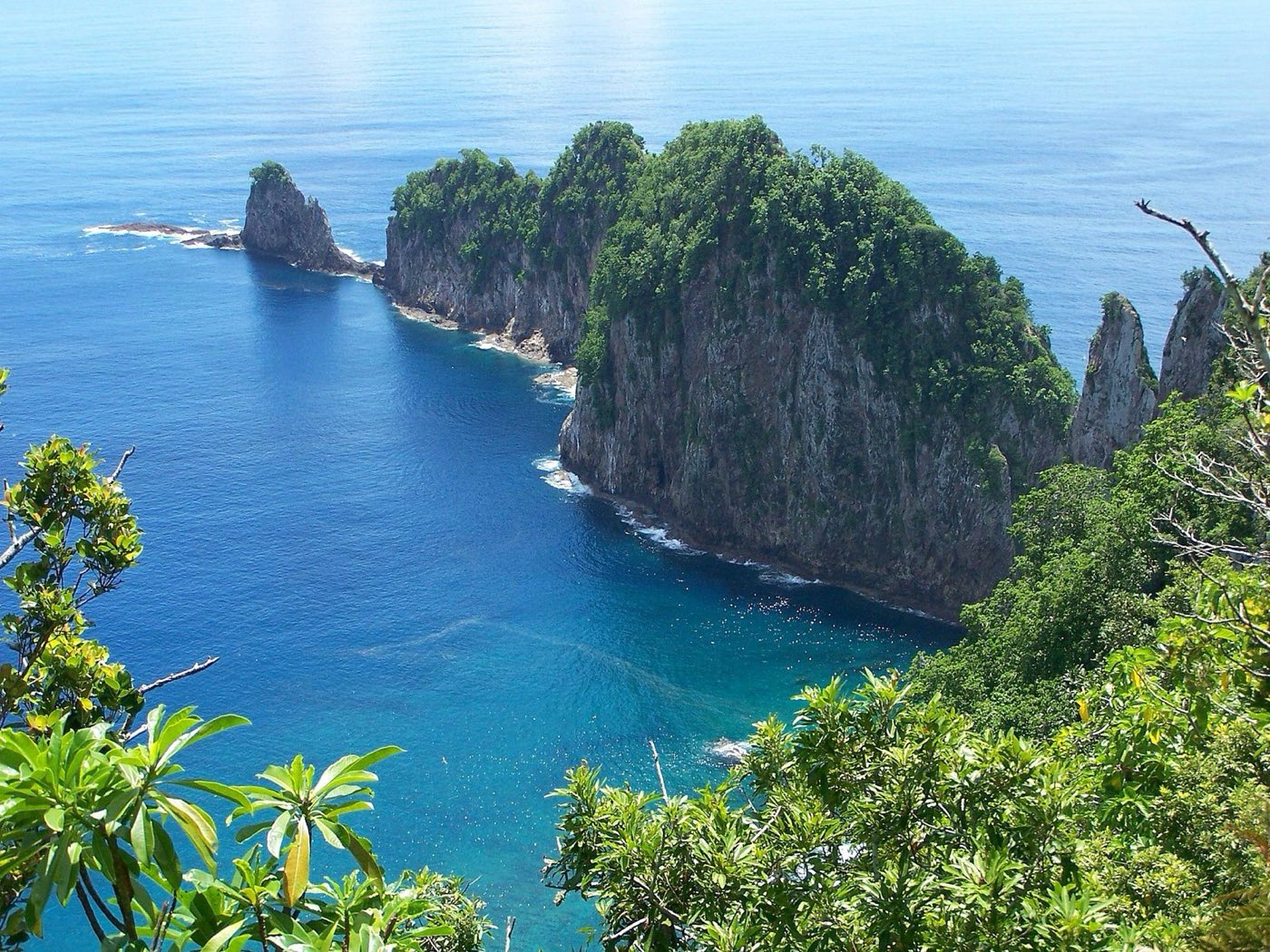
American Samoa is one of the few places in the U.S. where you'll look up and see large fruit bats — locally called pe'a — gliding between forest canopy trees with three-foot wingspans. Two species live here, and both are active in daylight. The Pola Island overlook on Tutuila's north shore is one of the most reliable places to watch a colony roosting and crossing the lagoon. Bring binoculars; they're high and fast.
Ofu Island's untouched white sand beach
Even if you don't snorkel, the three-mile arc of Ofu Beach is worth the flight. A single lodge, a palm-lined dirt road, and a lagoon of turquoise water in front of a jagged green ridge — no resort development, no crowds, and often no other visitors. Walk the full length at low tide for shells and driftwood, swim at the protected reef end, and plan for a sunset from the west end of the beach with the Ofu volcanic plugs silhouetted behind you.
World War II heritage sites on Tutuila
Pago Pago was a major U.S. Navy base during World War II, and coastal defenses built in the 1940s still dot the Tutuila shoreline. The Blunts Point and Breakers Point gun emplacements face out to the Pacific from short trails on the eastern side of the island, and the Tula and Mount 'Alava pillboxes are accessible as short detours off the main road. Small signs mark the sites; bring water and expect warm, overgrown paths.
Rainforest hike through Ta'u Island's cloud forest
Ta'u, the remote eastern island of the park, holds one of the largest intact paleotropical rainforests in the U.S. The trail to Judds Crater climbs into misty cloud forest dripping with epiphytes and ferns, with views east toward the open Pacific. Getting to Ta'u takes a small-plane flight from Tutuila and often a villager as a guide — arrange through the park's visitor services. This is a full-day commitment and the least-visited corner of the park.
Getting There & When to Go
Pago Pago International Airport on Tutuila is the only gateway, with twice-weekly flights from Honolulu on Hawaiian Airlines — plan on a long travel day from the U.S. mainland. From Tutuila, small-plane flights connect to Ofu and Ta'u a few times a week, weather permitting, on Samoa Airways or charter. The dry season from June through September has the most reliable weather, least rain, and best snorkeling visibility. Cyclone season runs November through April. Remember that American Samoa observes Sunday as a full day of rest — most businesses close and hiking is discouraged out of respect for local custom.
Where to Stay
On Tutuila, Tradewinds Hotel in Pago Pago is the main full-service option, with a pool and restaurant; Sadie's by the Sea is a smaller beachfront hotel on the airport side of the harbor. On Ofu, Vaoto Lodge is the only game in town, a family-run guesthouse right on the park's best beach — reserve months ahead. On Ta'u, accommodation is limited to a small village guesthouse and the park's homestay program. The homestay program, run through the park's visitor services office, places you with Samoan families in traditional fale (open-walled houses) and is the single most memorable way to experience the country if you're willing to travel light.
Frequently Asked Questions
- Do I need a passport to visit American Samoa?
- U.S. citizens technically don't need a passport to enter American Samoa, but most airlines require one at check-in for the Honolulu-to-Pago Pago flight, and you'll need it for any onward international travel. Bring your passport and you'll avoid any issues. Non-U.S. citizens need a passport and should check entry requirements in advance.
- Is there an entrance fee for the park?
- No — the National Park of American Samoa has no entrance fee. The park is leased from local villages under a long-term agreement, and access to most areas is free. Some homestays, boat trips, and guided activities through villages and local operators have their own fees paid directly to them.
- What happens on Sundays in American Samoa?
- Sunday is observed as a strict day of rest across the country — most restaurants, stores, and activities close, church attendance is near-universal, and even recreational hiking and swimming in some villages is considered disrespectful. Plan your trip so you're in your lodging for most of Sunday, or attend a church service as a respectful guest. Saturday and Monday are fair game.
- Are the reefs really healthier than elsewhere in the Pacific?
- Yes — while no reef in the world is unaffected, American Samoa's reefs have suffered less bleaching than most because of the region's oceanography and a natural population of heat-tolerant corals. Ofu's reef in particular is a scientific study site for coral resilience. You'll see living coral in colors and densities most snorkelers no longer find elsewhere.
Plan Your Visit
Book Nearby HotelsHave you visited National Park of American Samoa?
Track all 63 national parks on your map