National Park · AK · Est. 1980
Lake Clark
Overview
Lake Clark sits across Cook Inlet from Anchorage — only about 120 air miles from the city, but an entirely separate world. There are no roads into the park. Every visit starts with a one-hour floatplane flight from Anchorage, Homer, or Kenai, typically $500 to $900 per person roundtrip depending on landing location and operator. What the plane lands on varies: the turquoise-green water of Lake Clark itself, a sedge meadow on the Cook Inlet coast, or a gravel strip at Port Alsworth, the park's main human community and service hub. The draw is a remarkable range of Alaska compressed into one park. Two active volcanoes — Redoubt and Iliamna — anchor the skyline. One of the largest sockeye salmon runs on Earth pulses up the Kvichak River system through July and August, and brown bears pile onto the coastal flats at Chinitna Bay and Silver Salmon Creek to feed. Unlike Katmai's Brooks Falls, there's no platform here; you walk out onto a tidal meadow with a guide, sit quietly, and bears graze 30 to 60 yards away. Port Alsworth is also where conservationist and wilderness writer Dick Proenneke spent thirty years building a cabin by hand and filming his life; that cabin is preserved on Upper Twin Lake. Weather controls everything here — a marine layer over Cook Inlet will strand you for a day, and floatplane operators cheerfully rebook when the clouds come down. Build at least one flex day into any itinerary.
What to See & Do
Brown bear viewing at Chinitna Bay and Silver Salmon Creek
Chinitna Bay and Silver Salmon Creek are the two classic bear-viewing destinations on the park's coast, and both have the same formula: floatplane from Homer or Anchorage (about an hour), then a guide walks a small group across a sedge-grass meadow to sit quietly while brown bears feed on grass, dig for clams, and fish the creek mouth. Peak coastal bear activity is June and July on the sedge, then August for salmon. Full-day trips run $800 to $1,200 per person including flight, guide, and gear. No guarantees — weather cancels flights routinely.
Floatplane landing on turquoise Lake Clark
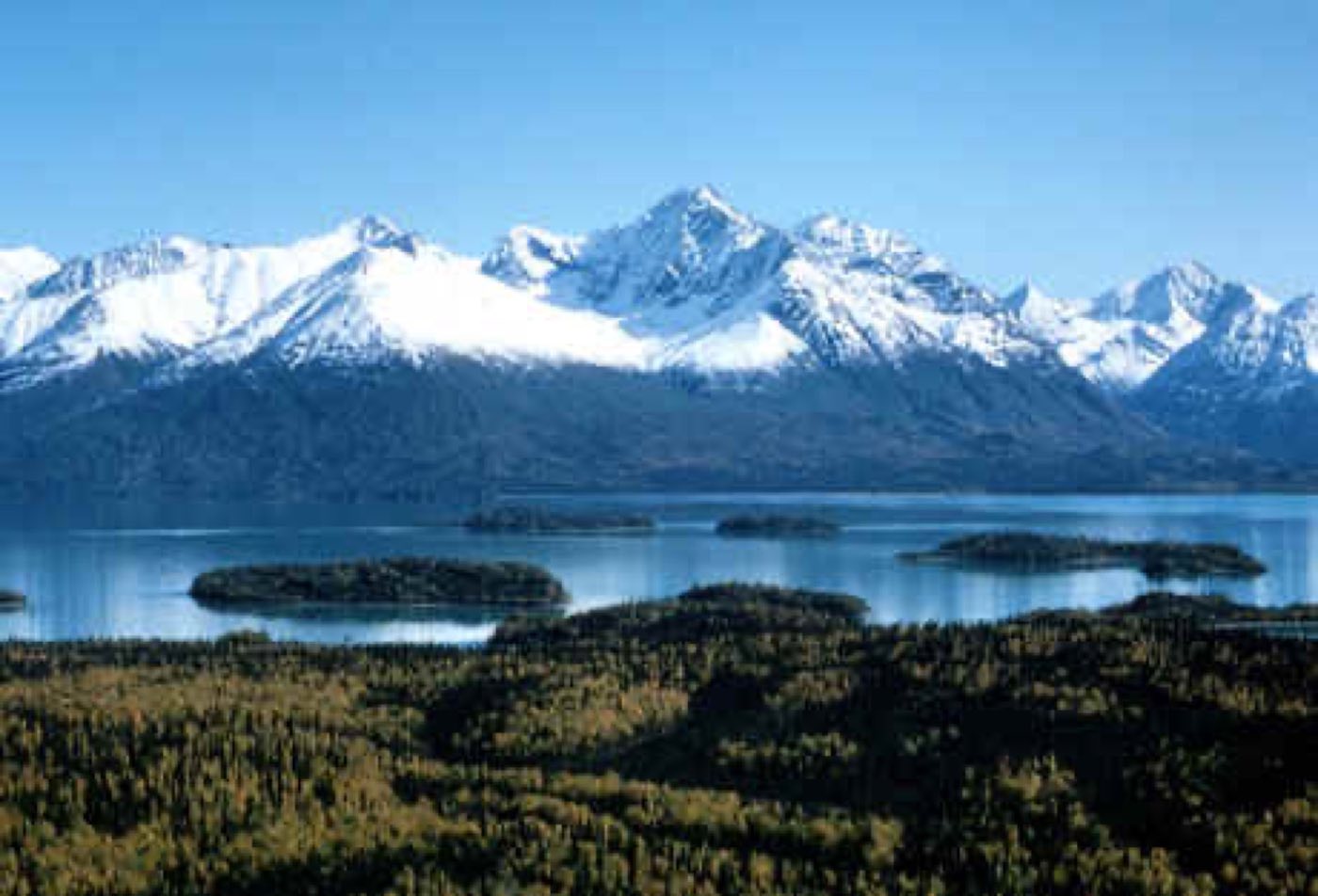
The flight in is half the experience. From Anchorage, a floatplane crosses Cook Inlet past the smoking cone of Mount Redoubt, threads through the Chigmit Mountains, and drops onto Lake Clark — 42 miles of water colored an improbable blue-green from glacial rock flour suspended in the meltwater. Most flights land at Port Alsworth, a tiny community of about 180 people on the lake's southeast shore. The water is bracingly cold but clear; many visitors swim a stroke or two just to say they did it.
Sockeye salmon run watching (July–August)
Lake Clark is part of the Kvichak River watershed, which hosts one of the largest sockeye salmon runs on Earth — tens of millions of fish returning each summer. From mid-July through August, streams across the park turn red with spawning salmon, and bears, bald eagles, gulls, and river otters show up to feast. Small creeks off Lake Clark are easy to walk beside with a guide from Port Alsworth; you'll hear the sound of thousands of fish thrashing upstream before you see them. Bring polarized sunglasses to see through the surface glare.
Redoubt and Iliamna volcano views
Two 10,000-foot active volcanoes dominate the park's skyline — Mount Redoubt (10,197 feet), which last erupted in 2009, and Mount Iliamna (10,016 feet), which steams year-round from fumaroles near the summit. The best views are from floatplane en route and from the coastal meadows of Chinitna Bay, where Iliamna rises directly inland. On clear days in late summer, early morning light hits the snow and ice of both peaks and turns them flamingo-pink. Bring a long lens or binoculars; they're farther away than they look across the flat meadows.
Tanalian Falls trail from Port Alsworth
The Tanalian Falls trail is the one established footpath in the park and the best day hike for Port Alsworth-based visitors — about 4 miles roundtrip through spruce forest to a 40-foot waterfall on the Tanalian River, then an optional climb up Tanalian Mountain for Lake Clark overlooks. Fit hikers make it to the falls in an hour; the mountain extension adds three to four hours. Carry bear spray and make noise in the forest sections — black bear sightings are common. Trailhead is a short walk from the National Park Service's Port Alsworth visitor center.
Fly-fishing for rainbow trout and salmon
The Kvichak drainage and its tributaries hold a famous population of giant rainbow trout that follow the salmon run to feed on flesh and eggs — fish of 20 to 28 inches are routine, and bigger are possible. Fly-fishing lodges at Lake Clark (Tulchina, Lake Clark Resort, Koksetna Camp) run all-inclusive packages from $5,000 to $8,000 per person for a week, with bush planes shuttling you to rivers. Independent anglers can hire day-guides out of Port Alsworth. Barbless hooks and single-hook flies are required in much of the park.
Twin Lakes wilderness cabin experience
Upper Twin Lake, about 40 miles north of Lake Clark proper, is where Dick Proenneke hand-built his cabin in 1968 and lived alone for three decades, documenting the experience in journals and 16mm film that became the classic 'Alone in the Wilderness.' The cabin is preserved as a historic site, staffed by volunteers in summer, and reached by floatplane from Port Alsworth or Anchorage. A visit is typically a day trip, including a tour of the cabin and a walk along the lake; a few Park Service public-use cabins nearby can be booked for overnights.
Getting There & When to Go
There is no road into Lake Clark. Floatplane operators out of Anchorage (Lake Clark Air, Rust's Flying Service), Homer (Bald Mountain Air), and Kenai run one-hour flights to Port Alsworth, Chinitna Bay, or Silver Salmon Creek for roughly $500 to $900 per person roundtrip. Peak season is June through early September; July and August are the reliable months for bear viewing and salmon fishing. June has midnight sun but peak mosquitoes. Weather cancellations are routine, especially when a low marine layer sits over Cook Inlet — build at least one flex day into any itinerary. Flightseeing day-trips from Anchorage give you a taste without overnighting.
Where to Stay
Port Alsworth has a handful of family-run lodges — Farm Lodge, The Farm Inn, Koksetna Camp — running roughly $400 to $700 per night with meals included. Fly-fishing and bear-viewing lodges deeper in the park (Tulchina, Silver Salmon Creek Lodge, Redoubt Bay Lodge) run all-inclusive weekly packages from $5,000 to $10,000 per person. Public-use cabins at Upper Twin Lake and Telaquana Lake are primitive ($75 per night, lottery reservation) and require you to pack in all gear and food. Backcountry camping is unregulated across the park — find a spot, pitch a tent, follow bear-safe food storage. There is no service in the park beyond Port Alsworth.
Frequently Asked Questions
- How do I get to Lake Clark?
- Only by floatplane or small aircraft. Anchorage, Homer, and Kenai are the three main departure points, with one-hour flights to Port Alsworth or the coastal bear-viewing areas. Roundtrip airfare runs $500 to $900 per person for day trips, more for weekly lodge transfers. The town of Port Alsworth has a gravel airstrip; wilderness areas are accessed only by floatplane landing on lakes and beaches.
- When is the best time for bear viewing in Lake Clark?
- June and July for bears grazing on sedge grass along the Cook Inlet coast at Chinitna Bay and Silver Salmon Creek, and August for the salmon run when bears shift to fishing. Full-day guided trips flying out of Homer or Anchorage are the easiest option — roughly $800 to $1,200 per person — and sightings are near-certain during peak season, weather permitting.
- Can I visit Proenneke's cabin at Twin Lakes?
- Yes — the cabin is preserved by the Park Service and open for self-guided and volunteer-led tours in summer, typically mid-June through mid-September. Most visitors reach it by floatplane from Port Alsworth or Anchorage, either as a day trip or combined with an overnight in one of the nearby public-use cabins. Book flights and cabins well in advance; Twin Lakes is popular with Proenneke enthusiasts.
- Do I need to bring my own food and camping gear?
- If you're staying at a lodge in Port Alsworth or at a fly-in fishing or bear-viewing lodge, all meals and gear are typically included. If you're doing public-use cabins, backcountry camping, or self-supported travel, yes — there are no stores, outfitters, or services beyond Port Alsworth's single small general store, and even that has limited inventory. Plan and pack as if you'll have zero resupply options.
Plan Your Visit
Book Nearby HotelsHave you visited Lake Clark?
Track all 63 national parks on your map