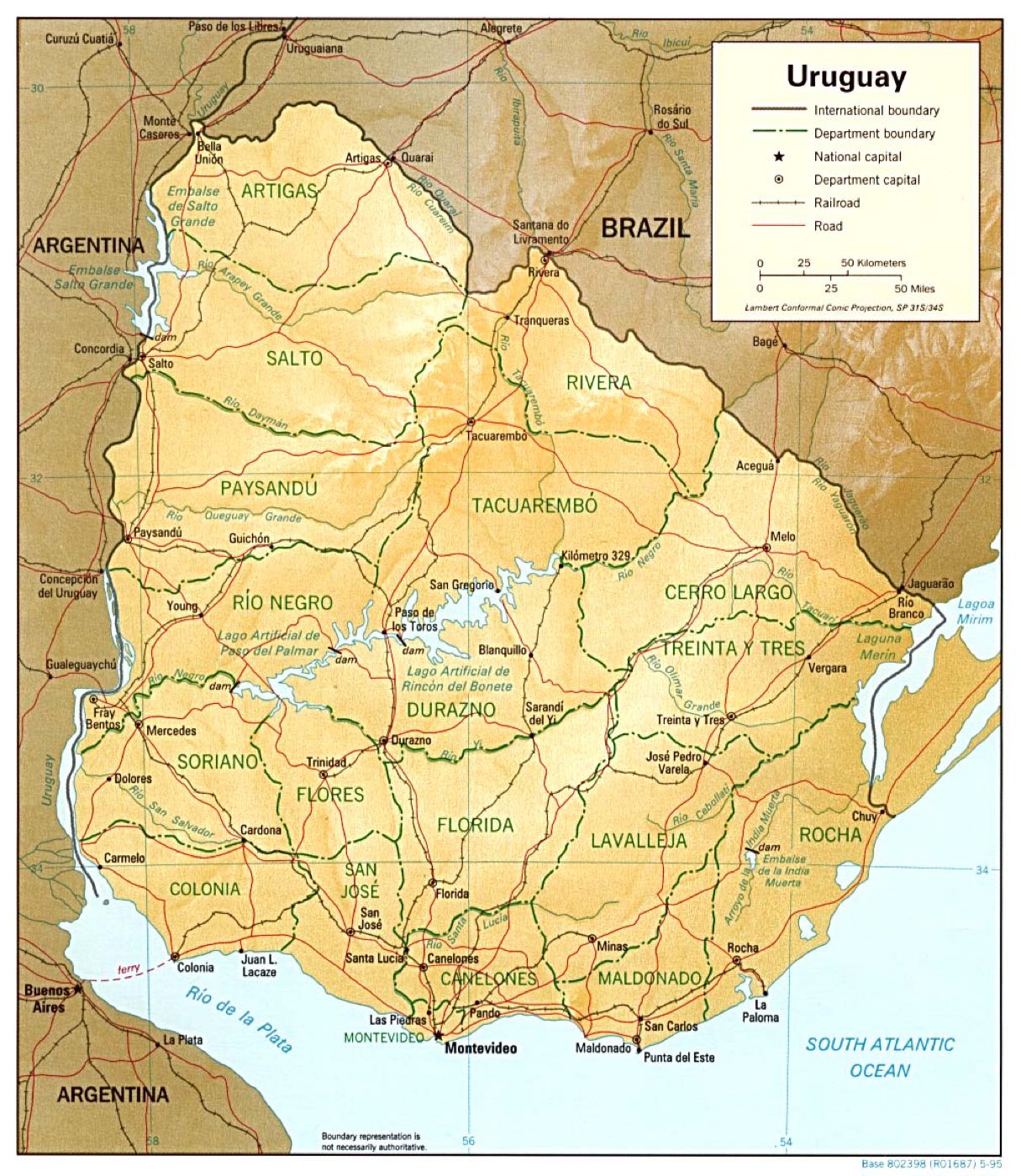
Uruguay
- Capital
- Montevideo
- Population
- 3.4M
- Currency
- UYU
- Languages
- Spanish
Overview
South America's quiet achiever — a small, stable, progressive nation wedged between Argentina and Brazil, with gaucho country in the interior, Atlantic beach towns on the coast, and wine regions that punch well above their weight. Most travelers come for Colonia del Sacramento's cobbled Portuguese colonial streets, Punta del Este's summer glamour, Montevideo's food halls and tango bars, and the long, empty beaches north of the capital. You notice the difference within an hour of arriving. Traffic is calm, strangers say good morning, and the political conversation at the next café table is thoughtful rather than shrill. Uruguay is the country where cannabis is legal and nobody seems to be using it, where public education and healthcare work, and where the beef genuinely is as good as Argentines grudgingly admit. The pace is slow — the national pastime is drinking maté from a gourd with a metal straw, and people do it walking down the street. This is a country of long weekends rather than grand tours. A week gives you Montevideo, Colonia, and a stretch of the Atlantic coast at a comfortable speed. Add a few days if you want to make it as far as the Carmelo wine region or the off-grid dunes of Cabo Polonio. Summer (December through February) is when the country comes alive; the shoulder months are slower and cheaper and just as rewarding if you're not here for the beaches.
Things to Do
Colonia del Sacramento's UNESCO colonial quarter
Founded by the Portuguese in 1680 and fought over for two centuries with the Spanish across the river, Colonia preserves a small, walkable old town of cobbled streets, sycamore trees, and thick-walled houses turned into cafés and wine bars. An afternoon is enough — walk to the lighthouse at the tip of the peninsula, climb it for the view over the Río de la Plata, and settle in for sunset at a terrace bar facing the water. The ferry from Buenos Aires lands here in just over an hour, which makes it the easiest day trip in South America.
Punta del Este beaches and Casapueblo
Uruguay's summer capital runs along a narrow peninsula with Playa Brava on the Atlantic side and Playa Mansa on the calmer river side — the famous fingers-emerging-from-the-sand sculpture is at Brava. In peak season (January) the town is packed with Argentine money and it's not for everyone. Come in November or March for the same beaches without the prices. Twenty minutes west, Casapueblo is the artist Carlos Páez Vilaró's whitewashed cliffside home and hotel; the sunset ceremony on the terrace is cheesy and worth it.
Montevideo's Mercado del Puerto
The cast-iron covered market in the old port is lined with parrillas — grill restaurants — whose pit masters will cook you a steak the size of a paperback over eucalyptus coals. Order a chivito (the national steak sandwich) or a full parrillada for two and add a glass of Tannat, the inky local red. Go Saturday lunch when the whole city seems to show up, live music starts early, and the smoke drifts across the cobbles. Walk it off along the Rambla, the 22-kilometer coastal promenade where everyone in the city eventually ends up.
José Ignacio's boutique beach scene
A half-hour east of Punta del Este, José Ignacio is a small village on a headland with two beaches, one lighthouse, a few dozen restaurants, and more billionaires per capita than is reasonable. You don't need to be one. Rent a simple posada inland, walk down in flip-flops to Parador La Huella — the beachfront restaurant that made the village famous — and eat grilled fish with your feet in the sand. Off-season (November and March) you'll have the beaches to yourself.
Cabo Polonio off-grid sea lion colony
Cabo Polonio is a tiny settlement at the end of an 8-kilometer stretch of dunes, reached only by a rattling 4x4 truck that grinds through the sand from the highway. No electricity (generators and candles only), no running water in most cabins, one lighthouse, and the second-largest sea lion colony on the Atlantic coast. You go for a night or two, eat what the small restaurants cook, and watch the stars — there's genuinely no light pollution. It's one of the more unusual places on the continent to sleep.
Carmelo wine region and Tannat tastings
Uruguay's signature red grape is Tannat, brought from southwestern France in the 19th century and grown here into something more approachable and chocolatey than its French ancestor. The Carmelo region, two hours northwest of Colonia, has a cluster of family bodegas you can visit on a day trip or stay at — Narbona is the best-known for its restaurant and inn. Harvest falls in February and March. Pair with the slow rhythm of the countryside: horses, pastures, occasional gauchos who still dress for the work.
Salto's thermal hot springs
Up in the north near the Argentine border, the town of Salto has a cluster of thermal pools fed by underground springs — Termas del Daymán is the most developed, with a spa hotel and multiple pools at different temperatures. Less glamorous than Punta del Este and less visited by foreigners, which is part of the appeal. Pair with a day at the Salto Grande dam (a hydroelectric project shared with Argentina) or a stop at Parque Nacional San Miguel further along the river. A winter visit, when the pools steam against cold air, is the right call.
When to Go
December through February is summer and prime beach season — this is when Punta del Este, José Ignacio, and the Atlantic coast fill up with Argentines and Brazilians. Prices on the coast double or triple in January, so aim for late November or March for the same weather without the crowds. October to November and March to April are comfortable for Montevideo, Colonia, and the wine country, with mild days and long evenings. Winter (June to August) is cool and grey on the coast but fine for thermal springs up north, and the cities stay active year-round with tango, theatre, and the best steak of your life inside a warm parrilla.
Getting Around
Uruguay is small — 200 miles from Montevideo to the Brazilian border — and buses run everywhere on time, cheaply, and comfortably. COT, CUT, and Copsa are the main lines; book a day ahead for weekends and summer holidays. Renting a car makes sense if you're heading to the wine country, Cabo Polonio, or exploring gaucho estancias inland; roads are well maintained and signed in Spanish. Within Montevideo, the bus network is dense and the STM card lets you tap on and off. Ride-hailing (Uber and local app Cabify) works in the capital and Punta del Este. Ferries from Buenos Aires dock in Colonia and Montevideo — Buquebus and Colonia Express compete for the route.
Cost & Currency
The currency is the Uruguayan peso (UYU), though major hotels and many restaurants on the coast quote in US dollars in summer and will accept them. Uruguay is the most expensive country in South America — expect prices close to Western European levels in Punta del Este in January, and about 30% cheaper everywhere else. Budget roughly US$80–$150 a night for a mid-range hotel in Montevideo, US$15–$25 for a parrilla dinner with wine, and US$3–$4 for a good coffee. ATMs dispense pesos or dollars. Cards are accepted nearly everywhere including small cafés; tipping is modest, around 10% at sit-down restaurants and rounding up on taxi fares.
Frequently Asked Questions
- Do I need a visa to visit Uruguay?
- Most Western travelers, including US, UK, EU, Canadian, Australian, and New Zealand citizens, can enter visa-free for up to 90 days with a passport valid six months beyond arrival. You'll get a stamp on entry. No pre-arrival application is needed, but keep proof of onward travel and a rough itinerary handy in case immigration asks.
- How do I get there from Buenos Aires?
- The fast ferry from Puerto Madero in Buenos Aires to Colonia del Sacramento takes just over an hour; Buquebus and Colonia Express run multiple crossings a day and it's the most common route. For Montevideo directly, the ferry takes about 2.5 hours. Book online a week ahead in summer for better fares. Many travelers do an overnight in Colonia and bus on to Montevideo the next morning.
- Is Uruguay safe for travelers?
- Yes — Uruguay is one of the safest countries in Latin America, with low violent crime and a stable political environment. Petty theft and bag-snatching happen in central Montevideo, especially around the Ciudad Vieja after dark; use normal city sense, don't flash phones, and take a ride-hail home late at night. Punta del Este and the beach towns are very safe.
- What should I eat?
- Beef, first — the asado (grill) is a national ritual, and Uruguayan cuts are arguably better than Argentine. The chivito is a steak-and-egg sandwich piled with ham, cheese, bacon, and olives; order it at any Montevideo lunch counter. Don't miss the dulce de leche in everything, Tannat red wine with dinner, and fresh fish along the Atlantic coast. Maté (the herbal infusion) is everywhere; try it, but locals drink it socially rather than at restaurants.
- Is English widely spoken?
- Some — in Montevideo's tourist areas, in Punta del Este and José Ignacio in summer, and at higher-end hotels, you'll find enough English to get by. Outside those zones, Spanish is the working language and a phrasebook will make the trip considerably smoother. Uruguayans speak a soft, sing-song Rioplatense Spanish close to Argentine; if you know Spanish from Spain, you'll adjust quickly.
Plan a Trip to Uruguay
Have you been to Uruguay?
Track 195 countries, 50 states & 63 national parks on your map