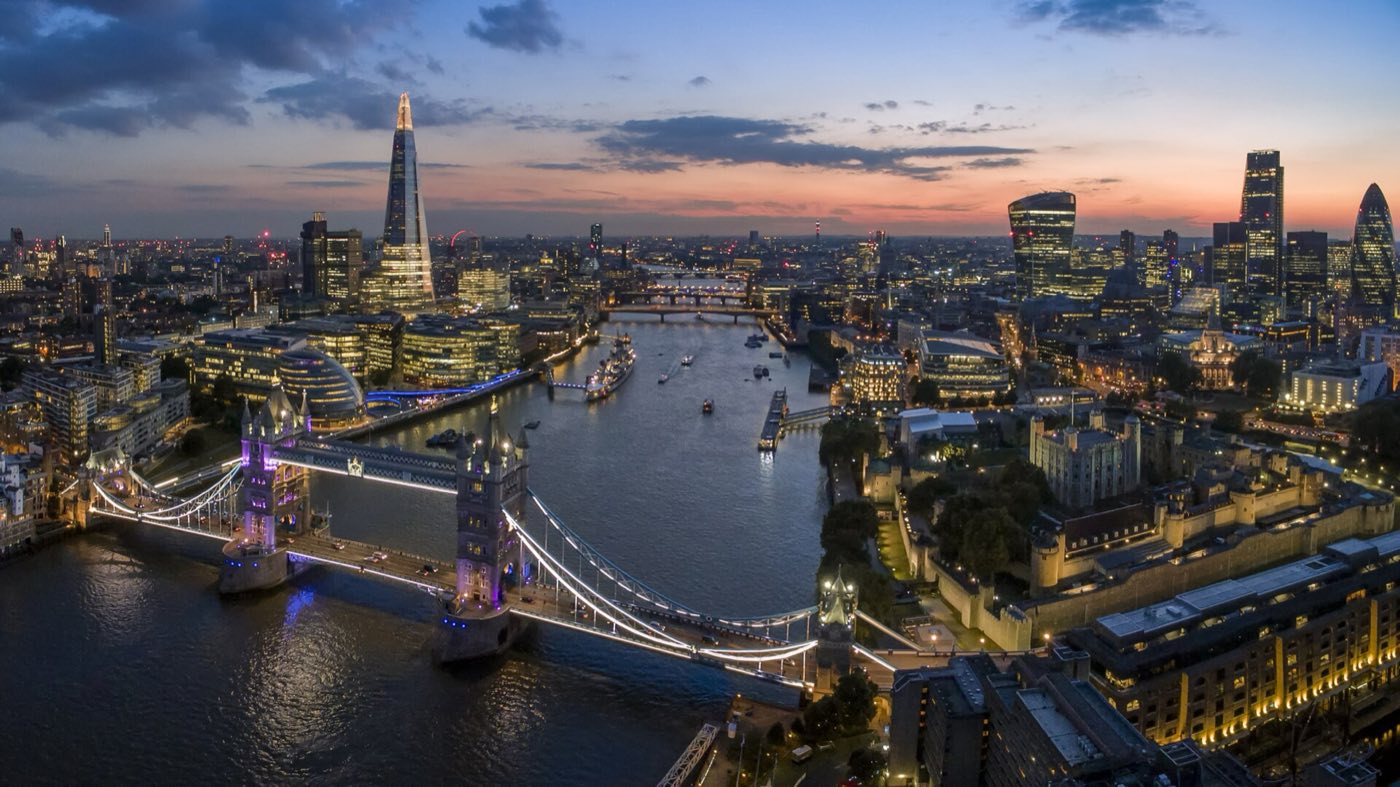
United Kingdom
- Capital
- London
- Population
- 67.7M
- Currency
- GBP
- Languages
- English
Overview
The UK is four countries in one — England, Scotland, Wales, and Northern Ireland — packed into an island nation slightly smaller than Oregon and exporting a disproportionate share of the world's culture, from Shakespeare and the Brontës to the Beatles, David Attenborough, and whichever Premier League fixture your taxi driver is arguing about. Most visitors start in London and never really leave, which is a shame — the country changes character every hour you drive. The texture is what surprises. An hour northwest of London, the Cotswolds slow into honey-colored villages where the pub is still the center of the social week. Six hours north by train, Edinburgh stacks medieval closes onto a volcanic ridge and in August turns into the largest arts festival on the planet. West of there, the Highlands open into empty glens, single-track roads, and water — lochs and sea — that changes color every 15 minutes as the weather moves through. Wales keeps its own language on the road signs and has a coastline to rival Cornwall's; Northern Ireland's Antrim coast holds the Giant's Causeway and some of the best stretches of walking in the British Isles. The UK rewards travelers willing to use the train network — one of Europe's densest — and to go beyond the obvious. Eat at the good pubs (the food revolution of the last 25 years is real), drink at the good ones, take the scenic railway lines (West Highland to Mallaig, the Settle-Carlisle, the Conwy Valley), and accept that it will rain on you at some point. Bring a waterproof jacket you genuinely like, and everything else becomes easier.
Things to Do
British Museum and Tower of London
The British Museum's eight million-object collection covers the entire span of human history — the Rosetta Stone, the Parthenon marbles, Assyrian reliefs, the Sutton Hoo treasure — and remains free to enter, as do most major London museums. Downriver, the Tower of London is a working royal palace and prison turned national monument, home to the Crown Jewels and a thousand years of history condensed into a compact stone complex. Do the Tower in the morning with a Yeoman Warder tour, the museum in the afternoon, and allow a full half-day for each.
Edinburgh Castle and the Royal Mile
Edinburgh's castle sits on a volcanic plug above the city and has been in some form of fortification for 900 years. From its battlements the Royal Mile runs downhill past St Giles' Cathedral, the narrow medieval closes of the old town, and the Scottish Parliament to Holyrood Palace at the bottom. Do it on foot in either direction; stop at the Writers' Museum, duck into a pub for a half-pint of something local, and catch the One O'Clock Gun fired from the castle if you're nearby. In August the Fringe adds 50,000 shows to the mix.
Stonehenge and Bath's Roman Baths
The ring of 5,000-year-old sarsen stones on Salisbury Plain remains one of Europe's most significant prehistoric sites, and the visitor center has improved it considerably — the monument is now approached on foot from a distance, with interpretation that takes the engineering and astronomy seriously. Pair with a short drive to Bath, where a Roman temple complex around a hot spring has been excavated under the Georgian city above. The steaming pool at the center of the Baths, viewed from the terrace, is genuinely moving. An easy day trip from London by train or on a tour.
Scottish Highlands and Loch Ness
North of Edinburgh the country opens into mountain, glen, and loch — Glencoe, Rannoch Moor, Ben Nevis, the Cairngorms — on a scale most visitors underestimate until they're driving it. The A82 takes you up the western side past Loch Ness; the Caledonian Sleeper from London Euston deposits you in Fort William at breakfast. Two full days minimum to do the Highlands any justice, longer if you head out to Skye. Pack layers and accept that Nessie is a joke everyone sells postcards of; the scenery doesn't need her.
Lake District hiking and literary history
The Lake District's 16 major lakes and 214 named peaks squeeze into a corner of northwestern England that inspired Wordsworth, Coleridge, Beatrix Potter, and Arthur Ransome. Helvellyn and Scafell Pike are the classic summit hikes; Ullswater, Derwentwater, and Wastwater the most scenic lakes. Base in Ambleside or Keswick, rent walking boots if you haven't brought them, and spend evenings in the pubs that have been serving walkers for centuries. Grasmere gingerbread is the local edible souvenir.
Cotswolds honey-stone villages
The Cotswolds cover 800 square miles of rolling English countryside west of Oxford, dotted with villages built from the same pale golden limestone — Bibury, Castle Combe, Stow-on-the-Wold, Broadway, Bourton-on-the-Water. The pace is slow, the pubs are properly good, and the walking is gentle, on well-marked paths through fields of sheep. Stay in one of the villages rather than passing through; two nights lets you shake the London rush. A car helps enormously since public transport is thin out here.
Oxford and Cambridge university towns
Oxford and Cambridge are both doable as day trips from London — an hour by train — and both reward a longer stay. Each is essentially a collection of medieval and Renaissance colleges arranged around central streets, with chapels, gardens, and libraries most of which are open to the public outside exam periods. Punting on the Cam in Cambridge or the Cherwell in Oxford is the touristic set piece and genuinely pleasant on a sunny afternoon. Evensong in King's College Chapel (Cambridge) or Christ Church (Oxford) is free and beautiful.
West End theatre in London
London's West End runs more than 40 theatres across the Covent Garden and Soho area and remains, with New York's Broadway, one of the two English-language theatre capitals. Same-day tickets through the TKTS booth in Leicester Square can get you serious discounts; the National Theatre on the South Bank often has the best productions in town at lower prices. Shakespeare's Globe, a reconstruction near the river, does summer-season productions in the open air — grab a 'groundling' standing ticket for five pounds and watch Hamlet the way the Elizabethans did.
When to Go
May through September offers the longest days, warmest weather, and the highest chance of consistent sun — though 'consistent' is relative; rain is possible in any month. June and early July are peak for English gardens and the Scottish Highlands; August is the Edinburgh Festival, which is extraordinary and extremely busy. September brings heather in bloom on the moors and good walking weather. The winter months, October through March, are dark by 4pm but atmospheric — Christmas markets, pantomime season in London, cheaper accommodation, and the West End at its best. Pack for weather changes regardless of season.
Getting Around
The UK rail network is one of Europe's densest and connects every place most visitors want to go; book a few weeks ahead through Trainline or direct for the cheapest advance fares, and consider a BritRail pass for multi-city trips. London's Tube, Glasgow's Subway, and local suburban networks handle cities; London black cabs and Uber fill gaps. Driving is sensible for the Cotswolds, the Highlands, the Lake District, and rural Wales, bearing in mind that you drive on the left, country lanes can be extremely narrow, and single-track roads in Scotland require patience at passing places. National Express and Megabus are the budget intercity coach options.
Cost & Currency
The UK uses the pound sterling (GBP), consistently one of the stronger currencies against the US dollar — budget accordingly. London is expensive: mid-range hotel rooms run GBP 150–250 per night, a sit-down dinner for two without wine GBP 60–90, a pint of beer GBP 6–8. Outside London costs drop by 30 to 40 percent — Edinburgh, Manchester, Bristol all feel noticeably more reasonable. Cards are accepted almost everywhere including contactless on the London Tube and buses; cash is now genuinely optional. Tipping is lighter than in the US — round up or leave 10% at restaurants if service is good, nothing in pubs unless you're being served at a table.
Frequently Asked Questions
- Do I need a visa to visit the UK?
- As of 2026, visitors from the US, EU, Australia, New Zealand, Canada, and many other countries need an Electronic Travel Authorisation (ETA) before departure — a simple online form costing GBP 10, approved within 72 hours, valid for multiple visits over two years. Some other nationalities need a standard visitor visa applied for in advance. Check the UK government's immigration pages against your specific passport.
- How long should I plan for a first UK trip?
- Ten days is comfortable for a first visit: four nights in London, a day trip to Oxford or Bath, then up to Edinburgh by train for three nights with a Highland day or overnight, and a last two nights in the Cotswolds or Lake District before flying home. Two weeks lets you add either the Scottish west coast and Skye, the Welsh coast, or Northern Ireland's Causeway Coast. Shorter than a week and you'll wish you had more time.
- Is the tap water safe to drink?
- Yes, tap water is potable throughout the UK and is among the most tightly regulated in Europe. Restaurants will usually bring a jug if you ask for tap water; carry a reusable bottle and refill at public fountains or your accommodation. Scottish water, from the Highlands in particular, is often soft and excellent — worth drinking rather than buying bottled.
- What's the best way to get from London to Scotland?
- The LNER East Coast line gets you from London King's Cross to Edinburgh Waverley in about 4 hours 20 minutes with a reserved seat; the West Coast line via Virgin and Avanti serves Glasgow in roughly the same time from Euston. For a more memorable option, the Caledonian Sleeper overnight train leaves London around 11pm and delivers you to Edinburgh, Glasgow, Fort William, or Inverness at breakfast. Flights are quicker in pure travel time but not once you factor in airports.
- Can I use US or European plugs and phones in the UK?
- The UK uses Type G three-prong plugs at 230V — bring an adapter; most laptop and phone chargers handle the voltage automatically but double-check older appliances. Mobile phones from major carriers work on UK networks; EU visitors lost free roaming after Brexit and should check roaming charges, while US visitors with international plans (T-Mobile, Google Fi) usually get reasonable data rates. Prepaid UK SIMs from Giffgaff or EE are easy to pick up for longer stays.
Plan a Trip to United Kingdom
Have you been to United Kingdom?
Track 195 countries, 50 states & 63 national parks on your map