Portugal
- Capital
- Lisbon
- Population
- 10.3M
- Currency
- EUR
- Languages
- Portuguese
Overview
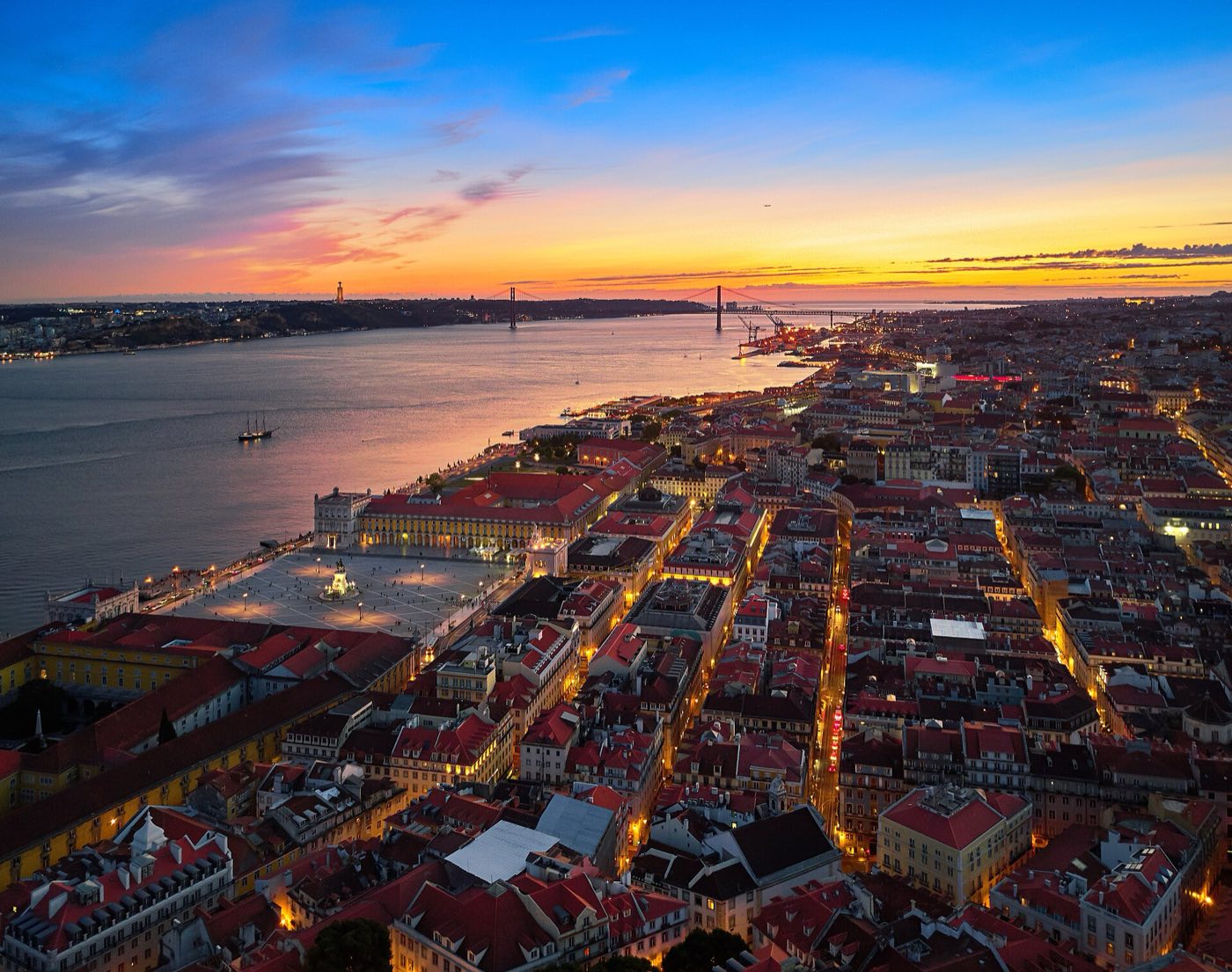
A western European nation of fado music, sun-bleached azulejo tiles, Atlantic-facing cliffs, and a maritime heritage that once connected the world. Visitors come for Lisbon's tram-threaded hills and custard tarts, the Douro Valley's vine-terraced riverbanks, surfing the Algarve, and Sintra's fairytale palaces. What stays with you is the light. It's pale and oceanic, spilling across tiled facades at a low angle Europe doesn't have anywhere else, and it gives even working-class neighborhoods the quality of a painting. You'll notice it most in Lisbon around five in the afternoon, when the trams start climbing back up to Graça and the pastel buildings glow against dark-blue river water. Portugal rewards travelers who like their cities walkable, their food unfussy, and their scenery earned. It's a country of slow lunches, afternoon coffees taken standing at tiled counters, and dinners that start at nine. If you want cities that feel lived-in rather than curated for tourists, ridge-top castles reached by winding trains, and beaches where the Atlantic does all the talking — this is a country that will hold your attention for a week or three.
Things to Do
Lisbon's Alfama district and Tram 28
The oldest neighborhood in the capital is a maze of alleys too narrow for cars, where laundry hangs across balconies and the smell of grilled sardines drifts out of small tascas. Board Tram 28 near the cathedral and ride it up through the tangle of hills toward Graça; stand near the back for the full rattle-and-lurch experience. Get off wherever it looks interesting — you'll find your way back eventually, or you won't, and that's fine too.
Sintra's Pena Palace and Moorish castle
A short train ride from Lisbon climbs into a forested ridge where 19th-century kings built their summer retreat. Pena Palace sits at the top in yellow, red, and violet — a romantic-era fantasy of towers and turrets visible from miles down the coast. Pair it with the Moorish Castle ruins nearby, whose stone walls trace the same ridge and offer a different kind of view: quieter, older, still half-reclaimed by moss.
Porto's Ribeira district and port wine cellars
The Douro River curves past the old waterfront, lined with stacked orange-roofed houses and the rabelo boats that once carried barrels downstream. Cross the Dom Luís I Bridge on foot to Vila Nova de Gaia, where the port wine lodges have run their tastings for two centuries. Stay for sunset at Jardim do Morro, when the whole city turns the color of the wine you just tasted.
Douro Valley wine cruise
A slow boat up the Douro from Porto threads you between terraced vineyards carved into near-vertical slopes — UNESCO-protected since 2001 and unchanged for much longer. Stop at a quinta for lunch on a terrace overlooking the river, and expect the tastings to start before noon. The one-day cruises return by train; the two-day ones let the valley settle into you properly.
Algarve coast sea caves and beaches
Southern Portugal's coastline is limestone cliff, sandstone arch, and pocket cove all the way from Lagos to Tavira. Benagil Cave is the one everyone photographs, but a boat tour from Lagos pulls into four or five equally strange grottos in an afternoon. For swimming, Praia da Marinha and Praia do Camilo deliver the postcard version — wide sand, warm water from June to September, cliffs that drop straight down.
Belém Tower and Pastéis de Belém
A tram ride west of central Lisbon drops you at the riverside neighborhood where Portugal's age-of-discovery fleets departed. Belém Tower is the ornate, sea-facing landmark; the Jerónimos Monastery across the road is more impressive still, its cloisters carved in the florid Manueline style. Then walk fifty yards to Pastéis de Belém, the bakery with the original 1837 recipe — order three, eat them at the counter, dust them with cinnamon.
Nazaré big-wave surfing
From October through February, Atlantic swells funnel through an underwater canyon and rear up as 60- and 80-foot walls just off the headland at Praia do Norte. You watch from the cliff at Sítio, where the lighthouse has become a semi-official viewing platform. Even if no surfers are out, the ocean's scale here is worth the two-hour drive from Lisbon — the rest of the time it's a sleepy fishing town with the best grilled fish on the coast.
Évora's Roman Temple and Chapel of Bones
In the Alentejo plains two hours east of Lisbon, Évora preserves a walled medieval city on a hilltop. At its center stand the columns of a Roman temple — often called the Temple of Diana — and a few blocks away the Capela dos Ossos lines its interior walls with the bones of 5,000 monks. Spend a night; the Alentejo's black-pork stews, red wines, and cork-oak landscapes reward the stop.
When to Go
April through June and September through October are the stretches to aim for — warm days, long evenings, and prices that haven't yet been pulled upward by August crowds. The Algarve coast is glorious from May through September, when the water finally warms up enough to swim in for real. Lisbon and Porto stay pleasant year-round; even in January you'll have cool, clear afternoons for walking, and the major festivals — Santo António in Lisbon in June, São João in Porto that same month — fall in the mild shoulder weeks.
Getting Around
Trains connect the main cities on a fast intercity network — Lisbon to Porto in just under three hours, Lisbon to Faro in about the same. Renting a car is the right call for the Douro Valley, the Alentejo interior, or driving the full Algarve coast, and roads are well signed though rural ones can narrow sharply. Within Lisbon and Porto the metro plus old funiculars and trams will take you almost anywhere worth going; ride-hailing fills the gaps cheaply. Highway tolls use an electronic system, so pick up a tag at the rental counter. Buses are the backbone anywhere trains don't reach, including to smaller coastal towns in the Algarve.
Cost & Currency
Portugal uses the euro and remains one of Western Europe's better travel values, roughly 20% below Spain and about half what you'd pay in central France. Expect €2.50–€3 for an espresso standing at the bar, €12–€18 for a neighborhood lunch of grilled fish or bacalhau, and €80–€130 a night for a comfortable mid-range hotel room in Lisbon or Porto. Cards are accepted almost everywhere in cities; keep €30–€40 in cash for small tascas, weekend markets, and rides in the older neighborhoods. Tipping is gentle — round up a café bill, leave 5–10% at a sit-down dinner if the service was warm, and don't feel pressured beyond that.
Frequently Asked Questions
- Is Portugal safe for travelers?
- Yes — Portugal consistently ranks among the safest countries in Europe, with very low violent crime, and tourist areas in Lisbon, Porto, and the Algarve are patrolled and well lit. Keep an eye on your phone and wallet on crowded Tram 28 and around Rossio station, where pickpocketing does happen.
- Do I need to speak Portuguese?
- No — English is widely spoken in Lisbon, Porto, the Algarve, and any tourist-facing business. A few polite phrases go a long way in smaller towns and across the Alentejo, where older locals may switch to French more readily than English.
- Is the tap water safe to drink?
- Yes, tap water is potable throughout Portugal and meets EU standards. Some locals prefer bottled water for taste, especially in the Algarve where the mineral content runs higher, but drinking from the tap is fine everywhere.
- How long should I plan for a first trip?
- Seven to ten days is a comfortable first visit — three nights in Lisbon with a Sintra day trip, two in Porto, and the rest for the Douro Valley or a stretch of the Algarve coast. Shorter than that and you'll skim; longer is easy to fill with the Alentejo and the north.
- What's the best way to get from Lisbon to Porto?
- Take the Alfa Pendular train — it's the fastest intercity service at about 2 hours 40 minutes, with reserved seats and a café car. Book a few days ahead for cheaper fares, though walk-up tickets are usually available too.
Plan a Trip to Portugal
Have you been to Portugal?
Track 195 countries, 50 states & 63 national parks on your map