Guatemala
- Capital
- Guatemala City
- Population
- 17.6M
- Currency
- GTQ
- Languages
- Spanish
Overview
Guatemala packs more variety into its 42,000 square miles than almost any country in the Americas — Maya ruins rising out of Petén jungle, three active volcanoes visible from a single rooftop in Antigua, a crater lake ringed by Indigenous villages, and a Caribbean coast with a Garifuna culture that has more in common with Belize than with the highlands. Travelers come for Tikal, Lake Atitlán, colonial Antigua, and the weekly market at Chichicastenango. The country is pleated vertically — everything is either uphill or down, and the altitude changes the weather in a way that takes a day or two to calibrate. In the western highlands, mornings are cool enough for a jacket and afternoons are warm and dry; in Petén, a few hundred miles north and a few thousand feet down, you're in proper jungle heat by 9 a.m. Antigua sits at 5,000 feet and stays mild year-round, which is why it's been a magnet for Spanish-language schools and long-stay expats for four decades. Guatemala rewards travelers who are willing to take it slowly and pay attention. The Maya civilization isn't historical here — roughly 40 percent of the population is Indigenous, 22 Mayan languages are still spoken, and the woven huipil blouses you see at market genuinely mark which village a woman is from. Infrastructure is uneven, buses are slow, and the security picture requires ordinary common sense rather than paranoia. Plan on nine or ten days to combine Antigua, Atitlán, Chichicastenango, and Tikal; add three more for Semuc Champey or the Caribbean.
Things to Do
Tikal Maya ruins rising from the jungle
In the Petén rainforest near the Belize border, the ceremonial heart of the Classic Maya world covers more than six square miles and includes some of the tallest pre-Columbian structures in the Americas. Temple IV rises 230 feet above the forest canopy and the view from the top — where Luke Skywalker's rebel base was filmed — is genuinely cinematic. Stay in Flores or at the park gate for one night so you can enter at 6 a.m., when the howler monkeys are at full volume and most of the crowds have not yet arrived.
Lake Atitlán and its Maya villages
A thousand-foot-deep crater lake, ringed by three volcanoes and a dozen Indigenous villages, sits in the western highlands at roughly 5,000 feet of elevation. Panajachel is the main arrival town; from there, small public boats (lanchas) run to Santiago Atitlán, San Marcos, and San Pedro, each a different character — fishing village, yoga retreat, budget backpacker hub. Base yourself for three nights in San Marcos or San Juan La Laguna, swim at sunrise when the water is glassy, and hike from one village to the next along the shore.
Antigua Guatemala's colonial architecture
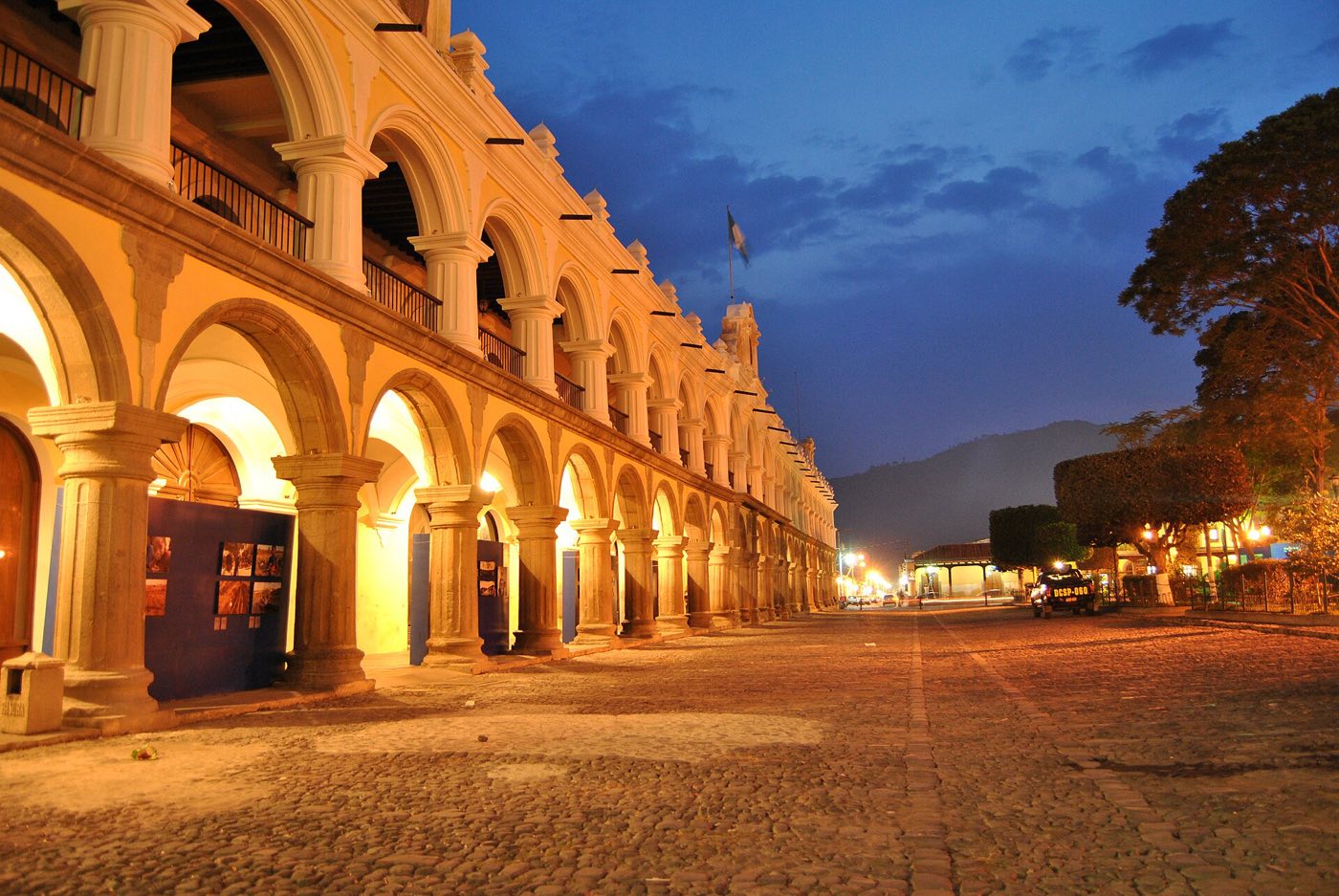
The former capital of Spanish Central America sits in a valley ringed by three volcanoes — Agua, Fuego, and Acatenango — and its UNESCO-listed grid of cobblestone streets, ruined convents, and ochre-walled courtyards has barely changed since an earthquake leveled it in 1773. Walk the ruins of La Merced and the Capuchin convent, climb the Cerro de la Cruz viewpoint at sunset for the full volcano panorama, and stay long enough to eat at a couple of the city's better restaurants. Antigua is where most Guatemala trips begin and should also be where they end.
Chichicastenango market
Every Thursday and Sunday, the highland town of Chichicastenango hosts one of the largest Indigenous markets in the Americas, with textile stalls, masks, wooden carvings, and produce spreading across several blocks around the Santo Tomás church. The church itself is remarkable — a 400-year-old Dominican structure where K'iche' Maya shrines still burn copal incense on the front steps, a blended Catholic-Maya practice you won't see anywhere else. Arrive early, bargain politely, and don't photograph people without asking.
Semuc Champey turquoise pools
A limestone bridge spans the Cahabón River in the remote interior of Alta Verapaz, forming a natural staircase of six pale-turquoise pools you can swim in. The drive is long — roughly eight or nine hours from Antigua or five from Cobán — and the last stretch is rough dirt road, which is why most visitors stay overnight at a hostel in Lanquín or at the park gate. Combine the pools with a candle-lit cave float through Kan'ba Caves, guided by local operators. Go for the drama; stay because it genuinely isn't like anywhere else in Central America.
Acatenango Volcano overnight hike
A 13,000-foot volcano outside Antigua that faces the continuously erupting Volcán de Fuego — the overnight hike puts you in a high camp with a front-row view of the eruptions lighting up the sky every 15 to 30 minutes through the night. The climb is serious, five to six hours up with roughly 5,000 feet of elevation gain, and the summit push is an optional 4 a.m. scramble. Go with a reputable Antigua operator (Soy Tours, Wicho y Charlie), rent proper cold-weather gear at altitude, and train for it beforehand. It's one of the most rewarding single nights anywhere in the Americas.
Livingston's Garifuna Caribbean culture
On the Caribbean coast at the mouth of the Río Dulce, Livingston is a road-isolated Garifuna town — reachable only by boat from Puerto Barrios or Río Dulce town — with an Afro-Indigenous culture that speaks Garifuna as a first language and cooks tapado, a coconut-milk seafood soup that has to be ordered in advance. The boat trip up the Río Dulce through mangrove gorges is itself one of the country's best half-days. Stay one night, eat at Happy Fish or a casa particular, and leave the Spanish-colonial and Maya worlds behind for 24 hours.
When to Go
November through April is the dry season — cool, clear highland days and reliably sunny weather in Antigua, Atitlán, and Tikal. Semana Santa (Easter Week) in Antigua is one of the most elaborate religious events in the Americas, with alfombras (carpets of colored sawdust) laid down the cobblestone streets for processions to walk over; book accommodation months ahead. The wet season runs May through October with afternoon downpours rather than all-day rain, and the highlands are at their most lush; hurricane tails from the Caribbean can disrupt Petén travel in September and October. January and February are the coolest months and best for hiking Acatenango.
Getting Around
Shuttle vans run by tourist operators are the practical way to move between the main traveler destinations — Antigua, Atitlán, Chichicastenango, Flores, Lanquín — at reasonable prices and in four-to-eight-hour stretches. Public chicken buses (repurposed American school buses) are dramatically cheaper and slower, and fine for short hops but not recommended for overnight or cross-country routes on security grounds. Domestic flights connect Guatemala City to Flores (for Tikal) in under an hour and save a full day of driving. Renting a car is viable in the highlands if you are an experienced driver and comfortable with narrow mountain roads; avoid driving at night anywhere. Boats handle the lake and the Caribbean coast. Ride-hailing (Uber) works in Guatemala City and Antigua.
Cost & Currency
The local currency is the Guatemalan quetzal (GTQ), roughly 7.7 to the US dollar. Guatemala is one of the cheaper countries in Latin America for travelers: expect GTQ 40-80 (US $5-10) for a comida corrida lunch at a local comedor, GTQ 200-500 (US $25-65) a night for a comfortable guesthouse or small hotel, and GTQ 800-1,500 (US $100-195) for a boutique stay in Antigua. Shuttle vans between main destinations run US $15-35 per leg, domestic flights to Flores are US $100-150. Cards are accepted at hotels and restaurants in Antigua, Guatemala City, and Panajachel; carry cash (small bills) for markets, chicken buses, boat rides, and most comedores. Tipping is 10 percent at sit-down restaurants.
Frequently Asked Questions
- Is Guatemala safe for travelers?
- Yes, with ordinary precautions. Antigua, Lake Atitlán, Flores, and the main tourist circuit are generally safe and well-traveled, though petty theft and occasional armed robbery on less-trafficked hiking trails (including around Atitlán and some volcanoes) mean you should go with a reputable guide. Avoid Guatemala City's outer zones, don't drive at night, and don't take public chicken buses on long-distance routes. The US State Department rates most of the country at standard caution levels.
- How do I get from Antigua to Lake Atitlán?
- Tourist shuttle vans run daily from Antigua to Panajachel on the lake in about three and a half hours for US $15-25 — your hostel or hotel can book one. From Panajachel, small public boats (lanchas) reach the other lake villages in 15 to 45 minutes for a few quetzales. Renting a car is also reasonable; the drive is paved and scenic, though traffic in and out of Antigua can be slow.
- Is it safe to drink the tap water?
- No, tap water is not potable for visitors anywhere in Guatemala. Stick to bottled or filtered water, which is cheap and everywhere. Most hotels and guesthouses provide filtered drinking water refills, and restaurants use purified ice. Be cautious with raw salads at smaller roadside spots and street food washed in tap water; the better-established comedores and tourist-area restaurants are generally fine.
- Do I need to speak Spanish?
- A working tourist Spanish will make your trip significantly easier and more rewarding. English is spoken at hotels and tour operators in Antigua, Panajachel, and Flores but is rare elsewhere, and the further you move from the main circuit the more important basic Spanish becomes. Antigua is one of the cheapest places in the Americas to take intensive Spanish lessons — a week of one-on-one classes plus homestay runs US $200-300 and is genuinely worth it.
- How long do I need for Tikal?
- Two days is the right amount — fly into Flores in the afternoon, stay overnight, enter the park at 6 a.m. the next morning for the cooler temperatures and active wildlife, and spend a full day exploring before flying back. Day trips from Guatemala City are possible but exhausting and skip the best hours. Sunrise and sunset tours into the park are available for an additional fee and worth considering if you're already staying at the park gate.
Plan a Trip to Guatemala
Have you been to Guatemala?
Track 195 countries, 50 states & 63 national parks on your map