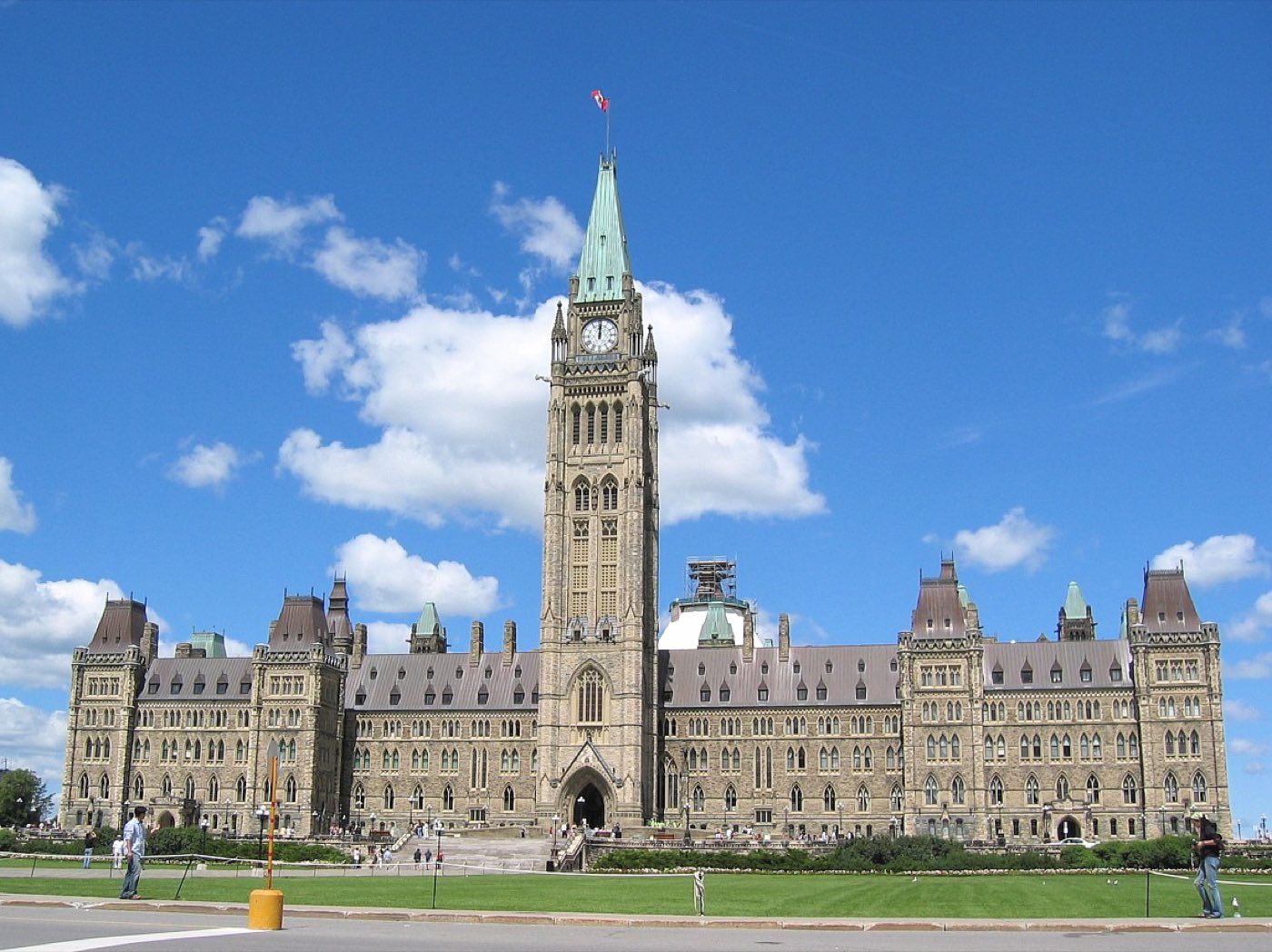
Canada
- Capital
- Ottawa
- Population
- 40.1M
- Currency
- CAD
- Languages
- English, French
Overview
The world's second-largest country by area unfolds across six time zones, from the rock-and-fog coast of Newfoundland to the temperate rainforests of Vancouver Island, the boreal interior of the Yukon, and the prairie skies of Saskatchewan and Alberta. Travelers come for Banff and Jasper's glacial lakes, the polar-bear coast of Manitoba, the French-speaking lanes of Quebec City, and skiing that rivals anywhere in the Alps. The scale takes a while to sink in. A flight from Halifax to Vancouver takes as long as one from London to Cairo, and the country's 40 million people mostly live in a narrow band within a few hundred kilometers of the US border. The further north you head, the stranger and emptier things get — above the treeline the country turns into tundra, muskeg, and thousands of lakes with no road access, and in winter the aurora borealis unrolls above it most nights. Canada rewards travelers who build their trips around a region rather than try to see the whole thing. A week in the Rockies, ten days in Quebec and the Maritimes, or a fly-in trip to the Yukon each feels complete on its own. Cities are clean, safe, and genuinely multicultural — Toronto and Vancouver lead the world on that count — and the national parks are still relatively affordable and well-run. If you want wild country within reach of good coffee and soft beds, Canada is the calibration.
Things to Do
Banff and Lake Louise in the Canadian Rockies
Banff National Park, Canada's oldest, wraps around a mountain town of ten thousand people set in the middle of 6,000 square kilometers of peaks, forest, and glacier-fed lakes. Lake Louise and Moraine Lake deliver the turquoise-water photographs you've seen a hundred times, and they look exactly like that in person — the color is real, produced by rock flour suspended in meltwater. Come in June before the crowds peak or September when the larches turn gold around Sentinel Pass, and book accommodation months ahead either way.
Niagara Falls
You know what this is before you arrive. The horseshoe falls are 57 meters high and 820 meters across, with 600,000 gallons of the Great Lakes pouring over them every second, and standing near the brink still delivers the roar and spray despite the carnival town that has grown up behind it. Take the Hornblower boat into the mist cloud, walk the Journey Behind the Falls tunnel, then escape up the river to Niagara-on-the-Lake for its well-kept 19th-century streets and the Ontario wine region's ice wines.
Old Quebec City's walled historic district
The only walled city north of Mexico, Quebec City's Vieux-Québec holds 400 years of French colonial history in a UNESCO-listed warren of cobblestones, dormered roofs, and boulangeries that open at five in the morning. The Château Frontenac sits on the cliff above the St. Lawrence like it was painted onto the horizon. Plan at least two nights — one to walk the upper and lower towns, one to cross the river by ferry for the best view back — and come in December if you want it dusted in snow with the Christmas markets running.
Northern Lights viewing in Yellowknife or Yukon
From late August through April, the aurora borealis appears above Yellowknife and Whitehorse on roughly 200 nights a year — this is one of the best places on the planet to see it, sitting directly under the auroral oval. Specialist operators run heated viewing tipis outside town where you wait from 10 pm to 2 am for the sky to start moving. Pair it with a husky sled run, an ice-road drive on the Mackenzie River, or a soak in the Takhini hot springs at minus thirty.
Vancouver's Stanley Park and Whistler
Vancouver is a glass-towered Pacific city pressed between the North Shore mountains and the ocean, with the 400-hectare Stanley Park as its central lung — a seawall loop of ten kilometers where you'll see herons, seals, and totem poles carved by Coast Salish and Kwakwaka'wakw artists. Two hours north on the Sea-to-Sky Highway, Whistler-Blackcomb is North America's largest ski resort and in summer a mountain-biking and hiking base. Combine both over five days for the classic first-time British Columbia trip.
Icefields Parkway scenic drive
The 232-kilometer road between Lake Louise and Jasper follows the spine of the Rockies past more than a hundred glaciers, the Columbia Icefield, the Athabasca and Sunwapta falls, and more roadside lakes than you can reasonably stop at. Drive it in a full day with multiple short hikes built in — Peyto Lake viewpoint, Bow Glacier Falls trail, Sunwapta Falls — or stretch it to two nights at the Num-Ti-Jah Lodge or the Icefield's simple roadside hotels. Fuel up in Lake Louise; there's exactly one gas station along the way.
Toronto's CN Tower and multicultural food scene
Canada's largest city is 51% foreign-born and it shows on every corner — in an afternoon you can eat Cantonese dim sum in Scarborough, Tibetan momos in Parkdale, Ethiopian injera on Queen West, and Portuguese grilled chicken on Ossington. The CN Tower still anchors the skyline at 553 meters and the glass-floor EdgeWalk will rattle you if you like that sort of thing, but the better use of a day in Toronto is Kensington Market, the St. Lawrence Market, and a ferry ride to the Toronto Islands for the city view at sunset.
Bay of Fundy's extreme tides
The Bay of Fundy between New Brunswick and Nova Scotia has the highest tides on Earth — a 16-meter swing twice a day, twice what you'd see almost anywhere else. Hopewell Rocks are the iconic spot, where you walk on the ocean floor at low tide and kayak above the same rocks six hours later. Add the Fundy Trail Parkway, a whale-watching boat out of St. Andrews for humpbacks and right whales, and a night at Alma for the best scallops on the east coast.
When to Go
Late June through early September is the country's warm season and the only window for most of the north — Yukon, Nunavut, and the subarctic are summer-only for practical purposes. September and early October bring the Quebec and Ontario fall foliage at its peak, plus thinner crowds in Banff and Jasper. December through March is ski season in Whistler, Banff, and Quebec's Mont-Tremblant, and the right time for aurora viewing in Yellowknife — dress seriously for cold that routinely hits -25 C. Avoid the shoulder weeks of late April and late October across most of the country unless you specifically want empty trails and hotel deals; many national park facilities close.
Getting Around
Canada is too big to experience without flying for at least part of it — Air Canada and WestJet connect every major city daily, and regional carriers fly into the north. Within regions, renting a car is almost always the right call: the Rockies, the Cabot Trail, the Niagara wine route, and Vancouver Island reward a road trip more than any public option. VIA Rail runs a handful of long-distance routes — the Canadian between Toronto and Vancouver takes four days through the prairies and is a trip in itself, and the Ocean to Halifax covers the Maritimes. Cities all have solid public transit; Toronto's TTC and Montreal's Metro are the two best systems. Distances between cities can be eight to ten hours of driving, so plan realistically and don't try to cover two provinces in a week.
Cost & Currency
Canada uses the Canadian dollar (CAD), typically 0.72 to 0.76 USD. Major cities and the Rockies run as expensive as anywhere in western Europe: expect CAD 200–350 a night for a mid-range hotel in Toronto, Vancouver, or Banff in summer, CAD 25–40 for a sit-down lunch, and CAD 8 for a craft beer. Rural areas and the Maritimes are noticeably cheaper — a comfortable B&B on Cape Breton or Prince Edward Island runs CAD 120–180, and a lobster dinner in a harbor town is CAD 35. Tipping is mandatory by local convention: 15–20% at restaurants, 15% for taxis and hairdressers, a couple of dollars per bag for porters. Cards work everywhere; carry a little cash for small-town farmers markets and parking meters in older neighborhoods.
Frequently Asked Questions
- Do I need a visa or eTA to enter Canada?
- Citizens of the US, EU, UK, Australia, Japan, and many other countries don't need a visa, but most visa-exempt travelers (not Americans) do need an Electronic Travel Authorization (eTA) before flying. It costs CAD 7, is applied for online, and typically comes through in minutes. Americans need only a valid passport.
- Is it worth visiting in winter?
- Yes, if you're prepared for the cold and you want what winter uniquely offers. Quebec City dressed in snow, aurora in Yellowknife, skiing in Whistler or Banff, and ice-fishing on the Great Lakes are all legitimately great winter experiences. Bring proper gear (down parka, base layers, insulated boots) and expect -10 C to -30 C depending on where and when.
- How much time should I plan for a first trip?
- Ten to fourteen days is the realistic minimum to experience one region properly. Common first trips: the Rockies plus Vancouver (10 days), Montreal-Quebec City-Toronto with Niagara (10 days), or the Maritimes circuit of Halifax-Cape Breton-PEI (12 days). Don't try to combine east and west in one trip unless you have at least three weeks.
- Is French essential in Quebec?
- No — English is widely spoken in tourist areas of Montreal, Quebec City, and the Eastern Townships, and any reasonable restaurant will have bilingual staff. Outside the main cities, in the Gaspé or the Saguenay, French becomes more essential. A few polite phrases are appreciated everywhere and Quebecois are usually happy to switch when they hear an accent.
- Can I see a moose or a bear?
- In the right places, yes — Jasper and Banff have reliable elk, bighorn sheep, and occasional black bear sightings from the road in summer, and moose are common around Algonquin Provincial Park in Ontario. Grizzly bears need specialist trips to the British Columbia coast (Knight Inlet or the Great Bear Rainforest). Keep a proper distance, never feed wildlife, and carry bear spray on trails.
Plan a Trip to Canada
Have you been to Canada?
Track 195 countries, 50 states & 63 national parks on your map