Denmark
- Capital
- Copenhagen
- Population
- 5.9M
- Currency
- DKK
- Languages
- Danish
Overview
The southernmost of the Scandinavian countries, Denmark occupies the Jutland peninsula and more than 400 islands scattered across the straits that separate the North Sea from the Baltic. Travelers come for Copenhagen's design culture and New Nordic kitchens, the medieval town of Ribe, the Viking ships at Roskilde, Hamlet's castle at Elsinore, and some of the most civilized bicycling infrastructure on Earth. What you notice within an hour of arriving in Copenhagen is how calm everything is. People cycle in proper clothes to proper jobs on proper bicycles, at reasonable speeds, on wide protected lanes. Sidewalks are clean, buses are quiet, and the pace is somehow both brisk and unhurried at once. By dinner, candles have appeared on every restaurant table — actual candles, not tea lights — and what the Danes call hygge starts to make sense as lived practice rather than export commodity. You slow your shoulders down a notch and don't realize it until you leave. Beyond the capital, Denmark opens into a low, green, watery country that you can cross by train in a few hours. Aarhus on Jutland is a compact second city with an excellent art museum and a reconstructed historic quarter. The west Jutland coast along the North Sea has dunes, fishing villages, and windswept beaches. Funen, the middle island, is H.C. Andersen country, all hedgerows and small manor houses. A week is the minimum to do Copenhagen plus Aarhus plus one island or coastal stop. Ten days is where the rhythm actually arrives.
Things to Do
Tivoli Gardens in Copenhagen
Opened in 1843 and the second-oldest operating amusement park in the world, Tivoli is the single place where Copenhagen's hygge tips fully into delight. Wooden roller coasters, paper lanterns, peacock gardens, and concert stages are wrapped into a compact park right next to the central railway station. It's as much a dinner-and-drinks destination as a ride park — the restaurants alone are worth an evening. Come at dusk in summer when thousands of colored lights come on at once, or during the Christmas market season for the full hygge program.
Nyhavn's colorful harbor houses
The painted 17th-century townhouses along the Nyhavn canal are Denmark's single most recognizable image, and yes, they live up to the photograph. A 400-meter stretch of harbor is lined with red, yellow, and blue facades; wooden schooners are moored in the middle; and the quayside cafés fill with Danes drinking beer in the sun whenever the sun cooperates. H.C. Andersen lived at number 67. Walk through, have a coffee, then continue east to the renovated harbor baths for a swim off the modern wooden decks.
Kronborg Castle (Hamlet's Elsinore)
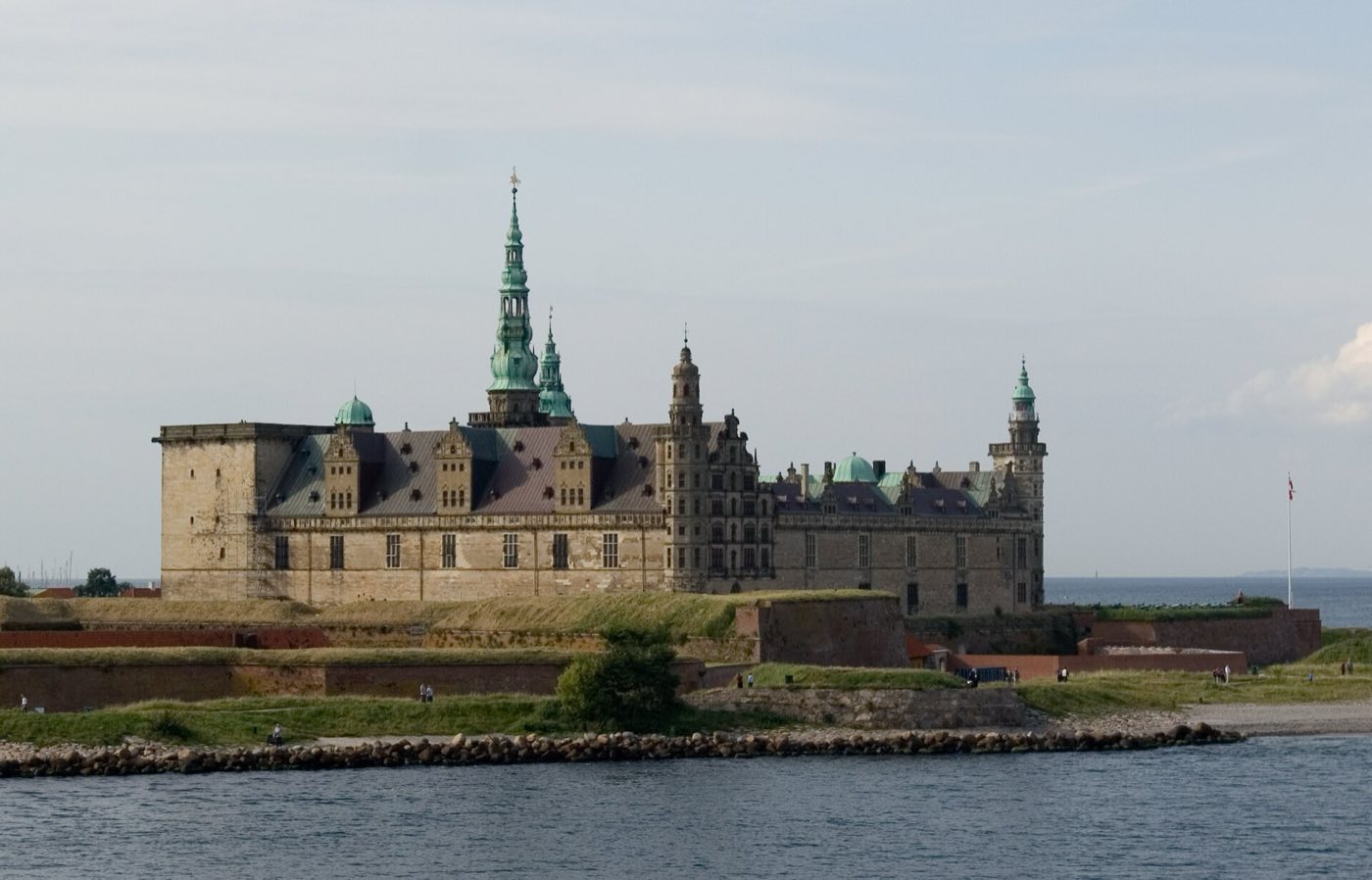
Forty-five minutes north of Copenhagen by train, Kronborg is the Renaissance fortress Shakespeare used as the setting for Hamlet without ever visiting it himself. The castle stands on a point at the narrowest part of the Øresund strait, less than four kilometers across from Sweden, and once collected tolls from every ship passing between the North Sea and the Baltic. UNESCO-listed, with full period rooms, the atmospheric casemates beneath, and summer performances of Hamlet in the courtyard by visiting theater companies.
The Little Mermaid statue
Edvard Eriksen's 1913 bronze of the mermaid on a rock in Copenhagen harbor is either the most over-hyped statue in Europe or the most charmingly under-stated landmark — depending entirely on what you expect. She is 1.25 meters tall. She sits on a boulder just offshore. Go at eight in the morning before the bus tours arrive, take a photograph, and then walk south along the harbor path to Kastellet, the star-shaped 17th-century citadel that most visitors skip. Kastellet is far more impressive than the mermaid.
Viking Ship Museum in Roskilde
Thirty kilometers west of Copenhagen, the fjord town of Roskilde is home to five 11th-century Viking ships salvaged from the fjord floor and reconstructed in a hall with floor-to-ceiling windows looking out at the water. The museum runs its own traditional boatyard where you can watch new replicas being built by shipwrights using Iron Age tools, and in summer you can book a sail on one of the finished replicas with a volunteer crew. Roskilde Cathedral — UNESCO-listed and the burial place of every Danish monarch since 1536 — is a ten-minute walk.
Legoland Billund
In central Jutland, Legoland is the original — opened in 1968 next to the Lego factory, and now a full theme park built around the brick. Miniland is the showstopper: a sprawling world of cities and landmarks rendered at 1:20 scale in approximately 20 million bricks. This is unabashedly a family destination, and with kids aged roughly four through twelve it is close to an essential Denmark stop. Billund airport is right there, so it can work as an arrival or departure bookend rather than a detour.
Skagen's northern tip where two seas meet
At Denmark's northernmost point, on the spit where the Skagerrak (North Sea) and the Kattegat (Baltic) collide visibly in a seam of breaking white water, sits the fishing town of Skagen. The light here drew a 19th-century colony of painters known as the Skagensmalerne, and the town still has the clear, silvery coastal light that made them. Walk Grenen's sand spit out to the point, see the Skagen Museum, and eat smoked herring at one of the harbor kitchens. A four-hour train from Copenhagen, best visited with an overnight.
When to Go
June through August is the peak — long daylight (sunset past 10 p.m. at midsummer), warm days in the 70s, and Danes out on bikes, at harbor baths, in Tivoli, and at midsummer bonfires on June 23. May and September are the shoulder weeks with cooler temperatures but far fewer crowds and better hotel rates. October through March is dark — in December the sun sets around 3:30 p.m. — but Copenhagen leans into it with Christmas markets, candles in every window, and the hygge that everyone writes about. The Roskilde Festival in late June/early July is one of Europe's biggest music festivals and books the whole Roskilde area out months ahead.
Getting Around
Denmark is small, well-connected, and easy to navigate. The national rail network (DSB) links Copenhagen to Aarhus, Odense, Aalborg, and the major island cities with frequent intercity trains; travel times are short (Copenhagen to Aarhus is about three hours, via the impressive Storebælt bridge). Cross-border trains run to Hamburg and Stockholm. Within Copenhagen, the metro, S-train, and bus network is excellent, and most visitors will find the city fully walkable and even more fully cyclable — bike rentals and Donkey Republic share bikes are everywhere. Renting a car is useful for deep Jutland and the west coast but unnecessary in the main corridor. The €1 billion Fehmarn tunnel to Germany opens in 2029 and will reshape the southern route.
Cost & Currency
Denmark uses the krone (DKK), not the euro, and the country is expensive — among the highest-priced destinations in Europe, comfortably ahead of Germany and close to Norwegian levels. Expect 45–65 DKK (€6–€9) for a coffee, 150–250 DKK (€20–€33) for a casual lunch of smørrebrød or pølser, and 1,400–2,500 DKK (€190–€335) a night for a mid-range hotel in central Copenhagen. New Nordic tasting menus at the Noma tier run 3,000–4,500 DKK per person before wine. Cards are accepted universally — Denmark is close to cashless — and contactless works everywhere. Tipping is not expected; service is included, and rounding up the bill for genuinely good service is more than sufficient. Budget for the prices going in; the country rewards the investment.
Frequently Asked Questions
- Do I need a visa to visit Denmark?
- Most Western travelers — EU citizens, Americans, Canadians, British, Australians — do not need a visa for stays up to 90 days within any 180-day period under the Schengen Area rules. ETIAS pre-authorization for visa-exempt non-EU travelers is being phased in from 2025 onward. Greenland and the Faroe Islands are Danish territories but are outside the EU and Schengen, so they have their own rules — typically visa-free for the same nationalities, but worth confirming if your trip includes either.
- Is Denmark safe for travelers?
- Yes — Denmark consistently ranks among the safest countries in the world, with very low violent crime and excellent infrastructure. The main traveler hazards are practical rather than personal: navigating Copenhagen's dedicated cycle lanes (don't wander onto them as a pedestrian — the bikes are fast and have right of way), and watching for pickpockets in the rail station and main shopping streets around Strøget.
- Is the tap water safe to drink?
- Yes, tap water in Denmark is of exceptional quality and meets EU drinking water standards across the country. Danes drink from the tap everywhere, including Copenhagen restaurants where tap water is freely served alongside your meal. You don't need to buy bottled water; carry a reusable bottle and top it up from any tap or public fountain.
- Can I get by with just English?
- Yes, comfortably — Denmark has one of the highest English proficiency rates in the non-native world, and you can operate entirely in English across every city, town, and tourist-facing business. Most signage and restaurant menus are bilingual. Learning a few words of Danish (tak for thank you, hej for hello, skål for cheers) is appreciated but not remotely required.
- Is cycling a realistic way to get around Copenhagen?
- Yes — cycling is the primary way locals get around, and Copenhagen has over 375 kilometers of protected bike lanes, bridges dedicated solely to bicycles, and a culture of courteous riding. Rent from Donkey Republic (an app-based share system), a shop like Copenhagen Bicycles on Nyhavn, or ask your hotel. Signal your turns, stay right on the lanes, and follow the bike-specific traffic lights. Within half a day you'll move like a local.
Plan a Trip to Denmark
Have you been to Denmark?
Track 195 countries, 50 states & 63 national parks on your map